Stand Loudspeaker Reviews

Sort By:  Post Date TitlePublish Date

NHT Classic Three loudspeaker
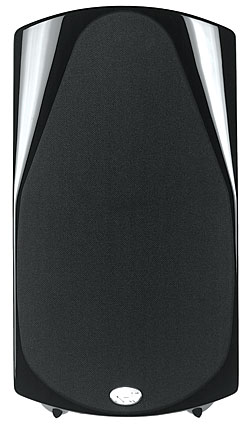
When reviewing affordable speakers, it's critical to have benchmarks and comparisons for various price points. Inexpensive speaker designs are exercises in tradeoffs and compromises, especially for the least costly products. In all of my reviews, I try to compare the speaker in question with other designs close to the review sample's price, chosen from my list of previously reviewed speakers. From time to time, if a speaker particularly impresses me, I ask the manufacturer if I can keep the speakers around a while longer, so that it can serve as a comparison reference for a certain price point. That's not to say that any speaker I don't keep around is less desirable—there's just not enough room in my house to keep a sample of every speaker I like. An audio reviewer's wife puts up with enough as it is.

Platinum Audio Solo loudspeaker

Flip flip flip]...Where the heck is it?...[flip flip flip]...Got it!" What am I looking for? There, in black and white, on p.634 of J. Gordon Holt's Really Reliable Rules for Rookie Reviewers (footnote 1), is the Prime Directive On Loudspeaker Setup: "Never, ever, choose a loudspeaker that has too much bass extension for your room!"

BG Z1 loudspeaker

Last summer, John Atkinson and I were playing a jazz gig poolside at my local club, and during a break we began discussing equipment. As JA adjusted his microphones and I became increasingly nervous about the running, jumping kids splashing chlorinated water on his Nagra">http://www.stereophile.com/hirezplayers/461">Nagra digital recorder, he asked me if I'd like to review the Z1 loudspeaker from BG Corp. "It's an interesting little bookshelf speaker featuring a ribbon tweeter." Hmm—an affordable bookshelf speaker matching a ribbon tweeter to a dynamic woofer? Very interesting. "Sounds good," said I, and resumed my ivory duties.

Epos ES12 loudspeaker

Blind loudspeaker listening tests are hard work, not least because usually, most of the models being auditioned fail to light any musical sparks. But back in the spring of 1991, when a small group of Stereophile writers were doing blind tests for a group speaker review, one speaker did light up smiles on the listeners' faces, including my own. (We don't talk during our blind tests, but it's more difficult to keep body language in check.) Once the results were in, we learned that the speaker that got the music right in that test was the diminutive ES11 from Epos in England (footnote 1).

Rogers Studio 3 loudspeaker

Back in the early 1970s, the BBC needed a physically unobtrusive, nearfield monitor loudspeaker for use in outside-broadcast trucks. Accordingly, they instructed their design department, which at that time featured such luminaries as Dudley Harwood (the "father" of the polypropylene cone, who went on to found Harbeth) and the late Spencer Hughes (the "father" of the Bextrene cone, who went on to found Spendor), to produce such a model. Thus, not only was what was then probably the finest collection of British speaker-design talent involved in its development, there were no commercial constraints placed on the design. The only limitations were intended to be those arising from the necessarily small enclosure and the absence of the need for a wide dynamic range under close monitoring conditions.

Ruark Equinox loudspeaker

Ever since the 1960s, when I built a pair of Altec A7 clones, I've had a preference for relatively big speakers. Yes, I was seduced by the Stax F-81 electrostatics because of their incredibly low coloration, but inevitably I felt the need to return to something that would move more air. Regardless of the type of music (I do like the big stuff) or the sound levels, unless the sound has solidity and size, I can't easily suspend disbelief.

Focal Electra 1007 Be loudspeaker

Back at the end of September 2005, I dropped by Jonathan and Kathleen Scull's Chelsea loft after work. I can't remember why; I think I was returning some gear. But we had also just finished shipping the 2006 Stereophile Buyer's Guide to the printer that day, and it was possible that I needed some high-quality musical R'n'R. Sitting in Jonathan's listening seat—the legendary Ribbon">http://forum.stereophile.com/photopost/showphoto.php/photo/450/password… Chair"—and enjoying the sound of his system, I flashed on the days when he worked for Stereophile full-time and I occasionally used to pop round to his place, just two blocks away from what was then our office, on Manhattan's Fifth Avenue. Whatever components Jonathan was writing about, a consistent factor in the always superb sound of his system was the presence of the pair of JMlab">http://www.stereophile.com/floorloudspeakers/273">JMlab Utopia loudspeakers that he had reviewed in the April 1998 issue of Stereophile. The Utopias delivered a seamless, full-range presentation that served Jonathan's eclectic taste in music while also allowing him to easily hear the effects, good or bad, of the various tweaks he was always trying.

Snell Acoustics LCR7 XL loudspeaker

When someone is described as having "written the book" on a subject, it is generally taken as a figure of speech. But veteran speaker designer Joseph D'Appolito, PhD, quite literally "wrote the book." His Testing Loudspeakers (Audio Amateur Press, 1998) is an invaluable resource for those of us who, lacking any talent for designing speakers ourselves, nevertheless find the subject of speaker performance endlessly fascinating. So when Snell's PR consultant, Bryan Stanton, contacted me a while back about reviewing the LCR7, the first design D'Appolito had seen through from start to finish for the Massachusetts-based company since he had replaced David Smith as Snell's chief engineer, I suffered from more than a little anxiety.

Fulton Musical Industries Model 80 & "J-Modular" loudspeakers

In the last issue we published a rather enthusiastic "Quickie" report on a small, $190/pair speaker system from a new company—the FMI Model 80. It was virtually devoid of low end, even as a stereo pair (pairing effectively doubles bass output), and slightly rough as well as a shade soft at the high end, but it had a quality of "aliveness" to it that almost defied belief. Was it a breakthrough in design? A new transducing principle? No, it was neither. In fact, the Model 80 looks like any one of those hundreds of little bookshelf systems that clutter, the pages of Stereo Review's "Hi-Fi Directory" in tedious profusion.
Advertisement
Advertisement
Advertisement