Stand Loudspeaker Reviews

Sort By:  Post Date TitlePublish Date

Snell Type K/II loudspeaker

In some ways, building an inexpensive yet musical two-way loudspeaker is a greater design challenge than creating a cost-no-object reference product. Although the latter is a much more complex endeavor, the venerable two-way box seems to bring out the creativity and resources of the designer. Rather than throw money at the product in the form of more expensive drivers, enclosures, or components, the designer of a low-cost two-way is forced to go back to the basics, rethink closely-held tenets, and rely on ingenuity and sheer talent to squeeze the most music from a given cost. Consequently, the inexpensive two-way is the perfect vehicle for designers to develop their skills. If one has mastered this art form, one is much more likely to achieve success when more ambitious designs are attempted.

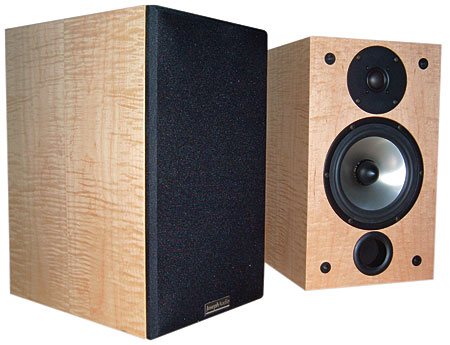
Joseph Audio RM7XL Special Edition loudspeaker

Jeff Joseph always causes a stir at Stereophile's annual Home Entertainment Shows. No matter which speakers he exhibits, he invariably gets wonderful sound in his room. He's fooled more than one Stereophile writer who thought he was listening to Joseph's flagship Pearls when, behind a curtain, it was actually two of his in-wall models that were playing. And his competitors seem to envy his hi-fi show sound more each year.

Spica TC-60 loudspeaker

As far as I can tell, Santa Fe–based speaker engineer John">http://www.stereophile.com/interviews/694">John Bau had designed but four commercial loudspeakers before the TC-60 was launched at the 1994 Winter CES: in order of appearance, they were the Spica SC50i (1980), the TC-50http://www.stereophile.com/standloudspeakers/446">TC-50; (1983), the Angelushttp://www.stereophile.com/floorloudspeakers/693">Angelus; (1987), and the SC-30 (1989). None were expensive, and all garnered much praise, both in Stereophile's pages and elsewhere.

Era Acoustics Design 4 loudspeaker & SUB10 subwoofer

The first time I attended the Las Vegas Consumer Electronics Show, in January 1986, I didn't get there until the second day of the Show. Still, by the beginning of the fourth and final day I'd managed to visit every high-end audio exhibit, and still had time to go back for seconds to the rooms that had sounded the best. Twenty years later, CES has grown so much that it's impossible for a single writer to visit even a quarter of the exhibits in which he might be interested. And even with the sort of team">http://blog.stereophile.com/ces2007/">team reporting Stereophile now practices, covering the Show has become an exercise in applied logistics for the busy journalist: "Should I wait for the free shuttle bus? Should I get a taxi—though I might get caught in Las Vegas's increasing traffic jams, or even just get stuck at the city's interminable traffic lights? Or should I take the new monorail—though that goes nowhere near the hotel in which [insert name of hot company] is demming its products?"
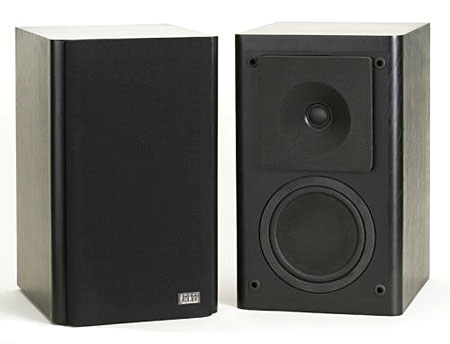
Phase Technology PC80 loudspeaker

In some ways, building an inexpensive yet musical two-way loudspeaker is a greater design challenge than creating a cost-no-object reference product. Although the latter is a much more complex endeavor, the venerable two-way box seems to bring out the creativity and resources of the designer. Rather than throw money at the product in the form of more expensive drivers, enclosures, or components, the designer of a low-cost two-way is forced to go back to the basics, rethink closely-held tenets, and rely on ingenuity and sheer talent to squeeze the most music from a given cost. Consequently, the inexpensive two-way is the perfect vehicle for designers to develop their skills. If one has mastered this art form, one is much more likely to achieve success when more ambitious designs are attempted.

Celestion 3000 loudspeaker

Some reviews seem ill-fated from the get-go: samples break; systems go wrong; test equipment gives anomalous measurements; and at times the reviewer starts to doubt his or her ears when it seems impossible to get the component being reviewed to sound anywhere as good as reported by other writers. Such was the case with this review of the Celestion 3000. When Celestion's Barry Fox visited Santa Fe three days before Christmas 1989 with early samples of the speaker, we were dismayed to find that the ribbon of one of the pair was crinkled and immobile, apparently due to the extruded-aluminum magnet frame warping in transit. Fortunately, Barry had brought a spare tweeter with him, to show how it worked, so we replaced the broken one in order to do some listening.

Dunlavy Audio Labs SC-I loudspeaker

The SC-I ($995/pair) is the smallest model in the "Signature Collection" to come from Dunlavy Audio Labs, the company founded by John">http://www.stereophile.com/interviews/163">John Dunlavy after he left Duntech. The largest model in this series used to be the $4995/pair SC-IV that Robert Deutsch so enthusiastically reviewed last April, and that this month was voted Stereophile's 1994 "Product of the Year." There is now also a huge SC-VIhttp://www.stereophile.com/floorloudspeakers/162">SC-VI; available.

Advertisement
Advertisement
Advertisement