As We See It

Sort By:  Post Date TitlePublish Date

Access Journalism vs Accountability Journalism
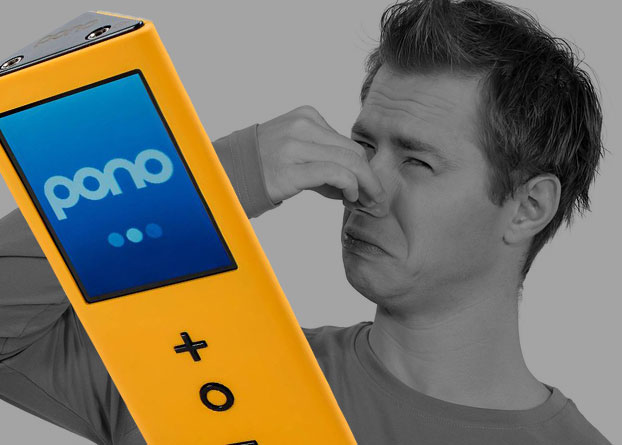
I write this in a Seattle coffee bar—my flight home to New York has been canceled due to a snowstorm. As I try to put down these thoughts, I'm listening to the high-resolution masters of the April issue's "Recording of the Month," Sasha Matson's jazz opera Cooperstown, on my Pono player using Ultimate Ears UE18 in-ear monitors. I was in Seattle for Music Matters 10, held by retailer Definitive Audio, and this was my first road trip with the Pono since I reviewed it for the April issue. (Bruce Botnick and Charles Hansen comment on that review elsewhere in this issue.)

Who's Right? Accuracy or Musicality

Many years ago, the now-defunct Life magazine ran a feature article about science and its sacred cows, in which a cartoon showed a huge inverted pyramid-shaped structure of great complexity, tapering downward to a single support at its base: a toothpick. The toothpick was labeled "basic premise," the inverted pyramid was the entire body of scientific knowledge.

Everything we do or think or know is based upon assumptions, some of which are rather more justified than others. When we set the alarm clock, we assume there will be a tomorrow. When we reach for the car's brake pedal without glancing at it, we assume it will be where it was yesterday, and that it will stop the car. When we scorn a phono cartridge because it is too bright, we assume the brightness is in the cartridge, not in the rest of our system. We have to trust our toothpicks or live in a world totally devoid of security—a world where 2+2 can equal anything from 3 to 11, all the laws change unannounced every few days, and Greenwich Mean Time is determined by a roulette wheel.
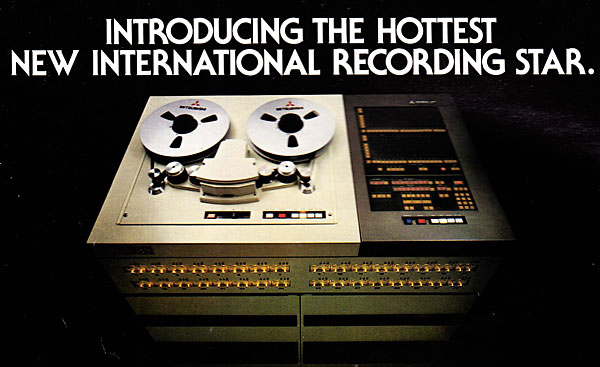
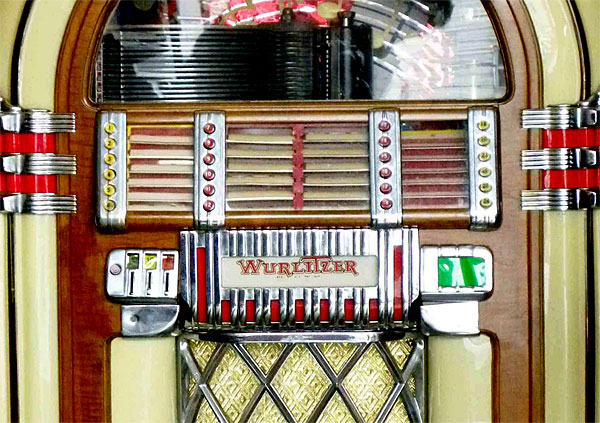
The Audio Centennial (+1) Revolution

Despite the myriads of technological breakthroughs announced month after month with tedious regularity by manufacturers of pickups, amplifiers and loudspeakers, there are only five developments in the 101-year history of audio reproduction (footnote 1) that we would call truly revolutionary. We will doubtless offend many by stating that Edison's phonograph was not one of them. It was the starting point, it was not a turning point. Emile Berliner's disc was revolutionary, in that it changed the whole format of sound reproduction, and made possible true mass production of recordings (footnote 2).

Us and Them

I've known a lot of folks with impressive LP and CD collections who were perfectly content with the sound of the crappiest of hi-fis. This diverse group has included recording engineers, musicians, and owners of record stores. Loving music isn't the same thing as caring about the sound of music, and maybe, in some alternate universe, those folks would-have-been, could-have-been audiophiles. But in this universe, they didn't, and I'm not sure why.

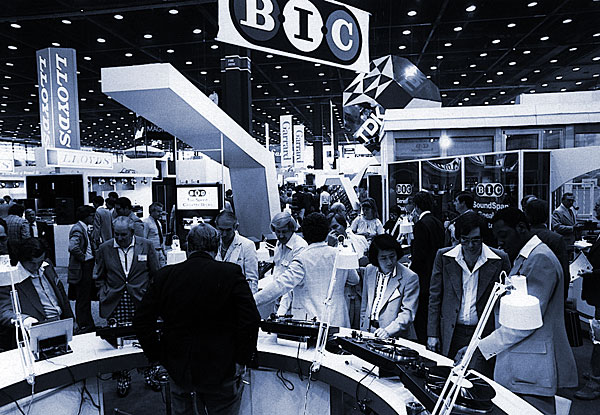
Thoughts from the 1980 Winter CES

Editor's Note: We are republishing this report from the 1980 CES both because many of the themes strike resonances 35 years later, and because it emphasizes the hard time high-end audio was having at the end of the 1970s. The LP had been eclipsed by the cassette and 8-track cartridge as the primary massmarket media for recorded music and the decade-long hi-fi boom that had been fueled by the entry of Japanese brands was running out of steam. Ironically, it was the launch of Compact Disc three years later that was to reinvigorate the audio business.—John Atkinson

The 1980 Winter CES, held in Las Vegas in January 1980, came on the heels of the worst business year the audio field has seen in almost a decade. So-called high-end audio, in particular, had distressing sales declines during the last year of the 1970s, with some dealers (who had not yet gone out of business) predicting that their books for 1979 would probably show as much as a 30% loss in sales from the previous year. Dealer turnout in the Las Vegas Jockey Club, where most of the high-end manufacturers were showing their wares, was nonetheless surprisingly good, although makers of the highest-priced exotica were not as ecstatic about the turnout as were those exhibiting more-affordable gear. One high-end entrepreneur was heard to say (to one of his associates), "It doesn't look any better for this year than last."

To Play or Not to Play

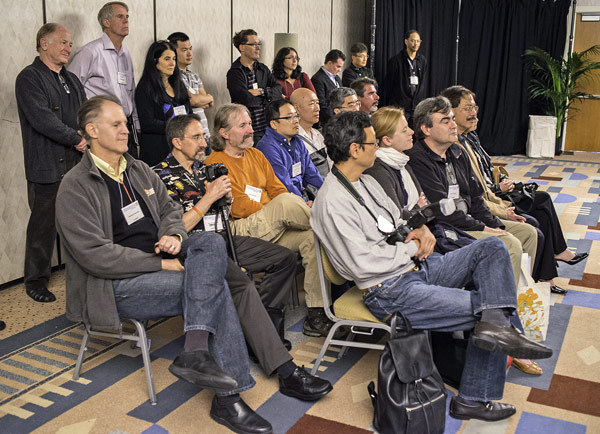
To put it mildly, Jack Vad (second row in photo, orange shirt) was dismayed. The Grammy Award–winning media producer and chief engineer for the San Francisco Symphony had just returned from the 2014 Rocky Mountain Audio Fest, and was trying to make sense of his experiences there. When he'd carried his latest recordings, which I think are superbly recorded, into rooms at the show and asked if he could play them, exhibitors were anything but enthusiastic.

A Change of Schedule (from 1980)

Recently, we've been asking a representative sample of Stereophile subscribers for suggestions as to how the magazine could be improved. We got 'em, in droves. And the one thing that led every list of suggestions we received was: "Publish more often!" Second in importance was: "Do more reports on affordable components, and let's have more suggestions for cheap ways of improving existing systems."

Audiophilia Nervosa

Audiophilia nervosa. It's a running gag with a mean streak. As audiophiles, we know its effects intimately. We know how it can turn what was once a source of pleasure and pride—listening to good music over a good sound system—into an irritating itch that can't be scratched.

The UrbanDictionary.com defines audiophilia nervosa (AN) as "the anxiety resulting from the never-ending quest to obtain the ultimate performance from one's stereo system by means of employing state-of-the-art components, cables, and the use of certain 'tweaks.' Although the goal is supposedly to achieve maximum appreciation of the music, those afflicted with this condition are merely obsessed with their electronics."

Home Alone

We all have secrets, and it's about time I came clean with one of mine: I enjoy recorded music more than concerts.

I know, that's a sacrilege—as a lifelong music lover, I'm supposed to relish the live event, with all of the energy and connection between musicians and audience that can happen only when they're all breathing the same air. That may be true for you, but not for me. I've harbored the guilt for years: When I take the plunge and attend a concert, I rarely enjoy the experience enough to justify the effort and expense.

Thinking Outside the Niche

With increasing frequency, many audiophiles and industry professionals have accepted that the quest for highest-quality sound quality is a luxury and esoteric pursuit that, by its very nature, can appeal to only a small niche market. According to this view, the masses—the 99%, if you will—are either satisfied with Pioneer, Bose, Samsung, Dr. Dre, and iPhone/Android/tablet sound; can't tell the difference between quality and dreck; or will never have the money or imagination to move beyond lowest-common-denominator sound. To the extent that the vast majority knows anything about high-end audio, it regards it as an absurdly overpriced indulgence and a target for their disdain.
Advertisement
Advertisement
Advertisement