As We See It

Sort By:  Post Date TitlePublish Date

Credibility Gap

To audiophiles who are aware that their household line voltage changes under varying loads, and have observed the absolutely fantastic differences in the sound of their system when the next-door neighbor turns on Junior's night light, it may come as a surprise to learn that there are folks out there who think you're full of crap. That's right, Virginia, they don't think you can really hear all those things you pretend to hear. (You are only pretending, aren't you?) They can't hear all those things, so how can you? Well, sometimes they can. They'll even admit that. But those tiny little differences are so trivial that they don't matter no more than a fruitfly's fart. That's the word in scientific circles these days. Or haven't you been following the "establishment" audio press lately?

Plain Talk About the Unmentionable

Editor's Note: On the 52nd anniversary of Stereophile's founding in 1962 by J. Gordon Holt, we are publishing this mea culpa "As We See it" essay from 1981, in which he explains why Vol.4 No.10 was almost six months late in mailing to subscribers. Gordon had relocated from the Philadephia suburbs to Santa Fe, New Mexico in 1978, and as he had explained in the April 1978 issue, the move had not gone well. "Much of the equipment necessary for testing got damaged or destroyed in transit," he wrote, adding that "What had promised to be a superb listening room turned out to have some sticky acoustical idiosyncrasies."

Communication Breakdown

Classical and jazz notwithstanding, an awful lot of new music is highly compressed, processed, and harsh, and it's about time we got used to it. Musicians, producers, and engineers are, in large part, on board with the sound, and any suggestion of making less-compressed recordings, with a wider dynamic range, is met with confused stares, or worse. One superstar producer didn't take kindly to my suggestion that he make two mixes for his new project: the standard compressed one, and another, less-crushed version. That didn't fly; he said there could be only one, the mix approved by him and the band, and that to them, a less-compressed mix wouldn't sound better. This producer is an audiophile, but he's not the least bit interested in making music for audiophiles. Harshness, it seems, isn't just a byproduct of compression; it's an integral part of the sound of today's music.

It's the Real Thing!

We are aware that much of what we have to say about reproduced sound in these pages goes completely over the heads of a lot of our readers, simply because they have not heard live, un-amplified music recently enough (if ever) to relate their own listening experiences to our observations. These are the people who tend to have developed a strong mental image of what hi-fi ought to sound like, and it is not surprising that that image should bear little if any resemblance to reality. In most cases, this image of hypothetical perfection involves a broadly sweeping sense of spaciousness, awesome power, floor-shaking low end and silky, velvety highs—rather similar, one might say, to the sound of a Magnificent Magnavox with a couple of extra octaves at each end.

God Lives in the Details

Hunter S. Thompson once wrote, "If you work in either journalism or politics . . . you will be flogged for being right and flogged for being wrong." I was reminded of Thompson's words when I read a forum post on our website. "Why is Stereophile way behind the other magazines?" asked "rs350z," explaining that, among things, he objected to Stereophile's supporting its reviews with measurements. "why waste the ink on doing measurements on each product reviewed," he wrote, with a disregard for capital letters. "There is no need to. I don't care if the distortion is 0.00005 or 0.00007, nor do i care about all of the other tests you do. What i care about is the sound, quality, finish, looks."

Living Sound Meets Living Art

I've always considered the high end to be industrial art. People who favor a certain brand are saying, in a way, "I like that designer's interpretation. I like his or her art."—David Wilson

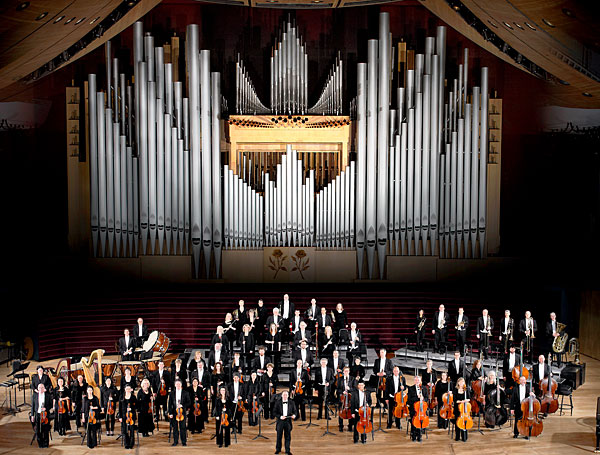
Last March, I had a rare experience akin to hearing the same recording through two different systems. I heard Andris Nelsons conduct the Vienna Philharmonic Orchestra in the same program—Haydn's Symphony 90, and Brahms's Variations on a Theme by Haydn, followed by his Symphony 3—in two very different venues: UC Berkeley's Zellerbach Hall and, 50 miles north, Sonoma State University's Weill Hall.

Know Thyself: Audio Existentialism

Playing recorded music in the home is a complex, coded, cultural experience: We sit, we listen, we think and dream—and, when it feels just right, we admire. We admire who we are and how we arrived at this beautiful moment. This simple act of admiration is usually a happy sort of self-congratulatory expression of our basic desire to have meaningful as well as enjoyable experiences. We are proud of our good taste and love of music. But this type of listening can also provoke anxiety and self-recrimination. We ask ourselves why we like this music and not some other kind. What would my friends think if they knew I was listening to "truckin' wit' th' doo-dah man"—or Deodato?

The Quality Deficit

I grew up with a healthy disrespect—almost a dislike—for rich people. Though my home town, Winchester, Mass., is one of Boston's wealthier suburbs, and my father and grandfather were officers in a Boston-area company, my father grew up on a farm and I seemed to inherit his farm-grown distrust for those who have money.

Start Making Sense

Record-business profits peaked 20 years ago, just before Napster and other file-sharing sites turned their world upside down. There have been occasional surges, but the future of the Compact Disc looks bleak, and while income from downloaded files is still climbing, the shift of profitability from à la carte music sales to unlimited streaming on demand seems inevitable. The realignment is already underway—the vast majority of today's music listeners, young and old, haven't bought a CD, file, or LP in years. It pains me to admit it, but after hearing, at the 2014 Midem music exhibition, a presentation by Marc Geiger, of William Morris Endeavors, I was convinced that music-streaming companies are poised to reboot the industry. If Geiger's predictions are accurate, the music business will be more profitable than ever, and swell to $100 billion in 20 years or less (see www.youtube.com/watch?v=bcNsAR_FM5M&feature=share).

Why Music?

Why does music matter so much to so many of us? Some, like Stereophile's readers, go to great lengths to reproduce it in their homes with accuracy and impact, and build libraries of their favorite works. Others, like my daughters, don't care much about equipment, but find it hard to spend more than five minutes in a car without listening to music. We go to concerts, play instruments, hum tunes, sing. Why? Why does music seem to speak to so many more of us than do, say, painting, sculpture, poetry, architecture, or even literature?
Advertisement
Advertisement
Advertisement