In the continuing chronicles of indefensibly cheesy 70s metal bands…
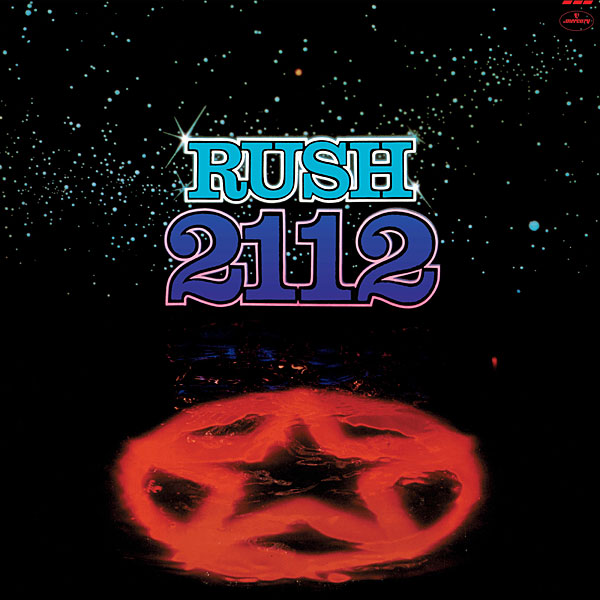
So the story goes that after Caress of Steel stiffed, undoubtedly because of tracks like the super indulgent and fairly leaden, 20-minute, “Fountain of Lamneth,” an early misguided attempt at heaviosity, the Canadian trio Rush knew they were about to be dropped by their label, if not the music business, the listening public and the entire human race, so they figured WTF. Deep into what Geddy Lee now calls their “kimono period,” the band wrote and recorded, 2112, (“Twenty One Twelve”) a record that makes them incredibly pretentious dorks or prog rock gods (in kimonos) depending on your taste and tolerance for Neil Peart-penned lyrics based on the turgid writings of Ayn Rand and a tale about worlds being taken over by The Priests of the Temples of Syrinx (pronounced Sear-Rinks).
In this futuristic tale, an innocent finds a guitar, presents it to the priests as a panacea for humanity, is rejected as being frivolous and eventually kills himself. Nothing dark or ridiculous there. A spoken word section that blares in a Big Brother monotone, “Attention all planets of solar federation: We have assumed control,” ends the epic “2112” that fills side one. While the ending is as muddled as the tale, all this is secondary to the band’s instrumental prowess which clearly by this time is growing more focused and real. And Lee’s one-of-a-kind high voice, ever the fall line for those who love or dismiss the band, is now in full wail. Most importantly for the future, and after 2112 they actually had a future, this is a band learning to write and ornament their prog rock jams with melodic hooks. The ballad “Tears,” where Geddy’s career as a tender crooner began and ended, is so soft that it’s almost a joke. Yet “Something for Nothing” is the kind of crisp rock tune they began to specialize in after this record. They also learned about iconography on 2112 when they came up with the Starman logo which appears inside the original album jacket. A naked white man, seen from behind, arms out as if to cushion the blow or push something away (probably those pesky priests), is set against a red, five-pointed star. This bit of Rush lore was memorialized for many years on the kick drum(s) of Neil Peart’s legendarily massive kit.
One of the ageless touchstones of prog/stoner rock, 2112, was quickly followed in the same year (1976) by a double live record, All The World’s A Stage, which in certain pressings was packaged in a purple trifold sleeve with lots of classic 70s backstage/onstage photos. Ahh, the halcyon days of the platform heel and the bell bottomed white suit. The live record, which like all 70’s live records was tweaked later in the studio, confirmed that the band had honed their material to a fine edge. Again, like a lot of live records from that period, it served as a greatest hits collection that ultimately broke the band to the larger world. Recorded at Toronto’s Massey Hall and opening with the one-two punch of “Bastille Day” and “Anthem” (after the introduction, “Oh won’t you please welcome home, RUSH!”) All The World’s a Stage roars through the entire “2112,” a spirited performance of the band’s other great teenage boy epic, “By-Tor and the Snow Dog” and closes its 12 tracks with the band’s first hit, “Working Man.”
Taken together, these two records close out the “early” Rush period, and both have now been reissued on LP for the first time since the mid-1980s by Universal Music. Compared to both the original LPs and two generations of CDs, the new 200 gram pressings hold their own as far as presence and power go. Both are DMM (Direct Metal Mastering), and both come with a download card that boasts that it accesses 320 kbps vinyl-ripped AAC MP4s. These new reissues have also put a serious dent in the market for original pressings, which until recently had reached the kind of prices that could make Rush fans with sensible limits on their bank accounts, strike the same pose as the Starman.