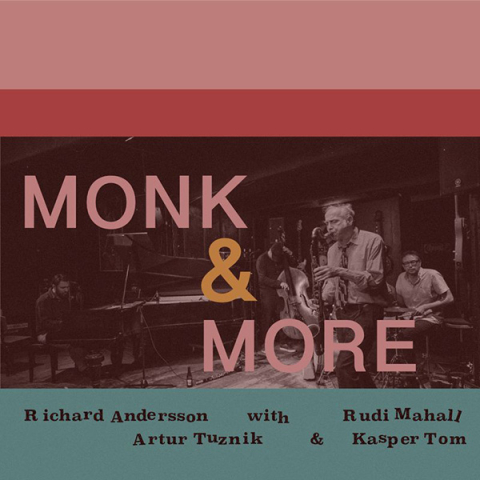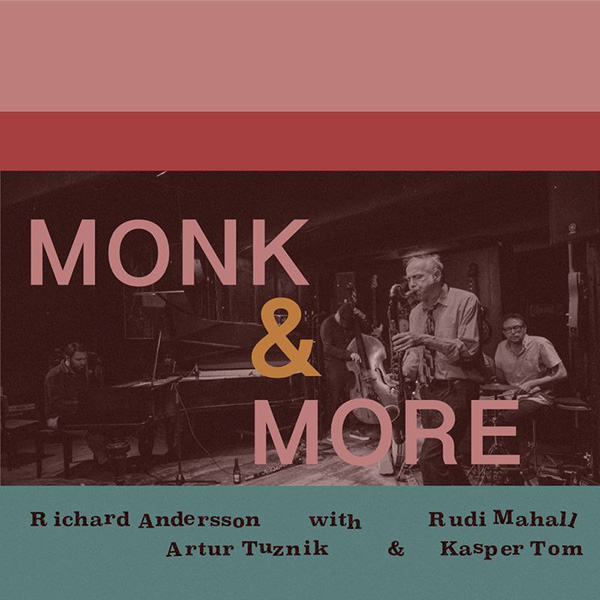
Richard Andersson: Monk & More
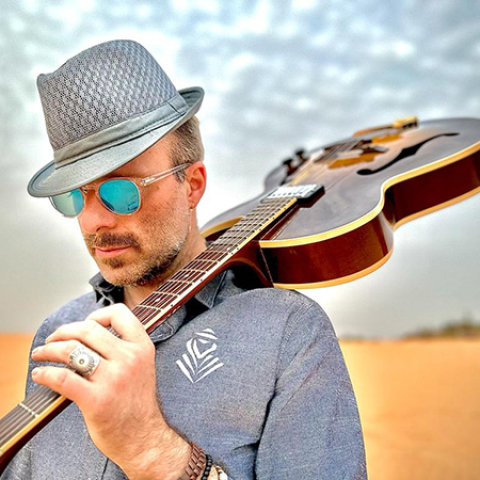
Richard Andersson, bass; Rudi Mahall, clarinets; Artur Tuznik, piano; Kasper Tom, drums
Hobby Horse HH32 (CD). 2026. Andersson, prod.; Simon Mariegaard, eng.
Performance ****½
Sonics ***½ I saw Rudi Mahall for the first time in 2009 at the Oslo Jazz Festival, in a band led by Alexander von Schlippenbach. I thought he was the best bass clarinet player I had ever heard, with the possible exception of Eric Dolphy. I have kept an eye out for Mahall ever since. He is German, and his name pops up occasionally in the European jazz press. But I have never come into possession of a record with him on it. Until now. Monk & More presents an international quartet led by Danish bassist Richard Andersson. Mahall is as extraordinary as I remembered. He plays a secondary, specialized instrument. The tall, thin body of the bass clarinet, with its bell at the bottom curving upward, looks avant-garde before it plays a note. Its range can exceed four octaves. Its sound is deep at the bottom and brilliantly bright at the top, with a rich, mellifluous middle register.
When a master like Mahall flies up and down this horn, with such a huge spectrum of notes at his fingertips, the capacity for expression is vast. Monk & More contains nine jazz standards, five by Monk. Of Monk's many interpreters, Mahall is unique. He obviously loves Monk's melodies almost as much as he loves blowing them up. It is a rush to hear him bend "We See" and "Trinkle Tinkle" to his will. Two Monk ballads are epic. Mahall sounds like he is pushing and extending "Ask Me Now" from deep inside the song, searching for answers to Monk's inherent mysteries. Mahall eats medium tempos for breakfast. His "Pannonica" is lovely and strange and definitive. Of the four other tracks, the most striking is the reinvention of Ornette Coleman's "The Blessing."
Andersson and Polish pianist Artur Tuznik are clever soloists, here tasked with following Mahall. They survive.—Thomas Conrad
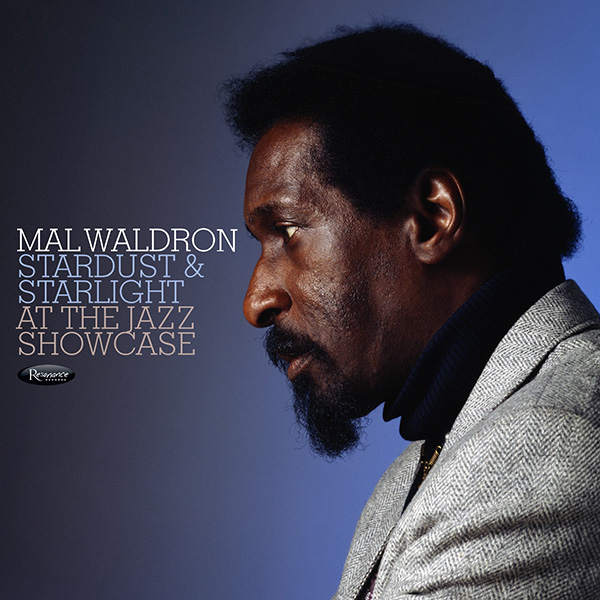 Mal Waldron: Starlight & Sunlight: At the Jazz Showcase
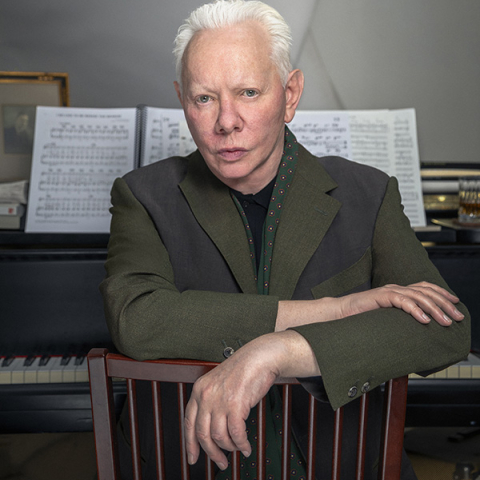
Mal Waldron, piano; three others
Resonance HCD-2087 (CD; available as LP). 1979/2026. Zev Feldman, Joe Alterman, prods.; George Klabin, Matthew Lutthans, Joe Lizzi, sound restoration.
Performance ****
Sonics ***½
Zev Feldman is the preeminent current producer of historical jazz recordings. His latest project taps into the vast tape archives of Joe Segal, who ran the Jazz Showcase in Chicago from 1947 until his death at 94 in 2020. (His son Wayne still operates the venue.) Segal brought the best jazz musicians to Chicago and taped thousands of shows.
When Mal Waldron hit Chicago, he was in the middle of a long, diversified, distinguished career. On an August night in 1979, he played Segal's club with its house rhythm section, bassist Steve Rodby and drummer Wilbur Campbell. Saxophonist Sonny Stitt sat in on two tunes. Although Waldron was associated with left-of-center jazz, on this night he played standards and bebop.
The resulting album, Starlight & Sunlight—one of four releases in Feldman's opening Jazz Showcase salvo—will remind you what a unique piano artist Waldron was. He could be one of the slowest, starkest, moodiest, most deliberate pianists ever. On "I Thought About You" and "'Round Midnight," he chooses chords as though his life depended on them, in a rapt process of searching and discovery. When he portrays these melodies, it feels like he carves them from granite. Few jazz pianists have been so committed to space and silence. Sometimes his reliance on repetition risks stasis. But on pieces like "It Could Happen to You," he draws you into his solemnity. He casts a spell. When Stitt joins, the spell is not broken because he is caught up in Waldron's aura. Reaching and striving, Stitt burns "Old Folks" and "Stardust" into Chicago's summer night air.
Soundboard tapes (from which this album originated) are a crapshoot. The tapes here must have so far been okay. They benefit from restoration by three engineers.—Thomas Conrad
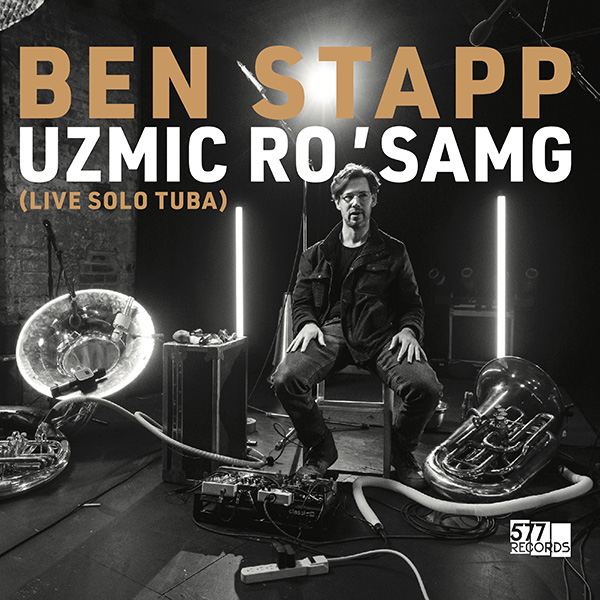 Ben Stapp: Uzmic Ro'Samg (Live Solo Tuba)
Ben Stapp, tuba, sousaphone, pedals, extensions
577 (CD, Digital). 2025. Ben Stapp, prod.; Murat Çolak, eng.
Performance ****
Sonics **** As I was previewing Ben Stapp's Uzmic Ro'Samg, my thoughts drifted to Jim Self, who passed away 10 days after the album's release. If you don't recognize the name, you know who he is: Self is the voice of the alien mothership at the end of Close Encounters of the Third Kind, still one of the highest-profile tuba performances on record.
Uzmic Ro'Samg was recorded live in the cavernous basement of a Brooklyn instrument store—lending it similar cetacean heft. In fact, this solo-tuba album is just as otherworldly as the Close Encounters music, and it plays a similar role: It's companion music to an in-progress science-fiction work involving figures Stapp calls "Keepers," with intriguing titles like "Klonopod," "Moonship," and "Galactic Plankton." Each Keeper has a track dedicated to it.
A 2010 listing of solo tuba recordings from 1982 onward (300 entries, total) encompassed classical, avant-garde, jazz, and unclassifiable. Uzmic Ro'Samg falls into all those categories. It is not for casual listening. It is not for listening alone in the dark. It may not be for listening at all but rather absorption through pores or hair follicles, or transmogrified and swallowed through vibrating of the teeth.
The opener, "Klonopod," is both evocative and invocative. It is followed by the maelstromic "Sciastica Neon." On the title track, the name of which refers to dark matter inside a nebula, Stapp approximates a harmonica sucked through a black hole. In the middle of the album are two of the longer pieces: "Oss," which is practically a classical étude, and "Freya," which is operatic, apocalyptic, the wildest piece of the set. There are several shorter palate cleansers, but they are more like chasing sulfuric acid with bleach.
In the midst of all this is the tragically beautiful "Eono," the final lament of a dying star.—Andrey Henkin
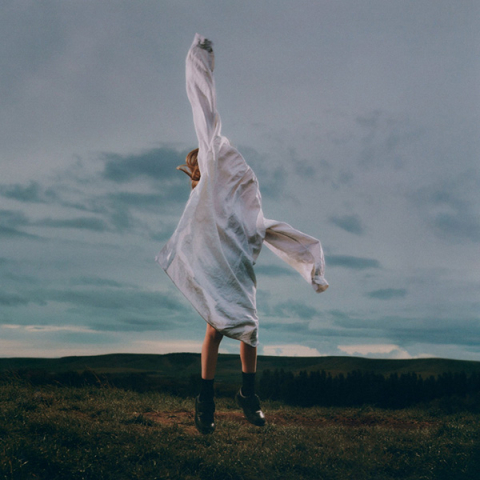
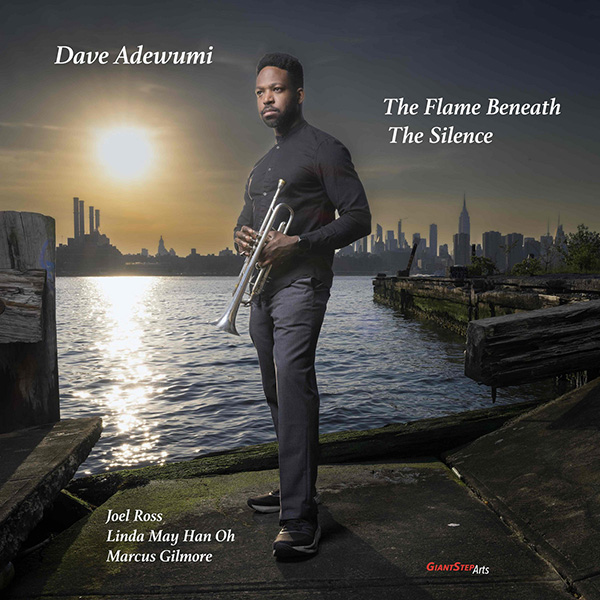 Dave Adewumi: The Flame Beneath the Silence
Adewumi, trumpet; Joel Ross, vibraphone; Linda May Han Oh, bass; Marcus Gilmore, drums
Giant Step Arts GSA 19 (CD). 2026. Adewumi, Jimmy Katz, prods.; Katz, James Kogan, engs.
Performance ****½
Sonics ****½ As a generalization, jazz people are abnormally in need of the new. That's why they gravitate to the art form that offers both improvisation (which is forever new by definition) and continuous experimentation. This album, Dave Adewumi's debut as a leader, is exciting from the first notes of the opening title track, because it is instantly clear that Adewumi is something different. The piece is not so much a song as a specific creative process: brooding trumpet gestures intensifying into obsessive runs; sputtering growls; soaring ascents; the complications of sudden intervallic leaps. High stabs alternate with repetitive figures like mantras.
To do what Adewumi does requires chops of doom. Yet his work is gritty, like the world. This record was not perfected in the studio. It is here as it went down, live, over two nights in Ornithology, a jazz hangout in Brooklyn. Adewumi acts in the moment. His split-second decisions have some rough edges because they are motivated by extreme inner necessity.
At this early point in his career, all Adewumi compositions and improvisations are rife with hard edges and sharp angles. Their lyricism is unique to himself and never obvious. To perceive it requires creative listening. What he plays spans many moods. "Abandon" is a slow, drawn-out plea, deep with self-exposure, like a prayer. The culmination of the album is the powerful final piece, "The Light You Left Behind." It contains a stunning diversity of fresh but targeted trumpet ideas.
The rest of the quartet is world-class. They surround Adewumi with intelligence and beauty and take compelling solos of their own, especially Joel Ross. But the news is the leader. Adewumi is the most promising trumpet talent to enter jazz since Ambrose Akinmusire.—Thomas Conrad
Richard Andersson, bass; Rudi Mahall, clarinets; Artur Tuznik, piano; Kasper Tom, drums
Hobby Horse HH32 (CD). 2026. Andersson, prod.; Simon Mariegaard, eng.
Performance ****½
Sonics ***½ I saw Rudi Mahall for the first time in 2009 at the Oslo Jazz Festival, in a band led by Alexander von Schlippenbach. I thought he was the best bass clarinet player I had ever heard, with the possible exception of Eric Dolphy. I have kept an eye out for Mahall ever since. He is German, and his name pops up occasionally in the European jazz press. But I have never come into possession of a record with him on it. Until now. Monk & More presents an international quartet led by Danish bassist Richard Andersson. Mahall is as extraordinary as I remembered. He plays a secondary, specialized instrument. The tall, thin body of the bass clarinet, with its bell at the bottom curving upward, looks avant-garde before it plays a note. Its range can exceed four octaves. Its sound is deep at the bottom and brilliantly bright at the top, with a rich, mellifluous middle register.
Mal Waldron: Starlight & Sunlight: At the Jazz ShowcaseMal Waldron, piano; three others
Resonance HCD-2087 (CD; available as LP). 1979/2026. Zev Feldman, Joe Alterman, prods.; George Klabin, Matthew Lutthans, Joe Lizzi, sound restoration.
Performance ****
Sonics ***½
Ben Stapp: Uzmic Ro'Samg (Live Solo Tuba)Ben Stapp, tuba, sousaphone, pedals, extensions
577 (CD, Digital). 2025. Ben Stapp, prod.; Murat Çolak, eng.
Performance ****
Sonics **** As I was previewing Ben Stapp's Uzmic Ro'Samg, my thoughts drifted to Jim Self, who passed away 10 days after the album's release. If you don't recognize the name, you know who he is: Self is the voice of the alien mothership at the end of Close Encounters of the Third Kind, still one of the highest-profile tuba performances on record.
Dave Adewumi: The Flame Beneath the SilenceAdewumi, trumpet; Joel Ross, vibraphone; Linda May Han Oh, bass; Marcus Gilmore, drums
Giant Step Arts GSA 19 (CD). 2026. Adewumi, Jimmy Katz, prods.; Katz, James Kogan, engs.
Performance ****½
Sonics ****½ As a generalization, jazz people are abnormally in need of the new. That's why they gravitate to the art form that offers both improvisation (which is forever new by definition) and continuous experimentation. This album, Dave Adewumi's debut as a leader, is exciting from the first notes of the opening title track, because it is instantly clear that Adewumi is something different. The piece is not so much a song as a specific creative process: brooding trumpet gestures intensifying into obsessive runs; sputtering growls; soaring ascents; the complications of sudden intervallic leaps. High stabs alternate with repetitive figures like mantras.