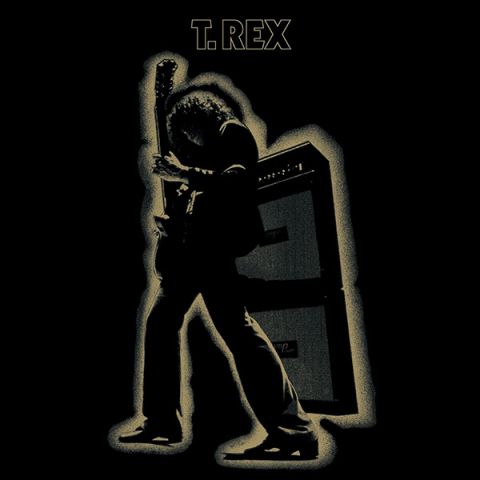
T. Rex: Electric Warrior
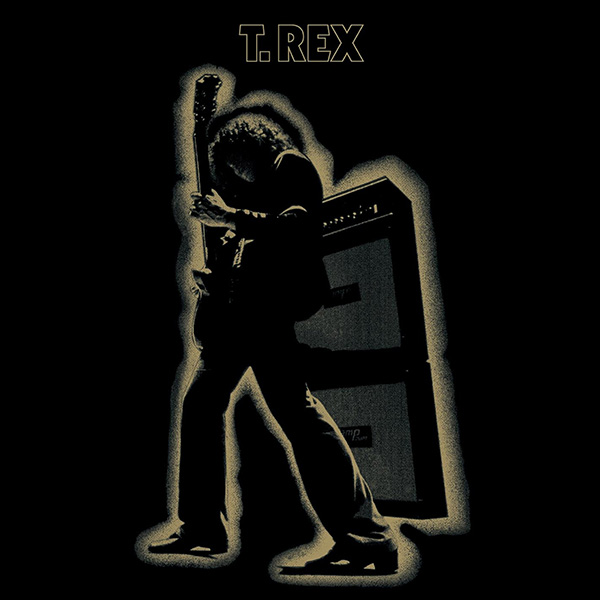
Reprise RHF1 6466081227806538 (180gm LP). 2026. Tony Visconti, orig. prod.; Rik Pekkonen, Malcolm Cecil, others, orig. engs.; Patrick Milligan, reissue project supervision.
Performance ****½
Sonics ****½ Once Marc Bolan uttered the famous line "You're dirty sweet and you're my girl" (from "Get It On (Bang a Gong)"), it was clear that Electric Warrior had transformed the former Tolkien-enthralled folkie into a luminous star. Suddenly wearing glitter eye shadow and tight trousers, Bolan personified the snarling, scrumptious androgyny and costumed excess that would come to exemplify glam rock. Indeed, this album's slightly menacing attitude and razor-edged guitars form one of the founding documents of glam. With a melody vaguely lifted from a Willie Dixon blues tune, "Jeepster" with its buzzy guitar lines is a perky love song that's sold by the crackling guitars and Bolan's undulating vocals. "Monolith" shoulda been a hit, but, renamed in the US with a new prefix, "Get It On (Bang a Gong)" remains T. Rex's only breakthrough single. There are moments in the current rage to reissue everything ever put on tape (and increasingly from digital capture as well) when even vinyl addicts must wonder: How many reissues are enough?
Sonically, this new cut of this timeless artifact by the inestimable Kevin Gray accents details in the Tony Visconti–produced mix. The horns, strings, and Bolan's electric guitar have never been crisper. At $39, pressed at Optimal in Germany, the quality-to-price balance is reasonable. For über collectors, there's also a singles edition of the album ($90) that includes a pair of 7", 33 1/3rpm EPs that contain three and four songs. Only one tune on the singles package, the hit "Get It On (Bang a Gong)," is also on the full album. New liner notes from Visconti are mostly vague, but they provide this gem about Marc's vision for recording: "Marc never did many takes. He didn't want perfection; he wanted vibe and swagger."—Robert Baird
 Tasha Warren & Dave Eggar: MotherLoad
Tasha Warren, bass clarinet, clarinet; Dave Eggar, cello
Bright Shiny Things BSTC-0237 (CD; reviewed as 24/96). 2026. Phil Faconti, Andy Waldeck, Louis Levitt, Johnny Nice, Mike Stephenson, Matt Hall, Jim Price, Jake Palumbo, engs.
Performance ****
Sonics ****
Welcome to MotherLoad, one of an increasing number of recordings in which multiple genres (eg, classical, pop, New Age, and jazz) meld into an inviting multitracked wash. Here, sonic naturalism takes second place to carefully constructed sonic environments designed to warm, lull, and seduce.
"Dave [Eggar] and I were inspired to create this album as a reaction to the struggle we feel in trying to feel grounded in our rapidly changing world," Tasha Warren writes in the album's introductory note. "How do we find inner peace amid chaos?" The answer: through the varied compositions of seven mothers, including Priya Darshini (previously recorded, and fabulously so, by Chesky Records), Norah Jones, Dika Chartoff, Jessica Rose Weiss, Anne Drummond, the marvelous vocalist Martha Redbone, and Warren herself, with assistance from what may be two men.
MotherLoad claims to respond to "lullabies of a distant childhood—the innocence of recent past" by exploring issues of motherhood, sanctuary, balance, conflict, and reconciliation. You might assume that the album's seven "lullabies" are variations of Brahms's and Schubert's wiegenlieder (lullabies), but you'll quickly discover a very different musical language in which some compositions transport you not to sleep, but to jazz and celebration.
A highlight of the whole album is the deeply satisfying timbre of Warren's bass clarinet. A standout track is Redbone, Eggar, and Warren's "I am Too from the Womb," in which those three artists join forces with Phil Faconti's guitar, Dan Sadownick's percussion, the Gatoori Primary School Children's Choir in Mutunduri, Kenya, and the Main Street Kids of Tazewell County, Tennessee. A Smorgasbord Worth Grazing.—Jason Victor Serinus
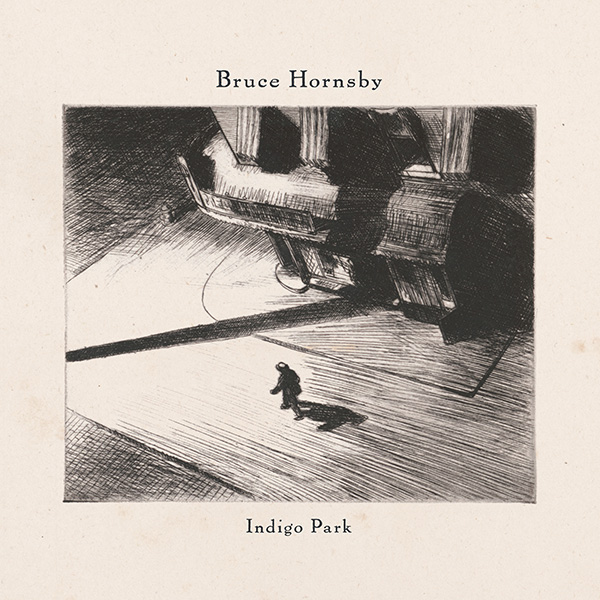 Bruce Hornsby: Indigo Park
Thirty Tigers (LP). 2026. Tony Berg, Bruce Hornsby, prods.; Will Maclellan, eng.
Performance ***
Sonics ****
Hornsby emerged in 1986 with The Way It Is, a fresh take on piano-centered rock. His sound carried a sophistication that leaned toward jazz while incorporating elements of bluegrass and other genres. Some listeners found that polish overly commercial, leading Hornsby to push farther into more eclectic territory, experimenting with hip-hop samples and other contemporary textures to push his sound forward. Alongside these studio explorations, Hornsby maintained a broader accessibility through collaborations and side projects, playing with the Grateful Dead, composing film scores, and writing with Don Henley, among others. Those experiences seemed to ease his transition into the more abstract and exploratory phase of his career.
Indigo Park underscores just how far he has moved from the sound that first brought him acclaim. At times, the album feels like a private conversation. The pieces don't always cohere; shifts in tone and structure can feel abrupt, and the record's pursuit of eccentricity occasionally comes across as forced rather than organic.
The title track opens in familiar territory, offering a brief sense of grounding before the album veers into more challenging terrain. Tracks like "Silhouette Shadows," with its nursery-rhyme approach, and "Ecstatic," featuring a rap-influenced vocal delivery, may test the patience of even longtime fans. Guest appearances, such as Bonnie Raitt's, do little to elevate these moments to the level one might expect.
Indigo Park is not without rewards. Bob Weir appears on "Might as Well Be Me." Weir's weathered vocal performance adds a layer of poignancy, though it also underscores the unevenness that runs through the record. "Take a Light Strain" stands out as a reminder of Hornsby's early brilliance. It is expansive, melodic, and emotionally resonant, a moment of clarity on an otherwise fragmented album.—Ray Chelstowski
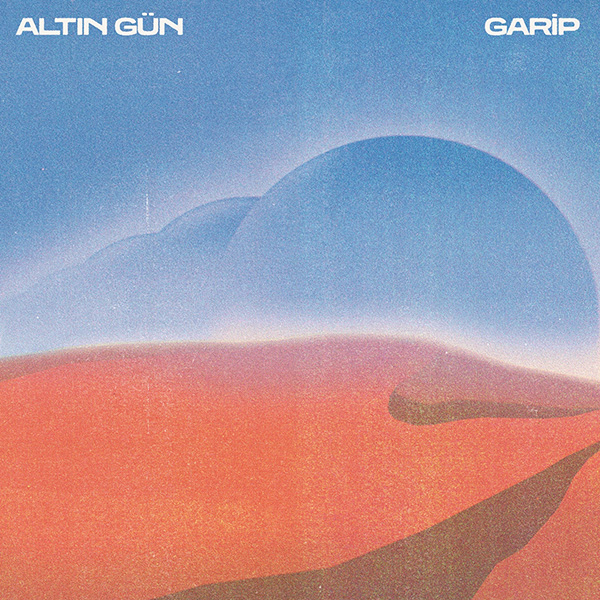 Altin Gün: Garip
ATO 0705 (LP). 2026. Altin Gün, prod.; Jan Schenk, eng.; Jasper Geluk, mix eng.
Performance ****
Sonics **** Apparently musical hybrids are the future of popular music. They're certainly the present. They account for much of today's most interesting and forward-looking music. Led by singer/songwriter Erdinç Ecevit Yildiz, in 2016, a mix of Dutch and Turkish musicians blended together in Amsterdam to form a band, which mixes acoustic and electronic instruments. Altin Gün is yet another example of how inclusive the definition of "rock band" has become. Garip, which translates to "Strange," is the band's sixth album, but it's the first as a quintet following the departure of vocalist/keyboard player Merve Daşdemir. Daşdemir was one of the band's most distinctive voices.
Ecevit rises to the challenge, leading one of the band's liveliest albums so far. Here, swirling electric psychedelia, a very au courant trend in today's rock-oriented music, mixes with lively, cinematic covers of songs by revered Turkish folk singer/songwriter Neşet Ertaş. On the upbeat "Öldurme Beni," insistent rhythmic chords on acoustic guitar, performed by Thijs Elzinga, are the structure around which Ecevit glides into spiraling, ebullient synthesizer solos. To the dramatic rhythms of "Gel Yanima Gel" and Ecevit's sax playing, the group adds a touch of reverb and the strings of the Stockholm Studio Orchestra. The result is a classic example of the band's trademark energy and exploration.
Lyrically, longing for love was often Ertaş's subject, and here, in the slashing, rocked-up opener "Neredesin Sen," the words speak of hunger for "The one who feels all my sorrows, the one/who knows my heart."
Many of the songs are fast, bouncy jams, but the band's style translates well to almost-ballads like the finale, "Bir Nazar Eyledim," where Ecevit stretches out as vocalist over a quiet bed of swelling synths and subdued drumming.—Robert Baird
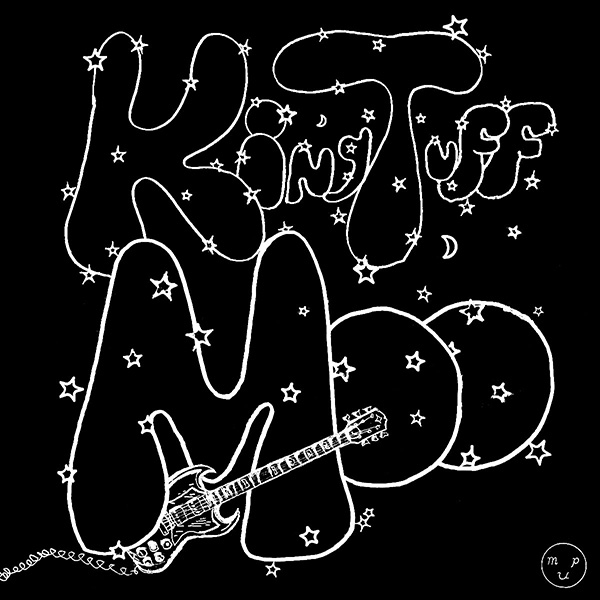 King Tuff: Moo
MUP (CD). 2026. King Tuff, prod., eng.
Performance ****
Sonics ***** Over more than two decades, Kyle Thomas has crafted an unpolished strain of rock under the name King Tuff. His music has always felt raw, channeling the spirit of Thin Lizzy but with less concern for hitmaking. King Tuff has long embraced a lo-fi, garage aesthetic built on instinct, imperfection, and a belief that rock music should feel lived in rather than labored over. There's a looseness that feels intentional. After a brief detour across two albums that leaned into a more refined, more produced sound, Thomas returns to his roots with Moo. The shift feels deliberate, and it's revitalizing. Here, Thomas reconnects with the stripped-down spirit that defined his earliest sound. Lyrically, Moo reflects on his time in Los Angeles, the unpredictability of life as a working musician, and the pull to return to a more intuitive creative process. He recorded Moo on a Tascam 388 in the woods of Vermont—the same setup and technique used for his early work. Tracks like "Stairway to Nowhere" and "Invisible Ink" blend garage-rock grit with playful, narrative songwriting. The songs are driven forward by the wiry sound of Thomas's Gibson SG and punchy, unvarnished drums played by one of the album's three drummers.
The record's centerpiece, "East of Ordinary," stretches beyond that scrappy framework into something more expansive. It's big and brassy, echoing the glam swagger of Marc Bolan while channeling the melodic ease of Tom Petty. There's even a hint of downtown romanticism reminiscent of Jesse Malin. The track encapsulates the album's core idea: a return journey that revisits familiar ground while folding in hard-earned perspective.
Moo doesn't reinvent King Tuff 's sound; it reaffirms it. And in doing so, Thomas reminds you that sometimes the most compelling evolution is simply finding your way back to what made the music feel alive in the first place.—Ray Chelstowski
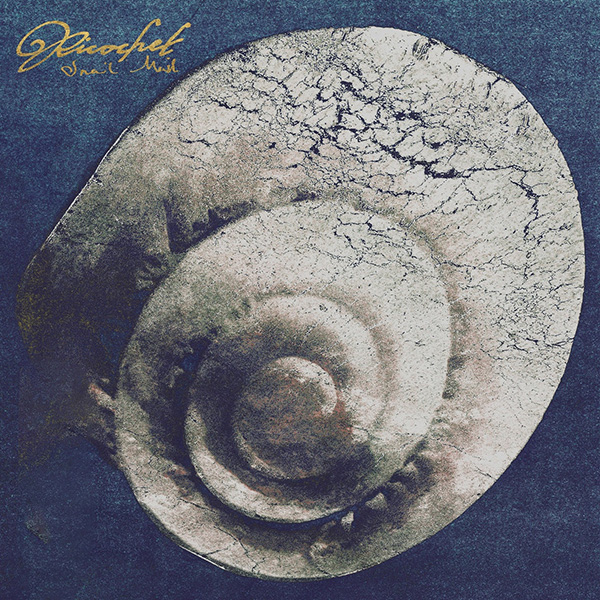 Snail Mail: Ricochet
Matador (CD). 2026. Aron Kobayashi Ritch, prod., eng.
Performance ****
Sonics ***** "Tractor Beam," the lush and expansive opening track on Ricochet, wastes no time reaching altitude. Its confident introduction draws listeners in. Snail Mail leader Lindsey Jordan cleverly pulls a sample from "Peaches" by The Presidents of the United States of America, tapping a vein of off beat nostalgia. The moment lands, hooks you, then disappears almost as quickly as it arrives. It's disorienting in the best way. Jordan hasn't just grabbed your attention; she's also stirred something deeper, and you're eager to follow wherever she goes next.
"Light On Our Feet" stands out. It begins with a marching snare roll, almost drum corps–like, before unfolding into a delicate wash of cello. Here, Jordan's vocals feel perfectly calibrated to her compositions, balancing restraint and release with remarkable precision. The result is intimate without being fragile.
A dreamy sensibility runs throughout the album, but it never drifts into dreaminess. On "Agony Freak," lemon-squeezed guitar tones cut through the haze, adding tension and texture. Jordan keeps a firm grasp on the line, ensuring that the songs never float too far out of reach, like a balloon. The guitars dig deeper on "Dead End." Their bite reasserts the album's rock foundation.
For years, Jordan has been kept in the "sad girl singer" box and criticized for her lilting vocal style, and Jordan's lyrics aren't Pulitzer material: "She lays by the pool in the summer/The end was such a bummer/Vitriol and on and on/I know you'll miss me when I'm gone," she sings on "Tractor Beam." But on Ricochet, her voice—set against crisp, assertive guitars and more dynamic arrangements—takes a sharper edge without sacrificing its key emotional core.
Ricochet rewards both full-volume immersion and quieter, more reflective listening. Jordan's latest music is confident and expansive, unconfined by the expectations that once defined her.—Ray Chelstowski
Reprise RHF1 6466081227806538 (180gm LP). 2026. Tony Visconti, orig. prod.; Rik Pekkonen, Malcolm Cecil, others, orig. engs.; Patrick Milligan, reissue project supervision.
Performance ****½
Sonics ****½ Once Marc Bolan uttered the famous line "You're dirty sweet and you're my girl" (from "Get It On (Bang a Gong)"), it was clear that Electric Warrior had transformed the former Tolkien-enthralled folkie into a luminous star. Suddenly wearing glitter eye shadow and tight trousers, Bolan personified the snarling, scrumptious androgyny and costumed excess that would come to exemplify glam rock. Indeed, this album's slightly menacing attitude and razor-edged guitars form one of the founding documents of glam. With a melody vaguely lifted from a Willie Dixon blues tune, "Jeepster" with its buzzy guitar lines is a perky love song that's sold by the crackling guitars and Bolan's undulating vocals. "Monolith" shoulda been a hit, but, renamed in the US with a new prefix, "Get It On (Bang a Gong)" remains T. Rex's only breakthrough single. There are moments in the current rage to reissue everything ever put on tape (and increasingly from digital capture as well) when even vinyl addicts must wonder: How many reissues are enough?
Tasha Warren & Dave Eggar: MotherLoadTasha Warren, bass clarinet, clarinet; Dave Eggar, cello
Bright Shiny Things BSTC-0237 (CD; reviewed as 24/96). 2026. Phil Faconti, Andy Waldeck, Louis Levitt, Johnny Nice, Mike Stephenson, Matt Hall, Jim Price, Jake Palumbo, engs.
Performance ****
Sonics ****
Welcome to MotherLoad, one of an increasing number of recordings in which multiple genres (eg, classical, pop, New Age, and jazz) meld into an inviting multitracked wash. Here, sonic naturalism takes second place to carefully constructed sonic environments designed to warm, lull, and seduce.
Bruce Hornsby: Indigo ParkThirty Tigers (LP). 2026. Tony Berg, Bruce Hornsby, prods.; Will Maclellan, eng.
Performance ***
Sonics ****
Hornsby emerged in 1986 with The Way It Is, a fresh take on piano-centered rock. His sound carried a sophistication that leaned toward jazz while incorporating elements of bluegrass and other genres. Some listeners found that polish overly commercial, leading Hornsby to push farther into more eclectic territory, experimenting with hip-hop samples and other contemporary textures to push his sound forward. Alongside these studio explorations, Hornsby maintained a broader accessibility through collaborations and side projects, playing with the Grateful Dead, composing film scores, and writing with Don Henley, among others. Those experiences seemed to ease his transition into the more abstract and exploratory phase of his career.
Altin Gün: GaripATO 0705 (LP). 2026. Altin Gün, prod.; Jan Schenk, eng.; Jasper Geluk, mix eng.
Performance ****
Sonics **** Apparently musical hybrids are the future of popular music. They're certainly the present. They account for much of today's most interesting and forward-looking music. Led by singer/songwriter Erdinç Ecevit Yildiz, in 2016, a mix of Dutch and Turkish musicians blended together in Amsterdam to form a band, which mixes acoustic and electronic instruments. Altin Gün is yet another example of how inclusive the definition of "rock band" has become. Garip, which translates to "Strange," is the band's sixth album, but it's the first as a quintet following the departure of vocalist/keyboard player Merve Daşdemir. Daşdemir was one of the band's most distinctive voices.
King Tuff: MooMUP (CD). 2026. King Tuff, prod., eng.
Performance ****
Sonics ***** Over more than two decades, Kyle Thomas has crafted an unpolished strain of rock under the name King Tuff. His music has always felt raw, channeling the spirit of Thin Lizzy but with less concern for hitmaking. King Tuff has long embraced a lo-fi, garage aesthetic built on instinct, imperfection, and a belief that rock music should feel lived in rather than labored over. There's a looseness that feels intentional. After a brief detour across two albums that leaned into a more refined, more produced sound, Thomas returns to his roots with Moo. The shift feels deliberate, and it's revitalizing. Here, Thomas reconnects with the stripped-down spirit that defined his earliest sound. Lyrically, Moo reflects on his time in Los Angeles, the unpredictability of life as a working musician, and the pull to return to a more intuitive creative process. He recorded Moo on a Tascam 388 in the woods of Vermont—the same setup and technique used for his early work. Tracks like "Stairway to Nowhere" and "Invisible Ink" blend garage-rock grit with playful, narrative songwriting. The songs are driven forward by the wiry sound of Thomas's Gibson SG and punchy, unvarnished drums played by one of the album's three drummers.
Snail Mail: RicochetMatador (CD). 2026. Aron Kobayashi Ritch, prod., eng.
Performance ****
Sonics ***** "Tractor Beam," the lush and expansive opening track on Ricochet, wastes no time reaching altitude. Its confident introduction draws listeners in. Snail Mail leader Lindsey Jordan cleverly pulls a sample from "Peaches" by The Presidents of the United States of America, tapping a vein of off beat nostalgia. The moment lands, hooks you, then disappears almost as quickly as it arrives. It's disorienting in the best way. Jordan hasn't just grabbed your attention; she's also stirred something deeper, and you're eager to follow wherever she goes next.