International audio shows are a white-knuckle thrill ride for those who report on turntables, amplifiers, and loudspeakers. The moment I first entered one of the four colossal, cathedral-like "Halles" of High End Munich 2024, my brain short-circuited. The floor plan was useless. Coffee and choco-filled pastries were powerless. There was nothing to do but hurl myself headlong into the chaos.
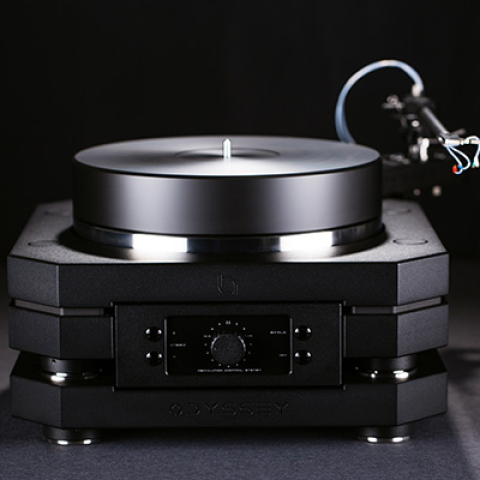
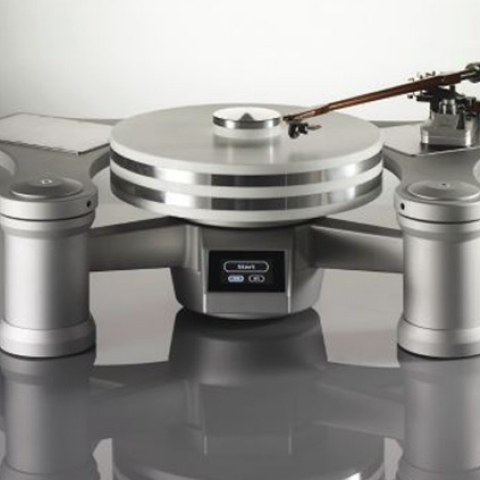
Among the products that gripped my senses that weekend, the Brutalist allure of the BennyAudio Odyssey Turntable ($45,000) spoke to me loudest. This was a brand I'd never heard of, and it was making magical sounds. "Sleek, powerful, massive, ... fully captivating" were my descriptors that spring day.
As BennyAudio founder Tomasz "Benny" (aka Tom) Franielczyk told Analog Planet Editor Mike Mettler, the Odyssey 'table "is the result of over seven years of research and experience. It is a turntable built from scratch. The main objective was to create a turntable that would surpass its older brother"—the Immersion II—"in every aspect. The drive system, platter bearing, platters, plinth, along with the base and tonearm were all redesigned from the ground up.
"The primary design focus is precise platter speed stability, advanced resonance control, and vibration management within both the turntable structure and the tonearm system," Franielczyk added.
Trained in IT and electronics, Franielczyk developed his first turntable concepts in 2017, with a focus on speed stability and vibration control. In 2019, the first commercial prototype, the T1, was introduced, in a limited run of three units. The T1 inspired the Immersion, which premiered in 2020, followed by the Odyssey.
Design
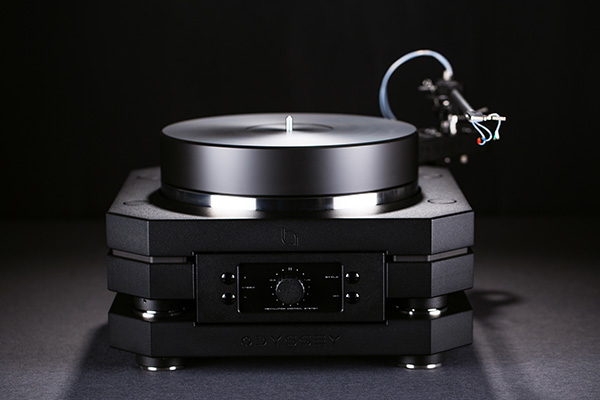
The Odyssey arrived at my New York City dugout like a clarion call. Measuring 15" wide × 10" high × 15" deep, it occupies space the way a war monument does: bold, declarative, serious. Think Bas Princen's Gothic Cooling Plant, Dubai: slightly sinister, quiet, bold. A gigantic spinning platter at its center. Mass, precision, silence. At 130lb, it was a chore to get up six flights of stairs.
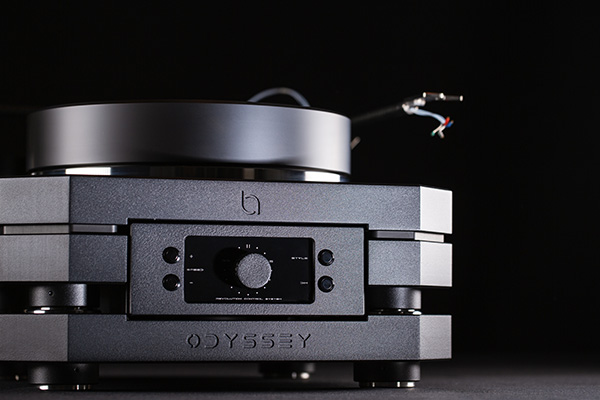
Powering the platter is a brushless (electronically commutated) three-phase, eight-pole, 20W motor governed by a Swiss-engineered driver and BennyAudio's custom-programmed microcontroller. The drive system employs a Delrin pulley and a 3mm round, vinyl methyl silicone (VMQ) elastomer belt and features soft start and stop, continuous speed control via an open-loop system that monitors and corrects platter speed after each revolution, adaptive speed correction with a range of ±8°, smooth torque adjustment, customizable backlighting, and a rotary control switch—all of Franielczyk's design.
 BennyAudio sources components from specialized manufacturers. "While I work independently in terms of engineering and design, manufacturing is supported by collaboration with top-tier local machining specialists," he explained. "These companies operate advanced CNC machinery and industrial-grade CAD/CAM systems and employ highly skilled technicians. Every Odyssey and Immersion unit is assembled, adjusted, and tested by me, personally."
The Odyssey's triple-layer platter is complex: an 11" upper section of black Delrin weighs 9lb; a substantial, 11" stainless steel midsection weighs 22lb; and an 8" lower sector of stainless steel rounds things out at an additional 7.25lb. That all adds up to 38.25lb. Four steel columns support the upper plinth structure; four more, capped with inverted porcelain cups, anchor the lower base.
The main bearing combines a hydrodynamic inverted sleeve, a 10mm ball made of YG8 (tungsten carbide with 8% cobalt, a serious upgrade in hardness and wear resistance on standard steel or ceramic), a Delrin base, and an aluminum body, each element chosen to minimize noise and maximize rotational stability. The plinth is built from three solid, 40mm-thick, CNC-machined aluminum layers with a 25mm section of POM thermoplastic sandwiched between the upper plates, isolating the bearing and platters from the vibrations that can muddy the signal.
"The platter bearing assembly is mounted within this internal POM layer," Benny explained. POM is polyoxymethylene, the generic equivalent of DuPont's Delrin. "This configuration places the bearing in the most mechanically isolated part of the structure, shielded from external disturbances and structural energy transmitted through the outer aluminum sections."
Rather than soft decoupling between layers, Odyssey uses "controlled impedance transition between materials of different mechanical characteristics": aluminum to POM, to manage energy propagation through the structure. Materials working together, not against each other.
Driven by that VMQ belt, the Odyssey takes about 20 seconds to reach 33 1/3rpm—the slowest ramp-up of any turntable I've reviewed. "This is intentional," Benny wrote. "The motor-control system uses a soft-start profile to reduce mechanical stress on the belt, avoid sudden load on the bearing assembly, prevent torque-shock transmission into the plinth and tonearm structure, and maintain long-term mechanical stability." A faster start, Benny noted, would "introduce higher instantaneous torque and unnecessary mechanical impulse into the system. The chosen ramp-up curve represents a controlled acceleration profile optimized for bearing longevity, belt durability, and vibration minimization. In practical use, 20 seconds is relatively short for a high-mass, 60kg turntable with a multiplatter assembly."
The motor-control system is built around Benny's own custom-programmed firmware: torque management, soft-start, open-loop correction, and interpolation-based speed control—all written and optimized in-house. "This ensures that the mechanical and electronic aspects of the system function as a unified structure," he explained, "rather than as separate modules designed by unrelated teams." On the Odyssey, everything answers to the same vision.
BennyAudio sources components from specialized manufacturers. "While I work independently in terms of engineering and design, manufacturing is supported by collaboration with top-tier local machining specialists," he explained. "These companies operate advanced CNC machinery and industrial-grade CAD/CAM systems and employ highly skilled technicians. Every Odyssey and Immersion unit is assembled, adjusted, and tested by me, personally."
The Odyssey's triple-layer platter is complex: an 11" upper section of black Delrin weighs 9lb; a substantial, 11" stainless steel midsection weighs 22lb; and an 8" lower sector of stainless steel rounds things out at an additional 7.25lb. That all adds up to 38.25lb. Four steel columns support the upper plinth structure; four more, capped with inverted porcelain cups, anchor the lower base.
The main bearing combines a hydrodynamic inverted sleeve, a 10mm ball made of YG8 (tungsten carbide with 8% cobalt, a serious upgrade in hardness and wear resistance on standard steel or ceramic), a Delrin base, and an aluminum body, each element chosen to minimize noise and maximize rotational stability. The plinth is built from three solid, 40mm-thick, CNC-machined aluminum layers with a 25mm section of POM thermoplastic sandwiched between the upper plates, isolating the bearing and platters from the vibrations that can muddy the signal.
"The platter bearing assembly is mounted within this internal POM layer," Benny explained. POM is polyoxymethylene, the generic equivalent of DuPont's Delrin. "This configuration places the bearing in the most mechanically isolated part of the structure, shielded from external disturbances and structural energy transmitted through the outer aluminum sections."
Rather than soft decoupling between layers, Odyssey uses "controlled impedance transition between materials of different mechanical characteristics": aluminum to POM, to manage energy propagation through the structure. Materials working together, not against each other.
Driven by that VMQ belt, the Odyssey takes about 20 seconds to reach 33 1/3rpm—the slowest ramp-up of any turntable I've reviewed. "This is intentional," Benny wrote. "The motor-control system uses a soft-start profile to reduce mechanical stress on the belt, avoid sudden load on the bearing assembly, prevent torque-shock transmission into the plinth and tonearm structure, and maintain long-term mechanical stability." A faster start, Benny noted, would "introduce higher instantaneous torque and unnecessary mechanical impulse into the system. The chosen ramp-up curve represents a controlled acceleration profile optimized for bearing longevity, belt durability, and vibration minimization. In practical use, 20 seconds is relatively short for a high-mass, 60kg turntable with a multiplatter assembly."
The motor-control system is built around Benny's own custom-programmed firmware: torque management, soft-start, open-loop correction, and interpolation-based speed control—all written and optimized in-house. "This ensures that the mechanical and electronic aspects of the system function as a unified structure," he explained, "rather than as separate modules designed by unrelated teams." On the Odyssey, everything answers to the same vision.
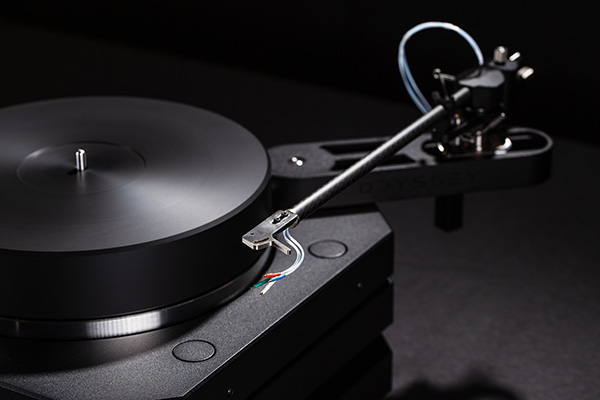 The Odyssey's heavy-duty outboard armboard accommodates arms from 8" to 14", with four mounting points on the plinth. The 14" arm's effective mass ranges between 18gm and 30gm depending on whether a carbon fiber or titanium headshell is used. The internal wiring is silver core.
Why unipivot? "Traditional unipivot tonearms are known for lateral instability and floating azimuth," he said. "That historical weakness has been eliminated in this design." Lateral stabilization is achieved through the pivot geometry. The arm doesn't tilt outward or drift. Azimuth is factory-set with high machining precision; fine adjustment remains possible via a screw on the tonearm, but in normal operation, no correction is needed.
Is the 14" arm resonance-free? "That would be physically impossible," Benny replied. "The correct interpretation is that no dominant high-Q structural resonance peaks were observed within the audible band under controlled excitation conditions. My measurements did not analyze the audio signal. They analyzed mechanical vibration amplitude ... as a function of frequency. The purpose was to identify frequency-dependent structural vibration amplification, narrow-band resonance spikes, and correlation between excitation frequency and vibration amplitude. Both vertical and lateral vibration axes were tested.
"The goal was never a 'dead' arm but to prevent narrow-band, high-amplitude structural peaks, maintain rigidity and speed, avoid energy storage and delayed release, [and] ensure that the tonearm does not interfere with cartridge vibration behavior."
Setup
The Odyssey's heavy-duty outboard armboard accommodates arms from 8" to 14", with four mounting points on the plinth. The 14" arm's effective mass ranges between 18gm and 30gm depending on whether a carbon fiber or titanium headshell is used. The internal wiring is silver core.
Why unipivot? "Traditional unipivot tonearms are known for lateral instability and floating azimuth," he said. "That historical weakness has been eliminated in this design." Lateral stabilization is achieved through the pivot geometry. The arm doesn't tilt outward or drift. Azimuth is factory-set with high machining precision; fine adjustment remains possible via a screw on the tonearm, but in normal operation, no correction is needed.
Is the 14" arm resonance-free? "That would be physically impossible," Benny replied. "The correct interpretation is that no dominant high-Q structural resonance peaks were observed within the audible band under controlled excitation conditions. My measurements did not analyze the audio signal. They analyzed mechanical vibration amplitude ... as a function of frequency. The purpose was to identify frequency-dependent structural vibration amplification, narrow-band resonance spikes, and correlation between excitation frequency and vibration amplitude. Both vertical and lateral vibration axes were tested.
"The goal was never a 'dead' arm but to prevent narrow-band, high-amplitude structural peaks, maintain rigidity and speed, avoid energy storage and delayed release, [and] ensure that the tonearm does not interfere with cartridge vibration behavior."
Setup
Three Anvil cases. A tight hallway. My "grandly intimate" listening room. Supreme Acoustic Systems will set up a BennyAudio turntable anywhere in the lower 48. In this case, setting up the Odyssey fell to Benny and his crack squad of worker bees including Hiram Toro, head of US hi-fi distributor Supreme Acoustic Systems, his luxurious beard giving him a floating, Rasputin-like appearance. Once the Odyssey was installed, Benny produced a record brush fit for royalty and a stiff, octagonal-shaped Hexmat Eclipse record mat. "The Hexmat Eclipse mat ($300–$375) is an optional accessory rather than a mandatory component of the design," Benny explained. "What I find most compelling about the Hexmat Eclipse is its method of mechanical coupling. The record rests on the mat, while the mat itself contacts the platter only at a limited number of small, defined support points. This creates partial mechanical separation between the record and the platter. As a result, the platter participates less directly in the vibrational behavior of the record during playback. Instead of a large contact surface, energy transfer occurs through controlled, minimal contact points. The intention is not to change the sound but to manage how energy from the record is transmitted into the platter mass."
 Listening
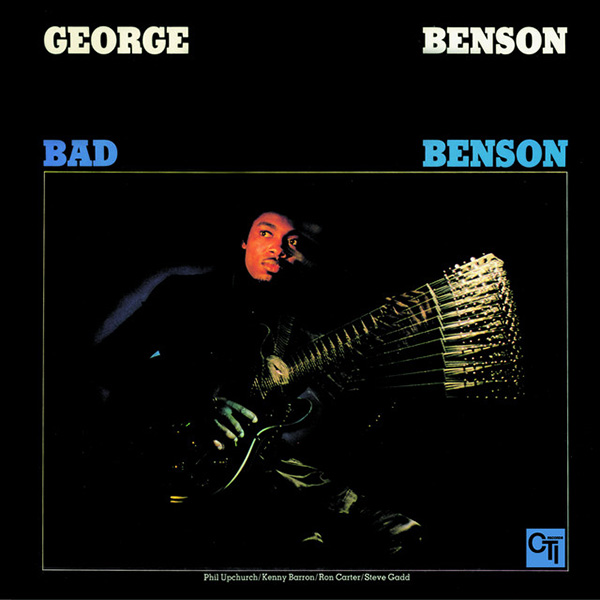
As I was preparing this review, I had just posted my latest YouTube video, covering jazz-funk vinyl—not fusion—from the 1970s. The records covered included Neal Creque's Creque (Cobblestone CST 9005), O'Donel Levy's Dawn of a New Day (Groove Merchant GM 518), Neil Larsen's Jungle Fever (Horizon SP-733), Tower of Power's In the Slot (Warner Bros. Records BS 2880), George Duke's The Aura Will Prevail (MPS Records BAP 5064), Peter Herbolzheimer's Waitaminute (MPS), Charles Earland's Leaving This Planet (Prestige P 66002), and three of George Benson's CTI records: Body Talk (CTI 6033), Good King Bad (CTI 6062), and Bad Benson (CTI 6045). One thing that ties all these records together—beyond tracking to tape—is a shared recording philosophy: live-in-the-studio performance, minimal effects, and zero reliance on studio tricks. (There's one other thing: a deep-funk pulse.) The payoff is clear sonics, startling dynamics, and what I think of as natural studio sound. I hoped the Odyssey would reveal, amplify, and translate the serious soul buried in these grooves. I began with organist Neil Larsen's Jungle Fever, a forgotten 1970s classic, a beautifully performed Latin-jazz-funk fusillade that continues to entrance decades after its '78 release. Soon after first contact between the Benz Micro Gullwing stylus and the record grooves, I was plastered to the back wall. The title track opens with what sounds like gentle sprites and woodland nymphs prancing—until drummer Andy Newmark's missile-like thwack! snaps everything into visceral, fiery focus. Over his jagged, Afro-Cuban funk groove, the band navigates a breakneck arrangement like a steam engine madly gripping the rails.
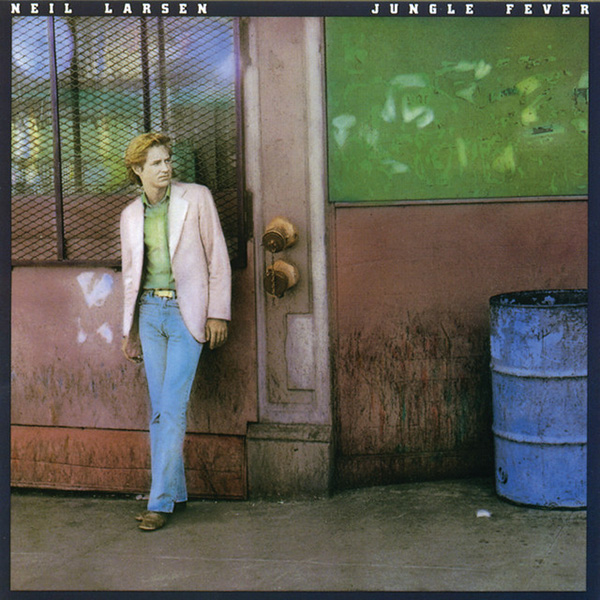 Presented by the Odyssey, the music was intensely physical: the robust weight and impact of Newmark's drums, Willie Weeks's molten bass, and one newly audible detail, percussionist Ralph McDonald's quiet 4/4 temple-block pulse threading through it all. The Odyssey uncovered levels of incisiveness and drive previously buried in this record. A grand soundstage practically materialized: brass, guitar, bass, organ, drums, each voice distinct, all pelting my senses simultaneously. I couldn't stay still. I was air-drumming and punching the void like a madman at a Grateful Dead show. The Odyssey is a master at reproducing primal punch and conveying emotional weight.
At the Jazz Record Center—my Saturday gig—I steer customers away from Dave Brubeck because I find it boring. But George Benson's version of Brubeck's big hit, "Take Five," from Bad Benson, rescues the song entirely. Drummer Steve Gadd wallops the 5/4 groove like an angry street punk even as Benson's guitar produces liquid tone and mercury runs. Via the Odyssey, Gadd's beats hit like a pneumatic drill, Benson's guitar sliced like a saw, and Kenny Barron's Rhodes bubbled up with near-physical joy.
If the main job of a turntable is to express rhythmic authority and get your mojo working, the Odyssey ate my soul then shot it back, laughing. The Odyssey grooved as hard as drummers like John "Jabo" Starks and Clyde Stubblefield, working its magic like soul godfather James Brown commanding every movement of his large ensemble.
The Odyssey delivered everything a circa $50k 'table should: a massive soundstage, fat, bloody images, an ink-black background, charged dynamics. What really captured my attention though—what captured me—was its naturalness, rhythmic speed and weight, and sheer corporeal chunk.
Mass-loaded turntables sometimes trade transient snap for drama and weight. Not this one. The monolithic Odyssey in Darth Vader black has weight like a shot put, but it played like a sprinter: aggressive, brisk, almost gleeful, ripping notes off the platter and launching them as if from a great horn speaker. At its center was something liquid and emotionally hot, producing a degree of involvement I've rarely experienced from a recorded-music source.
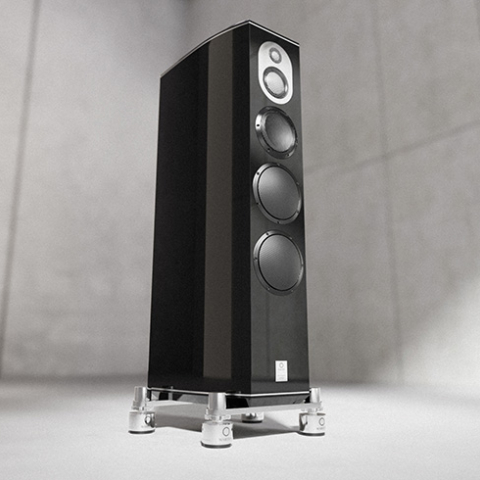
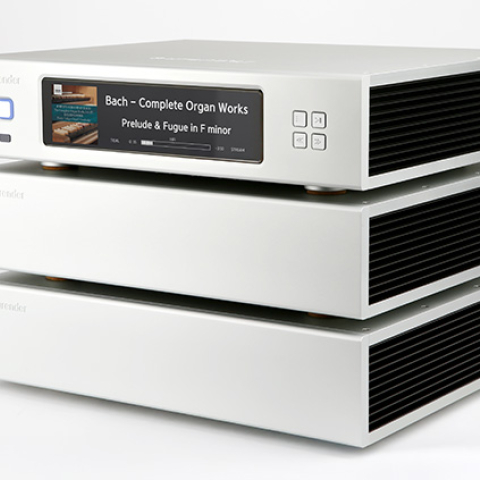
Certainly the rest of the system—Benz Micro Gullwing cartridge, Ampsandsound Yosemite preamp, Rogue Audio Stereo 100 amp, and DeVore Fidelity Super Nine loudspeakers—was a big part of the rare synergy I was hearing, but the Odyssey's life force, tonal richness, purity, and emotional character were the main act. The main question was whether its magic would extend beyond groove music, for which it was obviously well-suited.
Presented by the Odyssey, the music was intensely physical: the robust weight and impact of Newmark's drums, Willie Weeks's molten bass, and one newly audible detail, percussionist Ralph McDonald's quiet 4/4 temple-block pulse threading through it all. The Odyssey uncovered levels of incisiveness and drive previously buried in this record. A grand soundstage practically materialized: brass, guitar, bass, organ, drums, each voice distinct, all pelting my senses simultaneously. I couldn't stay still. I was air-drumming and punching the void like a madman at a Grateful Dead show. The Odyssey is a master at reproducing primal punch and conveying emotional weight.
At the Jazz Record Center—my Saturday gig—I steer customers away from Dave Brubeck because I find it boring. But George Benson's version of Brubeck's big hit, "Take Five," from Bad Benson, rescues the song entirely. Drummer Steve Gadd wallops the 5/4 groove like an angry street punk even as Benson's guitar produces liquid tone and mercury runs. Via the Odyssey, Gadd's beats hit like a pneumatic drill, Benson's guitar sliced like a saw, and Kenny Barron's Rhodes bubbled up with near-physical joy.
If the main job of a turntable is to express rhythmic authority and get your mojo working, the Odyssey ate my soul then shot it back, laughing. The Odyssey grooved as hard as drummers like John "Jabo" Starks and Clyde Stubblefield, working its magic like soul godfather James Brown commanding every movement of his large ensemble.
The Odyssey delivered everything a circa $50k 'table should: a massive soundstage, fat, bloody images, an ink-black background, charged dynamics. What really captured my attention though—what captured me—was its naturalness, rhythmic speed and weight, and sheer corporeal chunk.
Mass-loaded turntables sometimes trade transient snap for drama and weight. Not this one. The monolithic Odyssey in Darth Vader black has weight like a shot put, but it played like a sprinter: aggressive, brisk, almost gleeful, ripping notes off the platter and launching them as if from a great horn speaker. At its center was something liquid and emotionally hot, producing a degree of involvement I've rarely experienced from a recorded-music source.
Certainly the rest of the system—Benz Micro Gullwing cartridge, Ampsandsound Yosemite preamp, Rogue Audio Stereo 100 amp, and DeVore Fidelity Super Nine loudspeakers—was a big part of the rare synergy I was hearing, but the Odyssey's life force, tonal richness, purity, and emotional character were the main act. The main question was whether its magic would extend beyond groove music, for which it was obviously well-suited.
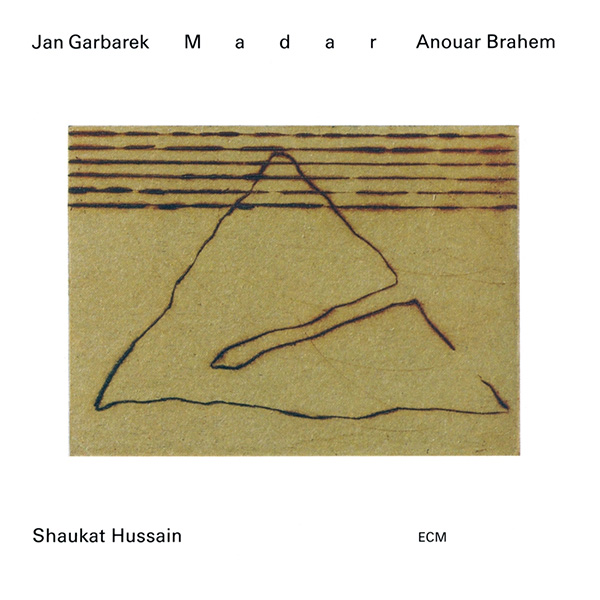 Madar (ECM 1515), from saxophonist Jan Garbarek, oud magician Anouar Brahem, and tabla maestro Ustad Shaukat Hussain, is a mysterious, spectral, twilight incantation, three master musicians conjuring a spell inside what at times sounds like a cathedral of sound, vast as a stadium yet richly intimate. The Odyssey tracked the rhythms with patient grace, gently, but carrying within its restraint a barely contained menace. Brahem's oud loosed notes like teardrops. As with the records I'd played earlier, the Odyssey drew Madar's very marrow, its dusky, smoldering tones and dense, layered soundscapes rendered with a rare organic connectedness.
Bartók's Concerto for Orchestra, with Ernest Ansermet conducting L'Orchestre de la Suisse Romande (London CS 6086), conjured cataclysms of light and dark. Notes coiled, heaved, and swirled. Crisscrossing strings etched a brooding, turbulent tableau of swirling emotion. The Odyssey balanced precision with emotional gravity, luxuriating in the score's lavish, tonal richness, riding its heroic, rhythmic drama. Its performance reached into something old and essential: memories half-lost, an emotional weight so heavy and unrelenting that it held me riveted from the first note to the last.
Madar (ECM 1515), from saxophonist Jan Garbarek, oud magician Anouar Brahem, and tabla maestro Ustad Shaukat Hussain, is a mysterious, spectral, twilight incantation, three master musicians conjuring a spell inside what at times sounds like a cathedral of sound, vast as a stadium yet richly intimate. The Odyssey tracked the rhythms with patient grace, gently, but carrying within its restraint a barely contained menace. Brahem's oud loosed notes like teardrops. As with the records I'd played earlier, the Odyssey drew Madar's very marrow, its dusky, smoldering tones and dense, layered soundscapes rendered with a rare organic connectedness.
Bartók's Concerto for Orchestra, with Ernest Ansermet conducting L'Orchestre de la Suisse Romande (London CS 6086), conjured cataclysms of light and dark. Notes coiled, heaved, and swirled. Crisscrossing strings etched a brooding, turbulent tableau of swirling emotion. The Odyssey balanced precision with emotional gravity, luxuriating in the score's lavish, tonal richness, riding its heroic, rhythmic drama. Its performance reached into something old and essential: memories half-lost, an emotional weight so heavy and unrelenting that it held me riveted from the first note to the last.
 To confirm I hadn't lost my marbles, I ran the J.Sikora Standard Max Supreme turntable ($38,500) with its matching KV9 Max Zirconium tonearm ($11,750) with the Aidas Tru-stone Gold Web cartridge. I plugged in to the Ampsandsound preamp's phono stage and dialed in a load resistance of 470 ohms (the midpoint for the Aidas Tru-stone Gold web).
I heard more surface noise with the J.Sikora, but playing the Bartók, it mined more resolution, was smoother overall, and had an even larger and deeper soundstage, and a generally cleaner sound. It was more cerebral, offered better definition, and sounded grander—more like a mass-loaded 'table—like I was scaling Valhalla.
What the Odyssey offered to offset those advantages was rhythm and plenty of it, which made music primal. The Odyssey connected with my heart and soul as few 'tables have. That was enough to make it as engaging as the J.Sikora.
Conclusion
To confirm I hadn't lost my marbles, I ran the J.Sikora Standard Max Supreme turntable ($38,500) with its matching KV9 Max Zirconium tonearm ($11,750) with the Aidas Tru-stone Gold Web cartridge. I plugged in to the Ampsandsound preamp's phono stage and dialed in a load resistance of 470 ohms (the midpoint for the Aidas Tru-stone Gold web).
I heard more surface noise with the J.Sikora, but playing the Bartók, it mined more resolution, was smoother overall, and had an even larger and deeper soundstage, and a generally cleaner sound. It was more cerebral, offered better definition, and sounded grander—more like a mass-loaded 'table—like I was scaling Valhalla.
What the Odyssey offered to offset those advantages was rhythm and plenty of it, which made music primal. The Odyssey connected with my heart and soul as few 'tables have. That was enough to make it as engaging as the J.Sikora.
Conclusion
The proliferation of ultrahigh-quality, ultra-expensive turntables presents a dilemma for those who wish to invest tens of thousands of dollars in vinyl playback. In my listening room, the BennyAudio Odyssey made a compelling case for itself. It's a divine, sense-expanding machine that delivers total tonal saturation, translating the emotion of a record as if it were purpose-built for the task (which it was). Designer Tomasz Franielczyk may be new to the industry, but he has caught up fast, stepping into the big leagues with a winner.
The Odyssey arrived at my New York City dugout like a clarion call. Measuring 15" wide × 10" high × 15" deep, it occupies space the way a war monument does: bold, declarative, serious. Think Bas Princen's Gothic Cooling Plant, Dubai: slightly sinister, quiet, bold. A gigantic spinning platter at its center. Mass, precision, silence. At 130lb, it was a chore to get up six flights of stairs.
BennyAudio sources components from specialized manufacturers. "While I work independently in terms of engineering and design, manufacturing is supported by collaboration with top-tier local machining specialists," he explained. "These companies operate advanced CNC machinery and industrial-grade CAD/CAM systems and employ highly skilled technicians. Every Odyssey and Immersion unit is assembled, adjusted, and tested by me, personally."
The Odyssey's triple-layer platter is complex: an 11" upper section of black Delrin weighs 9lb; a substantial, 11" stainless steel midsection weighs 22lb; and an 8" lower sector of stainless steel rounds things out at an additional 7.25lb. That all adds up to 38.25lb. Four steel columns support the upper plinth structure; four more, capped with inverted porcelain cups, anchor the lower base.
The Odyssey's heavy-duty outboard armboard accommodates arms from 8" to 14", with four mounting points on the plinth. The 14" arm's effective mass ranges between 18gm and 30gm depending on whether a carbon fiber or titanium headshell is used. The internal wiring is silver core.
Three Anvil cases. A tight hallway. My "grandly intimate" listening room. Supreme Acoustic Systems will set up a BennyAudio turntable anywhere in the lower 48. In this case, setting up the Odyssey fell to Benny and his crack squad of worker bees including Hiram Toro, head of US hi-fi distributor Supreme Acoustic Systems, his luxurious beard giving him a floating, Rasputin-like appearance. Once the Odyssey was installed, Benny produced a record brush fit for royalty and a stiff, octagonal-shaped Hexmat Eclipse record mat. "The Hexmat Eclipse mat ($300–$375) is an optional accessory rather than a mandatory component of the design," Benny explained. "What I find most compelling about the Hexmat Eclipse is its method of mechanical coupling. The record rests on the mat, while the mat itself contacts the platter only at a limited number of small, defined support points. This creates partial mechanical separation between the record and the platter. As a result, the platter participates less directly in the vibrational behavior of the record during playback. Instead of a large contact surface, energy transfer occurs through controlled, minimal contact points. The intention is not to change the sound but to manage how energy from the record is transmitted into the platter mass."
ListeningAs I was preparing this review, I had just posted my latest YouTube video, covering jazz-funk vinyl—not fusion—from the 1970s. The records covered included Neal Creque's Creque (Cobblestone CST 9005), O'Donel Levy's Dawn of a New Day (Groove Merchant GM 518), Neil Larsen's Jungle Fever (Horizon SP-733), Tower of Power's In the Slot (Warner Bros. Records BS 2880), George Duke's The Aura Will Prevail (MPS Records BAP 5064), Peter Herbolzheimer's Waitaminute (MPS), Charles Earland's Leaving This Planet (Prestige P 66002), and three of George Benson's CTI records: Body Talk (CTI 6033), Good King Bad (CTI 6062), and Bad Benson (CTI 6045). One thing that ties all these records together—beyond tracking to tape—is a shared recording philosophy: live-in-the-studio performance, minimal effects, and zero reliance on studio tricks. (There's one other thing: a deep-funk pulse.) The payoff is clear sonics, startling dynamics, and what I think of as natural studio sound. I hoped the Odyssey would reveal, amplify, and translate the serious soul buried in these grooves. I began with organist Neil Larsen's Jungle Fever, a forgotten 1970s classic, a beautifully performed Latin-jazz-funk fusillade that continues to entrance decades after its '78 release. Soon after first contact between the Benz Micro Gullwing stylus and the record grooves, I was plastered to the back wall. The title track opens with what sounds like gentle sprites and woodland nymphs prancing—until drummer Andy Newmark's missile-like thwack! snaps everything into visceral, fiery focus. Over his jagged, Afro-Cuban funk groove, the band navigates a breakneck arrangement like a steam engine madly gripping the rails.
Presented by the Odyssey, the music was intensely physical: the robust weight and impact of Newmark's drums, Willie Weeks's molten bass, and one newly audible detail, percussionist Ralph McDonald's quiet 4/4 temple-block pulse threading through it all. The Odyssey uncovered levels of incisiveness and drive previously buried in this record. A grand soundstage practically materialized: brass, guitar, bass, organ, drums, each voice distinct, all pelting my senses simultaneously. I couldn't stay still. I was air-drumming and punching the void like a madman at a Grateful Dead show. The Odyssey is a master at reproducing primal punch and conveying emotional weight.
At the Jazz Record Center—my Saturday gig—I steer customers away from Dave Brubeck because I find it boring. But George Benson's version of Brubeck's big hit, "Take Five," from Bad Benson, rescues the song entirely. Drummer Steve Gadd wallops the 5/4 groove like an angry street punk even as Benson's guitar produces liquid tone and mercury runs. Via the Odyssey, Gadd's beats hit like a pneumatic drill, Benson's guitar sliced like a saw, and Kenny Barron's Rhodes bubbled up with near-physical joy.
If the main job of a turntable is to express rhythmic authority and get your mojo working, the Odyssey ate my soul then shot it back, laughing. The Odyssey grooved as hard as drummers like John "Jabo" Starks and Clyde Stubblefield, working its magic like soul godfather James Brown commanding every movement of his large ensemble.
Madar (ECM 1515), from saxophonist Jan Garbarek, oud magician Anouar Brahem, and tabla maestro Ustad Shaukat Hussain, is a mysterious, spectral, twilight incantation, three master musicians conjuring a spell inside what at times sounds like a cathedral of sound, vast as a stadium yet richly intimate. The Odyssey tracked the rhythms with patient grace, gently, but carrying within its restraint a barely contained menace. Brahem's oud loosed notes like teardrops. As with the records I'd played earlier, the Odyssey drew Madar's very marrow, its dusky, smoldering tones and dense, layered soundscapes rendered with a rare organic connectedness.
Bartók's Concerto for Orchestra, with Ernest Ansermet conducting L'Orchestre de la Suisse Romande (London CS 6086), conjured cataclysms of light and dark. Notes coiled, heaved, and swirled. Crisscrossing strings etched a brooding, turbulent tableau of swirling emotion. The Odyssey balanced precision with emotional gravity, luxuriating in the score's lavish, tonal richness, riding its heroic, rhythmic drama. Its performance reached into something old and essential: memories half-lost, an emotional weight so heavy and unrelenting that it held me riveted from the first note to the last.
To confirm I hadn't lost my marbles, I ran the J.Sikora Standard Max Supreme turntable ($38,500) with its matching KV9 Max Zirconium tonearm ($11,750) with the Aidas Tru-stone Gold Web cartridge. I plugged in to the Ampsandsound preamp's phono stage and dialed in a load resistance of 470 ohms (the midpoint for the Aidas Tru-stone Gold web).
The proliferation of ultrahigh-quality, ultra-expensive turntables presents a dilemma for those who wish to invest tens of thousands of dollars in vinyl playback. In my listening room, the BennyAudio Odyssey made a compelling case for itself. It's a divine, sense-expanding machine that delivers total tonal saturation, translating the emotion of a record as if it were purpose-built for the task (which it was). Designer Tomasz Franielczyk may be new to the industry, but he has caught up fast, stepping into the big leagues with a winner.