It’s amazing the scorn for the Beatles solo work that the release of the new Live at The Hollywood Bowl has unleashed on the web. Okay, so the sum of the parts was undoubtedly better than the individual voices. But once the band broke up, the break was irrevocable. No matter how much anyone wished or still wishes, The Beatles were finished. No one’s ever said it better than George Martin in the original back cover liner for the original LP issue of the Hollywood Bowl record:
"Those who clamour for a Beatle reunion cannot see that it can never be the same again.”
So John, Paul, George and Ringo moved on, into solo careers, that despite some of the dismissive maligning now sloshing around on websites–often in the comments after reviews of the new Hollywood Bowl release–had more than a few highlights. To my ears, the masterpieces of the solo careers are obvious.
In John’s case, the raw intimacy of the Plastic Ono Band and the sweet tunefulness of Imagine are his solo masterworks. George Harrison’s initial solo release All Things Must Pass despite containing a record of jams that no one ever listened to among the three LPs that made up the set is still a fabulous collection of songs from the band’s most underrated talent. Cases can also be made for The Concert for Bangladesh and Living in the Material World.
To anyone who wants to disparage the Beatles solo records, one four word phrase defeats all arguments in that twisted direction: Band on the Run. Paul’s first album McCartney (the cherries record) and Ram are also excellent. And call me a sentimental wreck but I’ve always had a soft spot for Red Rose Speedway. Forget “My Love,” I like “Little Lamb Dragonfly.” Being a music fan is about guilty pleasures.
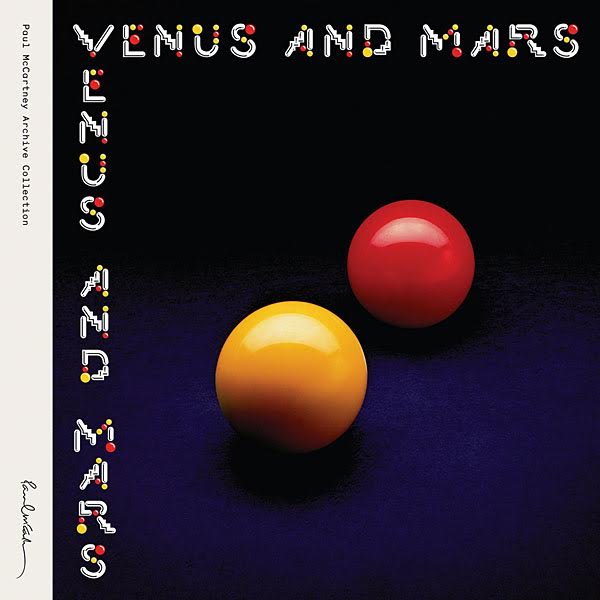
Watching and reading as the Beatles solo records were slandered inspired me to make a case for two in particular. As for Paul, he of the huge solo catalog filled with a number of middling entries it’s true, Venus and Mars has always seemed to me to be the half-hidden gem. The slightly over-produced one everyone overlooked.
As cloying McCartney singles go, “Listen to What The Man Said,” is among the best. “You Gave Me The Answer” is one of those British music hall throwbacks John and Paul always loved. “Magneto and Titanium Man,” is Paul at his silly, melodic best. The slow, low down, gritty guitar reprise of “Venus and Mars” has always been better than the version used as the album opener. The blues rock of “Medicine Jar,” is McCartney circa 1975 rocking out. But it’s probably the lovely “Love in Song,” which is a flash of Paul’s genius for melody that puts this one over the top for me. That and the fact that some of it was recorded in New Orleans at Sea-Saint Studios and that studio’s co-owner Allen Toussaint plays piano on the record.
 And then there’s the strange case of Richard Starkey. Does it surprise anyone, is it not cosmic justice that Ringo, perpetually overlooked and denigrated as “the drummer” for the greatest band ever formed or recorded, is still alive and touring? Perhaps putting on shows these days that are more pure fun that what Paul’s doing? While Goodnight Vienna and the wonderful late career landmark, Time Takes Times are consistent and listenable pop records, Ringo’s solo highlight is the 1973 Ringo record. Not only are all the other Beatles on it, but Ringo, in amazingly great voice, even co-wrote two of the best songs, “Photograph,” and “Oh My My.” And he was smart enough to include a Randy Newman number “Have You Seen My Baby” as well? And then let’s talk personnel” James Booker, Levon Helm, Merry Clayton, Marc Bolan, Harry Nilsson, Steve Cropper, Jim Keltner, Rick Danko. Jack Nitzsche arranged the choral and orchestral arrangements, Richard Perry produced and Bill Schnee engineered it and really… `nuff said.
No, there will never be another Revolver or Rubber Soul again, but mourning the band by scoffing at the solo work is absurd.
And then there’s the strange case of Richard Starkey. Does it surprise anyone, is it not cosmic justice that Ringo, perpetually overlooked and denigrated as “the drummer” for the greatest band ever formed or recorded, is still alive and touring? Perhaps putting on shows these days that are more pure fun that what Paul’s doing? While Goodnight Vienna and the wonderful late career landmark, Time Takes Times are consistent and listenable pop records, Ringo’s solo highlight is the 1973 Ringo record. Not only are all the other Beatles on it, but Ringo, in amazingly great voice, even co-wrote two of the best songs, “Photograph,” and “Oh My My.” And he was smart enough to include a Randy Newman number “Have You Seen My Baby” as well? And then let’s talk personnel” James Booker, Levon Helm, Merry Clayton, Marc Bolan, Harry Nilsson, Steve Cropper, Jim Keltner, Rick Danko. Jack Nitzsche arranged the choral and orchestral arrangements, Richard Perry produced and Bill Schnee engineered it and really… `nuff said.
No, there will never be another Revolver or Rubber Soul again, but mourning the band by scoffing at the solo work is absurd.
And then there’s the strange case of Richard Starkey. Does it surprise anyone, is it not cosmic justice that Ringo, perpetually overlooked and denigrated as “the drummer” for the greatest band ever formed or recorded, is still alive and touring? Perhaps putting on shows these days that are more pure fun that what Paul’s doing? While Goodnight Vienna and the wonderful late career landmark, Time Takes Times are consistent and listenable pop records, Ringo’s solo highlight is the 1973 Ringo record. Not only are all the other Beatles on it, but Ringo, in amazingly great voice, even co-wrote two of the best songs, “Photograph,” and “Oh My My.” And he was smart enough to include a Randy Newman number “Have You Seen My Baby” as well? And then let’s talk personnel” James Booker, Levon Helm, Merry Clayton, Marc Bolan, Harry Nilsson, Steve Cropper, Jim Keltner, Rick Danko. Jack Nitzsche arranged the choral and orchestral arrangements, Richard Perry produced and Bill Schnee engineered it and really… `nuff said.
No, there will never be another Revolver or Rubber Soul again, but mourning the band by scoffing at the solo work is absurd.