It’s too easy to bash the record business. Yes, they’ve lied to us (“CDs will get cheaper”). Put out inferior product (Dynaflex, need I say more). And been uncaring if not downright larcenous when it comes to artists. But strangest of all, is the seeming disregard that the business has always had for its own future. Planning ahead has never been a strong suit. Like maybe getting ahead of Napster before piracy dried up the cash might have been a good plan?
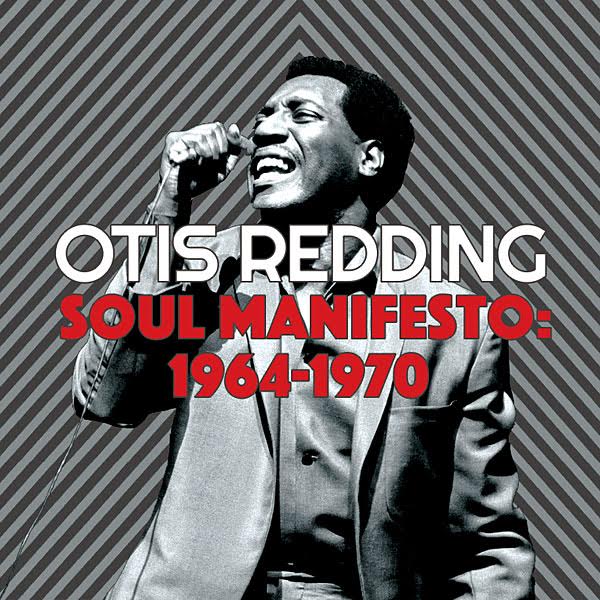
All this came to mind when Rhino’s new Otis Redding, Soul Manifesto: 1964-1970 boxed set arrived. Here is Redding’s entire official catalog of recordings, originally released by Stax and Atlantic/Atco Records, 12 albums, for less than fifty bucks ($48.57 on Amazon.com). Of course there’s still an angle; the inferior sounding but convenient MP3’s are $79.99, which is still a bargain. Sonically superior high resolution 192/24 downloads of the catalog are available on HD Tracks ($25.98) and Acoustic Sounds Super HiRez ($24.98). Original LPs, still my format of choice for this music, have risen in value though not to insane levels. Depending on the title and the condition they can range from $4.99 VG+ to nearly $100 for NM or better.
The riches here are vast and well known. As great as James Brown, Ray Charles, Sam Cooke and others were, Otis had ahold of something special, both vocally and as a songwriter. And anyone who’s ever seen any of his performance at the 1967 Monterey Pop Festival—where he finally crossed over to the white audience—knows he could bring it during the live experience. While the early records like Sings Soul Ballads and Dictionary of Soul are all classics every one, I’ve always found the posthumously released stuff, his final burst of creativity, to be his finest hours; recordings that filled the studio records, The Immortal Otis Redding, Love Man and Tell the Truth. While they are clearly a collection of leftover or unreleased new tracks, compiled as opposed to a thought through album, listening to all three provides both hugely accomplished performances and tantalizingly, hints as to where he might have gone musically had he lived.
For starters he was becoming a better singer, negotiating the twisting enunciation of “freak out” in “Give Away None of My Love,” or the “Flippity Flip” in “Wholesale Love,” both on Tell The Truth. In “I’m a Changed Man” and “(Your Love Has Lifted Me) Higher and Higher” both on Love Man, he experiments with scat singing. On the incomparable The Immortal it’s the songwriting that looks ahead in tunes like his finest ballad, “I’ve Got Dreams To Remember,” a prophetic co-write with his wife Zelma and “Hard To Handle,” a tune he still owns despite the Black Crowes rambunctious cover. In “I Got The Will” from Tell The Truth where he “cain’t find his way,” the rising verses are nothing short of a hit pop tune. The band accompaniment throughout, most by Cropper, Duck Dunn and the rest of the MGs, is masterful and supremely musical. The “what ifs” when it comes to Redding are heartbreaking.
While the music here is some of the most essential in all of American popular music bar none, the packaging is bare bones--no booklet, just simple slip cases. But to anyone interested in getting the entire Redding catalog on CD in one reasonably priced fell swoop, this is a deep and essential slug of old school soul music. Similar Rhino boxes containing the collected works of David Bowie, The Doobie Brothers and Alice Cooper on CD have also been released recently. The question they all beg is why didn’t sets like this appear when CD as a format still had a vital future? It’s not as simple as these records no longer sell and so they can be had cheaper now. Most of the record biz has never learned to play the long game. If there’s any lasting sin to criticize the record business about, it’s the uncanny ability to KO a format just as all the bugs are out, the manufacturing process is cheap and efficient and the buying public all have players and plenty of product. It happened with LPs in the 1980s and now it’s happened to CDs. Are downloads, High Rez or MP3, truly the final way to collect and/or consume music?