Manufacturers' Comment
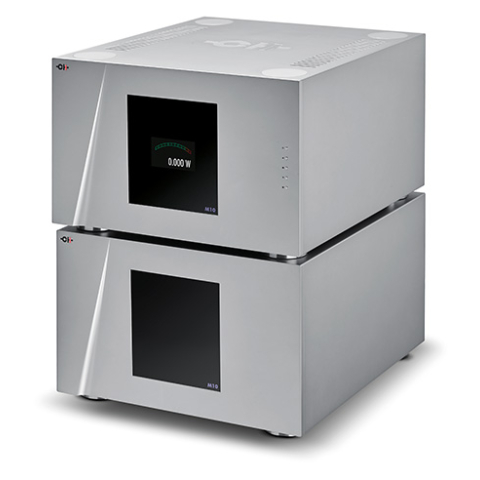
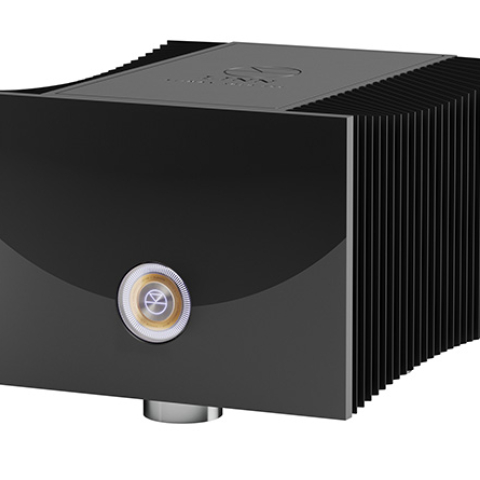
Editor: It is, of course, disappointing to receive an unfavorable review. A product designed and voiced at this level is inherently an opinion carefully stated. Michael's review is as well, and we differ. As Michael says, "that's hi-fi." We strive for fast transient ability and very low distortion. These are the qualities that we feel bring the ability to "hear the room," the 3D character of the recording space, the soundstage that removes the speakers' locations from the listener's perception. For us, this is the challenge. It is how we design and voice our systems. We feel that if this can be achieved, then the honesty of the primary musical elements comes along as a matter of course.
When looking at the measured squarewave, it is, in fact, superior to the reference system. There is no question regarding the M28's ability to cleanly and quickly reproduce transients. So what accounts for Michael's perception that aspects of the M28's sonic character lack excitement? To us, the answer is the same that we often give, regarding both our M1 and the M28. When a listener is presented with a sound that contains an order of magnitude less distortion than their reference system, it takes time to hear that as a positive aspect of the sound. Distortion masks the honesty of the recording, but it also adds high-frequency excitement. The additional harmonics add volume, particularly to transient elements and elements that already have a bit of distortion in the recording. But this distortion is not honest, and over time and across different sources, the greater honesty of lower distortion becomes evident and desirable.—Brian Zolner, Casey Dowdell
Bricasti Design
Bricasti Design