

Classical music gets treated more holistically. "[For] classical music recording especially, it's important to capture the performance, the energy, the chemistry of the room, and the musicians that are phrasing and tuning and reacting to each other," he said.
"Why record [a work] again if it's not about the actual moment, you know? So that's part of that culture."
He even likes mistakes in his concert music, he told me: "Sometimes especially string players will do something that you didn't write, in terms of the sound. You might have written a G, but they're playing it with a certain attack on the bow, and it creates another harmonic in the note. Those things are really sort of happenstance, and beautiful, I think."
Dessner drew parallels between pop and classical. "I think songwriting is the most fundamental form of expression," he told me. "Some of my favorite composers, Mahler, Schubert—the greatest of that era of songwriters—they wrote beautiful lieder, really simple songs in a way, you know?"
Dessner might be writing a violin concerto in the morning and orchestrating a Taylor Swift song in the evening. For his composing and writing process, the two aren't really that different, he said. "Whether I'm writing a really simple guitar song or a really complex piece of orchestra music, I try to just be humble about it. One of these things is not better or more sophisticated than the other. It's two different types of expression really, but they're very much related."
 "I think that classical music is elitist at times," he said. "Not necessarily the musicians, but the kind of institutions and often the kind of critical writing around it can be a bit ... it's as if you need a certain education to understand it. And I think that doesn't do anybody any favors as far as expanding the audience."
He's optimistic about the music of today and its future. Artists and young people have access to tools that even his generation didn't. "Technology is very, very empowering. You know, we don't necessarily need that Juilliard education to make complex music, even to write string arrangements or something." He finds this exciting.
Dessner's collaborations extend beyond his own projects to creating opportunities for emerging musicians. One such endeavor is 37d03d, which started as a residency, with gatherings at Funkhaus Studio in Berlin in 2018 focused on process, works in progress, and collaboration. Cross-pollination across musical genres is encouraged. "You can have a classical pianist and an 18-year-old deejay and a folk singer and an experimental musician, and then those people can work with each other." It grew into a small festival then spawned an eclectic indie label all under the 37d03d name.
It may not be obvious at first, but 37d03d is "people" upside down and backward; it's pronounced the regular way—like "people" (footnote 1). 37d03d is also a record label, founded with his brother and Justin Vernon, who is best known as the front man for indie folk pop group Bon Iver. Vernon is another busy, collaborative musician with varied interests; he has collaborated with Kanye West and Taylor Swift among others and cofounded the band Big Red Machine, with Aaron.
"The label's been more focused on just being a home for some of the artists who've been to those [residency] events and then some of the projects that have come up out of them," Dessner explained. "We've done mixtapes to support tracks that don't really fit anywhere else." Some of those mixtapes have been released on LP and as digital files. "But then obviously something like my record [Impermanence/Disintegration, which was released on 37d03d] is a big collaboration and a special project." 37d03d, then, is "a mix of things. It's partly the longer-term goal of just supporting artists and helping them, being another home where creative music can live."
For a while, 37d03d provided another home for such music: the 37d03d website, which for a time did online streaming. Artists could post files, and anyone could listen to them. "It was actually kind of a beautiful experiment," he said, "but we decided that the label doing certain special vinyl releases and that kind of thing would be a better way to support 37d03d."
Speaking of streaming: I asked Dessner what music he's been listening to lately and what inspires him. "We listen to Nina Simone all the time," he said. "We listen to Víkingur Ólafsson, an Icelandic pianist who's a friend of mine, a lot."
"I think that classical music is elitist at times," he said. "Not necessarily the musicians, but the kind of institutions and often the kind of critical writing around it can be a bit ... it's as if you need a certain education to understand it. And I think that doesn't do anybody any favors as far as expanding the audience."
He's optimistic about the music of today and its future. Artists and young people have access to tools that even his generation didn't. "Technology is very, very empowering. You know, we don't necessarily need that Juilliard education to make complex music, even to write string arrangements or something." He finds this exciting.
Dessner's collaborations extend beyond his own projects to creating opportunities for emerging musicians. One such endeavor is 37d03d, which started as a residency, with gatherings at Funkhaus Studio in Berlin in 2018 focused on process, works in progress, and collaboration. Cross-pollination across musical genres is encouraged. "You can have a classical pianist and an 18-year-old deejay and a folk singer and an experimental musician, and then those people can work with each other." It grew into a small festival then spawned an eclectic indie label all under the 37d03d name.
It may not be obvious at first, but 37d03d is "people" upside down and backward; it's pronounced the regular way—like "people" (footnote 1). 37d03d is also a record label, founded with his brother and Justin Vernon, who is best known as the front man for indie folk pop group Bon Iver. Vernon is another busy, collaborative musician with varied interests; he has collaborated with Kanye West and Taylor Swift among others and cofounded the band Big Red Machine, with Aaron.
"The label's been more focused on just being a home for some of the artists who've been to those [residency] events and then some of the projects that have come up out of them," Dessner explained. "We've done mixtapes to support tracks that don't really fit anywhere else." Some of those mixtapes have been released on LP and as digital files. "But then obviously something like my record [Impermanence/Disintegration, which was released on 37d03d] is a big collaboration and a special project." 37d03d, then, is "a mix of things. It's partly the longer-term goal of just supporting artists and helping them, being another home where creative music can live."
For a while, 37d03d provided another home for such music: the 37d03d website, which for a time did online streaming. Artists could post files, and anyone could listen to them. "It was actually kind of a beautiful experiment," he said, "but we decided that the label doing certain special vinyl releases and that kind of thing would be a better way to support 37d03d."
Speaking of streaming: I asked Dessner what music he's been listening to lately and what inspires him. "We listen to Nina Simone all the time," he said. "We listen to Víkingur Ólafsson, an Icelandic pianist who's a friend of mine, a lot."
 What about The National? "We're Grateful Dead fans, and we love that the live recordings especially have so much magic in them." The National paid homage to such old-school analog concert recording on Juicy Sonic Magic: The Mike Millard Method. (footnote 3) For that release, on digital and cassette, two of the band's 2018 live performances at the Greek Theatre in Berkeley, California, were recorded using Millard's "bootlegger" taping method with vintage AKG 451E microphones with CK-1 capsules and a Nakamichi 550 portable cassette recorder.
Dessner's words about The National's future plans were intriguingly ambiguous. "We are kind of back in the studio a bit," he told me. "Even possibly in the same room very soon. So yeah, there are things happening, which is exciting. But I don't know when, if and when, we are actively working together again yet."
I also asked how Dessner listens to music. He has a "decent" Sonos setup at home in France. He has Audio-Technica ATH-M50 headphones and a couple of sets of decent monitor speakers: "So it's definitely not super– high-end stereo stuff." He reserves his critical, professional listening for studios: "Studios tend to have really nice listening environments where you can really get a better sense of things."
But a better hi-fi could be in his future: "I think now I could see buying, getting myself a better home listening environment, just for leisure listening, not necessarily for work."
Noting that The National and the 37d03d label release music on vinyl, I asked for his views on black discs. "I have a lot of vinyl," he told me. "Not here in France, but back in New York. I have a house upstate. I have a good vinyl setup there."
As mentioned earlier, Dessner and his family moved out of Paris, to the countryside. His wife is French singer Mina Tindle, a stage name. Dessner is also a father, and in April, his productivity was impacted when his four-year-old son's nursery school closed due to COVID concerns. "It's nice to be with him, but it's hard to get any work done," he said with a chuckle.
What about The National? "We're Grateful Dead fans, and we love that the live recordings especially have so much magic in them." The National paid homage to such old-school analog concert recording on Juicy Sonic Magic: The Mike Millard Method. (footnote 3) For that release, on digital and cassette, two of the band's 2018 live performances at the Greek Theatre in Berkeley, California, were recorded using Millard's "bootlegger" taping method with vintage AKG 451E microphones with CK-1 capsules and a Nakamichi 550 portable cassette recorder.
Dessner's words about The National's future plans were intriguingly ambiguous. "We are kind of back in the studio a bit," he told me. "Even possibly in the same room very soon. So yeah, there are things happening, which is exciting. But I don't know when, if and when, we are actively working together again yet."
I also asked how Dessner listens to music. He has a "decent" Sonos setup at home in France. He has Audio-Technica ATH-M50 headphones and a couple of sets of decent monitor speakers: "So it's definitely not super– high-end stereo stuff." He reserves his critical, professional listening for studios: "Studios tend to have really nice listening environments where you can really get a better sense of things."
But a better hi-fi could be in his future: "I think now I could see buying, getting myself a better home listening environment, just for leisure listening, not necessarily for work."
Noting that The National and the 37d03d label release music on vinyl, I asked for his views on black discs. "I have a lot of vinyl," he told me. "Not here in France, but back in New York. I have a house upstate. I have a good vinyl setup there."
As mentioned earlier, Dessner and his family moved out of Paris, to the countryside. His wife is French singer Mina Tindle, a stage name. Dessner is also a father, and in April, his productivity was impacted when his four-year-old son's nursery school closed due to COVID concerns. "It's nice to be with him, but it's hard to get any work done," he said with a chuckle.
Footnote 1: The original name was "People," but it had to change due to copyright issues, he said. "I didn't think you could copyright the word 'people,' but apparently you can." He laughs.
Footnote 2: Coincidentally, these Dutilleux works are included in Stereophile's recent Qobuz playlist, Editorial Tracks from Stereophile.
Footnote 3: Mike Millard, aka Mike "The Mike," was a prolific bootleg taper of concerts in the 1970s and '80s. He captured many live recordings of Led Zeppelin, Rolling Stones, Pink Floyd, and Fleetwood Mac, among others.
Photo: Peter Hundert
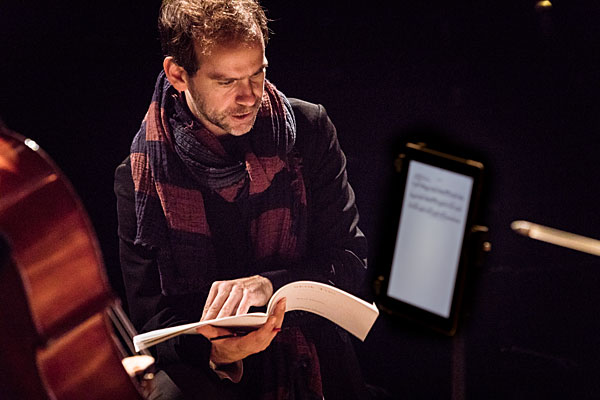
Although his own musical education is sophisticated—he earned bachelor's and master's degrees in music from Yale University—Dessner thinks classical music is limited by elitism, or can be.
Photo: Shervin Lainez
He's also been on a Mahler kick. "You can find everything in Mahler, basically," he said. "There's pages of that music that feel extremely modern—even pages of it that you look at and you think you're looking at a John Adams score, but it's more than 100 years older. It's super-interesting just to be writing music now and have access to all those things."
Dessner also mentioned the music of 20th century French composer Henri Dutilleux: "He's a little bit in the shadow, but the scores are just exceptional in every way." He specifically praised Métaboles and L'arbre des songes (footnote 2). "They're like little poems, basically," he said about the works. He generally enjoys French music: Ravel, Debussy, Messiaen, even Jacques Brel. A bit of Baroque, too, such as Rameau and Purcell (the latter not French, of course). Also, "a lot of Renaissance music." He mentions Bonny Light Horseman, a group that reinterprets old folk music: "You could feel them in the room together."
Photo: Graham MacIndoe
Spending more time at home during the pandemic has had benefits. He has reconnected with his instruments: guitars, piano, etc. "Being home in my own studio is just so much better than being on the road in a hotel room, trying to deal with whatever little gear I have there," he said. "At home, I have my ideal setup, a good listening environment, good monitor speakers, and my gear and stuff I need."
On the other hand, not being in the same room making music together has been difficult, Dessner said. Since the pandemic took hold, he's performed with other musicians only twice, live. "It was very inspiring to just be in the room with actual sound and actual instruments and human beings," he told me. "I miss that."
Footnote 1: The original name was "People," but it had to change due to copyright issues, he said. "I didn't think you could copyright the word 'people,' but apparently you can." He laughs.















