

It was. The Stereo 1.0's manual (p.8) reveals that, as with the Levinson, the user must wait at least three seconds between activations of the power switches. In fact, the Constellation's Power/Standby bar must be held down all that time, until an internal relay clicks as it triggers the turn-on sequence, during which the bar's LED shifts from glowing steady red (Standby) to flashing green (Warmup). That flashing-green phase, too, is inviolate—pressing the bar again won't bypass it. At the end of that long minute, the relay clicks again, the LED glows steady blue, and the Stereo 1.0 is ready to play music.
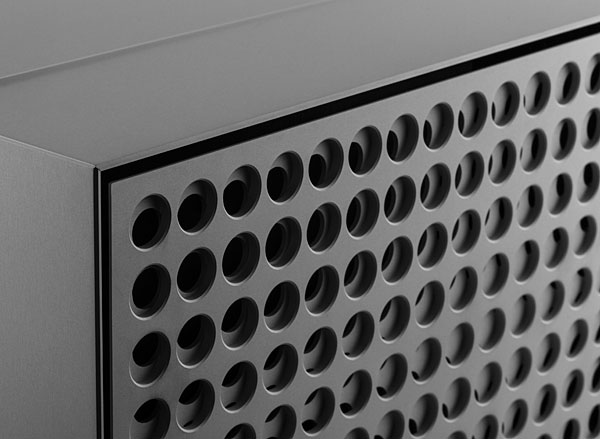
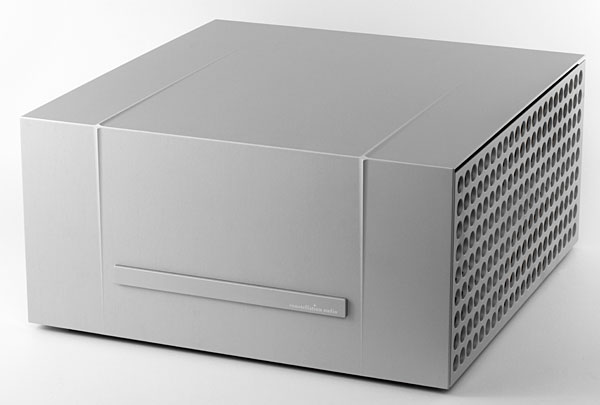
I ran the Constellation Stereo 1.0 for several hours at 90dB, playing all my favorite digital music files. The case got only slightly warm, and the amp never shut down because of overheating or for any other reason during the entire listening period. I was surprised that it ran as cool as it did, given that all its heatsinks are inside the case.
Sound
With the Inspiration Stereo 1.0 all warmed up, I put on The First Tears, a choral work by Eriks Eenvalds from a recording engineered by John Atkinson: The Doors of Heaven, with Ethan Sperry directing the Portland State Chamber Choir (24-bit/88kHz WAV file or CD, Naxos 8.579008). It was a Wow! moment. The stunningly translucent choir popped out of a jet-"black" background with bell-like clarity. Individual singers were clearly positioned on a broad soundstage as they echoed each other singing an Inuit tale of Raven. The depth of field was impressive. What was so startling, and what sealed the deal for me, was the dynamic range, from intimate whisperings to thunderous, foot-stomping full chorus. The Inspiration Stereo 1.0 sounded more vivid, refined, and transparent than my reference amps. Was the Constellation revealing things in the music I'd never heard before, or was it adding things to the music?
 LPs were reproduced with the same addictive midrange vividness. Prokofiev's Lieutenant Kijé Suite, with the Boston Symphony Orchestra led by Erich Leinsdorf (LP, RCA Living Stereo LSC-3061), came alive as never before. In the Romance and Troika, the Stereo 1.0 conveyed the blat of the brasses and the warmth of baritone David Clatworthy's voice. With a digital file of "Kote Moun Yo?," from Markus Schwartz & Lakou Brooklyn's Equinox (24/96k, CD, Soundkeeper SR1002), I was delighted by the amplifier's depiction of this recording's transparent, silken highs, dynamics, and "black" background.
The Stereo 1.0 came into its own with other choral recordings. I heard the rich timbral palette from the different ranks of singers in the Piè Jesu of John Rutter's Requiem, with Timothy Seelig leading the Turtle Creek Chorale (CD, Reference RR-57). The clarity, balance, and pitch definition of the pipe organ's pedal notes underpinning soprano Nancy Keith were especially pleasing. The lilting tenors of all-male chorus Cantus in Edie Hill's A Sound Like This, from the ensemble's While You Are Alive (24/88.2 digital file or CD, Cantus CTS-1208), retained their complex vocal timbres. José Carreras's soft, pure, lilting tenor in the Kyrie of Ariel Ramirez's Misa Criolla, in the recording conducted by José Luis Ocejo (CD, Philips 420 955-2), floated above and in front of the massed voices of choristers stretching out behind him. Livingston Taylor's cover of Stevie Wonder's "Isn't She Lovely," from Taylor's Ink (CD, Chesky JD162), and Lyle Lovett's performance of "Friend of the Devil," from Deadicated: A Tribute to the Grateful Dead (CD, Arista 8669), never sounded better. These singers' voices were holographic and three-dimensional.
Michael Fremer's description of Constellation's Centaur Mono ($54,000/pair) best expresses my own impression of the Stereo 1.0. Mikey praised the Centaur's "exceptionally pure sound, as well as their seamlessness and transparency." Although the Centaur's bass had impressive speed, pitch definition, and harmonic balance, MF noted that its sound was less muscular than he'd heard from other high-end solid-state amplifiers. Similarly, while the Stereo 1.0 emphasized the pitch definition and speed of the bass synthesizer in "Silk Road," from I Ching's Of the Marsh and the Moon (CD, Chesky WO144), it made the bass drum sound smaller and narrower as it had with the bass drum in Misa Criolla. The 32Hz pedal note that ends organist James Busby's performance of Herbert Howells's Master Tallis's Testament, on Pipes Rhode Island (CD, Riago 101), was deep, but didn't thunder or shake the room. Was this a more balanced, more accurate reproduction of the instrumental tonalities in this recording, or was it only the Stereo 1.0's interpretation of those tonalities?
LPs were reproduced with the same addictive midrange vividness. Prokofiev's Lieutenant Kijé Suite, with the Boston Symphony Orchestra led by Erich Leinsdorf (LP, RCA Living Stereo LSC-3061), came alive as never before. In the Romance and Troika, the Stereo 1.0 conveyed the blat of the brasses and the warmth of baritone David Clatworthy's voice. With a digital file of "Kote Moun Yo?," from Markus Schwartz & Lakou Brooklyn's Equinox (24/96k, CD, Soundkeeper SR1002), I was delighted by the amplifier's depiction of this recording's transparent, silken highs, dynamics, and "black" background.
The Stereo 1.0 came into its own with other choral recordings. I heard the rich timbral palette from the different ranks of singers in the Piè Jesu of John Rutter's Requiem, with Timothy Seelig leading the Turtle Creek Chorale (CD, Reference RR-57). The clarity, balance, and pitch definition of the pipe organ's pedal notes underpinning soprano Nancy Keith were especially pleasing. The lilting tenors of all-male chorus Cantus in Edie Hill's A Sound Like This, from the ensemble's While You Are Alive (24/88.2 digital file or CD, Cantus CTS-1208), retained their complex vocal timbres. José Carreras's soft, pure, lilting tenor in the Kyrie of Ariel Ramirez's Misa Criolla, in the recording conducted by José Luis Ocejo (CD, Philips 420 955-2), floated above and in front of the massed voices of choristers stretching out behind him. Livingston Taylor's cover of Stevie Wonder's "Isn't She Lovely," from Taylor's Ink (CD, Chesky JD162), and Lyle Lovett's performance of "Friend of the Devil," from Deadicated: A Tribute to the Grateful Dead (CD, Arista 8669), never sounded better. These singers' voices were holographic and three-dimensional.
Michael Fremer's description of Constellation's Centaur Mono ($54,000/pair) best expresses my own impression of the Stereo 1.0. Mikey praised the Centaur's "exceptionally pure sound, as well as their seamlessness and transparency." Although the Centaur's bass had impressive speed, pitch definition, and harmonic balance, MF noted that its sound was less muscular than he'd heard from other high-end solid-state amplifiers. Similarly, while the Stereo 1.0 emphasized the pitch definition and speed of the bass synthesizer in "Silk Road," from I Ching's Of the Marsh and the Moon (CD, Chesky WO144), it made the bass drum sound smaller and narrower as it had with the bass drum in Misa Criolla. The 32Hz pedal note that ends organist James Busby's performance of Herbert Howells's Master Tallis's Testament, on Pipes Rhode Island (CD, Riago 101), was deep, but didn't thunder or shake the room. Was this a more balanced, more accurate reproduction of the instrumental tonalities in this recording, or was it only the Stereo 1.0's interpretation of those tonalities?
 Comparisons
To confirm my impressions of the Inspiration Stereo 1.0's vividness and refined bass response, I level-matched to it two other solid-state stereo amplifiers, both from Mark Levinson: my No.334 (125Wpc, $5900 in 1999) and the No.534 (250Wpc, $20,000 footnote 1). All amplifiers were set using repeatable preamplifier volume settings to produce the same SPL of 88.5dB at my listening chair from a digital file of uncorrelated pink noise. The Stereo 1.0 proved faster, more vivid, and more transparent than the No.334, which sounded slightly darker and a bit muffled in comparison. As I switched back and forth between the two amplifiers with the Revel Ultima Salon2 speakers, it became clear that the Stereo 1.0's upper range was sweeter, more compelling, more addictive. However, the Constellation didn't go as low in the deep bass. This meant that dynamic contrasts involving deep bass, such as sustained pedal chords from pipe organs, were more emotionally involving with the No.334, shaking my listening room more. When I played the Toccata of Widor's Organ Symphony 5, as performed by Jonas Nordwall and recorded by John Atkinson (24/88.2 AIFF file), the No.334 delivered more thunderous deep-pedal notes that pressurized the room, ca 18Hz according to my Audio Tools FFT analyzer. The conga drum that begins "Hotel California," from the Eagles' Hell Freezes Over (CD, Geffen GEFD-24725), was well defined and tight through the Stereo 1.0, but more 3D and room-shaking through the No.334. The heartbeat that opens "Breathe (in the Air)," from Pink Floyd's The Dark Side of the Moon (SACD/CD, EMI 82136-2), was a well-defined, dense, solid, pitch-perfect pulse with the Stereo 1.0, but not as ominous or as room-shakingly massive as with the No.334. On the other hand, the Stereo 1.0's resolution and focus made Michael Arnopol's plucked double bass, which begins "Use Me" from Patricia Barber's/ Companion (SACD/CD, Premonition/Blue Note/Mobile Fidelity Sound Lab 2023), come alive, while giving up none of the emotional weight and energy heard through the other amplifiers.
The Stereo 1.0 closely matched the transparent highs and bass definition of the new Mark Levinson No.534. But the No.534—at almost twice the price—didn't deliver the Constellation's addictive vividness and clarity. Rather, its sound was more neutral and, at first, slightly more boring. Over time, I began to realize that the No.534 had better tonal balance and bass pitch definition, which made it easier to follow Tim Schmit's bass-guitar notes in the Eagles' "Hotel California."
Conclusions
Constellation Audio's Inspiration Stereo 1.0 has remarkable midrange and treble performance—those ranges are unusually vivid, translucent, and seemingly natural. Its sound qualities perfectly complemented those of my Revel Ultima Salon2 speakers, making them sound smoother, sweeter, less hard. It didn't take long for the sonic pleasures offered by the Stereo 1.0 to overcome my frustration with its lengthy Standby/Power-On cycles and lack of handles. While the Stereo 1.0 produced excellent definition of pitch of deep-bass notes, its low-end solidity was not as apparent with some recordings. This makes it an ideal amplifier for speakers that need to be supported by a powered subwoofer, such as my Quad ESL-989s.
As my listening sessions drew to a close, I realized that I most often turned to the Inspiration Stereo 1.0 for enjoyment instead of to my Mark Levinson amps, and not only because I was reviewing them. What an addictive product! That such excellence is possible with Constellation's least-expensive stereo amp is most impressive. But does its vividness mean that this is a better amp for revealing same in the music source, or is that quality produced by the amplifier. I suspect that the answer is a bit of both. One thing is certain—I don't look forward to returning the Inspiration Stereo 1.0 to Constellation Audio. Strongly recommended.
Footnote 1: Larry Greenhill will be following up his July 2017 review of the Mark Levinson No.536 monoblocks with a report on this stereo version.— Ed.
With the Inspiration Stereo 1.0 all warmed up, I put on The First Tears, a choral work by Eriks Eenvalds from a recording engineered by John Atkinson: The Doors of Heaven, with Ethan Sperry directing the Portland State Chamber Choir (24-bit/88kHz WAV file or CD, Naxos 8.579008). It was a Wow! moment. The stunningly translucent choir popped out of a jet-"black" background with bell-like clarity. Individual singers were clearly positioned on a broad soundstage as they echoed each other singing an Inuit tale of Raven. The depth of field was impressive. What was so startling, and what sealed the deal for me, was the dynamic range, from intimate whisperings to thunderous, foot-stomping full chorus. The Inspiration Stereo 1.0 sounded more vivid, refined, and transparent than my reference amps. Was the Constellation revealing things in the music I'd never heard before, or was it adding things to the music?
LPs were reproduced with the same addictive midrange vividness. Prokofiev's Lieutenant Kijé Suite, with the Boston Symphony Orchestra led by Erich Leinsdorf (LP, RCA Living Stereo LSC-3061), came alive as never before. In the Romance and Troika, the Stereo 1.0 conveyed the blat of the brasses and the warmth of baritone David Clatworthy's voice. With a digital file of "Kote Moun Yo?," from Markus Schwartz & Lakou Brooklyn's Equinox (24/96k, CD, Soundkeeper SR1002), I was delighted by the amplifier's depiction of this recording's transparent, silken highs, dynamics, and "black" background.
The Stereo 1.0 came into its own with other choral recordings. I heard the rich timbral palette from the different ranks of singers in the Piè Jesu of John Rutter's Requiem, with Timothy Seelig leading the Turtle Creek Chorale (CD, Reference RR-57). The clarity, balance, and pitch definition of the pipe organ's pedal notes underpinning soprano Nancy Keith were especially pleasing. The lilting tenors of all-male chorus Cantus in Edie Hill's A Sound Like This, from the ensemble's While You Are Alive (24/88.2 digital file or CD, Cantus CTS-1208), retained their complex vocal timbres. José Carreras's soft, pure, lilting tenor in the Kyrie of Ariel Ramirez's Misa Criolla, in the recording conducted by José Luis Ocejo (CD, Philips 420 955-2), floated above and in front of the massed voices of choristers stretching out behind him. Livingston Taylor's cover of Stevie Wonder's "Isn't She Lovely," from Taylor's Ink (CD, Chesky JD162), and Lyle Lovett's performance of "Friend of the Devil," from Deadicated: A Tribute to the Grateful Dead (CD, Arista 8669), never sounded better. These singers' voices were holographic and three-dimensional.
Michael Fremer's description of Constellation's Centaur Mono ($54,000/pair) best expresses my own impression of the Stereo 1.0. Mikey praised the Centaur's "exceptionally pure sound, as well as their seamlessness and transparency." Although the Centaur's bass had impressive speed, pitch definition, and harmonic balance, MF noted that its sound was less muscular than he'd heard from other high-end solid-state amplifiers. Similarly, while the Stereo 1.0 emphasized the pitch definition and speed of the bass synthesizer in "Silk Road," from I Ching's Of the Marsh and the Moon (CD, Chesky WO144), it made the bass drum sound smaller and narrower as it had with the bass drum in Misa Criolla. The 32Hz pedal note that ends organist James Busby's performance of Herbert Howells's Master Tallis's Testament, on Pipes Rhode Island (CD, Riago 101), was deep, but didn't thunder or shake the room. Was this a more balanced, more accurate reproduction of the instrumental tonalities in this recording, or was it only the Stereo 1.0's interpretation of those tonalities?
ComparisonsTo confirm my impressions of the Inspiration Stereo 1.0's vividness and refined bass response, I level-matched to it two other solid-state stereo amplifiers, both from Mark Levinson: my No.334 (125Wpc, $5900 in 1999) and the No.534 (250Wpc, $20,000 footnote 1). All amplifiers were set using repeatable preamplifier volume settings to produce the same SPL of 88.5dB at my listening chair from a digital file of uncorrelated pink noise. The Stereo 1.0 proved faster, more vivid, and more transparent than the No.334, which sounded slightly darker and a bit muffled in comparison. As I switched back and forth between the two amplifiers with the Revel Ultima Salon2 speakers, it became clear that the Stereo 1.0's upper range was sweeter, more compelling, more addictive. However, the Constellation didn't go as low in the deep bass. This meant that dynamic contrasts involving deep bass, such as sustained pedal chords from pipe organs, were more emotionally involving with the No.334, shaking my listening room more. When I played the Toccata of Widor's Organ Symphony 5, as performed by Jonas Nordwall and recorded by John Atkinson (24/88.2 AIFF file), the No.334 delivered more thunderous deep-pedal notes that pressurized the room, ca 18Hz according to my Audio Tools FFT analyzer. The conga drum that begins "Hotel California," from the Eagles' Hell Freezes Over (CD, Geffen GEFD-24725), was well defined and tight through the Stereo 1.0, but more 3D and room-shaking through the No.334. The heartbeat that opens "Breathe (in the Air)," from Pink Floyd's The Dark Side of the Moon (SACD/CD, EMI 82136-2), was a well-defined, dense, solid, pitch-perfect pulse with the Stereo 1.0, but not as ominous or as room-shakingly massive as with the No.334. On the other hand, the Stereo 1.0's resolution and focus made Michael Arnopol's plucked double bass, which begins "Use Me" from Patricia Barber's/ Companion (SACD/CD, Premonition/Blue Note/Mobile Fidelity Sound Lab 2023), come alive, while giving up none of the emotional weight and energy heard through the other amplifiers.
Constellation Audio's Inspiration Stereo 1.0 has remarkable midrange and treble performance—those ranges are unusually vivid, translucent, and seemingly natural. Its sound qualities perfectly complemented those of my Revel Ultima Salon2 speakers, making them sound smoother, sweeter, less hard. It didn't take long for the sonic pleasures offered by the Stereo 1.0 to overcome my frustration with its lengthy Standby/Power-On cycles and lack of handles. While the Stereo 1.0 produced excellent definition of pitch of deep-bass notes, its low-end solidity was not as apparent with some recordings. This makes it an ideal amplifier for speakers that need to be supported by a powered subwoofer, such as my Quad ESL-989s.
Footnote 1: Larry Greenhill will be following up his July 2017 review of the Mark Levinson No.536 monoblocks with a report on this stereo version.— Ed.















