

 Alvin: Well, yeah—and there were different levels of record stores, right? There were the ones where you knew the guys knew their stuff, so they knew if you put the record you wanted over in Easy Listening. You knew they'd figure it out within an hour. [laughs]
But there were a couple record stores—Licorice Pizza [in Long Beach, California] being one of them—where you knew the people working there had no idea, so you could take the blues or jazz or country record you wanted and put it over behind Mantovani or whatever. You knew they were never gonna look for it over there.
Mettler: I bet you might have done this too—if you saw somebody you knew "hide" a record, you went to see what it was after they left. You thought, "Okay, what did he put over there? What did he think was so cool that he would do the same thing I do?"
Alvin: Well, yeah—and there were different levels of record stores, right? There were the ones where you knew the guys knew their stuff, so they knew if you put the record you wanted over in Easy Listening. You knew they'd figure it out within an hour. [laughs]
But there were a couple record stores—Licorice Pizza [in Long Beach, California] being one of them—where you knew the people working there had no idea, so you could take the blues or jazz or country record you wanted and put it over behind Mantovani or whatever. You knew they were never gonna look for it over there.
Mettler: I bet you might have done this too—if you saw somebody you knew "hide" a record, you went to see what it was after they left. You thought, "Okay, what did he put over there? What did he think was so cool that he would do the same thing I do?"
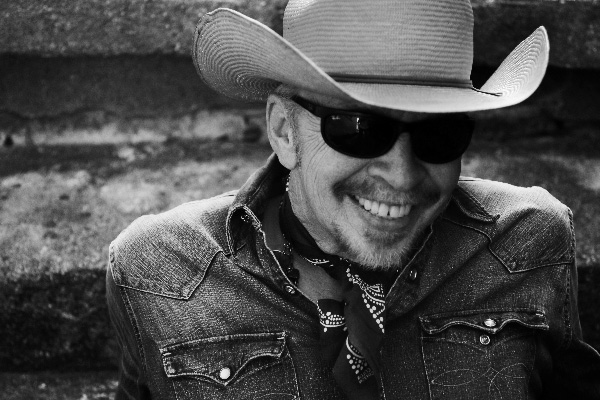
Photo by Todd Wolfson
Mettler: Getting back to the equipment: Did you eventually graduate to better-grade turntables and speakers as the years went by?
Alvin: At first, when I'd go to the stereo store, there would be an $800 turntable, or a $75 one. Guess which one I got? [chuckles] But it was about 25 or maybe 30 years ago when I started buying decent stuff. Johnny Bazz, the bass player in the Blasters, was always into high-end stereo, and I began thinking, "You know, I should probably have some really nice gear to play this music on." Now I have all this British NAD stuff (footnote 5).
After you spend enough time in recording studios, you get to thinking, "Why doesn't my stereo at home sound as good as this?" In the Blasters, we worked with Mark Linett, a great engineer (footnote 6), and he used to have—and I imagine he still does—he used to have what he called "the awful tones." When he was mixing, he'd go from the big speakers down to the quality speakers, the ones you tended to mix everything on. You'd hear the mix and go, "Okay, that sounds pretty good. Now let's hear it on the awful tones." [laughs]

Photo by Chip Duden
Alvin: I've never really had the budgets to where I could make what I call "top-end" recordings. Those are the ones where you can really hear the room or the studio, like with old Broadway recordings, operas, or on Miles Davis's Kind of Blue. The only thing I can do is make records where I try to be competitive sonically. If my record comes on after, say, a Pink Floyd record, it doesn't sound out of place. I can't beat Pink Floyd sonically, but I can at least try to stand head and shoulders with them.
Gavin Lurssen, the brilliant mastering engineer, he did this thing I wish more mastering guys would do. He mastered the second album I did with my brother Phil, Lost Time (footnote 8). While he was working on our record, he was also mastering a couple of high-end artists, and he would play 30 seconds of their records for us. First, it would be a hip-hop thing, then an urban/R&B vocalist, followed by an Eric Clapton record he'd just done—and then he'd play ours. He was like, "Okay, how do we make this record that cost 1% of what these other records cost sound competitive?" And I said, "Thank you for thinking that way about what we're going up against!" I've been trying to get mastering guys to do that for years—and I've worked with some really great mastering guys.
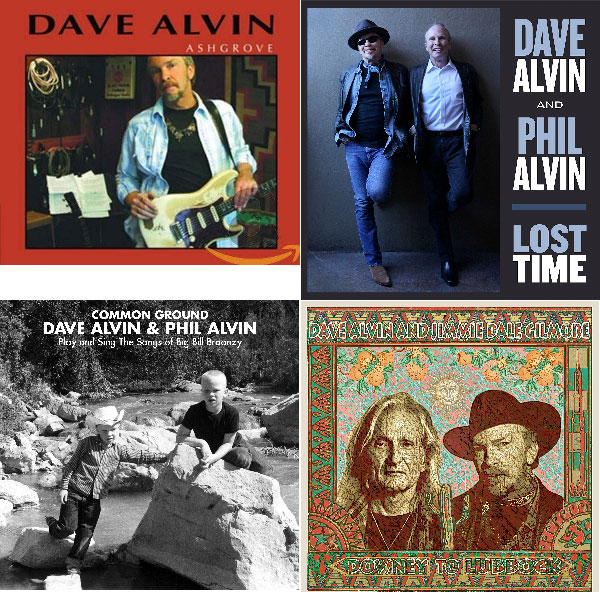 I'm still learning. That's fun for me. When I was getting ready to record the Ashgrove album [2004], Greg Leisz (footnote 9) said to me, "I found your engineer. His name is Craig Parker Adams. Don't be put off by the studio. It's a little beat up. It's a little small. But you're gonna like it." The room was about the size of Sun Studio. It was an old, beat-up Foley room from the 1930s with a gigantic ceiling—like 20, 25 feet—and the room itself was small.
Craig, who's a brilliant hard rock guitar player and a brilliant melodic musician, he knew exactly where to have the drums and the guitar amp so we could all be in the same room, looking at each other, in the same way Sam Phillips knew where to put the drums and the piano at Sun Studio.
The first day we were working on Ashgrove, it was like, "Well, let's get a feel for this." We did a take, and I turned to Craig and said, "Hey man, is it okay if I turn up my amp?" And Craig said, "Sure, turn it up! I can handle it." After years of having engineers tell me over and over to turn it down—and then turn it down some more—that's when I said, "You are my engineer!"
I'm still learning. That's fun for me. When I was getting ready to record the Ashgrove album [2004], Greg Leisz (footnote 9) said to me, "I found your engineer. His name is Craig Parker Adams. Don't be put off by the studio. It's a little beat up. It's a little small. But you're gonna like it." The room was about the size of Sun Studio. It was an old, beat-up Foley room from the 1930s with a gigantic ceiling—like 20, 25 feet—and the room itself was small.
Craig, who's a brilliant hard rock guitar player and a brilliant melodic musician, he knew exactly where to have the drums and the guitar amp so we could all be in the same room, looking at each other, in the same way Sam Phillips knew where to put the drums and the piano at Sun Studio.
The first day we were working on Ashgrove, it was like, "Well, let's get a feel for this." We did a take, and I turned to Craig and said, "Hey man, is it okay if I turn up my amp?" And Craig said, "Sure, turn it up! I can handle it." After years of having engineers tell me over and over to turn it down—and then turn it down some more—that's when I said, "You are my engineer!"
 With the Blasters' first few albums, we were a blues/R&B band that could play other stuff. I could write songs that weren't quite straight blues, but our attitude was still a Chicago blues band attitude, and you'd just get these monolithic sounds out of us.
On the last album I did with the Blasters, Hard Line, we mostly worked with a great producer named Jeff Eyrich (footnote 10). We'd gone to high school with Jeff, so we trusted him. We were working over at what was called Ocean Way Recording in those days. With that record, I started learning, "Oh—we're getting that greatest hits of Broadway sound on a couple of the tracks here!" Mostly, it was the typical "everybody into the pool!" Blasters—but there were other songs on there that weren't like that intentionally, and that opened me up to different styles of recording.
With the Blasters' first few albums, we were a blues/R&B band that could play other stuff. I could write songs that weren't quite straight blues, but our attitude was still a Chicago blues band attitude, and you'd just get these monolithic sounds out of us.
On the last album I did with the Blasters, Hard Line, we mostly worked with a great producer named Jeff Eyrich (footnote 10). We'd gone to high school with Jeff, so we trusted him. We were working over at what was called Ocean Way Recording in those days. With that record, I started learning, "Oh—we're getting that greatest hits of Broadway sound on a couple of the tracks here!" Mostly, it was the typical "everybody into the pool!" Blasters—but there were other songs on there that weren't like that intentionally, and that opened me up to different styles of recording.

Footnote 5: Though founded in London in 1972, NAD was acquired by Danish firm AudioNord in 1991, then sold in 1999 to the Lenbrook Group of Pickering, Ontario, Canada. Footnote 6: Mark Linett co-produced, recorded, mixed, and mastered the Blasters' 2002 live release, Trouble Bound. Footnote 7: Like many musicians of that era, Dave would check mixes on the stereo system in his car because he trusted the sound he was hearing in it would be akin to what listeners who bought the finished album would hear. Footnote 8: Lost Time was released in 2015 on Yep Roc. Footnote 9: A noted lap-steel and pedal-steel player who spent many years working and touring with k.d. lang, Leisz first began working with Dave Alvin in 1987. Footnote 10: Around the same time, Eyrich was also working with T Bone Burnett. Hard Line was released in 1985. Eyrich produced all but two tracks on the album.















