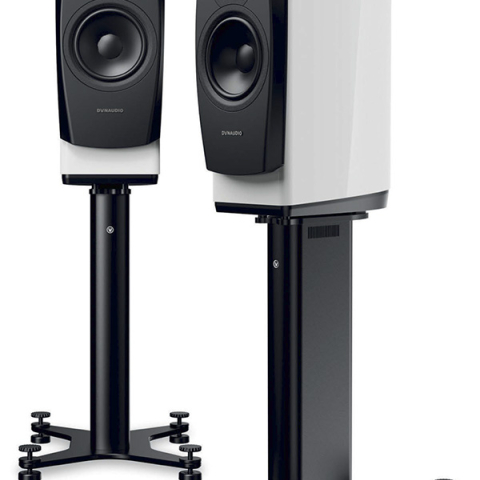
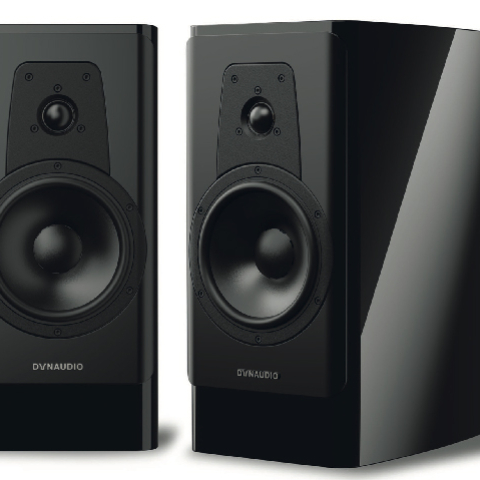
When rear-ported speakers are moved closer to the wall behind them, port plugs made of foam (or old socks) are sometimes necessary. Dynaudio's plug can be used to either fully block the Contour 20's port, or—by removing the center of the plug—merely narrow its aperture. I experimented with the plugs and nearly drove myself crazy. Every time I moved the speakers closer to or farther from the wall, I felt I had to try all three port possibilities: open, narrowed, and plugged. I was in audiophile purgatory.
After four days of anxious struggle, I ended up with the Contours slightly toed in, about 38" from the front wall to the front of each cabinet, 64" apart, and 82" from my ears. Their ports were narrowed, but not completely plugged, with the foam inserts. At which point I surrendered and began taking listening notes.
And then a fire struck
On the evening of my seventh day of listening to the Contour 20s, I removed the tiny Bel Canto powerhouse and replaced it with Line Magnetic's LM-518 IA tubed integrated amplifier (22Wpc). I attached the Contour 20s to the LM-518's 4-ohm taps and, gosh-dang me, suddenly I could relax. I played Charlie Haden/Jim Hall, recorded live at the Montreal Jazz Festival in 1990 (CD, Impulse!/Blue Note 002176502), kind of loud, and instantly realized that it was the Bel Canto that had been causing my discomfort. How could only 22Wpc be making Haden's double bass sound so much bigger and more real? How could Hall's guitar have so much more sweet liquidity? New life and color emerged. Folks, I'd just switched from 400Wpc class-D to 22Wpc class-A. How could this happen?
 Because the power was now limited, I had to set the volume just right—not too loud or too soft. Applause sounded very authentic. The groove moved and the room vibrated. Guitar and bass tones were rich and reverberant in a way that I can describe only as intoxicating. Everything seemed just right.
When I used the Line Magnetic only as a power amplifier with a Pass Labs HPA-1 acting as a preamp, the LM-518 IA played cleanly and beautifully, with extraordinary imaging, colors, and textures—up to a point. In addition to gradually and gently rolling off the Contour 20's highs, the LM-518 grew opaque as the volume rose into the loud zone. The Contour 20's liked the quality of the Line Magnetic's amplification; they just needed a few more watts.
So I offered them some—but only a few.
PrimaLuna Ballerina
Because the power was now limited, I had to set the volume just right—not too loud or too soft. Applause sounded very authentic. The groove moved and the room vibrated. Guitar and bass tones were rich and reverberant in a way that I can describe only as intoxicating. Everything seemed just right.
When I used the Line Magnetic only as a power amplifier with a Pass Labs HPA-1 acting as a preamp, the LM-518 IA played cleanly and beautifully, with extraordinary imaging, colors, and textures—up to a point. In addition to gradually and gently rolling off the Contour 20's highs, the LM-518 grew opaque as the volume rose into the loud zone. The Contour 20's liked the quality of the Line Magnetic's amplification; they just needed a few more watts.
So I offered them some—but only a few.
PrimaLuna Ballerina
Because I can't fully enjoy loudspeakers that sound good only within a narrow volume range, I decided to test the Contour 20's low- and high-level capabilities with a different amp—PrimaLuna's ProLogue Premium (35Wpc, $2199)—and two recordings of wide dynamic range.
The first was Carlo Maria Giulini conducting the Chicago Symphony Orchestra in an unheralded but beautifully executed recording of Stravinsky's Pétrouchka (LP, EMI C069-02070). My coming of age as a visual artist was profoundly affected by studying the artful music of Debussy and Stravinsky. I was especially impressed by how the brilliance of both artists was showcased by ballet impresario Sergei Diaghilev's Ballets Russes in that company's productions of Pétrouchka (1911) and The Afternoon of a Faun (1912), the latter choreographed to Debussy's Prelude to the Afternoon of a Faun, and both featuring the extraordinary talents of dancer and choreographer Vaslav Nijinsky (footnote 3). These milestone productions are surely among the highest artistic achievements of the 20th century.
Today, decades later, my enthusiasm for these works has been revitalized by how the PrimaLuna ProLogue Premium and Dynaudio Contour 20s reproduced Giulini's Pétrouchka with such hypnotizing depth of field and specificity of image. The soundstage was galaxy deep, the orchestra precisely arranged on it. The dark, vibrating, almost measurable spaces among the orchestral players kept grabbing my attention. Tonal qualities were so even and images so accurately described that I knew I'd finally gotten the Contour 20s set up and playing to my complete satisfaction.
I first played this vivid recording at a volume much lower than I normally do, to hear if it would turn dull, dark, or distant. It didn't. Instead of dull, I discovered a lively sonic luminescence that I've rarely experienced (from any loudspeaker) at such a low volume. The ProLogue Premium added a dash of second-order harmonic "glow" and noticeable sparkle to the Dynaudio's slightly dry, polite sound. Surprisingly, the PrimaLuna had more dynamic giddyup than the Line Magnetic or Schiit amps. In my small room, the modest ProLogue Premium, powered by EL34 tubes, allowed the Contour 20s to do everything I needed them to do. I stuck with using the PrimaLuna to drive the Contour 20s because that pairing kept making me listen deeper and more closely, day after day, night after night.
 You like close-miked LSD banjo? Wanna hear Hendrix on the mandolin? Wanna feel a violin's bow bend? When I clicked Play on Bill Monroe's "White House Blues," performed by Earl Taylor and the Stoney Mountain Boys, from the compilation Classic Bluegrass (CD, Smithsonian Folkways SFD 40092), I was blasted into submission. The Boys were killin' it.
The combo of Dynaudio Contour 20s and PrimaLuna ProLogue Premium played all the mountain ennui and fierce forward momentum that make classic bluegrass unique in the American songbook. Forget those "accurately layered soundstage" allusions —the only thing I, as a serious audio reviewer, feel I must do is be able to recognize divinely inspired picking, satanic bowing, and angelic singing when they appear between the speakers. When my system locks in and makes music truly happen (like it did here), I have no time for note taking, measuring, or analyzing soundstage depth. I pray daily to the audiophile gods: "Please, never let my hi-fi get too snooty for Snuffy Jenkins or Hazel Dickens!"
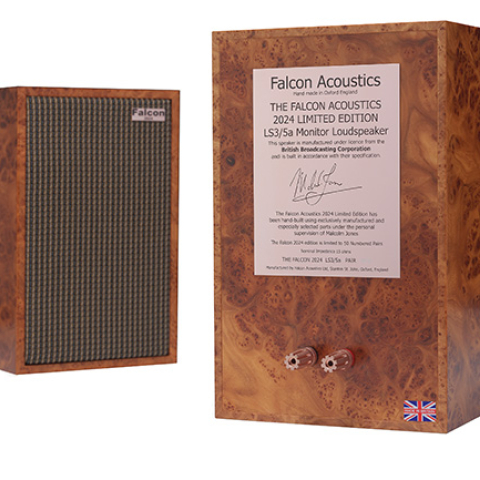
The Contour 20s' bigger boxes and 7.1" woofers generated greater weight and tone-truthfulness than KEF's LS50 ($1500/pair), Falcon Acoustics' LS3/5a ($2200/pair), or DeVore Fidelity's Gibbon 3XL ($3700/pair) stand-mounted models. But the DeVores produced a more seductive transparency. And the Falcons delivered more realistic timbres and precisely-expressed melodies.
Summing Up
You like close-miked LSD banjo? Wanna hear Hendrix on the mandolin? Wanna feel a violin's bow bend? When I clicked Play on Bill Monroe's "White House Blues," performed by Earl Taylor and the Stoney Mountain Boys, from the compilation Classic Bluegrass (CD, Smithsonian Folkways SFD 40092), I was blasted into submission. The Boys were killin' it.
The combo of Dynaudio Contour 20s and PrimaLuna ProLogue Premium played all the mountain ennui and fierce forward momentum that make classic bluegrass unique in the American songbook. Forget those "accurately layered soundstage" allusions —the only thing I, as a serious audio reviewer, feel I must do is be able to recognize divinely inspired picking, satanic bowing, and angelic singing when they appear between the speakers. When my system locks in and makes music truly happen (like it did here), I have no time for note taking, measuring, or analyzing soundstage depth. I pray daily to the audiophile gods: "Please, never let my hi-fi get too snooty for Snuffy Jenkins or Hazel Dickens!"
The Contour 20s' bigger boxes and 7.1" woofers generated greater weight and tone-truthfulness than KEF's LS50 ($1500/pair), Falcon Acoustics' LS3/5a ($2200/pair), or DeVore Fidelity's Gibbon 3XL ($3700/pair) stand-mounted models. But the DeVores produced a more seductive transparency. And the Falcons delivered more realistic timbres and precisely-expressed melodies.
Summing Up
Just when I began to believe that subjective and objective audiophiles would never agree, Dynaudio's new Contour 20 stand-mounted loudspeaker performed well on both the poetic and scientific levels. The Dynaudio Contour 20 is the first speaker I've heard that might actually be as neutral (I hate that word) as the best headphones. It displayed a near-perfect balance of the Apollonian and the Dionysian. It leaned a touch more toward the left side of my brain than I prefer, but not too much—just enough that I would never feel guilty recommending it to an objective-type audiophile. All of my modest in-house amplifiers caused the Dynaudio Contour 20s to deliver extremely satisfying sound—I can only imagine what even better amps might do with them.
Footnote 3: See www.youtube.com/watch?v=NKjEFxUiFME.
On the evening of my seventh day of listening to the Contour 20s, I removed the tiny Bel Canto powerhouse and replaced it with Line Magnetic's LM-518 IA tubed integrated amplifier (22Wpc). I attached the Contour 20s to the LM-518's 4-ohm taps and, gosh-dang me, suddenly I could relax. I played Charlie Haden/Jim Hall, recorded live at the Montreal Jazz Festival in 1990 (CD, Impulse!/Blue Note 002176502), kind of loud, and instantly realized that it was the Bel Canto that had been causing my discomfort. How could only 22Wpc be making Haden's double bass sound so much bigger and more real? How could Hall's guitar have so much more sweet liquidity? New life and color emerged. Folks, I'd just switched from 400Wpc class-D to 22Wpc class-A. How could this happen?
Because the power was now limited, I had to set the volume just right—not too loud or too soft. Applause sounded very authentic. The groove moved and the room vibrated. Guitar and bass tones were rich and reverberant in a way that I can describe only as intoxicating. Everything seemed just right.
When I used the Line Magnetic only as a power amplifier with a Pass Labs HPA-1 acting as a preamp, the LM-518 IA played cleanly and beautifully, with extraordinary imaging, colors, and textures—up to a point. In addition to gradually and gently rolling off the Contour 20's highs, the LM-518 grew opaque as the volume rose into the loud zone. The Contour 20's liked the quality of the Line Magnetic's amplification; they just needed a few more watts.
So I offered them some—but only a few.
PrimaLuna BallerinaBecause I can't fully enjoy loudspeakers that sound good only within a narrow volume range, I decided to test the Contour 20's low- and high-level capabilities with a different amp—PrimaLuna's ProLogue Premium (35Wpc, $2199)—and two recordings of wide dynamic range.
You like close-miked LSD banjo? Wanna hear Hendrix on the mandolin? Wanna feel a violin's bow bend? When I clicked Play on Bill Monroe's "White House Blues," performed by Earl Taylor and the Stoney Mountain Boys, from the compilation Classic Bluegrass (CD, Smithsonian Folkways SFD 40092), I was blasted into submission. The Boys were killin' it.
The combo of Dynaudio Contour 20s and PrimaLuna ProLogue Premium played all the mountain ennui and fierce forward momentum that make classic bluegrass unique in the American songbook. Forget those "accurately layered soundstage" allusions —the only thing I, as a serious audio reviewer, feel I must do is be able to recognize divinely inspired picking, satanic bowing, and angelic singing when they appear between the speakers. When my system locks in and makes music truly happen (like it did here), I have no time for note taking, measuring, or analyzing soundstage depth. I pray daily to the audiophile gods: "Please, never let my hi-fi get too snooty for Snuffy Jenkins or Hazel Dickens!"
The Contour 20s' bigger boxes and 7.1" woofers generated greater weight and tone-truthfulness than KEF's LS50 ($1500/pair), Falcon Acoustics' LS3/5a ($2200/pair), or DeVore Fidelity's Gibbon 3XL ($3700/pair) stand-mounted models. But the DeVores produced a more seductive transparency. And the Falcons delivered more realistic timbres and precisely-expressed melodies.
Just when I began to believe that subjective and objective audiophiles would never agree, Dynaudio's new Contour 20 stand-mounted loudspeaker performed well on both the poetic and scientific levels. The Dynaudio Contour 20 is the first speaker I've heard that might actually be as neutral (I hate that word) as the best headphones. It displayed a near-perfect balance of the Apollonian and the Dionysian. It leaned a touch more toward the left side of my brain than I prefer, but not too much—just enough that I would never feel guilty recommending it to an objective-type audiophile. All of my modest in-house amplifiers caused the Dynaudio Contour 20s to deliver extremely satisfying sound—I can only imagine what even better amps might do with them.
Footnote 3: See www.youtube.com/watch?v=NKjEFxUiFME.