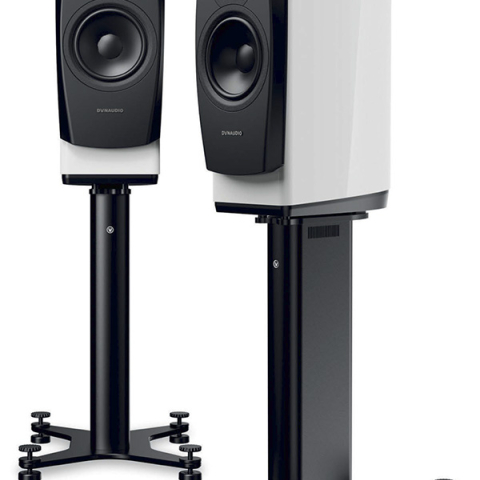
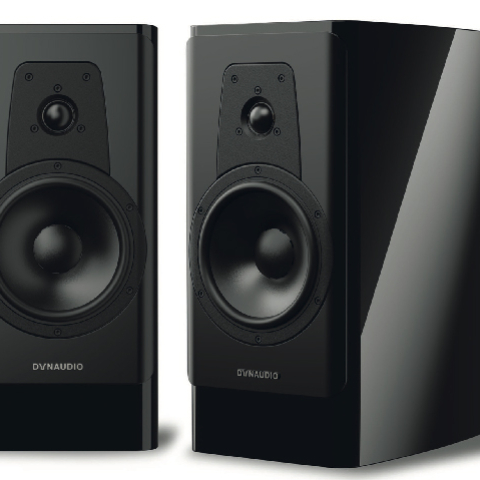
I listened to the Dynaudio rig both on my desktop and in the large classroom at nearby Peninsula College, where I taught classes in "Voices that Touch the Heart." Finally, I gave the setup a workout in my large, cathedral-ceilinged living room using Dynaudio's Stand 6 stands ($499/pair.) No matter where I played the Focus 200 XDs, they inspired a mixture of profound appreciation and disappointment. While the sound was clear, powerful, laudably neutral, and free of distortion, I consistently heard a bit of dryness at the centers of the voices of singers I've heard in person. That dryness lay in the core of the voice, between its overtones and undertones, and could not be ameliorated by flipping the Focus 200 XDs' Treble switch to +1.
True, the unique quality of each singer's voice came through loud and clear. But they all sounded as if in need of a spray of wild cherry bark syrup. Nor was this phenomenon limited to classical singers: it carried over to Ella Fitzgerald and Sarah Vaughan in various resolutions, and to Cécile McLorin Salvant, Melody Gardot, Tony Bennett, and many more. I couldn't help but wonder if this dryness was endemic to Dynaudio's digital amplification.
It wasn't. After upgrading the speaker firmware and receiving from Dynaudio the loan of an M2Tech 192kHz USB-to-S/PDIF adapter ($170, widely available online), I ditched the Benchmark DAC and used two Nordost Odin 1 75-ohm cables (BNC) equipped with BNC-to-RCA adapters to send digital signals directly from my computer to the Focus 200 XDs. Only then were the Dynaudios' strengths fully revealed.
 In my normally dry-sounding living room, what had sounded even drier with the Benchmark-Focus combo now came to life. James Taylor singing Christmas music (burned from CD) sounded lovely. Tenors, basses, and sopranos performing arias from Mozart's Die Zauberflöte sang gloriously. Ditto for everyone from Janet Jackson and Joss Stone to pianist Murray Perahia. When I compensated for the dryness by clicking the Dynaudios' Treble switches to +1, every recording and artist sounded right.
The most convincing comparison came in class, when I played Colin Davis's recording of Die Zauberflöte, with the Royal Opera House Covent Garden (BD, Opus Arte 7002), through the Oppo BDP-93. The first week, I fed Act I into the Benchmark DAC. The following week, I played Act II digitally, sans DAC. Save for a change of identical-level Nordost interconnects, everything else was the same. Yet feeding signals directly to the speakers replaced the dryness in voices and instruments with brighter colors and eminent liquidity. After I'd turned down their bass, which can be overwhelming even in large, unbounded spaces, the Focus 200 XDs delivered the best sound of the semester.
The next revelations arrived via wireless playback. It took a while to upgrade the Dynaudio Connect to the current firmware. Despite following all directions, I couldn't get it to transmit 24/96 signals. With Mike Manousselis on the phone, I tried reinstalling the upgrade. This time, a light on the unit kept flashing, and refused to stop until I'd unplugged it.
Things looked dire. Days later, when I dared try again, the Connect failed to sync with the Focus 200 XDs. That's when Manousselis told me to turn everything off and then turn it back on. I did. Music finally played wirelessly, from laptop to speakers. Remember Hint 1!
The best was still to come. Dynaudio's manual doesn't mention the Connect's range of operation, but I found this in their online FAQs: "The typical range in normal, open living areas is minimum 20 to 50 meters. The range also depends on the environment, in particular existing WiFi networks, other radio and wireless devices, walls as well as unknown interference from adjoining rooms, as Focus XD uses the same transmission frequency as many of these devices."
Given that different countries and cultures have very different living environments, who knows what "normal" is? But 50m=164', which is a considerable distance. Then again, most of us have a helluva lot of wireless devices that are capable of decreasing that range.
Party Time
In my normally dry-sounding living room, what had sounded even drier with the Benchmark-Focus combo now came to life. James Taylor singing Christmas music (burned from CD) sounded lovely. Tenors, basses, and sopranos performing arias from Mozart's Die Zauberflöte sang gloriously. Ditto for everyone from Janet Jackson and Joss Stone to pianist Murray Perahia. When I compensated for the dryness by clicking the Dynaudios' Treble switches to +1, every recording and artist sounded right.
The most convincing comparison came in class, when I played Colin Davis's recording of Die Zauberflöte, with the Royal Opera House Covent Garden (BD, Opus Arte 7002), through the Oppo BDP-93. The first week, I fed Act I into the Benchmark DAC. The following week, I played Act II digitally, sans DAC. Save for a change of identical-level Nordost interconnects, everything else was the same. Yet feeding signals directly to the speakers replaced the dryness in voices and instruments with brighter colors and eminent liquidity. After I'd turned down their bass, which can be overwhelming even in large, unbounded spaces, the Focus 200 XDs delivered the best sound of the semester.
The next revelations arrived via wireless playback. It took a while to upgrade the Dynaudio Connect to the current firmware. Despite following all directions, I couldn't get it to transmit 24/96 signals. With Mike Manousselis on the phone, I tried reinstalling the upgrade. This time, a light on the unit kept flashing, and refused to stop until I'd unplugged it.
Things looked dire. Days later, when I dared try again, the Connect failed to sync with the Focus 200 XDs. That's when Manousselis told me to turn everything off and then turn it back on. I did. Music finally played wirelessly, from laptop to speakers. Remember Hint 1!
The best was still to come. Dynaudio's manual doesn't mention the Connect's range of operation, but I found this in their online FAQs: "The typical range in normal, open living areas is minimum 20 to 50 meters. The range also depends on the environment, in particular existing WiFi networks, other radio and wireless devices, walls as well as unknown interference from adjoining rooms, as Focus XD uses the same transmission frequency as many of these devices."
Given that different countries and cultures have very different living environments, who knows what "normal" is? But 50m=164', which is a considerable distance. Then again, most of us have a helluva lot of wireless devices that are capable of decreasing that range.
Party Time
We're having a holiday party tomorrow. We expect 44 guests, and I'm certain that streaming some sweet, placid, New Age music via Tidal will help with our pre-party panic. Quickly, I wire the Connect to the iMac in the second-floor office. To reach the Focus 200 XDs wirelessly, the signal must traverse 10' of office space, a standard-width doorway, and the thick, solar-plexus–high guard wall of our second-story walkway, then go all the way down through the cathedral-ceilinged living room to the Focus 200 XDs in the far corner. "Holy shit!" may not be a New Age exclamation, but proclaim it I did when I heard New Age musician Deuter through the Focuses. At first, the music was a little on/off, with occasional skips. But once I'd moved the Connect in line with the doorway opening, and farther from my router, the music played without interruption. It wasn't the most colorful depiction of Deuter's music, not by a long shot—but as relaxing background music, it worked just fine. I would be remiss if I failed to mention how well the Dynaudios projected in the living room. True, their vibrancy was dimmed by the carpet and furnishings. But I could hear them all over the house: in the office above, in the adjacent dining room, and even around the corner, in the kitchen. Their 300Wpc strained not one bit to fill a large, two-story expanse with volume to spare. In fact, in my classes, they had to be placed some distance from the students, to prevent them from asking me to turn the volume down during dynamic swells. These are very powerful, full-voiced loudspeakers with a wide dynamic range.
Before and After
I would be remiss if I failed to mention how well the Dynaudios projected in the living room. True, their vibrancy was dimmed by the carpet and furnishings. But I could hear them all over the house: in the office above, in the adjacent dining room, and even around the corner, in the kitchen. Their 300Wpc strained not one bit to fill a large, two-story expanse with volume to spare. In fact, in my classes, they had to be placed some distance from the students, to prevent them from asking me to turn the volume down during dynamic swells. These are very powerful, full-voiced loudspeakers with a wide dynamic range.
Before and After
I was very curious to compare the sound of my original combo of Focus 110As (footnote 1) and Benchmark DAC1 USB with that of the Focus 200 XDs, the latter fed digital data. On my desktop, using the same Dynaudio speaker stands (they work well with the 200 XDs), I compared the setups with recordings of four very different pieces of music. Since the second two confirmed what the first two so clearly revealed, I'll limit discussion to those. For classical, I chose two 24/96 tracks: the final movement of Ludovic Morlot and the Seattle Symphony's recording of Dvorák's lyrical Symphony 9 (24/96 download, Seattle Symphony 1006/ HDTracks), and soprano Maria Callas's 1958 studio version of the blood-curdling Sleepwalking Scene from Verdi's Macbeth, with Nicola Rescigno conducting the Philharmonia Orchestra (24/96 download, Warner Classics 634015/ HDTracks). The differences were striking. While both systems sounded neutral and musical, the Focus 200 XDs had considerably more force behind them. The Dvorák's midrange was fuller and more fleshed out, hence more compelling. The dynamic contrasts in Callas's voice, even though compressed by the recording engineer, increased the bone-chilling impact of Lady Macbeth. Even though the soundstage was compromised by the computer screen between the speakers, the Focus 200 XDs allowed me to hear deeper into the music, and discern details and layering smudged by the Focus 110As.
Reality check
The Focus 200 XDs comprise a great system, but one with limits. When I recently covered a demo at Music Lovers Audio, in Berkeley, I played the Callas track through two systems: Vivid Audio's Oval B1 Decade speakers with Luxman and Spectral electronics, and Wilson Sasha 2 speakers with dCS and Ayre Acoustics electronics. Through both, everyone could hear a frighteningly dark churning in the middle of Callas's voice—one of the many features that make her Lady Macbeth so convincing. "Who would dare ask this woman to babysit your child or pet?" I asked. All agreed that to do so would invite disaster. While the Focus 200 XDs conveyed the essence of Callas's artistry, they couldn't flesh out that intentionally dark, knife-wielding middle of her voice. Instead, it was homogenized into the rest of her sound. Nor was that sound anywhere near as colorful and nuanced as it sounded through my own Wilson-dCS-Pass Labs-Nordost reference system. To hear it "all," or a convincing facsimile of same, requires speakers with more drivers, high-level electronics, and a whole lot more. But for what they are, the digital Dynaudios performed superbly well. When, in class, we played recordings of Beverly Sills as Maria Stuarda, people sat spellbound, and teared up at the beauty of her voice. These speakers really can sing. Conclusions
The Dynaudio Focus 200 XD self-powered digital loudspeaker system is an amazingly versatile, relatively lightweight, surprisingly powerful (300Wpc) high-resolution system that can deliver wired and wireless music reproduction that's fully digital-all-the-way-to-the-drivers. Its versatility includes treble, bass, and sensitivity controls for fine-tuning the sound to suit different environments.
While the Focus 200 XD yields its best sound in its wired, all-digital configuration, it can also wirelessly transmit impressive sound quality. Given how easy it is to transport the 200 XDs from place to place, and how adjustable they are, their versatility is self-recommending. If you've got room for them on your desktop, or are looking for stand-mounted speakers for a medium or even a large space—and especially if you want to dispense with several component boxes—they deserve an extended audition.
Footnote 1: Stereophile hasn't reviewed the Dynaudio Focus 110A but we did report on the similar Focus 160 in January 2012.—Ed.
In my normally dry-sounding living room, what had sounded even drier with the Benchmark-Focus combo now came to life. James Taylor singing Christmas music (burned from CD) sounded lovely. Tenors, basses, and sopranos performing arias from Mozart's Die Zauberflöte sang gloriously. Ditto for everyone from Janet Jackson and Joss Stone to pianist Murray Perahia. When I compensated for the dryness by clicking the Dynaudios' Treble switches to +1, every recording and artist sounded right.
The most convincing comparison came in class, when I played Colin Davis's recording of Die Zauberflöte, with the Royal Opera House Covent Garden (BD, Opus Arte 7002), through the Oppo BDP-93. The first week, I fed Act I into the Benchmark DAC. The following week, I played Act II digitally, sans DAC. Save for a change of identical-level Nordost interconnects, everything else was the same. Yet feeding signals directly to the speakers replaced the dryness in voices and instruments with brighter colors and eminent liquidity. After I'd turned down their bass, which can be overwhelming even in large, unbounded spaces, the Focus 200 XDs delivered the best sound of the semester.
The next revelations arrived via wireless playback. It took a while to upgrade the Dynaudio Connect to the current firmware. Despite following all directions, I couldn't get it to transmit 24/96 signals. With Mike Manousselis on the phone, I tried reinstalling the upgrade. This time, a light on the unit kept flashing, and refused to stop until I'd unplugged it.
We're having a holiday party tomorrow. We expect 44 guests, and I'm certain that streaming some sweet, placid, New Age music via Tidal will help with our pre-party panic. Quickly, I wire the Connect to the iMac in the second-floor office. To reach the Focus 200 XDs wirelessly, the signal must traverse 10' of office space, a standard-width doorway, and the thick, solar-plexus–high guard wall of our second-story walkway, then go all the way down through the cathedral-ceilinged living room to the Focus 200 XDs in the far corner. "Holy shit!" may not be a New Age exclamation, but proclaim it I did when I heard New Age musician Deuter through the Focuses. At first, the music was a little on/off, with occasional skips. But once I'd moved the Connect in line with the doorway opening, and farther from my router, the music played without interruption. It wasn't the most colorful depiction of Deuter's music, not by a long shot—but as relaxing background music, it worked just fine.
I would be remiss if I failed to mention how well the Dynaudios projected in the living room. True, their vibrancy was dimmed by the carpet and furnishings. But I could hear them all over the house: in the office above, in the adjacent dining room, and even around the corner, in the kitchen. Their 300Wpc strained not one bit to fill a large, two-story expanse with volume to spare. In fact, in my classes, they had to be placed some distance from the students, to prevent them from asking me to turn the volume down during dynamic swells. These are very powerful, full-voiced loudspeakers with a wide dynamic range.
I was very curious to compare the sound of my original combo of Focus 110As (footnote 1) and Benchmark DAC1 USB with that of the Focus 200 XDs, the latter fed digital data. On my desktop, using the same Dynaudio speaker stands (they work well with the 200 XDs), I compared the setups with recordings of four very different pieces of music. Since the second two confirmed what the first two so clearly revealed, I'll limit discussion to those. For classical, I chose two 24/96 tracks: the final movement of Ludovic Morlot and the Seattle Symphony's recording of Dvorák's lyrical Symphony 9 (24/96 download, Seattle Symphony 1006/ HDTracks), and soprano Maria Callas's 1958 studio version of the blood-curdling Sleepwalking Scene from Verdi's Macbeth, with Nicola Rescigno conducting the Philharmonia Orchestra (24/96 download, Warner Classics 634015/ HDTracks). The differences were striking. While both systems sounded neutral and musical, the Focus 200 XDs had considerably more force behind them. The Dvorák's midrange was fuller and more fleshed out, hence more compelling. The dynamic contrasts in Callas's voice, even though compressed by the recording engineer, increased the bone-chilling impact of Lady Macbeth. Even though the soundstage was compromised by the computer screen between the speakers, the Focus 200 XDs allowed me to hear deeper into the music, and discern details and layering smudged by the Focus 110As.
The Focus 200 XDs comprise a great system, but one with limits. When I recently covered a demo at Music Lovers Audio, in Berkeley, I played the Callas track through two systems: Vivid Audio's Oval B1 Decade speakers with Luxman and Spectral electronics, and Wilson Sasha 2 speakers with dCS and Ayre Acoustics electronics. Through both, everyone could hear a frighteningly dark churning in the middle of Callas's voice—one of the many features that make her Lady Macbeth so convincing. "Who would dare ask this woman to babysit your child or pet?" I asked. All agreed that to do so would invite disaster. While the Focus 200 XDs conveyed the essence of Callas's artistry, they couldn't flesh out that intentionally dark, knife-wielding middle of her voice. Instead, it was homogenized into the rest of her sound. Nor was that sound anywhere near as colorful and nuanced as it sounded through my own Wilson-dCS-Pass Labs-Nordost reference system. To hear it "all," or a convincing facsimile of same, requires speakers with more drivers, high-level electronics, and a whole lot more. But for what they are, the digital Dynaudios performed superbly well. When, in class, we played recordings of Beverly Sills as Maria Stuarda, people sat spellbound, and teared up at the beauty of her voice. These speakers really can sing. Conclusions
The Dynaudio Focus 200 XD self-powered digital loudspeaker system is an amazingly versatile, relatively lightweight, surprisingly powerful (300Wpc) high-resolution system that can deliver wired and wireless music reproduction that's fully digital-all-the-way-to-the-drivers. Its versatility includes treble, bass, and sensitivity controls for fine-tuning the sound to suit different environments.
Footnote 1: Stereophile hasn't reviewed the Dynaudio Focus 110A but we did report on the similar Focus 160 in January 2012.—Ed.