Cynics, stretch a bit here: After I wrote the paragraph directly above, I found an email containing tech notes from Forza that I'd forgotten about. "The placement of woofers close to the floor assists in bass coherency and more even distribution of room standing waves. This makes it easier to find a suitable listening position in the room, with fewer compromises in bass accuracy."
When the Wilson Audio Specialties XVXes were installed here almost a year ago, Christy Moore's "So Do I" from the album This Is the Day provided a benchmark for placement. Moore's voice could sound hooded or lacking weight in one spot, muffled in another spot, or just right, with clearly articulated lyrics in yet another spot. With the Forzas, I almost couldn't make Moore's voice sound less than ideal as I moved them inch by inch toward and away from the front wall. The touch of artificial reverb carefully tucked behind his voice was apparent wherever the speakers sat, perhaps more clearly revealed through the Forzas than through the XVXes. This proved true at both high and low SPLs.
That was true of the Forzas throughout my auditions: Their sonic character was consistent regardless of SPLs. Driving them to compression or discomfort proved impossible, and at the lowest SPLs, particularly after the electricity upgrade (footnote 4), they remained remarkably coherent and articulate. Low-level listening was pleasurable, but cranking them up, laying back, and soaking in the SPLs was even more so.
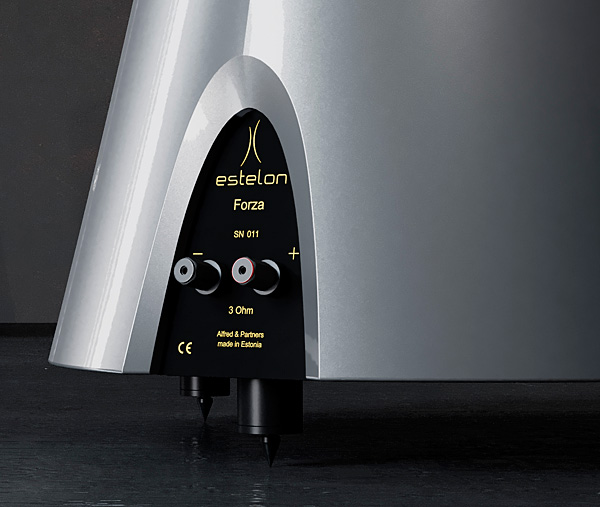 Once I was convinced that I'd found an ideal location, I worked on toe-in and out. Rotating the speaker around its central axis without also moving it fore and aft was not easy, but I managed. Excessive toe-in resulted in excellent center image focus but diminished soundstage width, and to a lesser degree depth, but as promised in the technical description these speakers did not beam or concentrate sound in a particular direction. I look forward to seeing the measurements.
Sound to love
Once I was convinced that I'd found an ideal location, I worked on toe-in and out. Rotating the speaker around its central axis without also moving it fore and aft was not easy, but I managed. Excessive toe-in resulted in excellent center image focus but diminished soundstage width, and to a lesser degree depth, but as promised in the technical description these speakers did not beam or concentrate sound in a particular direction. I look forward to seeing the measurements.
Sound to love
The Forza's low bass production was prodigious, well-controlled, and when the music contained none, AWOL—as it should be, with no hint of overhang. It never seemed to be coming from a box. That was one of the speaker's most impressive attributes: very deep bass "on-call," when required, but otherwise not present.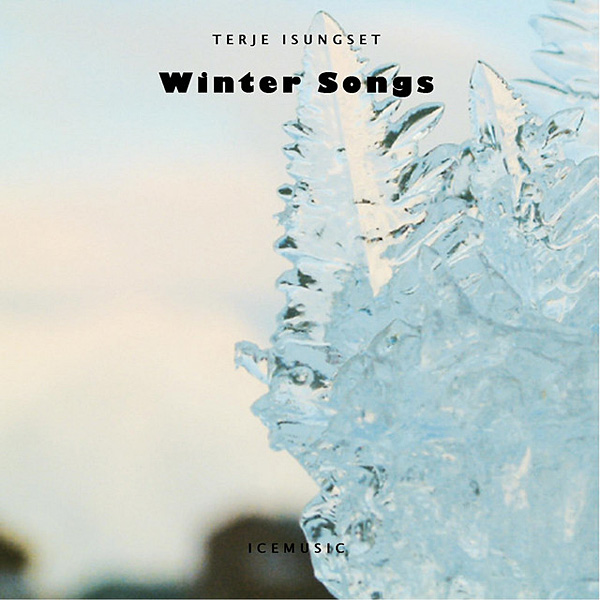 After the electricity upgrade, Audio-Ultra's Ed DeVito turned me on to Terje Isungset's spare (but not "icy" sounding) Winter Songs (Icemusic) from 2010, which Tidal calls "jazz" but which really isn't. DeVito wanted to hear the speaker's deep-bass production; most of what I'd played was rock music, little of which had much truly deep bass.
Stream Winter Songs (Icemusic) on Tidal (I didn't find it on Qobuz) and play "Arctic." If your speakers deliver the low-frequency goods and absent midbass bloat, you'll feel it from that track. The synth notes will spontaneously appear and drop away without decay (because there is none).
The speaker is rated to reproduce bass down to 25Hz. I believe it delivered that in the room, superbly well-focused, properly and compactly sized, consistently nonmechanical sounding, and fully satisfying.
The Forza's presentation of acoustic bass was equally exemplary: nimble and overhang-free. This is one sealed-box speaker that does not leave the bass (or any part of the music) "stuck in the box" or sounding compressed and restrained.
Had this review been written before the electricity up-grade described in this month's Analog Corner, I'd have had to toss the few minor negatives, including a slightly crispy, edgy upper midrange, but that was my electricity talking, not the speakers. The speaker's timbral neutrality and high resolution were communicating clearly a problem I had, and I was close to blaming the messenger!
Improved juice produced sonic enhancements to the Forza's fast, transparent, essentially colorless and smooth sonic personality (or lack thereof). If you want a loudspeaker with "warmth" or notably "crystalline highs," the Forza isn't your loudspeaker. Other than its effortless timbral transparency, it was difficult to pin down a sonic signature. Transient performance, attack, sustain and decay, macro- and especially microdynamic contrasts were as fine as I've heard from any loudspeaker.
Sometimes we think of certain speakers as better-suited to particular kinds of music. The Forza seemed able to mutate on call and effectively accommodate the music it was playing, becoming "better for classical" on classical music and "better for rock" on rock music, and so on. I listened to a lot of genres.
After the electricity upgrade, Audio-Ultra's Ed DeVito turned me on to Terje Isungset's spare (but not "icy" sounding) Winter Songs (Icemusic) from 2010, which Tidal calls "jazz" but which really isn't. DeVito wanted to hear the speaker's deep-bass production; most of what I'd played was rock music, little of which had much truly deep bass.
Stream Winter Songs (Icemusic) on Tidal (I didn't find it on Qobuz) and play "Arctic." If your speakers deliver the low-frequency goods and absent midbass bloat, you'll feel it from that track. The synth notes will spontaneously appear and drop away without decay (because there is none).
The speaker is rated to reproduce bass down to 25Hz. I believe it delivered that in the room, superbly well-focused, properly and compactly sized, consistently nonmechanical sounding, and fully satisfying.
The Forza's presentation of acoustic bass was equally exemplary: nimble and overhang-free. This is one sealed-box speaker that does not leave the bass (or any part of the music) "stuck in the box" or sounding compressed and restrained.
Had this review been written before the electricity up-grade described in this month's Analog Corner, I'd have had to toss the few minor negatives, including a slightly crispy, edgy upper midrange, but that was my electricity talking, not the speakers. The speaker's timbral neutrality and high resolution were communicating clearly a problem I had, and I was close to blaming the messenger!
Improved juice produced sonic enhancements to the Forza's fast, transparent, essentially colorless and smooth sonic personality (or lack thereof). If you want a loudspeaker with "warmth" or notably "crystalline highs," the Forza isn't your loudspeaker. Other than its effortless timbral transparency, it was difficult to pin down a sonic signature. Transient performance, attack, sustain and decay, macro- and especially microdynamic contrasts were as fine as I've heard from any loudspeaker.
Sometimes we think of certain speakers as better-suited to particular kinds of music. The Forza seemed able to mutate on call and effectively accommodate the music it was playing, becoming "better for classical" on classical music and "better for rock" on rock music, and so on. I listened to a lot of genres.
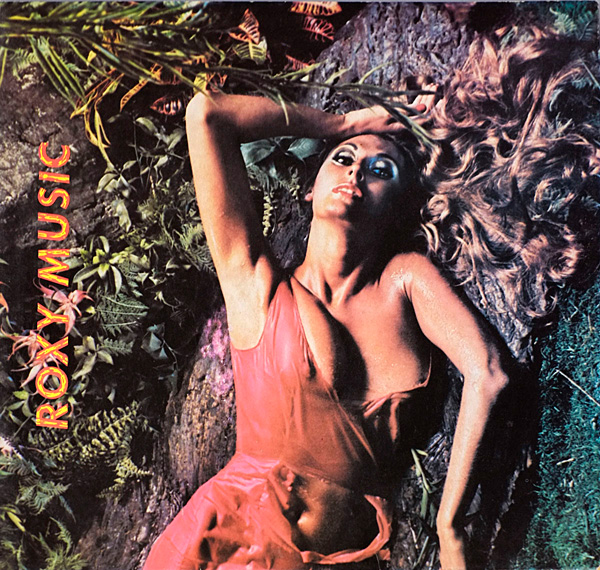 If there were any rips in the seamless timbral presentation, it might be in the lower midbass with certain kinds of records—familiar rock records that don't really have much real bass and so depend on a robust midbass for their foundation. On many such recordings, that foundation was somewhat thin. Apart from being mainly due to a defect in the recordings, this could also be room-related. I pulled out an original, pink-rimmed Island pressing of Roxy Music's Stranded (ILPS 9252), and while the speakers were able to cleanly resolve and present all the complex, twisty Jobson synth squiggles, searing Manzanera guitar screams, and Johnny Gustafson's bass lines, the sound lacked the expected weight. Same with Paul Thompson's nuanced kickdrum hits on "Psalm." The Forza perfectly communicated the kick-drum's subtle dynamic gradations, but the heavy kicks didn't have the force I'm used to. I'll take this presentation every time over excessive lower midbass "boom."
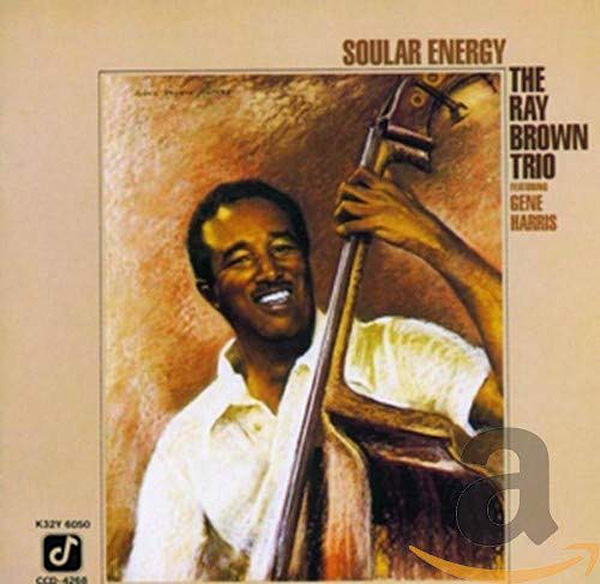 For an acoustic bass reality check, I played "Teach Me Tonight" from the Analogue Productions double 45rpm reissue of The Ray Brown Trio's Soular Energy (APJ 268-45). There was plenty of articulate, correctly presented stand-up bass—especially when I accidentally started it at 33 1/3 rpm. Gene Harris's piano sounded particularly right, especially its clean attack, the resulting sustain, and the natural decay.
I auditioned an impeccably packaged Electric Recording Company 7 LP mono box set reissue of the late Hungarian pianist Lili Kraus performing Mozart piano sonatas, Mozart L'Oeuvre de Piano par Lili Kraus (ERC 065), playing it back using the Miyajima Labs Infinity mono cartridge. The piano appeared effortlessly between the speakers, so cleanly and naturally rendered: no overhang on the low end of the keyboard and no "tinkly" toy piano sounds near the top.
I played a few sides using two installed stereo cartridges (the preamp set to mono) and found that the speaker's impressive neutrality clarified the known, attractive sonic attributes of the two (Ortofon Anna D, X-quisite ST). What's more, I heard the familiar differences between the CH Precision P1/X1 phono preamp and the Ypsilon VPS-100 delineated more clearly than ever.
Returning to the Infinity mono: The initial transient was neither too soft nor too hard. The sustain was generous, and the decay was natural. The mono recording is fairly closely miked in what sounds like a dry studio setting; with minimal room sound on the recording, the feeling of being in the presence of a real piano was palpable and so insistently natural and effortless that I played through all seven records in one sitting—something I don't think I've ever done with solo classical piano music. I felt I was hearing Kraus brought back to life. The amazing recording and superb mastering helped.
Granted I'm not a student of Mozart's piano sonatas, but I own and have heard many performances of them, some recorded live. This is now my favorite, easily. Kraus makes you hang on every nimbly played note. She's never glib, and her clarity and dynamic expressiveness (and of course the speaker's ability to convey it all) kept me listening for 14 sides.
The spatial picture
For an acoustic bass reality check, I played "Teach Me Tonight" from the Analogue Productions double 45rpm reissue of The Ray Brown Trio's Soular Energy (APJ 268-45). There was plenty of articulate, correctly presented stand-up bass—especially when I accidentally started it at 33 1/3 rpm. Gene Harris's piano sounded particularly right, especially its clean attack, the resulting sustain, and the natural decay.
I auditioned an impeccably packaged Electric Recording Company 7 LP mono box set reissue of the late Hungarian pianist Lili Kraus performing Mozart piano sonatas, Mozart L'Oeuvre de Piano par Lili Kraus (ERC 065), playing it back using the Miyajima Labs Infinity mono cartridge. The piano appeared effortlessly between the speakers, so cleanly and naturally rendered: no overhang on the low end of the keyboard and no "tinkly" toy piano sounds near the top.
I played a few sides using two installed stereo cartridges (the preamp set to mono) and found that the speaker's impressive neutrality clarified the known, attractive sonic attributes of the two (Ortofon Anna D, X-quisite ST). What's more, I heard the familiar differences between the CH Precision P1/X1 phono preamp and the Ypsilon VPS-100 delineated more clearly than ever.
Returning to the Infinity mono: The initial transient was neither too soft nor too hard. The sustain was generous, and the decay was natural. The mono recording is fairly closely miked in what sounds like a dry studio setting; with minimal room sound on the recording, the feeling of being in the presence of a real piano was palpable and so insistently natural and effortless that I played through all seven records in one sitting—something I don't think I've ever done with solo classical piano music. I felt I was hearing Kraus brought back to life. The amazing recording and superb mastering helped.
Granted I'm not a student of Mozart's piano sonatas, but I own and have heard many performances of them, some recorded live. This is now my favorite, easily. Kraus makes you hang on every nimbly played note. She's never glib, and her clarity and dynamic expressiveness (and of course the speaker's ability to convey it all) kept me listening for 14 sides.
The spatial picture
The Forza's soundstage was not the widest or deepest I've experienced in my room, nor was it wrap-around enveloping, but it was ultrastable, and the images presented on it, on the best recordings, were precise, 3D, and solid. Soundstage champs like The Royal Ballet (Classic Records/RCA LDS 6055) produced a fine spread. The rear stage corners were not as fully expressed as is possible.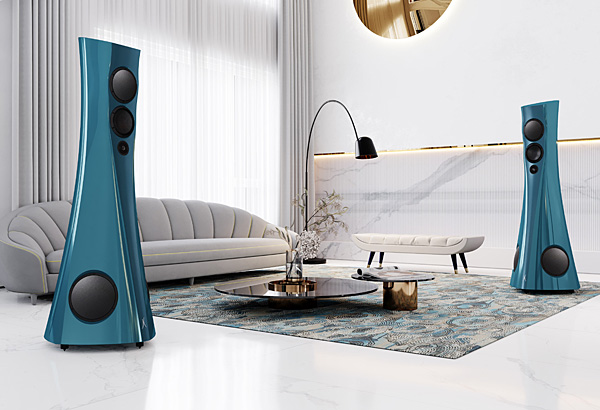 However, on spacious recordings, the stage sets up nicely slightly behind the baffles, and the speakers never interfered in the illusion. There was plenty to look at, and detail resolution, especially low-level detail, more than compensated because often there was something new to "see," or something familiar more clearly presented, like the reverb behind Christy Moore's voice, now cleanly separated from his voice. The speaker's transparency lets you see way into the soundstage—and that was true before the electricity upgrade, though it was enhanced by it.
Perhaps the less-than-expansive stage was because these speakers are intended for a larger, less acoustically treated room? I don't know. I experimented a great deal with toe-in and out, and I feel I got the most I could in that regard—and in every performance criteria you can think of in this space. It was more than sufficient to have a few extremely enjoyable months listening to a most impressive, coherent fullrange loudspeaker, but it's possible that they could do better still in a different space.
Conclusion
However, on spacious recordings, the stage sets up nicely slightly behind the baffles, and the speakers never interfered in the illusion. There was plenty to look at, and detail resolution, especially low-level detail, more than compensated because often there was something new to "see," or something familiar more clearly presented, like the reverb behind Christy Moore's voice, now cleanly separated from his voice. The speaker's transparency lets you see way into the soundstage—and that was true before the electricity upgrade, though it was enhanced by it.
Perhaps the less-than-expansive stage was because these speakers are intended for a larger, less acoustically treated room? I don't know. I experimented a great deal with toe-in and out, and I feel I got the most I could in that regard—and in every performance criteria you can think of in this space. It was more than sufficient to have a few extremely enjoyable months listening to a most impressive, coherent fullrange loudspeaker, but it's possible that they could do better still in a different space.
Conclusion
The Estelon Forza is a costly, well-engineered, striking-looking, exciting-sounding loudspeaker that, with the right associated equipment, is capable of delivering spectacular sonic performances. Based on the published specs and looking at the watts it consumed on the darTZeel amplifiers' front-panel meters, it seems to require a powerful amplifier to perform at its best. Its low coloration means that it is capable of great warmth on warm-sounding recordings and of ice on the cold ones. If you're looking for a speaker to warm things up in a system that's too cool, don't expect the Forza to do that for you. And who really wants that? Once you notice such coloration in your system, it's impossible to not hear it.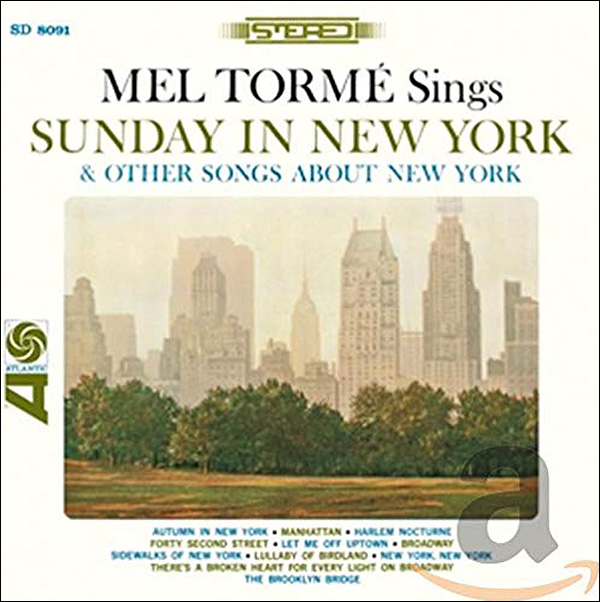 The Forza well served both male and female vocals; I could cite a laundry list of them, but I'll cite just one: Mel Tormé's Sings Sunday in New York and Other Songs About New York (Atlantic SD 8091) recorded by the great Bill Putnam. "The Velvet Fog" is right on top of a microphone with a rising top end, dryly presented with the orchestra arrayed around him.
You wouldn't want the speaker to add a chesty warmth to Tormé's voice, and the Forza doesn't, which keeps the sonic compact, believable, and focused. When he dips low, the vocal stays whole and doesn't fall into a pool of warm. You stick with Mel throughout because the speaker helps create the illusion that he's right there in your room.
The Forza is a marvelous loudspeaker.
The Forza well served both male and female vocals; I could cite a laundry list of them, but I'll cite just one: Mel Tormé's Sings Sunday in New York and Other Songs About New York (Atlantic SD 8091) recorded by the great Bill Putnam. "The Velvet Fog" is right on top of a microphone with a rising top end, dryly presented with the orchestra arrayed around him.
You wouldn't want the speaker to add a chesty warmth to Tormé's voice, and the Forza doesn't, which keeps the sonic compact, believable, and focused. When he dips low, the vocal stays whole and doesn't fall into a pool of warm. You stick with Mel throughout because the speaker helps create the illusion that he's right there in your room.
The Forza is a marvelous loudspeaker.
Footnote 4: See this month's Analog Corner.
Once I was convinced that I'd found an ideal location, I worked on toe-in and out. Rotating the speaker around its central axis without also moving it fore and aft was not easy, but I managed. Excessive toe-in resulted in excellent center image focus but diminished soundstage width, and to a lesser degree depth, but as promised in the technical description these speakers did not beam or concentrate sound in a particular direction. I look forward to seeing the measurements.
Sound to loveThe Forza's low bass production was prodigious, well-controlled, and when the music contained none, AWOL—as it should be, with no hint of overhang. It never seemed to be coming from a box. That was one of the speaker's most impressive attributes: very deep bass "on-call," when required, but otherwise not present.
After the electricity upgrade, Audio-Ultra's Ed DeVito turned me on to Terje Isungset's spare (but not "icy" sounding) Winter Songs (Icemusic) from 2010, which Tidal calls "jazz" but which really isn't. DeVito wanted to hear the speaker's deep-bass production; most of what I'd played was rock music, little of which had much truly deep bass.
If there were any rips in the seamless timbral presentation, it might be in the lower midbass with certain kinds of records—familiar rock records that don't really have much real bass and so depend on a robust midbass for their foundation. On many such recordings, that foundation was somewhat thin. Apart from being mainly due to a defect in the recordings, this could also be room-related. I pulled out an original, pink-rimmed Island pressing of Roxy Music's Stranded (ILPS 9252), and while the speakers were able to cleanly resolve and present all the complex, twisty Jobson synth squiggles, searing Manzanera guitar screams, and Johnny Gustafson's bass lines, the sound lacked the expected weight. Same with Paul Thompson's nuanced kickdrum hits on "Psalm." The Forza perfectly communicated the kick-drum's subtle dynamic gradations, but the heavy kicks didn't have the force I'm used to. I'll take this presentation every time over excessive lower midbass "boom."
For an acoustic bass reality check, I played "Teach Me Tonight" from the Analogue Productions double 45rpm reissue of The Ray Brown Trio's Soular Energy (APJ 268-45). There was plenty of articulate, correctly presented stand-up bass—especially when I accidentally started it at 33 1/3 rpm. Gene Harris's piano sounded particularly right, especially its clean attack, the resulting sustain, and the natural decay.
I auditioned an impeccably packaged Electric Recording Company 7 LP mono box set reissue of the late Hungarian pianist Lili Kraus performing Mozart piano sonatas, Mozart L'Oeuvre de Piano par Lili Kraus (ERC 065), playing it back using the Miyajima Labs Infinity mono cartridge. The piano appeared effortlessly between the speakers, so cleanly and naturally rendered: no overhang on the low end of the keyboard and no "tinkly" toy piano sounds near the top.
The Forza's soundstage was not the widest or deepest I've experienced in my room, nor was it wrap-around enveloping, but it was ultrastable, and the images presented on it, on the best recordings, were precise, 3D, and solid. Soundstage champs like The Royal Ballet (Classic Records/RCA LDS 6055) produced a fine spread. The rear stage corners were not as fully expressed as is possible.
However, on spacious recordings, the stage sets up nicely slightly behind the baffles, and the speakers never interfered in the illusion. There was plenty to look at, and detail resolution, especially low-level detail, more than compensated because often there was something new to "see," or something familiar more clearly presented, like the reverb behind Christy Moore's voice, now cleanly separated from his voice. The speaker's transparency lets you see way into the soundstage—and that was true before the electricity upgrade, though it was enhanced by it.
Perhaps the less-than-expansive stage was because these speakers are intended for a larger, less acoustically treated room? I don't know. I experimented a great deal with toe-in and out, and I feel I got the most I could in that regard—and in every performance criteria you can think of in this space. It was more than sufficient to have a few extremely enjoyable months listening to a most impressive, coherent fullrange loudspeaker, but it's possible that they could do better still in a different space.
The Estelon Forza is a costly, well-engineered, striking-looking, exciting-sounding loudspeaker that, with the right associated equipment, is capable of delivering spectacular sonic performances. Based on the published specs and looking at the watts it consumed on the darTZeel amplifiers' front-panel meters, it seems to require a powerful amplifier to perform at its best. Its low coloration means that it is capable of great warmth on warm-sounding recordings and of ice on the cold ones. If you're looking for a speaker to warm things up in a system that's too cool, don't expect the Forza to do that for you. And who really wants that? Once you notice such coloration in your system, it's impossible to not hear it.
The Forza well served both male and female vocals; I could cite a laundry list of them, but I'll cite just one: Mel Tormé's Sings Sunday in New York and Other Songs About New York (Atlantic SD 8091) recorded by the great Bill Putnam. "The Velvet Fog" is right on top of a microphone with a rising top end, dryly presented with the orchestra arrayed around him.
Footnote 4: See this month's Analog Corner.