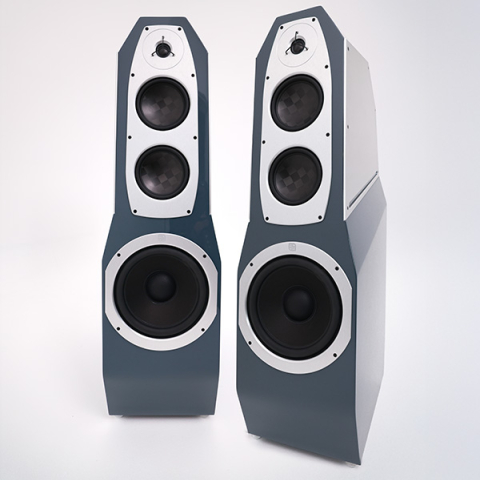
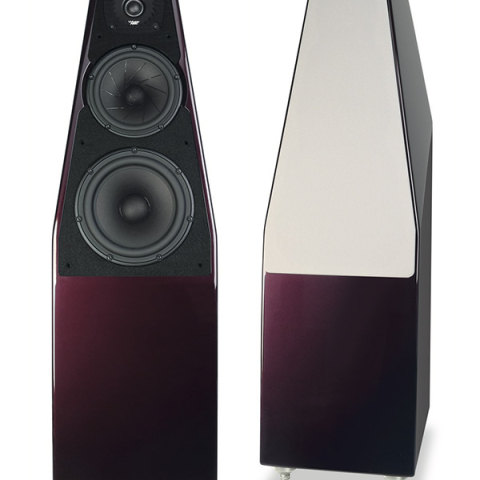
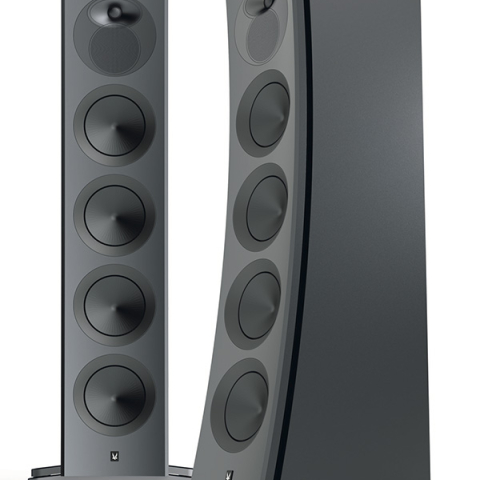
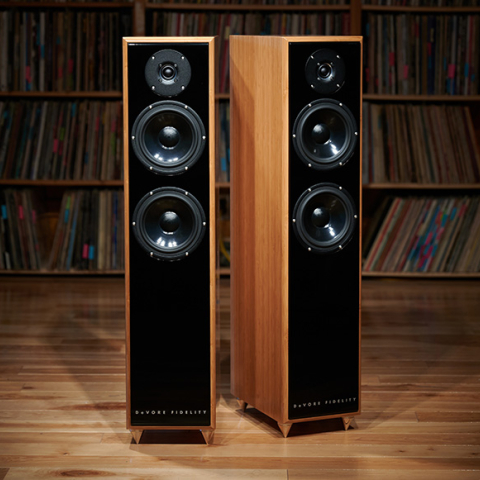
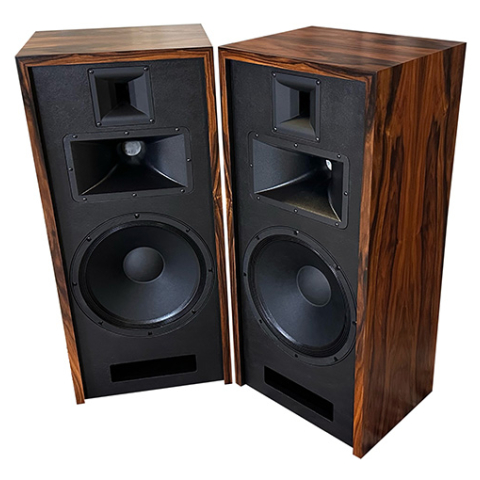
In his introduction to this review, Alex Halberstadt describes the conversations we had that led to the project of which this review is the first result. In those conversations, I suggested he seek out current commercial speakers that share virtues with his beloved vintage Altecs, ideally with fewer sonic compromises.
What compromises? The late Art Dudley, himself an Altec enthusiast (and Valencia owner), wrote about the Altec's shortcomings. When he first set up his Valencias, Art described "an aggressive and, at the worst of times, a downright steely quality woven within the lower treble. Some records that sounded reliably sweet through my Audio Note AN-Es or my borrowed DeVore Orangutan O/96s were shorn of that quality, and a small percentage of innately bright recordings in my collection were now off-putting or, at worst, unpleasant. Yikes almighty." That steely quality, he surmised, was a consequence of a material resonance in the metal horns.
Later, after he had mitigated the Altecs' vices by putting them up on stands and optimizing their positions in the room—among other adjustments, he moved them farther from the listening position—he reported that still, "with some recordings, especially during loud passages with significant high-frequency content, there remains a faint lattice of exaggeration in the upper-mid and treble ranges, which imparts to some instruments an aggressive quality. Among other things, the Altec Valencias dislike vigorously struck cymbals, and overlook few opportunities to remind me of the fact."
That sounds mighty unpleasant, but there's far more on the positive side of the ledger. Space limitations prevent me from including here all the praise Art heaped on the Altec's sound. You can read it for yourself here.
When I shared this passage with Alex in an email, he responded, "My experiences with the Altecs are very similar to Art's. I wrote about the 'steely quality' he describes in my Line Magnetic review. I also found that getting them off the floor and positioning them carefully ameliorated this issue significantly. With most amps, it doesn't bother me at all, as I think my brain has learned to compensate." Anyway, he summed up, "they do so much right that I think it's an entirely reasonable tradeoff."
In his introduction, Alex wrote, "From the vantage of the present day, it seems obvious to me that dynamic compression is a coloration, too—potentially a more meaningful one than frequency response peaks and valleys." I tend to associate the word "color" with spectral character—frequency response—but whatever you call it, the mildness or absence of that startle factor is a way in which most reproduced music sounds different from real, live music. (I believe that audio engineers deserve a share of this blame, for taking the dynamic edge off recordings. It could be that speakers like the Altecs are adding—back?—something the recording and mastering engineers left off.)
At a given price point, taste in loudspeakers comes down, apparently, to which compromises each of us finds most, and least, tolerable.
By the way, Art and Alex are hardly the only Altec admirers among Stereophile contributors. Stereophile founder J. Gordon Holt was also a fan; read his short 1966 description of the Altec A7 "Voice of the Theater" speakers, which he placed on the first Recommended Components list in Vol.1 No.12. Many years ago, when they were still sold new and on Stereophile's Recommended Components list, even Kal Rubinson owned a pair.– Jim Austin