Not so long ago, the 1970s were regularly and fairly vociferously disparaged as a musical wasteland. Lately however, it's become very noticeable, especially since Madison Avenue is now using '70s tunes to sell everything from cars to ice cream, that those voices have largely gone silent.
In fact, there is now a growing chorus from many different quarters—jazz and classical music fans included—that sing the praises of '70s music: that magical time before the compact disc, before Napster, before all the money drained out of the music business, and young folks decided that instead of creating music they would pour their good energies into building mobile apps, designing games and assembling beats.
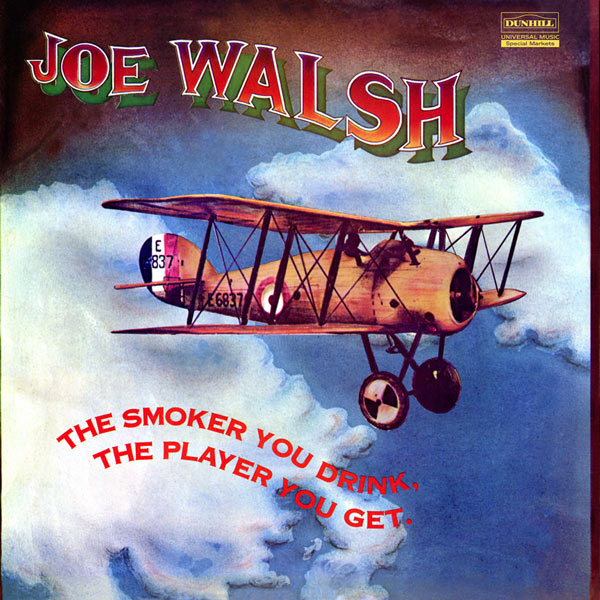
One of the 1970s' seminal hard-rock acts was the James Gang, a power trio led by a Kansas-born guitar player named Joe Walsh. The band released its masterpiece, James Gang Rides Again, initially with an unlicensed cover of Maurice Ravel's "Bolero" on side one, in 1970. Two lesser albums later, Walsh left the band, moved to Colorado and formed another trio, Barnstorm, which included drum and flute player Joe Vitale and bassist Kenny Passarelli, both of whom could also sing. Signed to ABC/Dunhill Records by Bill Szymczyk, who went on to become the band's producer, the group, now a quartet with keyboardist/vocalist Rocke Grace aboard, hit it big on their second and final record together, The Smoker You Drink, The Player You Get.
An outstanding new 200gm LP reissue from Analogue Productions, with improved sound thanks to a sparkling new remaster by Kevin Gray at Cohearent Audio, makes it clear that this 1973 release remains—with the possible exception of 1978's But Seriously, Folks . . .—the undisputed highlight of Walsh's solo career.
Billed on the cover as a Joe Walsh record—the cover with the airplane seemingly flying upside down!—these nine tracks became his commercial breakthrough thanks to the hit, "Rocky Mountain Way." This once ubiquitous single is also one of the earliest and best-known uses on record of the vocal talk box, which allows a musician to shape a guitar sound with his mouth.
Smoker is also a classic example of another 70s phenomenon that's now faded: albums that were a great listen all the way through. What was the most frequently heard criticism of the CD? That you had to pay $18 to get one hit and a bunch of other material that was marginal at best! Here, it's not just two hits surrounded by filler. Also all these tracks were deliberately sequenced to be a coherent program of music. Ahhh, the '70s album, what a glorious art form it was!
Best of all, are the quality of the recording done at Caribou Ranch and the variety of what was captured on tape. The mix here between the quieter. more reflective tracks like Vitale's "Days Gone By," where his flute provides a not unwelcome flavor, and the riff-rock hits "Rocky Mountain Way" and "Meadows," is nearly perfect. The instrumental "Midnight Moodies" (with Vitale's flute again) and the Latin-beat "Happy Ways" are solid, tuneful tracks buried deep on side one. And after "Meadows" on side two, "Dreams" with its ARP synth squiggles and the tiny closer, "Daydream (Prayer)" where all four voices in Barnstorm soar into a rock hosanna of sorts, combine to make this a really marvelous record in the best traditions of 7190s rock.
Another week, another beautiful-sounding, wonderfully packaged reissue from Analogue Productions.