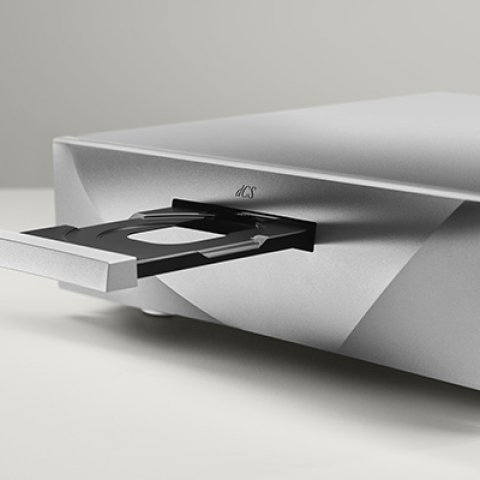
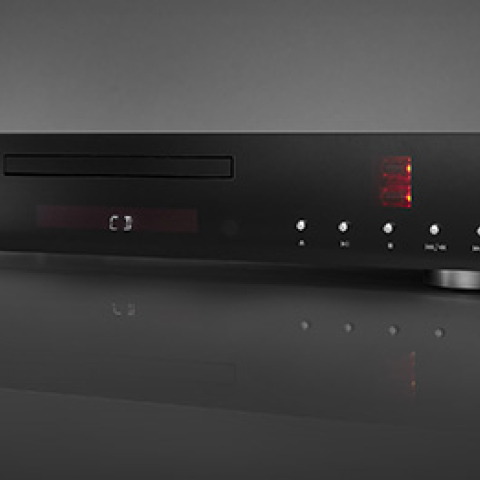
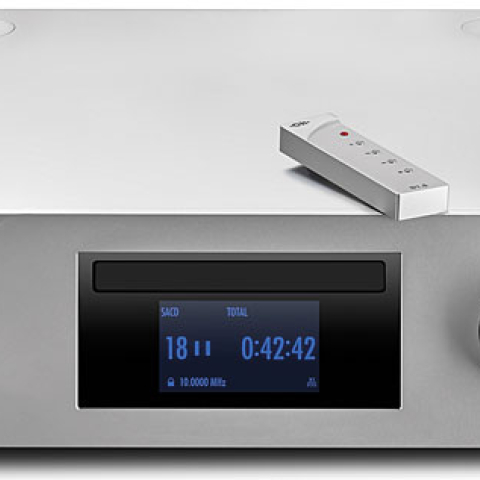
Although I don't care for remote controls in general, the Kalista's is noteworthy if only because its housing is made entirely of aluminum, and is formed with a pleasant-feeling ridge around its outer edge—it's reassuringly heavy. Its Mute button has no effect, leading me to assume there are other Métronome or Kalista products to which it corresponds; an unexpected bonus is a pair of buttons that diminish or increase the brightness of the display—though these are actually labeled Vol– and Vol+.
Listening
Here's the thing that set into motion such a difficult task: I chose for the DreamPlay One's maiden flight the album Looking Back, by the progressive bluegrass trio Phillips, Grier & Flinner (Compass 7 4342 2). As the first selection, an instrumental version of Bill Monroe's "Tennessee Blues," filled the room, I was impressed to a degree that seldom happens when I fire up a new piece of gear: In particular, I was genuinely surprised by the sheer sense of the presence of the acoustic instruments before me, especially Todd Phillips's double bass, which enters on a simple two-note kickoff (E2 to A1). Matt Flinner's mandolin and David Grier's guitar were similarly there, and the image of each instrument was of the right size, relative to the others and in absolute terms. I was reminded of the latter characteristic just a few measures later, when Phillips plays a deep E1 against the dominant chord: through the Kalista, his bass was identifiably big, not to mention resonant, not to mention unmistakably wooden. But it wasn't just the sound that impressed me—it was also the music-making. In "Tennessee Blues," it isn't until the middle of Flinner's third chorus as a soloist that bassist Phillips begins a steady two-notes-to-the-bar rhythm; through the Kalista, when the song reached that point, the increase in momentum—and excitement—was palpable.
I was so impressed that I at once dragged my heavy-ass Sony disc player back into the room for an immediate direct comparison. Through the Sony, the tempo of Phillips's bass didn't lag, per se—it simply lacked life. The comparison suggested, correctly or not, that the DreamPlay One was able to find and preserve all of the tiny randomnesses that otherwise go unnoticed—microdetails of timing and texture that, when finally, rarely heard, tell me: That's a human being making those notes.
But it wasn't just the sound that impressed me—it was also the music-making. In "Tennessee Blues," it isn't until the middle of Flinner's third chorus as a soloist that bassist Phillips begins a steady two-notes-to-the-bar rhythm; through the Kalista, when the song reached that point, the increase in momentum—and excitement—was palpable.
I was so impressed that I at once dragged my heavy-ass Sony disc player back into the room for an immediate direct comparison. Through the Sony, the tempo of Phillips's bass didn't lag, per se—it simply lacked life. The comparison suggested, correctly or not, that the DreamPlay One was able to find and preserve all of the tiny randomnesses that otherwise go unnoticed—microdetails of timing and texture that, when finally, rarely heard, tell me: That's a human being making those notes.
 While the SCD-777 was still in my listening room, I used it to play cellist Pieter Wispelwey's recording of the Andante cantabile from Tchaikovsky's String Quartet 1, arranged for cello and string orchestra, from the "Red Book" CD layer of a 2001 SACD/CD (Channel Classics CCS SA 16501). I felt a decent level of involvement—about what I've come to expect with the Sony, after 17 years of ownership—and a sound that was minimally colorful and textured, with a slight upward tilt to its overall timbral balance. When I moved that disc over to the DreamPlay One, I heard improvements both sonic and musical: I can't say there was a better suggestion of the cello's presence in my room, as there'd been virtually none with the Sony—but through the Kalista there was fine presence and, again, a convincing sense of scale. The cello sounded more colorful and more (appropriately) resonant, and Wispelwey's playing impressed me as feeling more purposeful, driven, and expressive.
I followed up with the London Symphony Orchestra, under ?iven Fjeldstadt, playing Grieg's Peer Gynt suite, in a reissue of the great Decca/London recording (London/Classic Compact Discs CSCD 6049). With the Kalista player, out poured the colorful, tactile, limber Decca sound one associates with their famous SXL series of classical LPs. Once again I made a direct comparison with the Sony, and once again the Kalista allowed the music more dynamic nuance and force, the latter especially audible in the strings at the beginning of Dance of the Mountain King's Daughter. And the Kalista, despite sounding more tonally balanced than the slightly tipped-up Sony, provided considerably more detail throughout—most notably at the beginning of Arabian Dance, in which the cymbal on the downbeats was easier to hear. From that point forward, the Sony was re-banished to my office.
While the SCD-777 was still in my listening room, I used it to play cellist Pieter Wispelwey's recording of the Andante cantabile from Tchaikovsky's String Quartet 1, arranged for cello and string orchestra, from the "Red Book" CD layer of a 2001 SACD/CD (Channel Classics CCS SA 16501). I felt a decent level of involvement—about what I've come to expect with the Sony, after 17 years of ownership—and a sound that was minimally colorful and textured, with a slight upward tilt to its overall timbral balance. When I moved that disc over to the DreamPlay One, I heard improvements both sonic and musical: I can't say there was a better suggestion of the cello's presence in my room, as there'd been virtually none with the Sony—but through the Kalista there was fine presence and, again, a convincing sense of scale. The cello sounded more colorful and more (appropriately) resonant, and Wispelwey's playing impressed me as feeling more purposeful, driven, and expressive.
I followed up with the London Symphony Orchestra, under ?iven Fjeldstadt, playing Grieg's Peer Gynt suite, in a reissue of the great Decca/London recording (London/Classic Compact Discs CSCD 6049). With the Kalista player, out poured the colorful, tactile, limber Decca sound one associates with their famous SXL series of classical LPs. Once again I made a direct comparison with the Sony, and once again the Kalista allowed the music more dynamic nuance and force, the latter especially audible in the strings at the beginning of Dance of the Mountain King's Daughter. And the Kalista, despite sounding more tonally balanced than the slightly tipped-up Sony, provided considerably more detail throughout—most notably at the beginning of Arabian Dance, in which the cymbal on the downbeats was easier to hear. From that point forward, the Sony was re-banished to my office.
 Popular music and jazz also benefited from what I came to regard as the Kalista's reliably and realistically colorful—indeed, vivid—sound. Enjoy it though I do, Bryter Later is my least favorite Nick Drake record, yet when the swelling strings from that album's "Introduction" poured from my speakers—I listened to the version from the collection A Treasury (SACD/CD, Island B0003518-36)—I found my stance beginning to soften. It may well have happened at some point in time, but I really can't recall the last time a CD player was so good that it helped change my mind about music I'd never quite favored. Yet if the DreamPlay One allowed beautiful music to sound ever more so, it allowed more aggressive musics to sound downright fierce. Never has "Simple Sister," from Procol Harum's Broken Barricades (Salvo SALVOCD022), sounded more sinister, Chris Copping's electric bass and Gary Brooker's electronically speeded-up piano gaining momentum and edgy force not heard through other players. The DreamPlay One is also to be commended for surpassing any other player at revealing Chris Copping's organ work throughout the same album's "Power Failure," not just in the song's final bars.
One of the most poignant moments with the DreamPlay One came when I played Joanna Newsom's masterpiece, Ys (Drag City DC303CD)—and my 20-year-old daughter, home from college, entered the room just as the first song, "Emily," began. My Julia, who is very much a Joanna Newsom fan and has most of her albums on vinyl, exclaimed, "That sounds amazing! I've never heard a CD sound that good!" We both paused to listen, and as the strings and jaw harp and banjo and other elements of Van Dyke Parks's lovely arrangement emerged, seemingly whole, from the mix, blending with Newsom's concert harp—which had never sounded quite so full-size or present until now, at least from CD—I had to agree.
Filter comparisons
Popular music and jazz also benefited from what I came to regard as the Kalista's reliably and realistically colorful—indeed, vivid—sound. Enjoy it though I do, Bryter Later is my least favorite Nick Drake record, yet when the swelling strings from that album's "Introduction" poured from my speakers—I listened to the version from the collection A Treasury (SACD/CD, Island B0003518-36)—I found my stance beginning to soften. It may well have happened at some point in time, but I really can't recall the last time a CD player was so good that it helped change my mind about music I'd never quite favored. Yet if the DreamPlay One allowed beautiful music to sound ever more so, it allowed more aggressive musics to sound downright fierce. Never has "Simple Sister," from Procol Harum's Broken Barricades (Salvo SALVOCD022), sounded more sinister, Chris Copping's electric bass and Gary Brooker's electronically speeded-up piano gaining momentum and edgy force not heard through other players. The DreamPlay One is also to be commended for surpassing any other player at revealing Chris Copping's organ work throughout the same album's "Power Failure," not just in the song's final bars.
One of the most poignant moments with the DreamPlay One came when I played Joanna Newsom's masterpiece, Ys (Drag City DC303CD)—and my 20-year-old daughter, home from college, entered the room just as the first song, "Emily," began. My Julia, who is very much a Joanna Newsom fan and has most of her albums on vinyl, exclaimed, "That sounds amazing! I've never heard a CD sound that good!" We both paused to listen, and as the strings and jaw harp and banjo and other elements of Van Dyke Parks's lovely arrangement emerged, seemingly whole, from the mix, blending with Newsom's concert harp—which had never sounded quite so full-size or present until now, at least from CD—I had to agree.
Filter comparisons
I've been listening for a living for a very long time. The distinctions between the DreamPlay One's six user-selectable filters were the smallest real differences—as opposed to instances in which a credible suspicion existed that I was imagining differences—I've ever heard. The difference in sound between correct and inverted signal polarities is greater than the differences between the two most distinctly opposed of these settings.
 The differences I heard were more of musical than sonic consequence. As I switched among filters, none of the changes resulted in differences in tonality—no selections were consistently brighter or duller than others. Rather, the thing most affected was musical timing—again, to a slender degree. In general, the Slow Rolloff filters allowed music more believable timing, with greater momentum and more realistic flow, than the Sharp Rolloff filters. The Slow Rolloff filters allowed every kind of music to sound pacier and more natural. As to why this was so, I have no idea—in fact, if you assume that such filters make their presence known more in the note envelope's decay component than its attack, my findings would seem counterintuitive. But I'm confident about what I heard: I came to regard the Kalista's Super Slow Rolloff filter as the one that let music sound best—and once I'd acclimated to it, switching back to a Sharp Rolloff filter left me feeling slightly less comfortable, almost as if the musicians were playing with less certainty—but to only an infinitesimally small degree, and only in direct comparison.
With the default Sharp Rolloff filter engaged—as it was during about half of the listening impressions described above—the Kalista was a supremely musical product; with Super Slow Rolloff filter, I liked it a hair more.
Conclusions
The differences I heard were more of musical than sonic consequence. As I switched among filters, none of the changes resulted in differences in tonality—no selections were consistently brighter or duller than others. Rather, the thing most affected was musical timing—again, to a slender degree. In general, the Slow Rolloff filters allowed music more believable timing, with greater momentum and more realistic flow, than the Sharp Rolloff filters. The Slow Rolloff filters allowed every kind of music to sound pacier and more natural. As to why this was so, I have no idea—in fact, if you assume that such filters make their presence known more in the note envelope's decay component than its attack, my findings would seem counterintuitive. But I'm confident about what I heard: I came to regard the Kalista's Super Slow Rolloff filter as the one that let music sound best—and once I'd acclimated to it, switching back to a Sharp Rolloff filter left me feeling slightly less comfortable, almost as if the musicians were playing with less certainty—but to only an infinitesimally small degree, and only in direct comparison.
With the default Sharp Rolloff filter engaged—as it was during about half of the listening impressions described above—the Kalista was a supremely musical product; with Super Slow Rolloff filter, I liked it a hair more.
Conclusions
That wasn't so hard after all, was it? If I actually believed in a reviewing model that puts the sound of real music at one extreme and the worst imaginable playback system at the other, then I suppose I'd labor in fear of being made redundant, or at least of painting myself into a rhetorical corner, when faced with a product as good as the Kalista DreamPlay One. Fortunately, domestic audio—like motoring, cuisine, wine, art, and life itself—isn't so simple that it can be quantified and described along a single continuum of good to bad, or of flawed to neutral. You paid good money for this review—either that, or you're a willing and compliant deer at the salt lick our advertisers have paid us to spread out before you—and damn it all, you want more than just This sucked less than anything else I've heard. You've told me so!
Although it's been a long time since I last heard Naim Audio's 555 CD player, a discontinued product that until now I considered the world's best, I'm confident in saying that the more vivid, more spatially accomplished, and no less musically accomplished Kalista DreamPlay One goes it one better. Music, sound, ergonomics, appearance—the DreamPlay One is without flaw in every regard but price.
Here's the thing that set into motion such a difficult task: I chose for the DreamPlay One's maiden flight the album Looking Back, by the progressive bluegrass trio Phillips, Grier & Flinner (Compass 7 4342 2). As the first selection, an instrumental version of Bill Monroe's "Tennessee Blues," filled the room, I was impressed to a degree that seldom happens when I fire up a new piece of gear: In particular, I was genuinely surprised by the sheer sense of the presence of the acoustic instruments before me, especially Todd Phillips's double bass, which enters on a simple two-note kickoff (E2 to A1). Matt Flinner's mandolin and David Grier's guitar were similarly there, and the image of each instrument was of the right size, relative to the others and in absolute terms. I was reminded of the latter characteristic just a few measures later, when Phillips plays a deep E1 against the dominant chord: through the Kalista, his bass was identifiably big, not to mention resonant, not to mention unmistakably wooden.
But it wasn't just the sound that impressed me—it was also the music-making. In "Tennessee Blues," it isn't until the middle of Flinner's third chorus as a soloist that bassist Phillips begins a steady two-notes-to-the-bar rhythm; through the Kalista, when the song reached that point, the increase in momentum—and excitement—was palpable.
While the SCD-777 was still in my listening room, I used it to play cellist Pieter Wispelwey's recording of the Andante cantabile from Tchaikovsky's String Quartet 1, arranged for cello and string orchestra, from the "Red Book" CD layer of a 2001 SACD/CD (Channel Classics CCS SA 16501). I felt a decent level of involvement—about what I've come to expect with the Sony, after 17 years of ownership—and a sound that was minimally colorful and textured, with a slight upward tilt to its overall timbral balance. When I moved that disc over to the DreamPlay One, I heard improvements both sonic and musical: I can't say there was a better suggestion of the cello's presence in my room, as there'd been virtually none with the Sony—but through the Kalista there was fine presence and, again, a convincing sense of scale. The cello sounded more colorful and more (appropriately) resonant, and Wispelwey's playing impressed me as feeling more purposeful, driven, and expressive.
I followed up with the London Symphony Orchestra, under ?iven Fjeldstadt, playing Grieg's Peer Gynt suite, in a reissue of the great Decca/London recording (London/Classic Compact Discs CSCD 6049). With the Kalista player, out poured the colorful, tactile, limber Decca sound one associates with their famous SXL series of classical LPs. Once again I made a direct comparison with the Sony, and once again the Kalista allowed the music more dynamic nuance and force, the latter especially audible in the strings at the beginning of Dance of the Mountain King's Daughter. And the Kalista, despite sounding more tonally balanced than the slightly tipped-up Sony, provided considerably more detail throughout—most notably at the beginning of Arabian Dance, in which the cymbal on the downbeats was easier to hear. From that point forward, the Sony was re-banished to my office.
Popular music and jazz also benefited from what I came to regard as the Kalista's reliably and realistically colorful—indeed, vivid—sound. Enjoy it though I do, Bryter Later is my least favorite Nick Drake record, yet when the swelling strings from that album's "Introduction" poured from my speakers—I listened to the version from the collection A Treasury (SACD/CD, Island B0003518-36)—I found my stance beginning to soften. It may well have happened at some point in time, but I really can't recall the last time a CD player was so good that it helped change my mind about music I'd never quite favored. Yet if the DreamPlay One allowed beautiful music to sound ever more so, it allowed more aggressive musics to sound downright fierce. Never has "Simple Sister," from Procol Harum's Broken Barricades (Salvo SALVOCD022), sounded more sinister, Chris Copping's electric bass and Gary Brooker's electronically speeded-up piano gaining momentum and edgy force not heard through other players. The DreamPlay One is also to be commended for surpassing any other player at revealing Chris Copping's organ work throughout the same album's "Power Failure," not just in the song's final bars.
One of the most poignant moments with the DreamPlay One came when I played Joanna Newsom's masterpiece, Ys (Drag City DC303CD)—and my 20-year-old daughter, home from college, entered the room just as the first song, "Emily," began. My Julia, who is very much a Joanna Newsom fan and has most of her albums on vinyl, exclaimed, "That sounds amazing! I've never heard a CD sound that good!" We both paused to listen, and as the strings and jaw harp and banjo and other elements of Van Dyke Parks's lovely arrangement emerged, seemingly whole, from the mix, blending with Newsom's concert harp—which had never sounded quite so full-size or present until now, at least from CD—I had to agree.
Filter comparisonsI've been listening for a living for a very long time. The distinctions between the DreamPlay One's six user-selectable filters were the smallest real differences—as opposed to instances in which a credible suspicion existed that I was imagining differences—I've ever heard. The difference in sound between correct and inverted signal polarities is greater than the differences between the two most distinctly opposed of these settings.
The differences I heard were more of musical than sonic consequence. As I switched among filters, none of the changes resulted in differences in tonality—no selections were consistently brighter or duller than others. Rather, the thing most affected was musical timing—again, to a slender degree. In general, the Slow Rolloff filters allowed music more believable timing, with greater momentum and more realistic flow, than the Sharp Rolloff filters. The Slow Rolloff filters allowed every kind of music to sound pacier and more natural. As to why this was so, I have no idea—in fact, if you assume that such filters make their presence known more in the note envelope's decay component than its attack, my findings would seem counterintuitive. But I'm confident about what I heard: I came to regard the Kalista's Super Slow Rolloff filter as the one that let music sound best—and once I'd acclimated to it, switching back to a Sharp Rolloff filter left me feeling slightly less comfortable, almost as if the musicians were playing with less certainty—but to only an infinitesimally small degree, and only in direct comparison.
With the default Sharp Rolloff filter engaged—as it was during about half of the listening impressions described above—the Kalista was a supremely musical product; with Super Slow Rolloff filter, I liked it a hair more.
ConclusionsThat wasn't so hard after all, was it? If I actually believed in a reviewing model that puts the sound of real music at one extreme and the worst imaginable playback system at the other, then I suppose I'd labor in fear of being made redundant, or at least of painting myself into a rhetorical corner, when faced with a product as good as the Kalista DreamPlay One. Fortunately, domestic audio—like motoring, cuisine, wine, art, and life itself—isn't so simple that it can be quantified and described along a single continuum of good to bad, or of flawed to neutral. You paid good money for this review—either that, or you're a willing and compliant deer at the salt lick our advertisers have paid us to spread out before you—and damn it all, you want more than just This sucked less than anything else I've heard. You've told me so!