Time, the internet, the explosion of so-called “world” music after the release of Paul Simon’s Graceland and the subsequent appearance of endless cross-cultural projects has drained the venom out of the old “rock musicians who are culture vultures” argument. Now, if you don’t have several exotic influences, if you’re not multi-cultural, you’re looked upon as being provincial and regressive. And the influences flow in every direction—the American-invented pedal steel guitar is now ubiquitous. Much of the most interesting new music being made today, in nearly every genre, is a blend of influences from music scenes and traditions the world over.
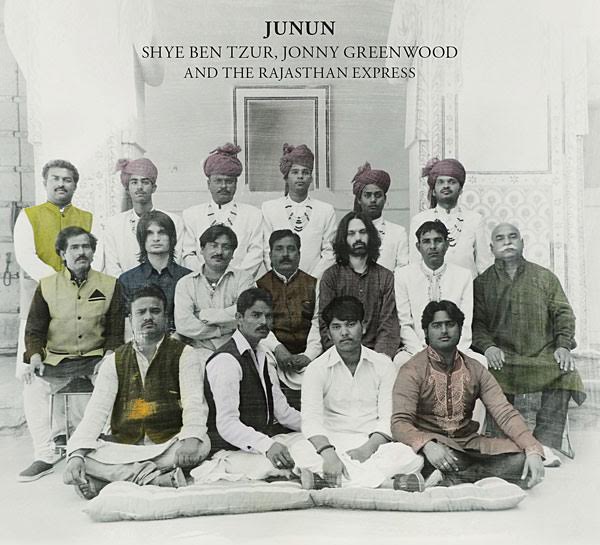
Here Nonesuch Records, which continues to build upon one of the most diverse and envied recording catalogs in the entire music business has teamed again with budding film music composer (There Will Be Blood, Inherent Vice) and ever adventurous Radiohead guitar player Jonny Greenwood to bring the music of Israeli composer Shye Ben Tzur (who also sings and plays guitar and flute and is immersed in India music) to life via acoustic and programmed instruments and an orchestra-sized ensemble of Indian singers, horn players and percussionists called the Rajasthan Express. Frequent Greenwood collaborator Paul Thomas Anderson directed a documentary of the same name about the making of the record but this is not a soundtrack record. The recordings were produced and recorded by Radiohead producer Nigel Godrich, who did a good job of capturing the multitude of instrumental and human voices, under less than ideal circumstances in India, in one of the most interesting projects released late last year.
Junun is that rare mashup that manages to be both intellectually meaty and wildly accessible. It’s dance music of a kind but its diverse weave of instruments and voices, different grains of sound are fascinating. The sound is space age tribal music, folk music from some future multicultural world, that is both religious and secular, connected to ancient Indian music traditions and languages like Hindi and Hebrew texts, meticulously composed and played with a communal, spontaneous feel. This is decidedly not the sound of a famous rock musician making a world music record. Greenwood’s guitar or bass is in fact, rarely (“Allah Elohim”) identifiable in the mix of sound.
A tune like “Roked” is rhythmic and repetitive dance music in the finest sense of the word, and one of the more accessible points in the four LP sides. A more expansive number such as “Chala Vahi Des,” which translates to “Let’s go to the land” and whose lyrics are poetry by the 16th century Indian mystic poet Meera Bai, though underpinned with rhythms, centers on the vocal duo of Afshana Khan and Razia Sultan. The soloing and massed horns of “Junun Brass” have unmistakable echoes of New Orleans. Greenwood occasionally sprinkles in the sounds of the ondes martenot, an early electronic keyboard instrument used at various times by Tom Waits, Olivier Messiaen, and Damon Albarn among others. “Eloah” (“God”) opens with a solo voice singing the verses over a chorus of voices that chanting at an ever increasing pace until it becomes an almost unintelligible shout of pleasure or devotion. A model of how to celebrate non-western music by lending your name and staying out of the way.