

The 845–O/96 combination
I began my audition with the two-way DeVore Fidelity O/96 loudspeaker (footnote 1), a rich, warm, incisive speaker that uses a 1" silk-dome tweeter and a 10" paper-cone woofer and sounds good with every amplifier and in every room I've heard it in. It was a natural fit for the Mastersound. I had to push my reference DeVore Fidelity O/96 loudspeakers back 6" to optimize coherence and clarity; once I did that, the system sang. The 845 wowed me with its immense soundstage, which I attribute partly to its aforementioned silence: the long decay of reverb tails contrasting that outer-space–blackness each enhancing the other. Against this backdrop, music blossomed, consistently creating a you-are-there, live-performance quality that made my DeVore Fidelity O/96s resemble Quad ESL-57s. Music had energy, speed, dynamics, punch, and depth. The Compact 845 ran hot, and so did the music that flowed from its mighty triodes. The Compact 845 inspired me to audition some new LPs and a few old ones. I listened to Wayne Shorter (may he rest in peace), Tony Rice, and Maki Asakawa—to Renata Tebaldi, the Beatles, and ZZ Top. The Compact 845 did not favor one genre of music over another. It rendered a sense of intimacy on operatic vocals, jazz, and bluegrass; it was equally generous with rock, electronic, and classical works. Its broad, deep soundstage framed each record in its unique space and time, encouraging repeated playback.
 The Contemporary Records recordings of engineer Roy DuNann are the most natural-sounding small-group jazz recordings I've ever heard. For 50-year-old recordings, they sound oddly modern and immediate; these are perfect records to audition hi-fi equipment with. I started with "Custard Puff" from Barney Kessel, Ray Brown, and Shelly Manne's The Poll Winners Ride Again! (LP, Contemporary Records S7556). A buoyant, bubbly performance, the Mastersound played it with great weight, air-moving dynamics, and tangible textures, especially on guitar and drums. The dry ride cymbal, taut snare drum, and all the other pieces of Manne's drums came to life with the Mastersound/DeVore pairing: I felt like I was sitting right in front of the kit. As I jotted in my notes, again and again, the soundstage was extremely deep, the backgrounds dead quiet. The music was full-toned and populated with dramatic stop-start rests. The sound was warm and lush but not syrupy, detailed but not analytical.
The Mastersound Compact 845, like my Shindo Labs separates, veers toward the dark side of neutral, yet it is faster and somewhat more transparent than the Shindo separates. In this respect, it fell somewhere between the rich, opulent tone of the Shindos and the detailed transparency of the Audio Note Meishu Tonmeister, which I reviewed in the February 2023 issue. The Mastersound, though, cast a wider, deeper soundstage than either of the other amplifiers.
The 845–O/96 pairing (re)created a dense, finely layered stage on Vincent d'Indy's Symphony on a French Mountain Air (LP, EMI ASD 3480). On Roy Haynes's engrossing We Three (LP, New Jazz NJ-8210), it pulled an intimacy-and-bangers feat similar to what it did on The Poll Winners disc. On jazz-vocal great Betty Carter's Inside Betty Carter (LP, United Artists Records UAL 3379), it cut through the poor recording quality to extract gut-punch dynamics.
The 845–O/96 duo produced sweet tone, lush, transparent mids, and satisfying bass—of the full-bodied variety, not carved-in-space tight. To my ears, perfect balance.
The 845 with the Volti Razz
The Contemporary Records recordings of engineer Roy DuNann are the most natural-sounding small-group jazz recordings I've ever heard. For 50-year-old recordings, they sound oddly modern and immediate; these are perfect records to audition hi-fi equipment with. I started with "Custard Puff" from Barney Kessel, Ray Brown, and Shelly Manne's The Poll Winners Ride Again! (LP, Contemporary Records S7556). A buoyant, bubbly performance, the Mastersound played it with great weight, air-moving dynamics, and tangible textures, especially on guitar and drums. The dry ride cymbal, taut snare drum, and all the other pieces of Manne's drums came to life with the Mastersound/DeVore pairing: I felt like I was sitting right in front of the kit. As I jotted in my notes, again and again, the soundstage was extremely deep, the backgrounds dead quiet. The music was full-toned and populated with dramatic stop-start rests. The sound was warm and lush but not syrupy, detailed but not analytical.
The Mastersound Compact 845, like my Shindo Labs separates, veers toward the dark side of neutral, yet it is faster and somewhat more transparent than the Shindo separates. In this respect, it fell somewhere between the rich, opulent tone of the Shindos and the detailed transparency of the Audio Note Meishu Tonmeister, which I reviewed in the February 2023 issue. The Mastersound, though, cast a wider, deeper soundstage than either of the other amplifiers.
The 845–O/96 pairing (re)created a dense, finely layered stage on Vincent d'Indy's Symphony on a French Mountain Air (LP, EMI ASD 3480). On Roy Haynes's engrossing We Three (LP, New Jazz NJ-8210), it pulled an intimacy-and-bangers feat similar to what it did on The Poll Winners disc. On jazz-vocal great Betty Carter's Inside Betty Carter (LP, United Artists Records UAL 3379), it cut through the poor recording quality to extract gut-punch dynamics.
The 845–O/96 duo produced sweet tone, lush, transparent mids, and satisfying bass—of the full-bodied variety, not carved-in-space tight. To my ears, perfect balance.
The 845 with the Volti Razz
The Volti Audio Razz loudspeaker is a three-way, hybrid bass reflex/horn loudspeaker that combines a 1" horn-loaded tweeter, a wide-dispersion, metal midrange horn with a 2" composite-diaphragm compression driver, and a 12" paper-cone woofer paired to a front-firing rectangular port. I've reviewed the Volti Rival; the Razz is cut from a similar cloth. The Razz is considerably heavier than the DeVore Fidelity O/96, although its cabinet volume is slightly smaller. And where richness, sweetness, and detail are the DeVore's strengths, what's most notable about the Razz is a clear-blue-sky top end and earth-rumbling lows.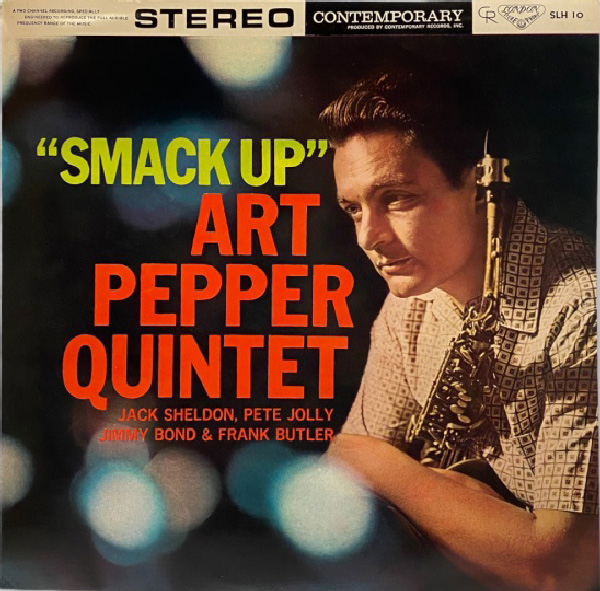 On record after record, with the Compact 845 in the driver's seat, the Razz produced deep, clean, copious low end, a sparkling, neutral midrange, and brilliant, wide-open treble. On Art Pepper's Smack Up (LP, Contemporary Records S7602), Pepper's tone was tart and fast, Jack Sheldon's trumpet spun his Schoolhouse Rock! days on their head, and the rhythm section of bassist Jimmy Bond and drummer Frank Butler delivered dancing cadences at a measured pace, with appropriate momentum.
This combination also ran the table with classical vinyl due to its exceptional clarity, beautiful layering of instruments, impressive speed, and deep soundstage. On Boulez Conducts Stravinsky: Firebird Suite (Columbia MS 7206), the pairing heightened the sense of drama and urgency of the piece. A rip-roaring Night on Bald Mountain, with the Cleveland Orchestra under Lorin Maazel, from Mussorgsky: Pictures at an Exhibition / Night on Bald Mountain (LP, Telarc 10042), played with such spirited power that I felt as if I myself were being chased down the mountain, the devil at my heels. The 845/Razz combination had tone and texture as well, amply heard in Eugene Ormandy and the Philadelphia Orchestra's recording of Shostakovich's 5th Symphony (LP, RCA Red Seal ARL1- 1149).
The 845/SourcePoint duo
On record after record, with the Compact 845 in the driver's seat, the Razz produced deep, clean, copious low end, a sparkling, neutral midrange, and brilliant, wide-open treble. On Art Pepper's Smack Up (LP, Contemporary Records S7602), Pepper's tone was tart and fast, Jack Sheldon's trumpet spun his Schoolhouse Rock! days on their head, and the rhythm section of bassist Jimmy Bond and drummer Frank Butler delivered dancing cadences at a measured pace, with appropriate momentum.
This combination also ran the table with classical vinyl due to its exceptional clarity, beautiful layering of instruments, impressive speed, and deep soundstage. On Boulez Conducts Stravinsky: Firebird Suite (Columbia MS 7206), the pairing heightened the sense of drama and urgency of the piece. A rip-roaring Night on Bald Mountain, with the Cleveland Orchestra under Lorin Maazel, from Mussorgsky: Pictures at an Exhibition / Night on Bald Mountain (LP, Telarc 10042), played with such spirited power that I felt as if I myself were being chased down the mountain, the devil at my heels. The 845/Razz combination had tone and texture as well, amply heard in Eugene Ormandy and the Philadelphia Orchestra's recording of Shostakovich's 5th Symphony (LP, RCA Red Seal ARL1- 1149).
The 845/SourcePoint duo
Just as I was finishing this review, I received the MoFi Electronics SourcePoint 10 loudspeakers, which Technical Editor John Atkinson reviewed in the January 2023 issue. John used a variety of solid state amplifiers to drive the SourcePoint 10, from Parasound, Schitt, and Benchmark. I wanted to audition the MoFi speaker with tubes. With the Mastersound driving the SourcePoint 10s, I heard nothing tipped up—but I did hear a treble that was lit, clear, dense, and super-detailed. Tony Williams's hi-hat and ride cymbals, on "Love for Sale," the title song of an album by the Great Jazz Trio (LP, East Wind EW-8046), played with detail, silken texture, and clean, full-bodied attack—more so than I'd ever heard it. On the same track, Ron Carter's bass was incredibly deep and tight. The Mastersound and the SourcePoints played together like friends in a hi-fi sandbox.
Conclusion
The Mastersound Compact 845 hits all my sonic sweet spots: gorgeous, burnished tube tone, palpable instrumental texture, unerring naturalism, lush, rich, transparent midrange, solid bass, open treble, black background, precise layering of instruments and vocals—and the deepest, punchiest soundstage I've heard. It was also eerily quiet. Like the Audio Note Meishu Tonmeister integrated amplifier, I would be happy to live with this amplifier for the rest of my days. With the Compact 845, Mastersound moves to the front row in the hallowed hall of master tube-amplifier manufacturers, alongside Shindo, Audio Note, Air Tight, Line Magnetic, Luxman, and PrimaLuna.
Footnote 1: See Art Dudley's review here, his follow-up three years later here, and Jim Austin's follow-up here.
I began my audition with the two-way DeVore Fidelity O/96 loudspeaker (footnote 1), a rich, warm, incisive speaker that uses a 1" silk-dome tweeter and a 10" paper-cone woofer and sounds good with every amplifier and in every room I've heard it in. It was a natural fit for the Mastersound. I had to push my reference DeVore Fidelity O/96 loudspeakers back 6" to optimize coherence and clarity; once I did that, the system sang. The 845 wowed me with its immense soundstage, which I attribute partly to its aforementioned silence: the long decay of reverb tails contrasting that outer-space–blackness each enhancing the other. Against this backdrop, music blossomed, consistently creating a you-are-there, live-performance quality that made my DeVore Fidelity O/96s resemble Quad ESL-57s. Music had energy, speed, dynamics, punch, and depth. The Compact 845 ran hot, and so did the music that flowed from its mighty triodes. The Compact 845 inspired me to audition some new LPs and a few old ones. I listened to Wayne Shorter (may he rest in peace), Tony Rice, and Maki Asakawa—to Renata Tebaldi, the Beatles, and ZZ Top. The Compact 845 did not favor one genre of music over another. It rendered a sense of intimacy on operatic vocals, jazz, and bluegrass; it was equally generous with rock, electronic, and classical works. Its broad, deep soundstage framed each record in its unique space and time, encouraging repeated playback.
The Contemporary Records recordings of engineer Roy DuNann are the most natural-sounding small-group jazz recordings I've ever heard. For 50-year-old recordings, they sound oddly modern and immediate; these are perfect records to audition hi-fi equipment with. I started with "Custard Puff" from Barney Kessel, Ray Brown, and Shelly Manne's The Poll Winners Ride Again! (LP, Contemporary Records S7556). A buoyant, bubbly performance, the Mastersound played it with great weight, air-moving dynamics, and tangible textures, especially on guitar and drums. The dry ride cymbal, taut snare drum, and all the other pieces of Manne's drums came to life with the Mastersound/DeVore pairing: I felt like I was sitting right in front of the kit. As I jotted in my notes, again and again, the soundstage was extremely deep, the backgrounds dead quiet. The music was full-toned and populated with dramatic stop-start rests. The sound was warm and lush but not syrupy, detailed but not analytical.
The Mastersound Compact 845, like my Shindo Labs separates, veers toward the dark side of neutral, yet it is faster and somewhat more transparent than the Shindo separates. In this respect, it fell somewhere between the rich, opulent tone of the Shindos and the detailed transparency of the Audio Note Meishu Tonmeister, which I reviewed in the February 2023 issue. The Mastersound, though, cast a wider, deeper soundstage than either of the other amplifiers.
The 845–O/96 pairing (re)created a dense, finely layered stage on Vincent d'Indy's Symphony on a French Mountain Air (LP, EMI ASD 3480). On Roy Haynes's engrossing We Three (LP, New Jazz NJ-8210), it pulled an intimacy-and-bangers feat similar to what it did on The Poll Winners disc. On jazz-vocal great Betty Carter's Inside Betty Carter (LP, United Artists Records UAL 3379), it cut through the poor recording quality to extract gut-punch dynamics.
The Volti Audio Razz loudspeaker is a three-way, hybrid bass reflex/horn loudspeaker that combines a 1" horn-loaded tweeter, a wide-dispersion, metal midrange horn with a 2" composite-diaphragm compression driver, and a 12" paper-cone woofer paired to a front-firing rectangular port. I've reviewed the Volti Rival; the Razz is cut from a similar cloth. The Razz is considerably heavier than the DeVore Fidelity O/96, although its cabinet volume is slightly smaller. And where richness, sweetness, and detail are the DeVore's strengths, what's most notable about the Razz is a clear-blue-sky top end and earth-rumbling lows.
On record after record, with the Compact 845 in the driver's seat, the Razz produced deep, clean, copious low end, a sparkling, neutral midrange, and brilliant, wide-open treble. On Art Pepper's Smack Up (LP, Contemporary Records S7602), Pepper's tone was tart and fast, Jack Sheldon's trumpet spun his Schoolhouse Rock! days on their head, and the rhythm section of bassist Jimmy Bond and drummer Frank Butler delivered dancing cadences at a measured pace, with appropriate momentum.
Just as I was finishing this review, I received the MoFi Electronics SourcePoint 10 loudspeakers, which Technical Editor John Atkinson reviewed in the January 2023 issue. John used a variety of solid state amplifiers to drive the SourcePoint 10, from Parasound, Schitt, and Benchmark. I wanted to audition the MoFi speaker with tubes. With the Mastersound driving the SourcePoint 10s, I heard nothing tipped up—but I did hear a treble that was lit, clear, dense, and super-detailed. Tony Williams's hi-hat and ride cymbals, on "Love for Sale," the title song of an album by the Great Jazz Trio (LP, East Wind EW-8046), played with detail, silken texture, and clean, full-bodied attack—more so than I'd ever heard it. On the same track, Ron Carter's bass was incredibly deep and tight. The Mastersound and the SourcePoints played together like friends in a hi-fi sandbox.
The Mastersound Compact 845 hits all my sonic sweet spots: gorgeous, burnished tube tone, palpable instrumental texture, unerring naturalism, lush, rich, transparent midrange, solid bass, open treble, black background, precise layering of instruments and vocals—and the deepest, punchiest soundstage I've heard. It was also eerily quiet. Like the Audio Note Meishu Tonmeister integrated amplifier, I would be happy to live with this amplifier for the rest of my days. With the Compact 845, Mastersound moves to the front row in the hallowed hall of master tube-amplifier manufacturers, alongside Shindo, Audio Note, Air Tight, Line Magnetic, Luxman, and PrimaLuna.
Footnote 1: See Art Dudley's review here, his follow-up three years later here, and Jim Austin's follow-up here.















