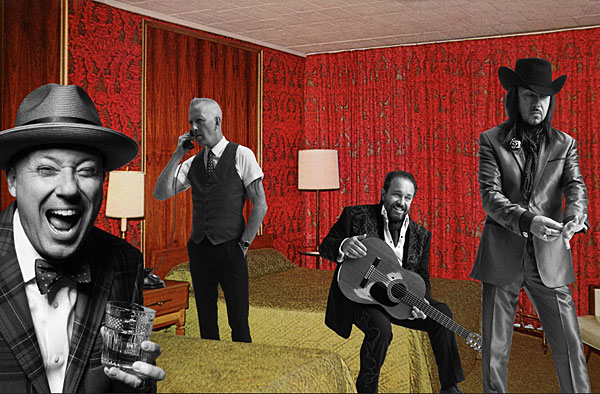
The Mavericks, perhaps the greatest non-country act to ever come out of Nashville (via Miami) and a band that writes terrific tunes, gives a powerhouse live show and has one of the most compelling voices in all of pop music today as a front man, decided, according to their latest official biography, to mix their second record since a 2011 comeback in mono. A call to their publicist confirmed that they recorded and mixed in mono. Very charming and brave on some level. In case there was any confusion, they also named it Mono.
With the band in Europe and not doing stateside interviews, I had to lift a quote from that same bio. This from drummer Paul Deakin: “As is often the case with The Mavericks’ plans, the idea to mix the record in mono came about spontaneously. During the recording process we would go into the studio around noon and listen to vinyl records for some extra inspiration. At some point, someone noted that almost all of the recordings we were listening to were mixed in mono. Our producer Niko Bolas said, off-the-cuff, ‘we should mix this record in mono.’ And we thought, we can’t get away with that – so of course … we had to.”
Needless to say, when I received my CD copy of Mono (only MP3’s and CDs so far) I was anxious for a serious listen. Before opinions, a slight disclaimer. Many mono mixes sound wonderful. Many older records exist only in mono. Arguments about the Beatles catalog in mono or stereo, are to audiophiles, akin to discussing politics or religion: Just Don’t Do IT! If you enjoy the sound of mono, savor a certain retro vibe, listen to your music on a car radio (?) and/or genuinely prefer the supposedly tighter, more meticulous mixes that mono at its best can offer—or just hate the multi-track freedom to twiddle that is recording in stereo’s biggest draw—more power to ya. I prefer stereo.
As far as the material is concerned, this is another record full of memorable pop tunes in now familiar Raul Malo modes of songwriting, all put over by Malo’s big voice, which to be honest, has never sounded better. He’s learned how to write songs and pitch them where he really has to stretch as a singer. The big Latin-flavored opener, “All Night Long,” is the great grandson of “What A Crying Shame.” “What Am I Supposed To Do” is the kind of big pop hit that Malo cranks out with amazing regularity. And in a very typical example of how this band has learned to write and play in an eclectic, multi-cultural style all their own, the Orbison-like ballad “Pardon Me,” leans country (“Wichita to Arkansas/and every mile in between/A lady friend in every town/Waiting for the phone to ring”) and yet has a Norteno accordion and a roots rock baritone guitar solo.
For a band like The Mavericks who favor a very large, rich soundstage, a focus on Raul’s voice and very full, some might say cluttered mixes with lots of instrumental tracks from the band’s eight musicians, the mono choice is an odd one. This is exactly the kind of ambitious act that multi-track recordings were meant for. Heard on a couple different pairs of speaker as well as a pair of Sony MDR-1R headphones, the mix is not unpleasant though I could have done with less monolithic bass thump on several tracks. It’s also not the sharpest mono mix I’ve ever heard as high frequencies can be muddled. Malo’s voice, which in mono sounds even more like that of Roy Orbison, still seems a bit stunted and sonically limited here. His building crescendos, perhaps THE Malo specialty, do not have the same drama here as they did on say the band’s last record 2013’s In Time. Back to Paul Deakin: “We recorded live in the studio with very little overdubbing. Some people might even be surprised to know that the tracking vocal is the vocal you hear on the record. Raul didn’t go back in and re-sing anything.” So it’s raw and in mono? I also found myself wondering just how skilled any engineer today, after half a century of stereo mixing, is really gonna be in creating mono mixes. On some tracks, the balances are noticeably uneven.
In the end, I suspect this was more of a cool retro gesture than any sonic conviction. I have a feeling that other performers like Bruce Springsteen who, for example, learned their craft from mono recordings, have also considered doing the same thing. Lastly, one much noticed and missed absence on Mono is founding bassist Robert Reynolds who has been fired from the band and is struggling with opiate addiction while his wife Angie is fighting cancer. In the following video from 2012, Reynolds can be seen idly strumming an acoustic guitar and staying well clear of the microphone. Hopefully, both get help, get better and find a brighter future.