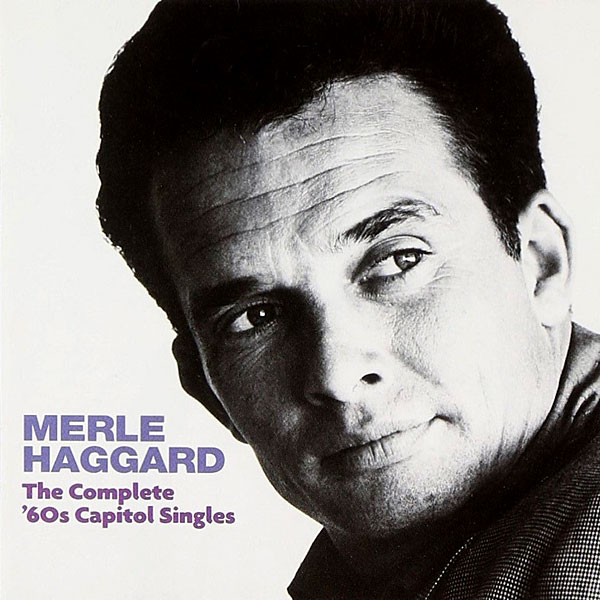
We’ve lost Hag. On his birthday no less. Now the only original outlaws of country music left alive are Billy Joe Shaver and Willie, with whom Merle Haggard made his final record, Django and Jimmie.
What stands out most about the man and his music, in contrast to today’s country music, is how real he was. His ballads, in which he was usually at fault for his troubles, pulled no punches. The fact that he hated welfare but sang songs about “living off the fat of this great land,” and knowing where to get a handout while “bumming through Chicago in the afternoon,” was always puzzling but somehow, the way he sang it, it all made sense. The man had conviction. And sure, he may have pumped up the tale of doing time at San Quentin—“I turned twenty one in prison, serving life without parole,”—he actually served three years for being an inept burglar, but then that comes under the heading of poetic license.
In two long emails that I received today from PR firms in Nashville, a list of country music luminaries commented on his passing. Ricky Skaggs, Pam Tillis, Larry Gatlin, Dolly Parton, Tanya Tucker, Moe Bandy, Lorrie Morgan, Nancy Jones (George’s wife), T.G. Sheppard and others all talked about how they loved the guy and will miss him. What was more striking was the silence from today’s “country” stars. Let’s check a list of the big winners and featured performers from Sunday night’s CMA Awards show. Not a peep out of Luke Bryan, Carrie Underwood, Miranda Lambert, Keith Urban, Dierks Bentley, Blake Shelton, Kenny Chesney, Jason Aldean, Taylor Swift, Eric Church. But then those cookie cutter marginal talents—excepting perhaps Swift—are pop singers, with no roots or real connection to anything in genuine country music.
While he was an accomplished songwriter who epitomized the Bakersfield Sound in immortal classics like ”Mama Tried,” ”Silver Wings,” ‘Workin’ Man Blues” “The Bottle Let Me Down,” and “I Take A lot of Pride in What I Am,” Haggard was also one of the greatest country singers ever. With a smooth, polished tone and a very precise delivery, he learned much early on from one of his first employers out in the central valley of California, the criminally underrated Wynn Stewart. The vocal similarities between the two are unmistakable. No one could sell lines like, “We like holdin’ hands and pitchin’ woo,” like Haggard.
And about that tune, “Okie from Muskogee” which championed small town all-American values in opposition to “hippies” and those who “make a party out of lovin’,” Hag later had two classic comments. The first, in response to the song’s opening line, may be urban legend but it went something like, “The only place I don’t smoke it is in Muskogee.” The second, which was in the late, great No Depression magazine, and was actually quoted in his NYT obituary was, “I was dumb as rock when I wrote “Okie from Muskogee.” I sing with a different intention now.” Pure Prairie League’s version of Electric Flag’s Nick Gravenites’ response song, "I’ll Fix Your Flat Tire Merle,” is a hoot worth tracking down.
I was lucky enough to interview Haggard in person a number of times, the first time in the late '80s when he was still…umm…young and frisky. He was always full of life and laughs. I loved all his conspiracy theories. And one afternoon spent on his tour bus, with his absolutely crack band led at that point by drummer/bus driver Biff Adam will live in my mind forever. Also on the bus that day was Bonnie Owens, who’d been married to both Buck Owens and Haggard. Now there was a woman with a sense of adventure! I was very impressed when at one point during that day he wanted to sit and dutifully listen to cassettes and CDs that young country music hopefuls had sent him. He genuinely cared.
Although he is probably most famous for the Capitol singles and albums he made with producer Ken Nelson in the 1960s and early 1970s—Swinging Doors, Hag, Someday We’ll Look Back are all album classics—he continued to make good records right up until the end. Only in the early to mid-1980s, when he hit a fallow patch on Epic Records, did he make albums that are less than essential.
It’s been a very hard year so far for musicians. To get Pete Townshend about it, Who's Next?