Sidebar 3: Measurements
I used DRA Labs' MLSSA system and a calibrated DPA 4006 microphone to measure the Monitor Audio PL300 II's frequency response in the farfield; and, for the nearfield frequency responses, an Earthworks QTC-40, which has a ¼" capsule and thus doesn't present a significant obstacle to the sound. For logistical reasons, I measured a different sample of the PL3000 II (serial no.100047) than those auditioned by Robert Deutsch. I left both rear-panel ports open for the measurements and left the grilles in place.
My estimate of the PL 300 II's voltage sensitivity was 87dB(B)/2.83V/m, which is 3dB lower than the specified figure of 90dB/W/m. The speaker's electrical impedance magnitude and phase are shown in fig.1. The PL300 II is specified as a 4 ohm load with a minimum value of 4.2 ohms at 111Hz; the minimum magnitudes in my measurement (solid trace) are 4.12 ohms at 119Hz and 4.1 ohms at 2.2kHz. Though the impedance amplitude remains above 6 ohms for much of the audioband, the electrical phase angle (dotted trace) is larger than usual at some frequencies, meaning that Monitor's rating of 4 ohms is correct.


 The farfield response of the woofers rolls off sharply above the crossover to the midrange unit, which appears to be slightly lower in frequency than the specified 500Hz. The midrange driver rolls in more gently, but its output and that of the tweeter are impressively flat between 1 and 12kHz. However, there are some small peaks and dips in the top octave, which may be due to reflections from the vestigial grille.
The black trace in fig.4 shows the PL 300 II's anechoic response, averaged across a 30° horizontal window on the tweeter axis, with the complex sum of the nearfield responses plotted below 300Hz, taking into account both acoustic phase angle and the different distances of the radiators from a nominal microphone position. The slight rise in output in the upper bass is due to the nearfield measurement technique; the PL300 II's output is superbly flat overall, though the peaks and dips between 12 and 30kHz are again visible.
The farfield response of the woofers rolls off sharply above the crossover to the midrange unit, which appears to be slightly lower in frequency than the specified 500Hz. The midrange driver rolls in more gently, but its output and that of the tweeter are impressively flat between 1 and 12kHz. However, there are some small peaks and dips in the top octave, which may be due to reflections from the vestigial grille.
The black trace in fig.4 shows the PL 300 II's anechoic response, averaged across a 30° horizontal window on the tweeter axis, with the complex sum of the nearfield responses plotted below 300Hz, taking into account both acoustic phase angle and the different distances of the radiators from a nominal microphone position. The slight rise in output in the upper bass is due to the nearfield measurement technique; the PL300 II's output is superbly flat overall, though the peaks and dips between 12 and 30kHz are again visible.
 Fig.5 shows the Monitor's horizontal dispersion, normalized to the tweeter-axis response. The contour lines are smooth and even, though there is a slight off-axis flare at 4.5kHz (cursor position), and the speaker's output drops off sharply to the sides above 13kHz. The PL300 II might sound a little lacking in air in very large or dry rooms. In the vertical plane (fig.6), a suckout develops at the upper crossover frequency more than 5° above the tweeter axis. The balance remains unchanged up to 5° below the tweeter axis—which, as that axis is 40" from the floor and a typical seated listener's ears are 36" from the floor, is a good thing.

 Turning to the time domain, the PL300 II's step response on the tweeter axis (fig.7) reveals that the tweeter and midrange units are wired in inverted acoustic polarity, the woofers in positive polarity. More important, the decay of each unit's step blends smoothly with the start of the next step lower in frequency, suggesting optimal crossover design. However, if you look closely, this graph does suggest that the listening axis is just below the tweeter. The cumulative spectral-decay plot (fig.8) reveals a generally even decay across the audioband, any delayed energy being well down in level.
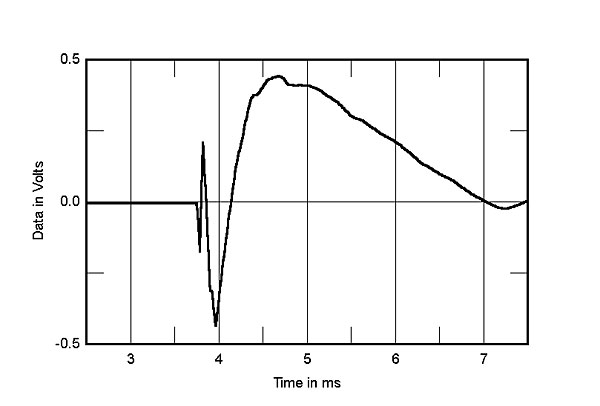

Fig.1 Monitor Platinum PL300 II, electrical impedance (solid) and phase (dashed) (5 ohms/vertical div.).
The impedance traces are free from the small discontinuities that would imply the existence of enclosure panel resonances, and the cabinet did indeed generally feel inert to the traditional knuckle-rap test. But the top panel and the concave rear panel behind the midrange driver did feel more lively; using a plastic-tape accelerometer, I found a single strong mode at 410Hz (fig.2) on these surfaces. As RD didn't comment on any midrange congestion, I suspect that the resonant areas of the cabinet are too small to affect sound quality.
Fig.2 Monitor Platinum PL300 II, cumulative spectral-decay plot calculated from output of accelerometer fastened to center of top panel (MLS driving voltage to speaker, 7.55V; measurement bandwidth, 2kHz).
Fig.3 shows the combined farfield outputs of the tweeter and midrange unit (green trace above 400Hz) and that of the woofers (blue above 350Hz) on the tweeter axis, with the nearfield responses of the midrange unit (green below 400Hz), woofers (blue below 350Hz), and ports (red). (The two ports behaved identically, as did the two woofers.) The output of the ports peaks a little lower in frequency than the minimum-motion notch in the woofers' response, which occurs at 34Hz, the frequency of the saddle between the two impedance peaks in the bass in fig.1. The smooth higher-frequency rolloff of the ports is disturbed by a couple of peaks, but these are well down in level.
Fig.3 Monitor Platinum PL300 II, acoustic crossover on tweeter axis at 50", corrected for microphone response, with summed nearfield responses of ports (red), woofers (blue), and midrange unit (green), all plotted in the ratios of their radiating diameters.
Fig.4 Monitor Platinum PL300 II, anechoic response on tweeter axis at 50", averaged across 30° horizontal window and corrected for microphone response, with complex sum of nearfield responses plotted below 300Hz.
Fig.5 Monitor Platinum PL300 II, lateral response family at 50", normalized to response on tweeter axis, from back to front: differences in response 90–5° off axis, reference response, differences in response 5–90° off axis.
Fig.6 Monitor Platinum PL300 II, vertical response family at 50", normalized to response on tweeter axis, from back to front: differences in response 15–5° above axis, reference response, differences in response 5–10° below axis.
Fig.7 Monitor Platinum PL300 II, step response on tweeter axis at 50" (5ms time window, 30kHz bandwidth).
Fig.8 Monitor Platinum PL300 II, cumulative spectral-decay plot on tweeter axis at 50" (0.15ms risetime).
I am not surprised that RD was impressed by Monitor Audio's Platinum PL300 II; so was I.—John Atkinson