Listening
To get a handle on the C 3050 LE's baseline sound quality, I started my auditioning streaming audio with the BluOS app and with Dirac Live turned off. With my usual go-to recordings—Jerome Harris Quintet's "The Mooche" from the Stereophile label's Rendezvous album (16/44.1 Bandcamp stream), the 24/96 masters for the Portland State Chamber Choir's Translations, Patricia Barber's "The Beat Goes On" from Companion (16/44.1 Tidal stream), the late Lars Vogt's performance of the first Brahms Piano Concerto (24/48 Qobuz stream)—the presentation was very similar to that of the more expensive M10 (footnote 3). Excellent upper-bass articulation was combined with a natural-sounding midrange and clean highs. Stereo imaging was well-defined with good, if not great, soundstage depth.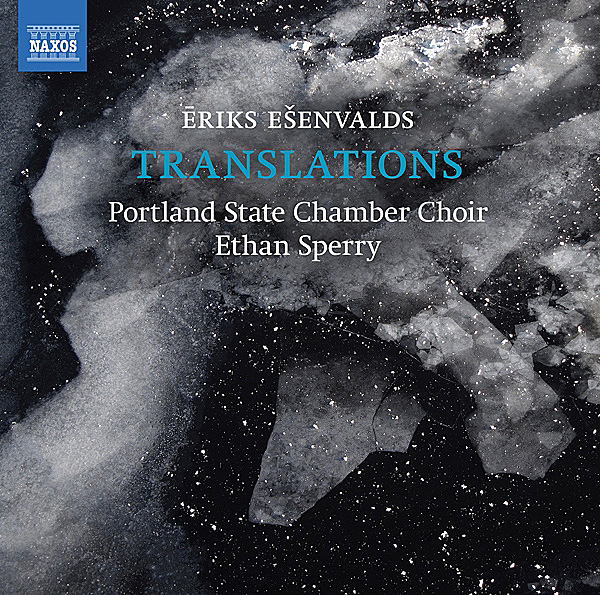 I listened to the same tracks with the NAD M10 driving the KEFs. I heard few significant differences from playback with the C 3050 LE: a slightly deeper soundstage and perhaps more mellow highs. Though the latter's overall presentation was less impressive—seemingly more restricted in dynamics—than I am used to with my usual combination of the MBL N31 DAC and Parasound Halo JC 1+ monoblocks, those components together cost 19 times the price of the NAD. But it is fair to note that with the C 3050 LE, I was more aware that the LS50s are small speakers.
It was therefore time to try listening to the speaker's low-frequency balance with Dirac operating. It would be an exaggeration to write that this made the speakers sound full-range, but the mid-bass region now sounded in good balance with the upper bass and lower midrange. Jerome Harris's soft-toned acoustic bass guitar on "The Mooche" now provided the essential support for the alto saxophone and trombone soloists, and Billy Drummond's kickdrum lit up the Blue Heaven Studio acoustic more effectively. The driving rhythm on "The Beat Goes On" had an enhanced sense of urgency.
I have found with the KEFs driven by the NAD M10 that on Evelina Vorontsova's performance of Rachmaninoff 's second Piano Sonata (16/44.1 ALAC ripped from CD, STH Quality Classics CD 1416092), the piano's left-hand register is sensitive to too much boost in the upper bass. The C 3050 LE with Dirac correction sounded just right with this recording, and I continued my critical listening with Dirac on.
I listened to the same tracks with the NAD M10 driving the KEFs. I heard few significant differences from playback with the C 3050 LE: a slightly deeper soundstage and perhaps more mellow highs. Though the latter's overall presentation was less impressive—seemingly more restricted in dynamics—than I am used to with my usual combination of the MBL N31 DAC and Parasound Halo JC 1+ monoblocks, those components together cost 19 times the price of the NAD. But it is fair to note that with the C 3050 LE, I was more aware that the LS50s are small speakers.
It was therefore time to try listening to the speaker's low-frequency balance with Dirac operating. It would be an exaggeration to write that this made the speakers sound full-range, but the mid-bass region now sounded in good balance with the upper bass and lower midrange. Jerome Harris's soft-toned acoustic bass guitar on "The Mooche" now provided the essential support for the alto saxophone and trombone soloists, and Billy Drummond's kickdrum lit up the Blue Heaven Studio acoustic more effectively. The driving rhythm on "The Beat Goes On" had an enhanced sense of urgency.
I have found with the KEFs driven by the NAD M10 that on Evelina Vorontsova's performance of Rachmaninoff 's second Piano Sonata (16/44.1 ALAC ripped from CD, STH Quality Classics CD 1416092), the piano's left-hand register is sensitive to too much boost in the upper bass. The C 3050 LE with Dirac correction sounded just right with this recording, and I continued my critical listening with Dirac on.
 I then compared the sound of CD data fed to the NAD's optical digital input with the analog output of my Ayre C-5xeMP fed to the amplifier's line input. The first CD I played was one of my 2015 Records 2 Die 4, The Wigmore Hall Recital (DG 479 0965) by Antônio Meneses. On Meneses's performance of Schubert's Arpeggione Sonata, accompanied by pianist Maria João Pires, his cello sounded full-bodied with both inputs—there didn't appear to be a level difference—but its upper register was slightly reedier with the line input. A touch more of the hall acoustic was audible with the TosLink data but slightly less weight to the piano's lower register.
I followed the Schubert with Sasha Matson's latest project, Molto Molto, an album of three classical-themed works including a piano concerto and a symphony scored for a traditional jazz big band. (As I write this, the album is awaiting release due to delays in having the LPs pressed.) I played the CD with the Ayre, comparing the sound of the NAD's analog and optical inputs with the 24/96 master files, streaming the latter with BluOS. The difference between the C 3050 LE's line and optical inputs was the same as with the Schubert: slightly more space around the instruments with the digital data, slightly more low-frequency weight via the analog input. The TosLink signal was closest to the sound of the high-rez files.
I then compared the sound of CD data fed to the NAD's optical digital input with the analog output of my Ayre C-5xeMP fed to the amplifier's line input. The first CD I played was one of my 2015 Records 2 Die 4, The Wigmore Hall Recital (DG 479 0965) by Antônio Meneses. On Meneses's performance of Schubert's Arpeggione Sonata, accompanied by pianist Maria João Pires, his cello sounded full-bodied with both inputs—there didn't appear to be a level difference—but its upper register was slightly reedier with the line input. A touch more of the hall acoustic was audible with the TosLink data but slightly less weight to the piano's lower register.
I followed the Schubert with Sasha Matson's latest project, Molto Molto, an album of three classical-themed works including a piano concerto and a symphony scored for a traditional jazz big band. (As I write this, the album is awaiting release due to delays in having the LPs pressed.) I played the CD with the Ayre, comparing the sound of the NAD's analog and optical inputs with the 24/96 master files, streaming the latter with BluOS. The difference between the C 3050 LE's line and optical inputs was the same as with the Schubert: slightly more space around the instruments with the digital data, slightly more low-frequency weight via the analog input. The TosLink signal was closest to the sound of the high-rez files.
 It is impossible to know how much these differences were due to the NAD's redigitized analog input or to the Ayre's own D/A stage. But the C 3050 LE's line input offers good quality, and the digitization allows analog source signals to benefit from the DSP.
Unfortunately, I was not able to audition the C 3050 LE's moving magnet–compatible phono stage. But as you can read in the Measurements sidebar, it offers accurate RIAA equalization, low noise and distortion, and high overload margins.
I finished my critical listening to the NAD amplifier with headphones, specifically my low-impedance Audeze LCD-Xes and high-impedance Sennheiser HD-650s. (I remembered to disable the Dirac EQ, but I encountered one minor annoyance: With the headphone jack positioned right below the standby switch, I kept turning the amplifier off when plugging in a pair of headphones.) Though there was an engrossing presentation of detail playing the Translations master files with the Audeze 'phones—the precise placement of the singers in the title track, the articulation of the rolled bass drum in "Vineta," the unambiguous presentation of the off-stage viola in "In Paradisum"—the C 3050 LE sounded more relaxed with the Sennheisers. I could listen longer.
It is impossible to know how much these differences were due to the NAD's redigitized analog input or to the Ayre's own D/A stage. But the C 3050 LE's line input offers good quality, and the digitization allows analog source signals to benefit from the DSP.
Unfortunately, I was not able to audition the C 3050 LE's moving magnet–compatible phono stage. But as you can read in the Measurements sidebar, it offers accurate RIAA equalization, low noise and distortion, and high overload margins.
I finished my critical listening to the NAD amplifier with headphones, specifically my low-impedance Audeze LCD-Xes and high-impedance Sennheiser HD-650s. (I remembered to disable the Dirac EQ, but I encountered one minor annoyance: With the headphone jack positioned right below the standby switch, I kept turning the amplifier off when plugging in a pair of headphones.) Though there was an engrossing presentation of detail playing the Translations master files with the Audeze 'phones—the precise placement of the singers in the title track, the articulation of the rolled bass drum in "Vineta," the unambiguous presentation of the off-stage viola in "In Paradisum"—the C 3050 LE sounded more relaxed with the Sennheisers. I could listen longer.
 Conclusions
Toward the end of the review period, I heard the sad news that David Crosby had died. I spent the next evening binging on the first Crosby, Stills & Nash album and Crosby's first solo album, If I Could Only Remember My Name, streaming the audio from Qobuz with BluOS. The relatively inexpensive combination of the NAD driving the Dirac-optimized KEF LS50s was compelling. (At $2235 for the 10' pair, the AudioQuest speaker cables were more expensive than either the amplifier or the speakers.) This combination took me deep into the music. Yes, considerably more expensive systems could play louder, deeper, and clearer, with a greater sense of scale, but what I heard that evening didn't leave me wishing for more. NAD's C 3050 LE is an excellent example of a modern, full-featured, solid state integrated amplifier. But, as with the M10, it is its integration with Dirac low-frequency room equalization that enables it to offer pretty much everything audiophiles and music lovers need to enjoy their music at a competitive price.
Footnote 3: The M10 cost $2749 at the time of my review. NAD has since replaced it with the M10 V2, which adds a remote control, wireless surround playback, offers a slightly different gain architecture, and is priced at $2999.
To get a handle on the C 3050 LE's baseline sound quality, I started my auditioning streaming audio with the BluOS app and with Dirac Live turned off. With my usual go-to recordings—Jerome Harris Quintet's "The Mooche" from the Stereophile label's Rendezvous album (16/44.1 Bandcamp stream), the 24/96 masters for the Portland State Chamber Choir's Translations, Patricia Barber's "The Beat Goes On" from Companion (16/44.1 Tidal stream), the late Lars Vogt's performance of the first Brahms Piano Concerto (24/48 Qobuz stream)—the presentation was very similar to that of the more expensive M10 (footnote 3). Excellent upper-bass articulation was combined with a natural-sounding midrange and clean highs. Stereo imaging was well-defined with good, if not great, soundstage depth.
I listened to the same tracks with the NAD M10 driving the KEFs. I heard few significant differences from playback with the C 3050 LE: a slightly deeper soundstage and perhaps more mellow highs. Though the latter's overall presentation was less impressive—seemingly more restricted in dynamics—than I am used to with my usual combination of the MBL N31 DAC and Parasound Halo JC 1+ monoblocks, those components together cost 19 times the price of the NAD. But it is fair to note that with the C 3050 LE, I was more aware that the LS50s are small speakers.
It was therefore time to try listening to the speaker's low-frequency balance with Dirac operating. It would be an exaggeration to write that this made the speakers sound full-range, but the mid-bass region now sounded in good balance with the upper bass and lower midrange. Jerome Harris's soft-toned acoustic bass guitar on "The Mooche" now provided the essential support for the alto saxophone and trombone soloists, and Billy Drummond's kickdrum lit up the Blue Heaven Studio acoustic more effectively. The driving rhythm on "The Beat Goes On" had an enhanced sense of urgency.
I then compared the sound of CD data fed to the NAD's optical digital input with the analog output of my Ayre C-5xeMP fed to the amplifier's line input. The first CD I played was one of my 2015 Records 2 Die 4, The Wigmore Hall Recital (DG 479 0965) by Antônio Meneses. On Meneses's performance of Schubert's Arpeggione Sonata, accompanied by pianist Maria João Pires, his cello sounded full-bodied with both inputs—there didn't appear to be a level difference—but its upper register was slightly reedier with the line input. A touch more of the hall acoustic was audible with the TosLink data but slightly less weight to the piano's lower register.
I followed the Schubert with Sasha Matson's latest project, Molto Molto, an album of three classical-themed works including a piano concerto and a symphony scored for a traditional jazz big band. (As I write this, the album is awaiting release due to delays in having the LPs pressed.) I played the CD with the Ayre, comparing the sound of the NAD's analog and optical inputs with the 24/96 master files, streaming the latter with BluOS. The difference between the C 3050 LE's line and optical inputs was the same as with the Schubert: slightly more space around the instruments with the digital data, slightly more low-frequency weight via the analog input. The TosLink signal was closest to the sound of the high-rez files.
It is impossible to know how much these differences were due to the NAD's redigitized analog input or to the Ayre's own D/A stage. But the C 3050 LE's line input offers good quality, and the digitization allows analog source signals to benefit from the DSP.
Unfortunately, I was not able to audition the C 3050 LE's moving magnet–compatible phono stage. But as you can read in the Measurements sidebar, it offers accurate RIAA equalization, low noise and distortion, and high overload margins.
I finished my critical listening to the NAD amplifier with headphones, specifically my low-impedance Audeze LCD-Xes and high-impedance Sennheiser HD-650s. (I remembered to disable the Dirac EQ, but I encountered one minor annoyance: With the headphone jack positioned right below the standby switch, I kept turning the amplifier off when plugging in a pair of headphones.) Though there was an engrossing presentation of detail playing the Translations master files with the Audeze 'phones—the precise placement of the singers in the title track, the articulation of the rolled bass drum in "Vineta," the unambiguous presentation of the off-stage viola in "In Paradisum"—the C 3050 LE sounded more relaxed with the Sennheisers. I could listen longer.
ConclusionsToward the end of the review period, I heard the sad news that David Crosby had died. I spent the next evening binging on the first Crosby, Stills & Nash album and Crosby's first solo album, If I Could Only Remember My Name, streaming the audio from Qobuz with BluOS. The relatively inexpensive combination of the NAD driving the Dirac-optimized KEF LS50s was compelling. (At $2235 for the 10' pair, the AudioQuest speaker cables were more expensive than either the amplifier or the speakers.) This combination took me deep into the music. Yes, considerably more expensive systems could play louder, deeper, and clearer, with a greater sense of scale, but what I heard that evening didn't leave me wishing for more. NAD's C 3050 LE is an excellent example of a modern, full-featured, solid state integrated amplifier. But, as with the M10, it is its integration with Dirac low-frequency room equalization that enables it to offer pretty much everything audiophiles and music lovers need to enjoy their music at a competitive price.
Footnote 3: The M10 cost $2749 at the time of my review. NAD has since replaced it with the M10 V2, which adds a remote control, wireless surround playback, offers a slightly different gain architecture, and is priced at $2999.