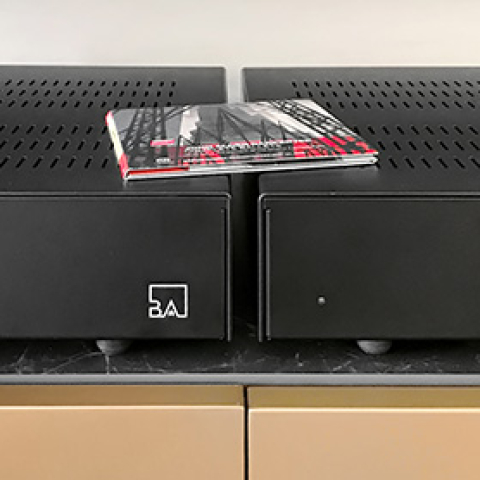
I frequently attend concerts, from lieder, chamber music, and small-ensemble jazz to operas and big symphonies. I know what live music sounds like. Since moving to New York, I've had some great experiences, from the Jazz Standard club through the 92nd Street Y to the Metropolitan Opera and Carnegie Hall. I also regularly attend, at a neighbor's place, house concerts by professional musicians who are preparing for a competition, tour, or recording date. Usually I sit in a folding chair near the right elbow of a string player, or a few feet behind the Steinway's lower keys. Always a great experience. But I've never had a seat at an orchestral performance that could match the experience of hearing this Mahler recording, its intensity and sense of envelopment, in a system with the Pass Labs XA60.8 monoblocks.
More listening
The improvements rendered by the Pass Labs XA60.8s weren't only in the soundstage; the sound was now, when called for, sweeter, warmer, more delicate—as, for example, with the voices and tenor sax on Getz/Gilberto, an oh, so familiar recording I explored with new interest with the XA60.8s in the system. That album's huge hit, "The Girl from Ipanema"—with João and Astrud Gilberto, Stan Getz, and pianist and composer Antonio Carlos Jobim—is one of the best-selling jazz tracks in history, and won a Grammy for Record of the Year. I've loved it at least since early adolescence, when its image of a beautiful, bikini-clad girl swaying gently as she walks toward the ocean was embedded in my brain: "he smiles, but she doesn't see." That image is still in there, but my relationship to it has grown more complicated as I've aged. To paraphrase T.S. Eliot's J. Alfred Prufrock, I do not think that she will sing to me.
The principal sounds in "The Girl from Ipanema" are all delicate, fragile, vulnerable, human—another reason that I and, presumably, other audiophiles interested in the evocation of emotion by recorded music want to hear them. Many versions of this track are available; Tidal offers seven versions of the album, and Discogs lists 174 separate releases of it. Those include at least a handful of different remasterings, the provenance of which isn't always clear.
 Just for fun, I decided to compare seven digital versions of the song (despite my long history with Getz/Gilberto, I own only one vinyl edition of it), from: the original CD (Verve 810 048-2); the Mobile Fidelity Sound Lab CD (MFSL-607); a 1989 four-CD Stan Getz set, The Girl from Ipanema: The Bossa Nova Years, which also includes a live version of the song (Verve 823 611-2); and the 50th Anniversary edition (Verve V6/V-8545, B002074902), which adds remastered stereo and mono versions, plus the one that was released as a single, without João Gilberto's singing in Portuguese. There's also an SACD/CD (Verve/Analogue Productions CVRJ 8545 SA), but I don't own that.
Listening to the better versions of this recording through the XA60.8s, I heard more humanity from it than I'd ever noticed before, and the differences among the versions were easy to hear. To me, the best is the one on the MoFi CD, closely followed by the version from the boxed set. The original CD runs a close third. All three are very good, but the MoFi has a bit more spatial definition, and the voices are reproduced with a nice touch of resonance—not too much. Both mono and stereo versions on the 50th Anniversary reissue have too much of a good thing, exaggerating that same resonance and making it hard to hear the texture in João's voice; the bass, too, loses definition. And the single version excludes João's voice—'nuff said.
At the end of disc 4 of The Girl from Ipanema: The Bossa Nova Years is a sequence of three tracks recorded live in Carnegie Hall: "Eu e Voce," "Corcovado," and that live version of "The Girl from Ipanema." At the end of "Eu e Voce," Getz introduces João: "The husband must always put in his two cents," Getz says, just months before stealing Astrud away. What follows is easily worth the price of the entire set. In "Corcovado," first João's quiet guitar enters, then Astrud's delicate voice, then João's voice, then Getz's tenor sax—each in turn possesses a deep, aching fragility that I've listened to at least a dozen times since I discovered it a week ago. It sounds natural and live. Oh, how lovely indeed.
The live version of "The Girl from Ipanema," which follows, has problems: there's microphone feedback; Astrud misses an entrance (or maybe the sound man was slow to turn her volume up), and she struggles to match her husband's slow pace, singing well ahead of his guitar. But João's performance toward the beginning of the track—as he tunes his guitar, slows the tempo, speeds it up again, and begins to sing, very softly, behind the beat—is simply gorgeous. The mistakes in Astrud's part just serve to make it seem more real.
This is not a remarkable recording. Its technical quality is good but not uncommon. What makes it special is that it's characterful music played by skilled musicians, recorded as well as it needs to be. The vast archive of recorded music contains many such pleasures. If you work at it, you can hear these things through any good system. But better systems dig out the emotion, make it more clear, and thus heighten your experience.
Maybe it's not all about that bass after all
Just for fun, I decided to compare seven digital versions of the song (despite my long history with Getz/Gilberto, I own only one vinyl edition of it), from: the original CD (Verve 810 048-2); the Mobile Fidelity Sound Lab CD (MFSL-607); a 1989 four-CD Stan Getz set, The Girl from Ipanema: The Bossa Nova Years, which also includes a live version of the song (Verve 823 611-2); and the 50th Anniversary edition (Verve V6/V-8545, B002074902), which adds remastered stereo and mono versions, plus the one that was released as a single, without João Gilberto's singing in Portuguese. There's also an SACD/CD (Verve/Analogue Productions CVRJ 8545 SA), but I don't own that.
Listening to the better versions of this recording through the XA60.8s, I heard more humanity from it than I'd ever noticed before, and the differences among the versions were easy to hear. To me, the best is the one on the MoFi CD, closely followed by the version from the boxed set. The original CD runs a close third. All three are very good, but the MoFi has a bit more spatial definition, and the voices are reproduced with a nice touch of resonance—not too much. Both mono and stereo versions on the 50th Anniversary reissue have too much of a good thing, exaggerating that same resonance and making it hard to hear the texture in João's voice; the bass, too, loses definition. And the single version excludes João's voice—'nuff said.
At the end of disc 4 of The Girl from Ipanema: The Bossa Nova Years is a sequence of three tracks recorded live in Carnegie Hall: "Eu e Voce," "Corcovado," and that live version of "The Girl from Ipanema." At the end of "Eu e Voce," Getz introduces João: "The husband must always put in his two cents," Getz says, just months before stealing Astrud away. What follows is easily worth the price of the entire set. In "Corcovado," first João's quiet guitar enters, then Astrud's delicate voice, then João's voice, then Getz's tenor sax—each in turn possesses a deep, aching fragility that I've listened to at least a dozen times since I discovered it a week ago. It sounds natural and live. Oh, how lovely indeed.
The live version of "The Girl from Ipanema," which follows, has problems: there's microphone feedback; Astrud misses an entrance (or maybe the sound man was slow to turn her volume up), and she struggles to match her husband's slow pace, singing well ahead of his guitar. But João's performance toward the beginning of the track—as he tunes his guitar, slows the tempo, speeds it up again, and begins to sing, very softly, behind the beat—is simply gorgeous. The mistakes in Astrud's part just serve to make it seem more real.
This is not a remarkable recording. Its technical quality is good but not uncommon. What makes it special is that it's characterful music played by skilled musicians, recorded as well as it needs to be. The vast archive of recorded music contains many such pleasures. If you work at it, you can hear these things through any good system. But better systems dig out the emotion, make it more clear, and thus heighten your experience.
Maybe it's not all about that bass after all
John Atkinson may have called the XA60.5 the best-sounding amplifier he'd ever used, but he did report a flaw. With the XA60.5s driving Wilson Audio Specialties' Alexia and Vivid Audio's Giya G3 speakers, he found the bass under-controlled. With a pair of 60W amps, this is understandable—either speaker will challenge an amplifier, the Wilson more so. JA was comparing the XA60.5s to Classé's CT-M600 monoblocks, his reference at the time, and specified to output 10 times the Passes' power. Stepping up to a more powerful monoblock from Pass's XA series—say, the XA100.5 or XA160.8—might well have solved the problem, but that wasn't the point of the comparison. The point was to determine whether the meager 60W RMS output of the Pass Labs monos could hold its own in the bass in an absolute sense with speakers that were moderately difficult to drive. JA's conclusion: not quite. And yet he put the XA60.5 at the very top of his lifetime amplifier list. Best-sounding he'd ever used. What about the XA60.8? Was it as good as the XA60.5, or even better? Could it handle the bass better than its predecessor did? It has the same rated power, but more metal: bigger transformers, bigger heatsinks. Are those differences enough to provide that bit of extra oomph? Nelson Pass suggested they might be.
This isn't a perfect test, as I'm not using the same speakers JA used. The Alta Titanium Hestia's resolution in the bass may not be as good, and we won't know how hard they are to drive until JA measures them for the forthcoming review.
In his review of the XA60.5, JA used two tracks to test the XA60.5's bass. First was "Deck the Halls," from male-voice choir Cantus's Comfort and Joy: Volume 2 (CD, Cantus CTS-1205), which JA engineered, edited, mixed, mastered, and played bass guitar on. In this track he overdubbed sampled drums and added a bass part, equalizing and compressing the sound of his Fender Precision bass to get just the balance he wanted of body and definition. Through the speakers he was using, JA found that the Classé amps reproduced that sound exactly as he'd intended; with the XA60.5 monoblocks, the balance tilted toward bass weight and away from definition.
I repeated this test, not only with "Deck the Halls" but also with a file JA sent me containing just the drums and bass tracks. I listened with both the XA60.8s and PS Audio's powerful BHK 300 monoblocks (specified to produce 1000W into 2 ohms), and lowered the volume to compensate for the PSA's higher gain. I heard differences in the sounds of these two amplifiers, but no difference in bass resolution. In particular, I didn't hear the change in the balance of bass weight and definition that JA described in his XA60.5 review.
JA also tested the XA60.5's bass with the Zander-Philharmonia recording of Mahler's Symphony 2: "In one Maxellian moment almost 10 minutes into the third movement, In ruhig fliessender Bewegung, the immense scare chord blew the wind past my ears even with the less-sensitive Vivid speakers. However, the rumbling bass drum in this movement needed a little more control than the Passes could bring to bear."
I listened to this passage, as well as to a similar passage starting about 10:40 into the long fifth movement, when a quiet sequence of three harp notes gives way to successive crescendos, now with both bass drum and snare. Listening first with the XA60.8s, I indeed heard a lack of definition: The rumbling bass drum was indistinct, more a mass of tone than a well-defined instrument. But when I listened with the much more powerful PS Audio BHK 300 amplifiers, I heard the same thing.
I switched the cables back to the Pass Labs amps just to make sure, then back to the PS Audios again—and kept alternating them, again and again, listening to both amps at least half a dozen times each for differences in the character of that rumbling percussion. I heard no difference in bass resolution—surprising, considering the large difference in these amps' rated power.
As I wrote before, it wasn't a perfect test. It could be that these speakers are less demanding, or less resolving than the ones JA was using. Room resonance could be limiting the system's resolving ability. Or maybe the extra metal in the XA60.8 makes all the difference. Whatever the reason, I didn't hear what JA heard with the XA60.5s.
When She Passes
What about the XA60.8? Was it as good as the XA60.5, or even better? Could it handle the bass better than its predecessor did? It has the same rated power, but more metal: bigger transformers, bigger heatsinks. Are those differences enough to provide that bit of extra oomph? Nelson Pass suggested they might be.
This isn't a perfect test, as I'm not using the same speakers JA used. The Alta Titanium Hestia's resolution in the bass may not be as good, and we won't know how hard they are to drive until JA measures them for the forthcoming review.
In his review of the XA60.5, JA used two tracks to test the XA60.5's bass. First was "Deck the Halls," from male-voice choir Cantus's Comfort and Joy: Volume 2 (CD, Cantus CTS-1205), which JA engineered, edited, mixed, mastered, and played bass guitar on. In this track he overdubbed sampled drums and added a bass part, equalizing and compressing the sound of his Fender Precision bass to get just the balance he wanted of body and definition. Through the speakers he was using, JA found that the Classé amps reproduced that sound exactly as he'd intended; with the XA60.5 monoblocks, the balance tilted toward bass weight and away from definition.
I repeated this test, not only with "Deck the Halls" but also with a file JA sent me containing just the drums and bass tracks. I listened with both the XA60.8s and PS Audio's powerful BHK 300 monoblocks (specified to produce 1000W into 2 ohms), and lowered the volume to compensate for the PSA's higher gain. I heard differences in the sounds of these two amplifiers, but no difference in bass resolution. In particular, I didn't hear the change in the balance of bass weight and definition that JA described in his XA60.5 review.
JA also tested the XA60.5's bass with the Zander-Philharmonia recording of Mahler's Symphony 2: "In one Maxellian moment almost 10 minutes into the third movement, In ruhig fliessender Bewegung, the immense scare chord blew the wind past my ears even with the less-sensitive Vivid speakers. However, the rumbling bass drum in this movement needed a little more control than the Passes could bring to bear."
I listened to this passage, as well as to a similar passage starting about 10:40 into the long fifth movement, when a quiet sequence of three harp notes gives way to successive crescendos, now with both bass drum and snare. Listening first with the XA60.8s, I indeed heard a lack of definition: The rumbling bass drum was indistinct, more a mass of tone than a well-defined instrument. But when I listened with the much more powerful PS Audio BHK 300 amplifiers, I heard the same thing.
I switched the cables back to the Pass Labs amps just to make sure, then back to the PS Audios again—and kept alternating them, again and again, listening to both amps at least half a dozen times each for differences in the character of that rumbling percussion. I heard no difference in bass resolution—surprising, considering the large difference in these amps' rated power.
As I wrote before, it wasn't a perfect test. It could be that these speakers are less demanding, or less resolving than the ones JA was using. Room resonance could be limiting the system's resolving ability. Or maybe the extra metal in the XA60.8 makes all the difference. Whatever the reason, I didn't hear what JA heard with the XA60.5s.
When She Passes
John Atkinson has heard vastly more amplifiers than I have, but in this conclusion I'll echo what he concluded about the XA60.5 monoblock. The Pass Laboratories XA60.8 monoblock is the best amplifier I've heard. What's more, for whatever reason, I didn't hear the single fault he identified in the XA60.5. So . . . is it love? I may be too old and crusty to fall in love—especially that new, fresh, giddy kind of love. And, given my lifelong infatuation with a certain delicate-voiced Brazilian girl, frozen in time at age 17, it seems especially unlikely that I'd fall in love with a pair of heavy, wide-bodied twins. Yet I find myself dreading the day, a week or so hence, when JA will double-park his wife's Land Cruiser outside my front door and haul these low-slung beauties away to his test bench. Will I ever hear them again?
I am smitten.
The improvements rendered by the Pass Labs XA60.8s weren't only in the soundstage; the sound was now, when called for, sweeter, warmer, more delicate—as, for example, with the voices and tenor sax on Getz/Gilberto, an oh, so familiar recording I explored with new interest with the XA60.8s in the system. That album's huge hit, "The Girl from Ipanema"—with João and Astrud Gilberto, Stan Getz, and pianist and composer Antonio Carlos Jobim—is one of the best-selling jazz tracks in history, and won a Grammy for Record of the Year. I've loved it at least since early adolescence, when its image of a beautiful, bikini-clad girl swaying gently as she walks toward the ocean was embedded in my brain: "he smiles, but she doesn't see." That image is still in there, but my relationship to it has grown more complicated as I've aged. To paraphrase T.S. Eliot's J. Alfred Prufrock, I do not think that she will sing to me.
Just for fun, I decided to compare seven digital versions of the song (despite my long history with Getz/Gilberto, I own only one vinyl edition of it), from: the original CD (Verve 810 048-2); the Mobile Fidelity Sound Lab CD (MFSL-607); a 1989 four-CD Stan Getz set, The Girl from Ipanema: The Bossa Nova Years, which also includes a live version of the song (Verve 823 611-2); and the 50th Anniversary edition (Verve V6/V-8545, B002074902), which adds remastered stereo and mono versions, plus the one that was released as a single, without João Gilberto's singing in Portuguese. There's also an SACD/CD (Verve/Analogue Productions CVRJ 8545 SA), but I don't own that.
Listening to the better versions of this recording through the XA60.8s, I heard more humanity from it than I'd ever noticed before, and the differences among the versions were easy to hear. To me, the best is the one on the MoFi CD, closely followed by the version from the boxed set. The original CD runs a close third. All three are very good, but the MoFi has a bit more spatial definition, and the voices are reproduced with a nice touch of resonance—not too much. Both mono and stereo versions on the 50th Anniversary reissue have too much of a good thing, exaggerating that same resonance and making it hard to hear the texture in João's voice; the bass, too, loses definition. And the single version excludes João's voice—'nuff said.
John Atkinson may have called the XA60.5 the best-sounding amplifier he'd ever used, but he did report a flaw. With the XA60.5s driving Wilson Audio Specialties' Alexia and Vivid Audio's Giya G3 speakers, he found the bass under-controlled. With a pair of 60W amps, this is understandable—either speaker will challenge an amplifier, the Wilson more so. JA was comparing the XA60.5s to Classé's CT-M600 monoblocks, his reference at the time, and specified to output 10 times the Passes' power. Stepping up to a more powerful monoblock from Pass's XA series—say, the XA100.5 or XA160.8—might well have solved the problem, but that wasn't the point of the comparison. The point was to determine whether the meager 60W RMS output of the Pass Labs monos could hold its own in the bass in an absolute sense with speakers that were moderately difficult to drive. JA's conclusion: not quite. And yet he put the XA60.5 at the very top of his lifetime amplifier list. Best-sounding he'd ever used.
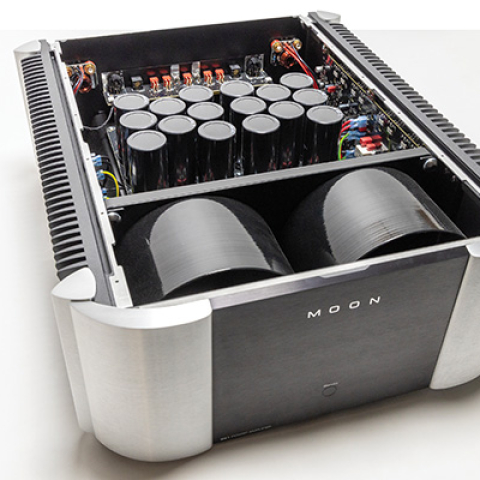
What about the XA60.8? Was it as good as the XA60.5, or even better? Could it handle the bass better than its predecessor did? It has the same rated power, but more metal: bigger transformers, bigger heatsinks. Are those differences enough to provide that bit of extra oomph? Nelson Pass suggested they might be.
John Atkinson has heard vastly more amplifiers than I have, but in this conclusion I'll echo what he concluded about the XA60.5 monoblock. The Pass Laboratories XA60.8 monoblock is the best amplifier I've heard. What's more, for whatever reason, I didn't hear the single fault he identified in the XA60.5. So . . . is it love? I may be too old and crusty to fall in love—especially that new, fresh, giddy kind of love. And, given my lifelong infatuation with a certain delicate-voiced Brazilian girl, frozen in time at age 17, it seems especially unlikely that I'd fall in love with a pair of heavy, wide-bodied twins. Yet I find myself dreading the day, a week or so hence, when JA will double-park his wife's Land Cruiser outside my front door and haul these low-slung beauties away to his test bench. Will I ever hear them again?