Second, with most speakers, treble energy drops off as one moves to the side from the tweeter axis. However, with the fact.8, I heard an increase in HF energy just off the axis (in either direction), which decreased as I moved farther off-axis. (The narrow, 6" baffle, with its sharp edges, may play a role in this.) PMC suggests a starting arrangement with the speakers angled to have their axes cross just behind the head, but this aims the off-axis boost directly at the listening position. I had to play with both toe-in and the HF switch to get a suitable mid/treble balance and open up the center image and soundstage. Optimum (subjective) balance was achieved with less toe-in than suggested and the HF switch set to the rolled-off position.
Removal of the front-panel grille enhanced and clarified midrange detail. One might say that, literally, I removed a veil.
The review system was the same as usual: My Mac mini server sent audio data from Qobuz or from files stored on my NAS to the Mytek Brooklyn via USB; the DAC output went direct to the Bryston or Benchmark amps via XLR. To play discs, I ran the S/PDIF output from the Oppo player to the Brooklyn. The volume was always controlled at the Mytek DAC.
Getting it on
It took more than 50 hours—more than the recommended break-in time—until I felt I was ready for serious listening, at which point I noticed that my volume control settings were about 6dB higher with the fact.8s than with my usual speakers, even though the specs indicate just a 1dB difference in sensitivity. I began extended listening with a recent 24/96 download of Fauré's Requiem that I find quite satisfying, by Ensemble Aedes and Les Siècles, conducted by Mathieu Romano (Qobuz 24/44.1 stream, Aparté AP201). The recording takes me to another time and place, and the pacing seems perfect, the singing and playing superb. With the fact.8, vocal details were clear and the ensemble itself seemed alive. The performance emerged from a believable space, and, if I moved forward from my normal listening position, I felt I could enter that space.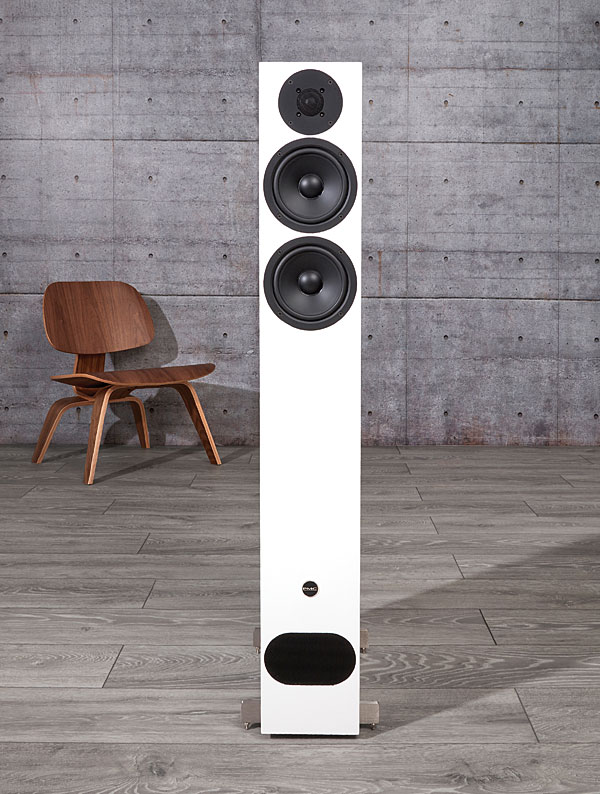 Shifting to an old chestnut, "Yulunga (Spirit Dance)" from the Dead Can Dance album Into the Labyrinth (SACD, 4AD SAD 2711), I was entranced by the airy spaciousness of Lisa Gerrard's haunting voice and the accompanying, isolated instruments appearing and disappearing. Out of that, the sound of the eerie shaker shocks with its proximity and the slowly accelerating drums convey Gerrard's agitated melisma. The fact.8 was wickedly transparent. It clearly revealed each individual voice and instrument in this recording.
But something was missing. It was not the clarity of the midrange or treble, nor was it the low bass in the organ pedals from the opening bars of the Fauré or the deep drum whacks in "Yulunga"—both were notably solid. It also was not in the fact.8's imaging, within and deep beyond the plane of the speakers. What I was missing was in the upper bass and low midrange. On "Yulunga," the wandering drone-like instrumental hum was less full than I'm used to. The result was less warm. In the Fauré, the organ notes in "Libera Me" were deep and clear, but the choral balance favored the upper voices, even though the composer omitted sopranos here.
Hans Theessink's gruff, resonant baritone in "Late Last Night," from Call Me (Blue Groove BG-4020), was lightened, and the huge, synthetic bellow of "Oh Yeah" from Yello's One Second (Mercury 832 675-2) never filled the room, no matter how loud I played it. I continued pushing the volume in the hope of more realistic and thrilling impact. Room-matching may have been a factor.
The cello operates in the same frequency range as those deep voices, and an effect in that range can change one's perception of the music. The iconic opening Prelude of Bach's Suite No.1 in G major, from Gavriel Lipkind's recording of the six Bach Cello Suites, BWV 1007-1012 (3 SACDs, Edel Classics 0016132GLP), is a series of arpeggiated chords. The first long and full tone in each chord defines the pitch and drives the melody; the fact.8 diminished each initial, defining tone, causing the embellishment that follows to gain prominence and Bach's melody to be obscured.
Shifting to an old chestnut, "Yulunga (Spirit Dance)" from the Dead Can Dance album Into the Labyrinth (SACD, 4AD SAD 2711), I was entranced by the airy spaciousness of Lisa Gerrard's haunting voice and the accompanying, isolated instruments appearing and disappearing. Out of that, the sound of the eerie shaker shocks with its proximity and the slowly accelerating drums convey Gerrard's agitated melisma. The fact.8 was wickedly transparent. It clearly revealed each individual voice and instrument in this recording.
But something was missing. It was not the clarity of the midrange or treble, nor was it the low bass in the organ pedals from the opening bars of the Fauré or the deep drum whacks in "Yulunga"—both were notably solid. It also was not in the fact.8's imaging, within and deep beyond the plane of the speakers. What I was missing was in the upper bass and low midrange. On "Yulunga," the wandering drone-like instrumental hum was less full than I'm used to. The result was less warm. In the Fauré, the organ notes in "Libera Me" were deep and clear, but the choral balance favored the upper voices, even though the composer omitted sopranos here.
Hans Theessink's gruff, resonant baritone in "Late Last Night," from Call Me (Blue Groove BG-4020), was lightened, and the huge, synthetic bellow of "Oh Yeah" from Yello's One Second (Mercury 832 675-2) never filled the room, no matter how loud I played it. I continued pushing the volume in the hope of more realistic and thrilling impact. Room-matching may have been a factor.
The cello operates in the same frequency range as those deep voices, and an effect in that range can change one's perception of the music. The iconic opening Prelude of Bach's Suite No.1 in G major, from Gavriel Lipkind's recording of the six Bach Cello Suites, BWV 1007-1012 (3 SACDs, Edel Classics 0016132GLP), is a series of arpeggiated chords. The first long and full tone in each chord defines the pitch and drives the melody; the fact.8 diminished each initial, defining tone, causing the embellishment that follows to gain prominence and Bach's melody to be obscured.
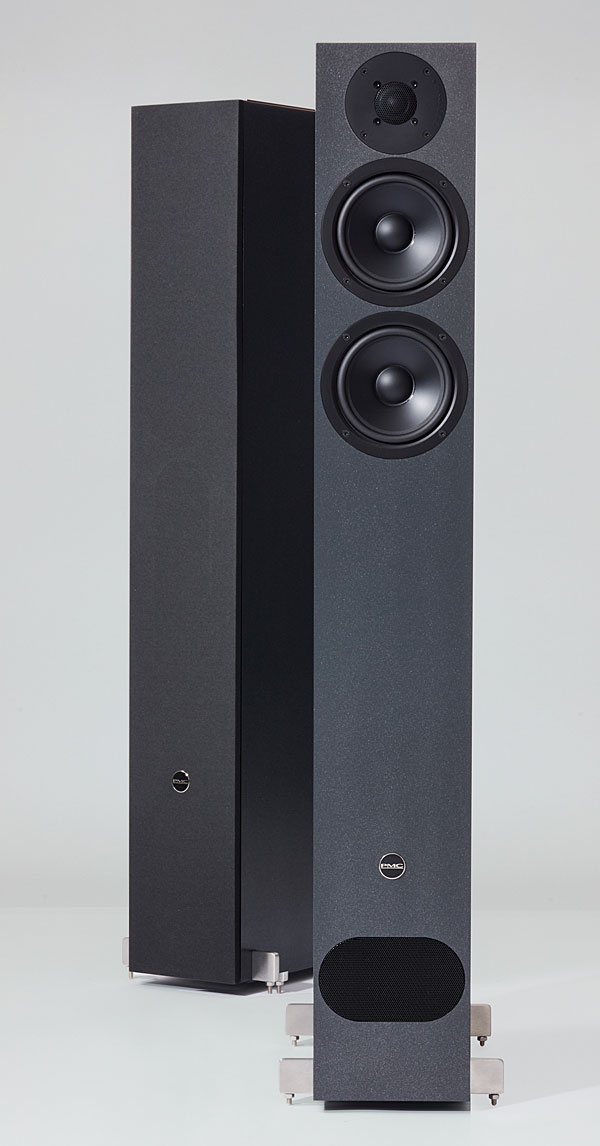 Over a span of several weeks, the fact.8s were my primary sound source, including for casual listening. I adapted to their sound, except when I sat still and focused on a piece of music, at which time I was quickly reminded that I needed more richness in the upper and midbass. That prevented me from spending much time with orchestral recordings—my usual meat and potatoes—and it tilted my selections to small ensembles, solo voices, and simple, open instrumentation.
I revisited some old favorites, like the classic recording of Handel's Concerto for Harp and Lute with Osian Ellis, Desmond Dupré, Granville Jones, and the Philomusica of London, on a Boston Skyline reissue (BSD 119). The delicate scoring, the definition of the solo instruments, and the strings and winds of the ensemble were clear and delectable here. And I should note that my Monitor Audio Silver 8 loudspeakers lacked the PMC's upper-midrange and treble transparency, and its high-definition soundstage. But the Silver 8s provided more energy in the lower frequencies, achieving what seemed to me a more natural balance.
Conclusion
Over a span of several weeks, the fact.8s were my primary sound source, including for casual listening. I adapted to their sound, except when I sat still and focused on a piece of music, at which time I was quickly reminded that I needed more richness in the upper and midbass. That prevented me from spending much time with orchestral recordings—my usual meat and potatoes—and it tilted my selections to small ensembles, solo voices, and simple, open instrumentation.
I revisited some old favorites, like the classic recording of Handel's Concerto for Harp and Lute with Osian Ellis, Desmond Dupré, Granville Jones, and the Philomusica of London, on a Boston Skyline reissue (BSD 119). The delicate scoring, the definition of the solo instruments, and the strings and winds of the ensemble were clear and delectable here. And I should note that my Monitor Audio Silver 8 loudspeakers lacked the PMC's upper-midrange and treble transparency, and its high-definition soundstage. But the Silver 8s provided more energy in the lower frequencies, achieving what seemed to me a more natural balance.
Conclusion
The PMC fact.8 is unquestionably a well-made loudspeaker, and I'm confident the designers have achieved what they were aiming for. I've heard similar sound from other wellknown speakers that are prized for their clarity and detail. Listeners seeking those qualities will find the fact.8 satisfying. Those seeking more mid- and upper-bass weight should audition the fact.8 carefully before buying.
It took more than 50 hours—more than the recommended break-in time—until I felt I was ready for serious listening, at which point I noticed that my volume control settings were about 6dB higher with the fact.8s than with my usual speakers, even though the specs indicate just a 1dB difference in sensitivity. I began extended listening with a recent 24/96 download of Fauré's Requiem that I find quite satisfying, by Ensemble Aedes and Les Siècles, conducted by Mathieu Romano (Qobuz 24/44.1 stream, Aparté AP201). The recording takes me to another time and place, and the pacing seems perfect, the singing and playing superb. With the fact.8, vocal details were clear and the ensemble itself seemed alive. The performance emerged from a believable space, and, if I moved forward from my normal listening position, I felt I could enter that space.
Shifting to an old chestnut, "Yulunga (Spirit Dance)" from the Dead Can Dance album Into the Labyrinth (SACD, 4AD SAD 2711), I was entranced by the airy spaciousness of Lisa Gerrard's haunting voice and the accompanying, isolated instruments appearing and disappearing. Out of that, the sound of the eerie shaker shocks with its proximity and the slowly accelerating drums convey Gerrard's agitated melisma. The fact.8 was wickedly transparent. It clearly revealed each individual voice and instrument in this recording.
But something was missing. It was not the clarity of the midrange or treble, nor was it the low bass in the organ pedals from the opening bars of the Fauré or the deep drum whacks in "Yulunga"—both were notably solid. It also was not in the fact.8's imaging, within and deep beyond the plane of the speakers. What I was missing was in the upper bass and low midrange. On "Yulunga," the wandering drone-like instrumental hum was less full than I'm used to. The result was less warm. In the Fauré, the organ notes in "Libera Me" were deep and clear, but the choral balance favored the upper voices, even though the composer omitted sopranos here.
Over a span of several weeks, the fact.8s were my primary sound source, including for casual listening. I adapted to their sound, except when I sat still and focused on a piece of music, at which time I was quickly reminded that I needed more richness in the upper and midbass. That prevented me from spending much time with orchestral recordings—my usual meat and potatoes—and it tilted my selections to small ensembles, solo voices, and simple, open instrumentation.
The PMC fact.8 is unquestionably a well-made loudspeaker, and I'm confident the designers have achieved what they were aiming for. I've heard similar sound from other wellknown speakers that are prized for their clarity and detail. Listeners seeking those qualities will find the fact.8 satisfying. Those seeking more mid- and upper-bass weight should audition the fact.8 carefully before buying.