

No printed circuit boards are in the signal path, which might be a relief for tube rollers who've suffered the heartache of thin copper traces on tube-heated PCBs cracking, necessitating repair.
Van den Dungen told me that he hates to compromise on quality. These days, he sources tinfoil capacitors from Switzerland, made to his specs, and has them sent to the Netherlands. "Here, we sample for quality, and then they go on transport to China. In China," where PrimaLuna's products are built, "each capacitor is tested, which in fact we do with all our parts: resistors, caps, transistors, FETs, MOSFETs, and tubes of course. If they're not good enough, we send them back to the manufacturer."
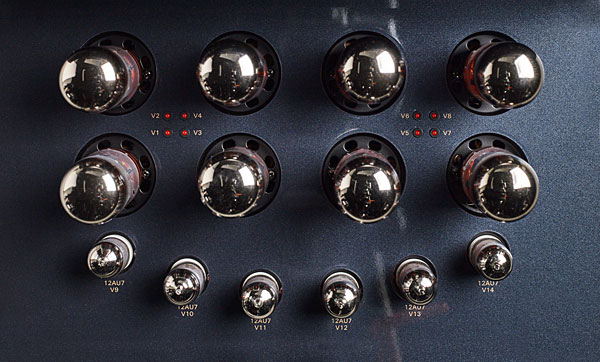 List(en)ing surprises
I fed the EVO 400 a signal from my Bluesound Node 2i streamer connected by S/PDIF to the German-made, second-generation RME ADI-2 DAC FS. There was very good synergy between the RME and the PrimaLuna. The smooth but clinically revealing RME, which banishes noise, distortion, and jitter to far beyond the audible range, boasts an admirable, just-the-facts quality that comes from being designed by Teutonic boffins. (It even looks like a piece of lab equipment.) I used it without engaging its bevy of built-in filters or its parametric equalizer. Later, I played music from my 16" MacBook Pro M1 Max running Roon 1.8 into a Roon ROCK via USB, and from there to an Auralic Vega DAC. Speakers were my trusty references: MartinLogan Odyssey electrostats and a pair of Tekton Moabs.
In honor of PrimaLuna's birthplace, I decided to start my 12 weeks of almost-nightly listening with an improvised playlist of Dutch music. First up: Sweet d'Buster's "Bread" (16/44.1 FLAC, Tidal), a fine piece of mid-'70s polderfunk. World-class bassist Herman Deinum lays down a propulsive riff that, through the extraordinary clarity the EVO 400 provides, reveals his instrument unmistakably as a Fender Precision bass.
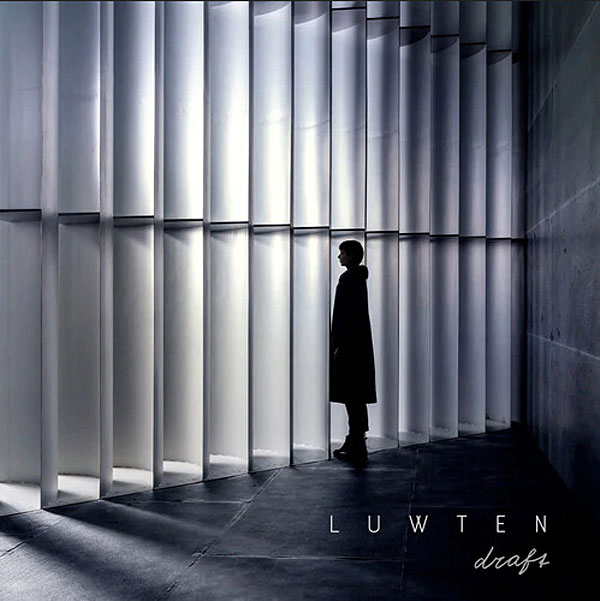 I soon discovered that this perspicuity is a defining characteristic of the amp, perhaps even more than with the DiaLogue Premium HP, whose treble sometimes sounded a trifle closed in by comparison. When I played the title song from Luwten's 2021 album Draft (24/96 FLAC, Qobuz), the EVO 400 made me aware that delicate and delectable have the same root. For the intro, singer Tessa Douwstra hums a single note and through multitracking adds a second and a third identical one—same pitch, same voice. Through the PrimaLuna, each part was easy to distinguish from its doppelgangers on the neighboring tracks.
On "The Goodbye Look" by Donald Fagen (24/96 FLAC, Tidal), a de facto test track I've played easily more than 500 times, I noticed something that had previously escaped my attention: In the final syllable of the last line of the chorus, on the word look, there's an extra voice in the right channel.
This kind of detail retrieval made for an Easter egg hunt of sorts, an exciting one. What else would the EVO 400 reveal?
Among the surprises: When I listened to Paquito D'Rivera's megafamiliar (to me) "Afro" (16/44.1 FLAC, Tidal), at 3:09, I heard something crinkling or rustling—sheet music, most likely. Another example: On David Bowie's "Bring Me the Disco King" from Reality (16/44.1 FLAC, Qobuz), one vocal note seems off. In the line "stab you from the city spires," on the second syllable of "city," Bowie hits an A where the scale dictates an A-flat. It's not that you can't hear this minor (ha!) flub on other equipment; it's that the PrimaLuna renders it with an elevated, dissective clarity.
I soon discovered that this perspicuity is a defining characteristic of the amp, perhaps even more than with the DiaLogue Premium HP, whose treble sometimes sounded a trifle closed in by comparison. When I played the title song from Luwten's 2021 album Draft (24/96 FLAC, Qobuz), the EVO 400 made me aware that delicate and delectable have the same root. For the intro, singer Tessa Douwstra hums a single note and through multitracking adds a second and a third identical one—same pitch, same voice. Through the PrimaLuna, each part was easy to distinguish from its doppelgangers on the neighboring tracks.
On "The Goodbye Look" by Donald Fagen (24/96 FLAC, Tidal), a de facto test track I've played easily more than 500 times, I noticed something that had previously escaped my attention: In the final syllable of the last line of the chorus, on the word look, there's an extra voice in the right channel.
This kind of detail retrieval made for an Easter egg hunt of sorts, an exciting one. What else would the EVO 400 reveal?
Among the surprises: When I listened to Paquito D'Rivera's megafamiliar (to me) "Afro" (16/44.1 FLAC, Tidal), at 3:09, I heard something crinkling or rustling—sheet music, most likely. Another example: On David Bowie's "Bring Me the Disco King" from Reality (16/44.1 FLAC, Qobuz), one vocal note seems off. In the line "stab you from the city spires," on the second syllable of "city," Bowie hits an A where the scale dictates an A-flat. It's not that you can't hear this minor (ha!) flub on other equipment; it's that the PrimaLuna renders it with an elevated, dissective clarity.
 Heart vs head
Despite that precise character, the EVO 400 plays to the heart, not the head. I had listening sessions where not a single new remark appeared on the pages of my notepad—not because there wasn't anything to write about but because the PrimaLuna guided me to immersion, not analysis. Case in point: the track "Samhain Labs" from Here Be Dragons (24/44.1 FLAC, Qobuz) by the Kilimanjaro Darkjazz Ensemble. This is ambient noir reminiscent of Angelo Badalamenti, mood music evoking drizzle, fog, glistening streets, upturned collars, and vague menace. Via the PrimaLuna, no particular instrument elbowed to the fore. The amp just took the signal and reproduced it so that the sound came across as organic, holistic, and alive.
When I did manage to take notes, I ended up with phrases like Rife with detail and dimensionality. Inviting, slightly warm, and opulent. Also, solid density of textures; plush.
Headphones, bass, and triodes
One evening, I plugged my Monolith M1060 planar magnetic headphones into the PrimaLuna's headphone jack, mostly to keep from feeling guilty that I'd spent a perfectly good $270 on them even though they're easily bested by several 'phones I own. Listening to Arturo O'Farrill's "The Offense of the Drum" from the album of the same name (24/44.1 FLAC, Qobuz) made me giddy. It was as if the headphones had received a free upgrade to Audeze LCD-2 or LCD-3 status. And when I switched to my Audeze LCD-4s, they too sounded better than before. The weight of the kickdrum, the blattiness of the muy picante trombones—all was represented with panache and color. The PrimaLuna turns things vibrant with a sprinkling of warm pigments but without making a DayGlo, euphonic mess. "Planners & Thinkers" from Metropolis (Soundtrack) by Metropolis (16/44.1 FLAC, Tidal, footnote 2) revealed a startling amount of tight, room-rattling bass, on a par with the best I've heard from my Moabs. With reggae and dub, I sometimes heard less control in the bass than I do with my solid state gear. Some overhang was present, with the deepest bass notes not as apt to stop on a dime. But the music chugged and jived in ways that left no room for disappointment. Always, 20–30 minutes after I fired it up, the EVO 400 became a glowing little contentment machine, ready to lay bare the soul of any music I threw at it.
In my description of the EVO 400, I failed to mention that you can switch it from Triode mode to Ultralinear on the fly with the included remote control. Which is best? To my ears, Ultralinear provided the clearest lens into the music, prioritizing near-scrupulous fidelity to the source material. But what if that source material needs a little help? Lots of terrific early-'70s pop with a tipped-up upper midrange—the Kinks, say, or Cockney Rebel, or ELO—can sound harsh and ultimately fatiguing. In Triode mode, the PrimaLuna is like a hit of Valium. It takes the edge off.
"Planners & Thinkers" from Metropolis (Soundtrack) by Metropolis (16/44.1 FLAC, Tidal, footnote 2) revealed a startling amount of tight, room-rattling bass, on a par with the best I've heard from my Moabs. With reggae and dub, I sometimes heard less control in the bass than I do with my solid state gear. Some overhang was present, with the deepest bass notes not as apt to stop on a dime. But the music chugged and jived in ways that left no room for disappointment. Always, 20–30 minutes after I fired it up, the EVO 400 became a glowing little contentment machine, ready to lay bare the soul of any music I threw at it.
In my description of the EVO 400, I failed to mention that you can switch it from Triode mode to Ultralinear on the fly with the included remote control. Which is best? To my ears, Ultralinear provided the clearest lens into the music, prioritizing near-scrupulous fidelity to the source material. But what if that source material needs a little help? Lots of terrific early-'70s pop with a tipped-up upper midrange—the Kinks, say, or Cockney Rebel, or ELO—can sound harsh and ultimately fatiguing. In Triode mode, the PrimaLuna is like a hit of Valium. It takes the edge off.
 I had to force myself to refrain from flicking the Triode/Ultralinear switch back and forth on every recording. If the presence of the feature awakens the tweaker and worrier in you, it can become a double-edged sword.
Sounding solid
I had to force myself to refrain from flicking the Triode/Ultralinear switch back and forth on every recording. If the presence of the feature awakens the tweaker and worrier in you, it can become a double-edged sword.
Sounding solid
What of the nontubed competition? A great solid state amp like my Krell FPB 200c, or the Pass Labs INT-60, will render individual performers as if they're standing in white, narrow-beamed aural spotlights, sharply delineated while the space just a foot or two away remains black. It's the kind of sonic treatment I love for its stark precision but that tube lovers may dismiss as clinical.
In contrast, the illumination produced by the PrimaLuna is more gold and amber in character. The spotlights' focus is wider and softer, lighting up the space between the players and letting you take in the whole stage at once. That's fantastic too. Which is better?
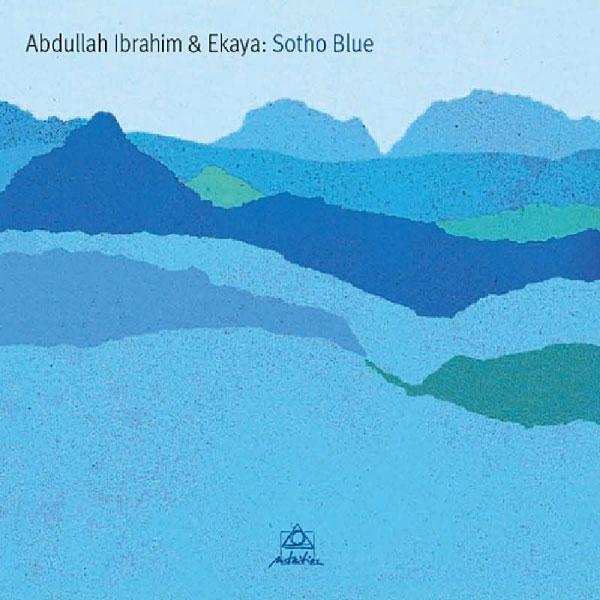 The three-horn interplay on the Bud Powell composition "Glass Enclosure" (16/44.1 FLAC, Qobuz), from Sotho Blue by Abdullah Ibrahim and Ekaya, was a standout on the EVO 400, besting the Krell in some ways. The alto sax sounded bright yet burnished, and the baritone displayed that exhilarating ochre-brown hue, that signature dark-colored bzzz that goes straight to the gut. The grand piano was as gorgeously expansive as I've ever heard it, although maybe lacking the cleanest leading-edge definition of each note. The Krell was better at rendering chords as a collection of discernable notes; the PrimaLuna tended toward an impressionistic, holistic picture. To borrow an analogy from the Dutch art world, the Krell painted with the geometrical precision of Johannes Vermeer; the PrimaLuna was more like Vincent van Gogh.
That clinches it: PrimaLuna's EVO 400 is a work of art. If you're on the hunt for a world-class integrated tube amp for less than five figures, it's hard to imagine how you could do better.
The three-horn interplay on the Bud Powell composition "Glass Enclosure" (16/44.1 FLAC, Qobuz), from Sotho Blue by Abdullah Ibrahim and Ekaya, was a standout on the EVO 400, besting the Krell in some ways. The alto sax sounded bright yet burnished, and the baritone displayed that exhilarating ochre-brown hue, that signature dark-colored bzzz that goes straight to the gut. The grand piano was as gorgeously expansive as I've ever heard it, although maybe lacking the cleanest leading-edge definition of each note. The Krell was better at rendering chords as a collection of discernable notes; the PrimaLuna tended toward an impressionistic, holistic picture. To borrow an analogy from the Dutch art world, the Krell painted with the geometrical precision of Johannes Vermeer; the PrimaLuna was more like Vincent van Gogh.
That clinches it: PrimaLuna's EVO 400 is a work of art. If you're on the hunt for a world-class integrated tube amp for less than five figures, it's hard to imagine how you could do better.
Footnote 2: This is an electronica album, not the "original motion-picture soundtrack" with Freddie Mercury and Pat Benatar.—Jim Austin
List(en)ing surprisesI fed the EVO 400 a signal from my Bluesound Node 2i streamer connected by S/PDIF to the German-made, second-generation RME ADI-2 DAC FS. There was very good synergy between the RME and the PrimaLuna. The smooth but clinically revealing RME, which banishes noise, distortion, and jitter to far beyond the audible range, boasts an admirable, just-the-facts quality that comes from being designed by Teutonic boffins. (It even looks like a piece of lab equipment.) I used it without engaging its bevy of built-in filters or its parametric equalizer. Later, I played music from my 16" MacBook Pro M1 Max running Roon 1.8 into a Roon ROCK via USB, and from there to an Auralic Vega DAC. Speakers were my trusty references: MartinLogan Odyssey electrostats and a pair of Tekton Moabs.
I soon discovered that this perspicuity is a defining characteristic of the amp, perhaps even more than with the DiaLogue Premium HP, whose treble sometimes sounded a trifle closed in by comparison. When I played the title song from Luwten's 2021 album Draft (24/96 FLAC, Qobuz), the EVO 400 made me aware that delicate and delectable have the same root. For the intro, singer Tessa Douwstra hums a single note and through multitracking adds a second and a third identical one—same pitch, same voice. Through the PrimaLuna, each part was easy to distinguish from its doppelgangers on the neighboring tracks.
On "The Goodbye Look" by Donald Fagen (24/96 FLAC, Tidal), a de facto test track I've played easily more than 500 times, I noticed something that had previously escaped my attention: In the final syllable of the last line of the chorus, on the word look, there's an extra voice in the right channel.
Heart vs headDespite that precise character, the EVO 400 plays to the heart, not the head. I had listening sessions where not a single new remark appeared on the pages of my notepad—not because there wasn't anything to write about but because the PrimaLuna guided me to immersion, not analysis. Case in point: the track "Samhain Labs" from Here Be Dragons (24/44.1 FLAC, Qobuz) by the Kilimanjaro Darkjazz Ensemble. This is ambient noir reminiscent of Angelo Badalamenti, mood music evoking drizzle, fog, glistening streets, upturned collars, and vague menace. Via the PrimaLuna, no particular instrument elbowed to the fore. The amp just took the signal and reproduced it so that the sound came across as organic, holistic, and alive.
One evening, I plugged my Monolith M1060 planar magnetic headphones into the PrimaLuna's headphone jack, mostly to keep from feeling guilty that I'd spent a perfectly good $270 on them even though they're easily bested by several 'phones I own. Listening to Arturo O'Farrill's "The Offense of the Drum" from the album of the same name (24/44.1 FLAC, Qobuz) made me giddy. It was as if the headphones had received a free upgrade to Audeze LCD-2 or LCD-3 status. And when I switched to my Audeze LCD-4s, they too sounded better than before. The weight of the kickdrum, the blattiness of the muy picante trombones—all was represented with panache and color. The PrimaLuna turns things vibrant with a sprinkling of warm pigments but without making a DayGlo, euphonic mess.
"Planners & Thinkers" from Metropolis (Soundtrack) by Metropolis (16/44.1 FLAC, Tidal, footnote 2) revealed a startling amount of tight, room-rattling bass, on a par with the best I've heard from my Moabs. With reggae and dub, I sometimes heard less control in the bass than I do with my solid state gear. Some overhang was present, with the deepest bass notes not as apt to stop on a dime. But the music chugged and jived in ways that left no room for disappointment. Always, 20–30 minutes after I fired it up, the EVO 400 became a glowing little contentment machine, ready to lay bare the soul of any music I threw at it.
I had to force myself to refrain from flicking the Triode/Ultralinear switch back and forth on every recording. If the presence of the feature awakens the tweaker and worrier in you, it can become a double-edged sword.
Sounding solidWhat of the nontubed competition? A great solid state amp like my Krell FPB 200c, or the Pass Labs INT-60, will render individual performers as if they're standing in white, narrow-beamed aural spotlights, sharply delineated while the space just a foot or two away remains black. It's the kind of sonic treatment I love for its stark precision but that tube lovers may dismiss as clinical.
The three-horn interplay on the Bud Powell composition "Glass Enclosure" (16/44.1 FLAC, Qobuz), from Sotho Blue by Abdullah Ibrahim and Ekaya, was a standout on the EVO 400, besting the Krell in some ways. The alto sax sounded bright yet burnished, and the baritone displayed that exhilarating ochre-brown hue, that signature dark-colored bzzz that goes straight to the gut. The grand piano was as gorgeously expansive as I've ever heard it, although maybe lacking the cleanest leading-edge definition of each note. The Krell was better at rendering chords as a collection of discernable notes; the PrimaLuna tended toward an impressionistic, holistic picture. To borrow an analogy from the Dutch art world, the Krell painted with the geometrical precision of Johannes Vermeer; the PrimaLuna was more like Vincent van Gogh.
That clinches it: PrimaLuna's EVO 400 is a work of art. If you're on the hunt for a world-class integrated tube amp for less than five figures, it's hard to imagine how you could do better.
Footnote 2: This is an electronica album, not the "original motion-picture soundtrack" with Freddie Mercury and Pat Benatar.—Jim Austin















