I experimented with the bass control and found its settings to be very subtle and very useful. With the F208s switched to Boundary, I heard very little loss in overall bass extension, but a useful loss of boom through the mid- and upper bass. Many boundary switches rob speakers of their life, and even impose a kind of haze on the rest of the audioband. Not so the F208—some audiophiles will find the bass switch a very useful feature. Plugging the ports drastically reduced the level and extension of the bass. Perhaps plugging the ports will be helpful in some rooms, but then you might as well save the money and get the Performa3 F206 ($3500/pair), or one of the Performa3 minimonitors.
After all that burn-in and setup, I was really ready to listen to and evaluate the F208s.
Hell Yes
More than any speaker I have reviewed, the Performa3 F208 had a coherence that I found intoxicating. That coherence manifested itself in two ways. First, the F208's sound was utterly seamless, from its top treble to its lowest bass. Many loudspeakers, especially multiway models, divide the music into distinguishable treble, midrange, and bass sections. But the F208s challenged my ears' ability to divide the sound into separate parts. Music emerged from the F208s as a whole, as it does in real life. I have heard only electrostatic speakers mimic this level of coherence, and only occasionally—and usually, that coherence comes at the price of lighter image solidity and dynamic compression. In fact, the only other multidriver speaker of my experience that betters the F208 is Revel's own Ultima2 Salon2 ($21,998/pair).
For instance, the choir and organ in Glorificatio, by Estonian composer René Eespere, (CD, Christophorus CHR 77233), sounded seamless from top to bottom; the fundamentals of the sung notes sat in perfect balance with the formants and overtones, which in turn were perfectly balanced with the choir's sibilants and the organ's pedal notes. Nor was this coherence only in the arena of frequency. Via the F208, music also seemed to play better in time with itself from top to bottom, resulting in fantastic pace with "Hell Yes," from Beck's Guero (CD, Interscope B0003481-02). The beats hit hard and perfectly together, making me totally groove in my seat.
 Though pulling apart the F208's sound into various bandwidths seemed more difficult than usual, I could still do it. The speaker's treble was extraordinarily extended, clear, and open. The tweeter was, perhaps, ever so slightly hot; the treble control made useful changes when I listened to music recorded with too much sizzle. The tweeter did very little to hide the flaws of bad recordings, but it sure rewarded those recorded with a natural treble balance—the hi-hat and snare in Paul Desmond's Bossa Antigua (CD, RCA Victor 68689-2) sounded so open, clear, and right. The tweeter also allowed the sound of breath through Desmond's alto sax to come through in a natural yet startlingly real way. Thankfully, the tweeter never imposed on the sound any hardness or grain. The treble of each recording sounded totally different from the one before it—as it should.
The F208's midrange was quick, open, and transparent with every recording I played. Naturally recorded classical and jazz sounded immediate and alive, the Revels rendering images with realistic body, weight, and "thereness" while opening a revealing window on the recorded event. On Bossa Antigua, Jim Hall's guitar can sound a bit fuzzy and distant through some speakers; the F208 properly reproduced his attack for each note, while retaining the tubey glow of the sound through Hall's guitar amp. Voices, solo or massed, were served well by the F208, sounding neither dark and weighty nor light and open, but somehow weighty and open.
As I've mentioned, dialing in the Performa3 F208's bass for my room was quite easy and gave spectacular results. I was most impressed with the lack of tubbiness in the mid- and upper bass, the overall bass extension, the resolution of that bass, and the speaker's rhythmic pacing. During my time with the Revels, I edited a recording I've produced, by the Portland State Chamber Choir, that includes Eric Whitacre's A Boy and a Girl—drippingly gorgeous music of tight chord clusters that remain unresolved as they tell a poetic story by Octavio Paz. The basses and baritones often sing in tight harmonies of seconds and thirds, and the F208s allowed me to listen into those pitches in a way convincingly real. Hearing whether or not a minor second is in tune in the upper bass was critical for me in judging the takes we'd laid down, and the F208 made that job relatively easy.
Not only was the F208 a champ at bass resolution, it totally rocked in the bass. Like many, I fell under Lorde's spell when I heard "Royals" on the radio. I picked up her album, Pure Heroine (CD, Virgin B0019254-02), expecting to have it for just the one song. Turns out that this Kiwi has made an album that plays beautifully from start to finish. The minimal interplay of drum machine and synth bass were amazing through the F208s, each bass-drum stroke having the proper bump and each bass pitch clear. More complex bass fare, such as Peter Kruder's Private Collection: Classics from My Living Room and Bedroom (CD, G-Stone GSCD036), also sounded tight, tuneful, and full. The Performa3 F208 is a full-range speaker voiced slightly on the lean side in the bottom octaves, but make no mistake—it will rumble and shake when told to.
The F208s' stereo imaging was superb. These speakers gave me the best front-to-back layering I've heard in my system. In general, close-miked voices and instruments had a scary realness and proximity, while images in the middle and background were clearly placed where they should be. The lateral image was very wide, and instruments within the image were remarkably stable. The band of dual-mono pink noise on John Atkinson's Editor's Choice: Sampler & Test CD (Stereophile STPH016-2) was the narrowest and most centered I have heard with this test. This indicated great phase coherence and little cabinet coloration. This lack of coloration added to the speaker's resolution, speed, and clarity.
Perhaps the best feature of the F208 was its ability to play loudly without strain, stress, or compression. So often, loudspeakers tend to compress dynamics, whether the wide swings of classical music or the constant stop-and-start of popular music. The F208s loved to have the volume turned up, gave uncompressed dynamic swings on both the macro and micro levels, and delivered them with little change in timbre while adding no hardness or edge to the sound as it got louder. The Revels could also handle the high levels of rock and electronic music, somehow sounding more open the higher the volume. I have never heard a $5000/pair speaker play so loudly, so easily, so musically.
Old vs New
Though pulling apart the F208's sound into various bandwidths seemed more difficult than usual, I could still do it. The speaker's treble was extraordinarily extended, clear, and open. The tweeter was, perhaps, ever so slightly hot; the treble control made useful changes when I listened to music recorded with too much sizzle. The tweeter did very little to hide the flaws of bad recordings, but it sure rewarded those recorded with a natural treble balance—the hi-hat and snare in Paul Desmond's Bossa Antigua (CD, RCA Victor 68689-2) sounded so open, clear, and right. The tweeter also allowed the sound of breath through Desmond's alto sax to come through in a natural yet startlingly real way. Thankfully, the tweeter never imposed on the sound any hardness or grain. The treble of each recording sounded totally different from the one before it—as it should.
The F208's midrange was quick, open, and transparent with every recording I played. Naturally recorded classical and jazz sounded immediate and alive, the Revels rendering images with realistic body, weight, and "thereness" while opening a revealing window on the recorded event. On Bossa Antigua, Jim Hall's guitar can sound a bit fuzzy and distant through some speakers; the F208 properly reproduced his attack for each note, while retaining the tubey glow of the sound through Hall's guitar amp. Voices, solo or massed, were served well by the F208, sounding neither dark and weighty nor light and open, but somehow weighty and open.
As I've mentioned, dialing in the Performa3 F208's bass for my room was quite easy and gave spectacular results. I was most impressed with the lack of tubbiness in the mid- and upper bass, the overall bass extension, the resolution of that bass, and the speaker's rhythmic pacing. During my time with the Revels, I edited a recording I've produced, by the Portland State Chamber Choir, that includes Eric Whitacre's A Boy and a Girl—drippingly gorgeous music of tight chord clusters that remain unresolved as they tell a poetic story by Octavio Paz. The basses and baritones often sing in tight harmonies of seconds and thirds, and the F208s allowed me to listen into those pitches in a way convincingly real. Hearing whether or not a minor second is in tune in the upper bass was critical for me in judging the takes we'd laid down, and the F208 made that job relatively easy.
Not only was the F208 a champ at bass resolution, it totally rocked in the bass. Like many, I fell under Lorde's spell when I heard "Royals" on the radio. I picked up her album, Pure Heroine (CD, Virgin B0019254-02), expecting to have it for just the one song. Turns out that this Kiwi has made an album that plays beautifully from start to finish. The minimal interplay of drum machine and synth bass were amazing through the F208s, each bass-drum stroke having the proper bump and each bass pitch clear. More complex bass fare, such as Peter Kruder's Private Collection: Classics from My Living Room and Bedroom (CD, G-Stone GSCD036), also sounded tight, tuneful, and full. The Performa3 F208 is a full-range speaker voiced slightly on the lean side in the bottom octaves, but make no mistake—it will rumble and shake when told to.
The F208s' stereo imaging was superb. These speakers gave me the best front-to-back layering I've heard in my system. In general, close-miked voices and instruments had a scary realness and proximity, while images in the middle and background were clearly placed where they should be. The lateral image was very wide, and instruments within the image were remarkably stable. The band of dual-mono pink noise on John Atkinson's Editor's Choice: Sampler & Test CD (Stereophile STPH016-2) was the narrowest and most centered I have heard with this test. This indicated great phase coherence and little cabinet coloration. This lack of coloration added to the speaker's resolution, speed, and clarity.
Perhaps the best feature of the F208 was its ability to play loudly without strain, stress, or compression. So often, loudspeakers tend to compress dynamics, whether the wide swings of classical music or the constant stop-and-start of popular music. The F208s loved to have the volume turned up, gave uncompressed dynamic swings on both the macro and micro levels, and delivered them with little change in timbre while adding no hardness or edge to the sound as it got louder. The Revels could also handle the high levels of rock and electronic music, somehow sounding more open the higher the volume. I have never heard a $5000/pair speaker play so loudly, so easily, so musically.
Old vs New
After I'd gotten my ears around the Performa3 F208s, I decided to compare them with my old Performa F30s. When I set up the F30s and played them again, it became clear that these two speakers are related to one another. Each had a generous, open midrange and full-range sound. However, the F208 played with far greater coherence, image layering, midbass clarity, dynamics, and lack of cabinet coloration. Subjectively, the F208s went as low in the bass as my F30s, but with far better pitch definition and rhythmic pacing. The F208s' lowest octave of bass lacked the F30s' last bit of gut-punch wallop, but the F208s' superior bass clarity and pacing more than made up for it. In my experience, Revel's Performa2 F52 had a slightly darker midrange than either the F30 or the F208. All in all, and in every way, I prefer the sound of the Performa3 F208 to the sounds of Performas of yesteryear. The F208 takes what was good about both earlier generations of Performas and does it all better, while costing $2000 less per pair than the Performa2 F52 and only $1500 more than my 15-year-old Performa F30s. In audio, such a feat is remarkable. Conclusions
I know too many audiophiles who've lost their way with their gear, who say they're in love with the sound of a certain amplifier, turntable, or speaker. But I don't want to fall in love with audio gear. I want audio gear that helps me fall in love with my music.
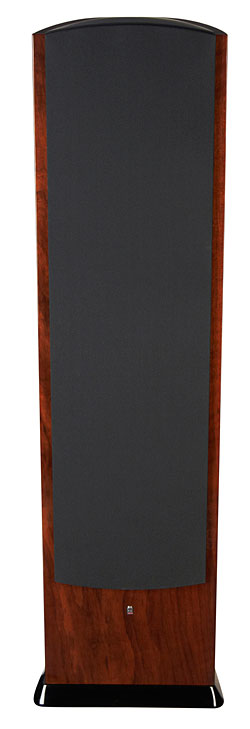
Revel's Performa3 F208 brought me closer to my music in ways I hadn't thought a $5000 pair of speakers could. It offers uncolored, open, neutral sound, full-range extension, superb imaging and dynamics, and beautiful enclosures. It won't do certain things that some audiophile like, but no matter—the Performa F208 is my new benchmark for loudspeakers at this price.
Okay, Okay. I kind of love it.
More than any speaker I have reviewed, the Performa3 F208 had a coherence that I found intoxicating. That coherence manifested itself in two ways. First, the F208's sound was utterly seamless, from its top treble to its lowest bass. Many loudspeakers, especially multiway models, divide the music into distinguishable treble, midrange, and bass sections. But the F208s challenged my ears' ability to divide the sound into separate parts. Music emerged from the F208s as a whole, as it does in real life. I have heard only electrostatic speakers mimic this level of coherence, and only occasionally—and usually, that coherence comes at the price of lighter image solidity and dynamic compression. In fact, the only other multidriver speaker of my experience that betters the F208 is Revel's own Ultima2 Salon2 ($21,998/pair).
Though pulling apart the F208's sound into various bandwidths seemed more difficult than usual, I could still do it. The speaker's treble was extraordinarily extended, clear, and open. The tweeter was, perhaps, ever so slightly hot; the treble control made useful changes when I listened to music recorded with too much sizzle. The tweeter did very little to hide the flaws of bad recordings, but it sure rewarded those recorded with a natural treble balance—the hi-hat and snare in Paul Desmond's Bossa Antigua (CD, RCA Victor 68689-2) sounded so open, clear, and right. The tweeter also allowed the sound of breath through Desmond's alto sax to come through in a natural yet startlingly real way. Thankfully, the tweeter never imposed on the sound any hardness or grain. The treble of each recording sounded totally different from the one before it—as it should.
The F208's midrange was quick, open, and transparent with every recording I played. Naturally recorded classical and jazz sounded immediate and alive, the Revels rendering images with realistic body, weight, and "thereness" while opening a revealing window on the recorded event. On Bossa Antigua, Jim Hall's guitar can sound a bit fuzzy and distant through some speakers; the F208 properly reproduced his attack for each note, while retaining the tubey glow of the sound through Hall's guitar amp. Voices, solo or massed, were served well by the F208, sounding neither dark and weighty nor light and open, but somehow weighty and open.
As I've mentioned, dialing in the Performa3 F208's bass for my room was quite easy and gave spectacular results. I was most impressed with the lack of tubbiness in the mid- and upper bass, the overall bass extension, the resolution of that bass, and the speaker's rhythmic pacing. During my time with the Revels, I edited a recording I've produced, by the Portland State Chamber Choir, that includes Eric Whitacre's A Boy and a Girl—drippingly gorgeous music of tight chord clusters that remain unresolved as they tell a poetic story by Octavio Paz. The basses and baritones often sing in tight harmonies of seconds and thirds, and the F208s allowed me to listen into those pitches in a way convincingly real. Hearing whether or not a minor second is in tune in the upper bass was critical for me in judging the takes we'd laid down, and the F208 made that job relatively easy.
After I'd gotten my ears around the Performa3 F208s, I decided to compare them with my old Performa F30s. When I set up the F30s and played them again, it became clear that these two speakers are related to one another. Each had a generous, open midrange and full-range sound. However, the F208 played with far greater coherence, image layering, midbass clarity, dynamics, and lack of cabinet coloration. Subjectively, the F208s went as low in the bass as my F30s, but with far better pitch definition and rhythmic pacing. The F208s' lowest octave of bass lacked the F30s' last bit of gut-punch wallop, but the F208s' superior bass clarity and pacing more than made up for it. In my experience, Revel's Performa2 F52 had a slightly darker midrange than either the F30 or the F208. All in all, and in every way, I prefer the sound of the Performa3 F208 to the sounds of Performas of yesteryear. The F208 takes what was good about both earlier generations of Performas and does it all better, while costing $2000 less per pair than the Performa2 F52 and only $1500 more than my 15-year-old Performa F30s. In audio, such a feat is remarkable. Conclusions
I know too many audiophiles who've lost their way with their gear, who say they're in love with the sound of a certain amplifier, turntable, or speaker. But I don't want to fall in love with audio gear. I want audio gear that helps me fall in love with my music.