

Sidebar: Reel-to-Reel 101
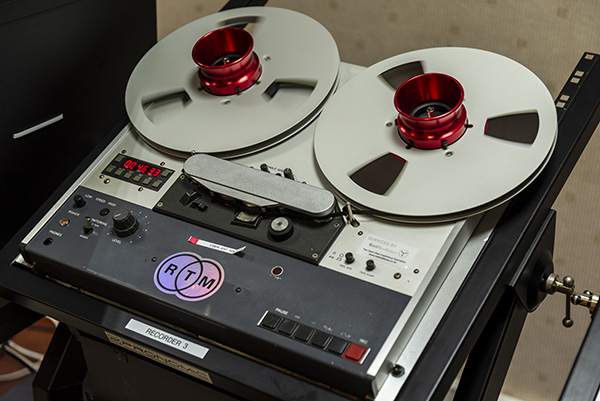 Deluxe, premium-priced reel-to-reel tapes have shown staying power as a small niche format within the audiophile music market. The Tape Project was a pioneer in the reel-to-reel renaissance, very early in the market, shipping to customers as early as 2007. Today there are dozens of tape producers based in Europe, Asia, and North America (footnote 1).
To get the most out of what can be a substantial investment—tapes cost hundreds of dollars per album, and properly working tape machines cost thousands—some knowledge is required. In pro audio circles, it's widely acknowledged that it's easier to record a tape than to play it back, assuming the goal is high fidelity to the source—ensuring that output most closely equals input. So acquiring, setting up, and maintaining a tape playback machine requires skill and knowledge.
First, it's important to know about playback equalization curves. There are two main curves: IEC, formerly CCIR; and NAB, which in Europe was renamed IEC2, though NAB remains more common. IEC was developed in Europe and used on most European tape recordings from the late 1950s onward. NAB—named for the National Association of Broadcasters—dates from the dawn of magnetic tape recording in the US. Most American-made tapes, and many mainstream (rock/pop) British tapes, were recorded with the NAB curve up to recent days.
The key thing to know: Most if not all premium-priced reel tapes use IEC (CCIR) EQ, and most of the second-hand tape machines you'll find on eBay and the like (in the US and Canada) left the factory set up for NAB. A qualified restoration tech will be able to configure a used machine for proper playback (footnote 2).
Assuming you intend to collect these recently reissued tapes, when buying a new-production reel deck, make sure it's set up at the factory for IEC. If you intend to collect vintage tapes, you may need two decks.
The next variable with tape playback is operating level. The original "standard operating level," established in the late 1940s, was 185 nanowebers per meter of magnetic fluxivity. Use Google and other research tools to dive down the rabbit hole of magnetic recording physics; to get up to speed on playing reel tapes, just remember 185nWb. Modern audiophile reel tapes are recorded with a reference level of "+3" (250nWb) or "+6" (355nWb). The safe move is to align your playback machine for +6 = 0 on your VU meters. That way, a "hot" +6 tape won't overload the playback circuits. A high-quality reel machine has a low electronic noisefloor and a good bit of dynamic headroom, so the fact that +3 tapes will read a little low on the VU meters doesn't really matter. Net-net, it's better to avoid overload distortion and clipping.
The main reason a tape is recorded +6 for the audiophile reel market is to keep the background hiss level low on what is at least a third-generation tape (ideally, first-generation master tape > second-generation duplication master > third-generation duplicated tape offered for sale).
Finally, every tape machine owner should have an alignment tape, to keep the machine sounding as it should. There is an alignment procedure for each machine type, usually spelled out in the user manual. Generically, an alignment tape is used to set operating level, playback head azimuth, and playback equalization (as flat frequency response as possible to IEC or IEC2 EQ). These tapes are recorded with precision. It is essential to use a first-generation alignment tape. The main supplier of alignment tapes today is Magnetic Reference Lab (MRL), based in California.
A tape machine in good working order (properly restored or purchased new from a reliable manufacturer), aligned for the correct playback EQ curve and operating level, will maximize the sound quality on modern luxury-priced reel tapes. Such a machine will cost quite a bit of money and require learning and skill to keep it working. An audiophile wishing to get into reel-tape playback should go in with eyes—and wallet—open.—Tom Fine
Deluxe, premium-priced reel-to-reel tapes have shown staying power as a small niche format within the audiophile music market. The Tape Project was a pioneer in the reel-to-reel renaissance, very early in the market, shipping to customers as early as 2007. Today there are dozens of tape producers based in Europe, Asia, and North America (footnote 1).
To get the most out of what can be a substantial investment—tapes cost hundreds of dollars per album, and properly working tape machines cost thousands—some knowledge is required. In pro audio circles, it's widely acknowledged that it's easier to record a tape than to play it back, assuming the goal is high fidelity to the source—ensuring that output most closely equals input. So acquiring, setting up, and maintaining a tape playback machine requires skill and knowledge.
First, it's important to know about playback equalization curves. There are two main curves: IEC, formerly CCIR; and NAB, which in Europe was renamed IEC2, though NAB remains more common. IEC was developed in Europe and used on most European tape recordings from the late 1950s onward. NAB—named for the National Association of Broadcasters—dates from the dawn of magnetic tape recording in the US. Most American-made tapes, and many mainstream (rock/pop) British tapes, were recorded with the NAB curve up to recent days.
The key thing to know: Most if not all premium-priced reel tapes use IEC (CCIR) EQ, and most of the second-hand tape machines you'll find on eBay and the like (in the US and Canada) left the factory set up for NAB. A qualified restoration tech will be able to configure a used machine for proper playback (footnote 2).
Assuming you intend to collect these recently reissued tapes, when buying a new-production reel deck, make sure it's set up at the factory for IEC. If you intend to collect vintage tapes, you may need two decks.
The next variable with tape playback is operating level. The original "standard operating level," established in the late 1940s, was 185 nanowebers per meter of magnetic fluxivity. Use Google and other research tools to dive down the rabbit hole of magnetic recording physics; to get up to speed on playing reel tapes, just remember 185nWb. Modern audiophile reel tapes are recorded with a reference level of "+3" (250nWb) or "+6" (355nWb). The safe move is to align your playback machine for +6 = 0 on your VU meters. That way, a "hot" +6 tape won't overload the playback circuits. A high-quality reel machine has a low electronic noisefloor and a good bit of dynamic headroom, so the fact that +3 tapes will read a little low on the VU meters doesn't really matter. Net-net, it's better to avoid overload distortion and clipping.
The main reason a tape is recorded +6 for the audiophile reel market is to keep the background hiss level low on what is at least a third-generation tape (ideally, first-generation master tape > second-generation duplication master > third-generation duplicated tape offered for sale).
Finally, every tape machine owner should have an alignment tape, to keep the machine sounding as it should. There is an alignment procedure for each machine type, usually spelled out in the user manual. Generically, an alignment tape is used to set operating level, playback head azimuth, and playback equalization (as flat frequency response as possible to IEC or IEC2 EQ). These tapes are recorded with precision. It is essential to use a first-generation alignment tape. The main supplier of alignment tapes today is Magnetic Reference Lab (MRL), based in California.
A tape machine in good working order (properly restored or purchased new from a reliable manufacturer), aligned for the correct playback EQ curve and operating level, will maximize the sound quality on modern luxury-priced reel tapes. Such a machine will cost quite a bit of money and require learning and skill to keep it working. An audiophile wishing to get into reel-tape playback should go in with eyes—and wallet—open.—Tom Fine
Footnote 1: Here is a global list of reel tape producers as of 2023: leson.org/reel-to-reel-tapes-for-sale. Some of the listed companies have since exited the market, and no doubt others have entered. Footnote 2: Another option is an external tape preamp—but to use one with a consumer or prosumer deck, the deck must be modified to add a direct-from-the-heads output. Professional decks require an appropriate cable interface/adapter. Even once that's done, impedance matching is fraught because of the wide range of tape-head inductances. Audiophile tape preamp is a viable product category, but it's complex.
Deluxe, premium-priced reel-to-reel tapes have shown staying power as a small niche format within the audiophile music market. The Tape Project was a pioneer in the reel-to-reel renaissance, very early in the market, shipping to customers as early as 2007. Today there are dozens of tape producers based in Europe, Asia, and North America (footnote 1).
To get the most out of what can be a substantial investment—tapes cost hundreds of dollars per album, and properly working tape machines cost thousands—some knowledge is required. In pro audio circles, it's widely acknowledged that it's easier to record a tape than to play it back, assuming the goal is high fidelity to the source—ensuring that output most closely equals input. So acquiring, setting up, and maintaining a tape playback machine requires skill and knowledge.
First, it's important to know about playback equalization curves. There are two main curves: IEC, formerly CCIR; and NAB, which in Europe was renamed IEC2, though NAB remains more common. IEC was developed in Europe and used on most European tape recordings from the late 1950s onward. NAB—named for the National Association of Broadcasters—dates from the dawn of magnetic tape recording in the US. Most American-made tapes, and many mainstream (rock/pop) British tapes, were recorded with the NAB curve up to recent days.
Footnote 1: Here is a global list of reel tape producers as of 2023: leson.org/reel-to-reel-tapes-for-sale. Some of the listed companies have since exited the market, and no doubt others have entered. Footnote 2: Another option is an external tape preamp—but to use one with a consumer or prosumer deck, the deck must be modified to add a direct-from-the-heads output. Professional decks require an appropriate cable interface/adapter. Even once that's done, impedance matching is fraught because of the wide range of tape-head inductances. Audiophile tape preamp is a viable product category, but it's complex.















