

I initially suspected that this midband clarity might be the result of a tipped-up tonal balance, but then I reconsidered: The speakers didn't sound etched or fatiguing. Rather, I think it was because I was accustomed to my LS50s' tonal character, which is darker overall. Through the Skylights, I was hearing more music than I was used to. And faster music, too: The Skylights served at the temple of tempo, keeping things running at a tight clip and on time.
The Skylights revealed the distinct characters of a wide range of recordings. While the music on Walters's album sounded brash, jaunty, and harmonically meagre, Matthew Halsall's meditative work Colour Yes (CD, Gondwana Records GONDCD003) was all warm hues and lush, expansive environments. The Skylights projected a fertile soundstage, but what impressed me most was how that soundstage spread outward, toward me. Halsall's suave trumpet tone and the harp's colorful vibrations reached my ears in a lifelike way and had a nearly 3D sense of presence. Again, there was great separation between the various sounds in the mix—everything in its place yet tightly bound together. (This was interesting to me, the idea that the more the sounds were separated from each other, the more unified they sounded.)
That cohesiveness and expansiveness was also palpable in Alice Coltrane's Middle Eastern themed Journey in Satchidananda (LP, Impulse! IMP-228). This 1971 classic is rife with jingling percussion sounds. I've heard it countless times, but, courtesy of the Skylights, I gleaned new things from it. What I had always assumed, in "Shiva-Loka," was a frantic comingling of sounds from different types of exotic shakers now seemed more plausibly to come only from tambourines of different pitches and distances from the microphone.
 I also heard more nuance in Pharoah Sanders's blowing technique on saxophone and was taken aback by just how fast Coltrane plucks her harp strings and the notes fly off like sparks. Wow.
Next, I spun Sir Colin Davis and the LSO's Elgar's Symphony No.2 (CD, LSO Live LSO0018). This is an overcooked recording with no trace of concert hall ambience, but even so, the strings swept with grace and gusto and the buildup of the opening allegro kept me on my mental toes. Even as the sounds piled on and became more feverish, the small Skylights remained cool cucumbers and free from gross distortions, playing the music loudly and with impressive dynamics. The Skylights prioritized the recording's musical content over its lackluster production.
Curious, I played a poor recording, Bob Marley & the Wailers' greatest hits package, Legend (CD, Tuff Gong CCID 103). No, the Skylights didn't turn studio lead into audiophile gold, but what they managed to do was pick up this flat and fleshless recording, give it a shine and a new pair of bass shoes, inject it with air and personality, and make the music interesting again: I am in awe of Marley's singular contribution to popular culture, but he's in that category of artists whose music I've heard so many times it doesn't speak to me anymore.
Or so I thought. When I put on the album's live version of "No Woman, No Cry" and listened as the crowd whooped it up and sang along with a hand-clapping, messianic Marley intoning a succession of "Everything's gonna be alright," I got choked up and teary-eyed. The Skylights got me there. They got past the mediocre sound and delivered the music.
I also heard more nuance in Pharoah Sanders's blowing technique on saxophone and was taken aback by just how fast Coltrane plucks her harp strings and the notes fly off like sparks. Wow.
Next, I spun Sir Colin Davis and the LSO's Elgar's Symphony No.2 (CD, LSO Live LSO0018). This is an overcooked recording with no trace of concert hall ambience, but even so, the strings swept with grace and gusto and the buildup of the opening allegro kept me on my mental toes. Even as the sounds piled on and became more feverish, the small Skylights remained cool cucumbers and free from gross distortions, playing the music loudly and with impressive dynamics. The Skylights prioritized the recording's musical content over its lackluster production.
Curious, I played a poor recording, Bob Marley & the Wailers' greatest hits package, Legend (CD, Tuff Gong CCID 103). No, the Skylights didn't turn studio lead into audiophile gold, but what they managed to do was pick up this flat and fleshless recording, give it a shine and a new pair of bass shoes, inject it with air and personality, and make the music interesting again: I am in awe of Marley's singular contribution to popular culture, but he's in that category of artists whose music I've heard so many times it doesn't speak to me anymore.
Or so I thought. When I put on the album's live version of "No Woman, No Cry" and listened as the crowd whooped it up and sang along with a hand-clapping, messianic Marley intoning a succession of "Everything's gonna be alright," I got choked up and teary-eyed. The Skylights got me there. They got past the mediocre sound and delivered the music.
 Of my Bandcamp-sourced finds (including the Walters and Halsall CDs, above), my favorite so far is Brooklyn-based Jaimie Branch's album Fly or Die II: bird dogs of paradise (CD, International Anthem Recording Co. 0027). It is also the best-sounding album of the lot, as the Skylights proved, delivering the first track's interplay between double bass, mbira, and trumpet with a conspicuous sense of timing, tactility, and surrounding air. The album's centerpiece is the second track, "Prayer for Amerikkka pt. 1 and 2," an epic, antiracist manifesto that's a beast of forward momentum, dramatic tension, and surging self-affirmation, as depicted by jarring shouts of "wide-eyed racists," deep chugging bass lines, and Mexican caballeria trumpet blasts. The Skylights nailed the song's dynamic swings and sense of urgency, their presentation akin to a live news feed in which the action seemed to be happening now.
And therein lies what I believe the Skylights do best—indeed, better than most speakers, regardless of price: tell a story. They understand pacing. They understand that a track has a beginning, a middle, and an end. You feel it when you listen to them, like you're being led down a path toward a conclusion. They made me pay attention out of fear I'd miss something important—a clue, a piece of the puzzle, a precious gem.
I think that's the best thing we can say about a component: that it makes us want to listen to its story. If I had to pinpoint in audiophile terms what makes the Skylights so skilled at this, I'd zero in on their combination of midband clarity and sense of rhythm and drive.
Of my Bandcamp-sourced finds (including the Walters and Halsall CDs, above), my favorite so far is Brooklyn-based Jaimie Branch's album Fly or Die II: bird dogs of paradise (CD, International Anthem Recording Co. 0027). It is also the best-sounding album of the lot, as the Skylights proved, delivering the first track's interplay between double bass, mbira, and trumpet with a conspicuous sense of timing, tactility, and surrounding air. The album's centerpiece is the second track, "Prayer for Amerikkka pt. 1 and 2," an epic, antiracist manifesto that's a beast of forward momentum, dramatic tension, and surging self-affirmation, as depicted by jarring shouts of "wide-eyed racists," deep chugging bass lines, and Mexican caballeria trumpet blasts. The Skylights nailed the song's dynamic swings and sense of urgency, their presentation akin to a live news feed in which the action seemed to be happening now.
And therein lies what I believe the Skylights do best—indeed, better than most speakers, regardless of price: tell a story. They understand pacing. They understand that a track has a beginning, a middle, and an end. You feel it when you listen to them, like you're being led down a path toward a conclusion. They made me pay attention out of fear I'd miss something important—a clue, a piece of the puzzle, a precious gem.
I think that's the best thing we can say about a component: that it makes us want to listen to its story. If I had to pinpoint in audiophile terms what makes the Skylights so skilled at this, I'd zero in on their combination of midband clarity and sense of rhythm and drive.
 Conclusions
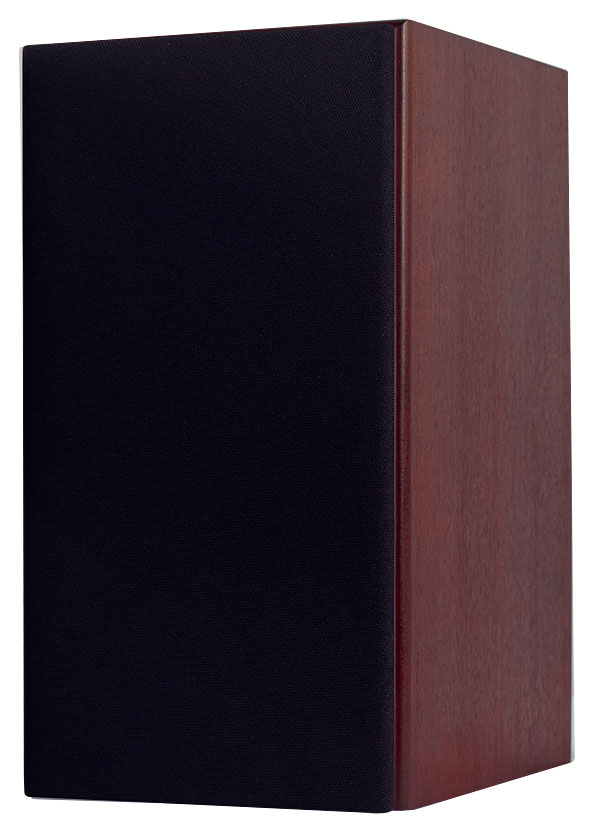
Which brings me to my venerable Stereophile Class A–rated KEF LS50s. Compared to these, in my setup, the Skylights sounded more open and expressive. They breathed out more vital music. And with a specified sensitivity of 88dB versus the LS50's 85dB—both have a nominal impedance of 8 ohms—the Skylights played a little louder with the same juice, and without strain. How do they compare to the Totem Model 1s I owned in the '80s? It's been a while, but I have a lingering impression of the older speaker's sound: rich, refined, with a woodsy, natural warmth. If I remove from the equation the differences in ancillary components, my calculated guess is that the Skylights are better storytellers.
Indeed, I was heartbroken to see them go.
I also heard more nuance in Pharoah Sanders's blowing technique on saxophone and was taken aback by just how fast Coltrane plucks her harp strings and the notes fly off like sparks. Wow.
Next, I spun Sir Colin Davis and the LSO's Elgar's Symphony No.2 (CD, LSO Live LSO0018). This is an overcooked recording with no trace of concert hall ambience, but even so, the strings swept with grace and gusto and the buildup of the opening allegro kept me on my mental toes. Even as the sounds piled on and became more feverish, the small Skylights remained cool cucumbers and free from gross distortions, playing the music loudly and with impressive dynamics. The Skylights prioritized the recording's musical content over its lackluster production.
Curious, I played a poor recording, Bob Marley & the Wailers' greatest hits package, Legend (CD, Tuff Gong CCID 103). No, the Skylights didn't turn studio lead into audiophile gold, but what they managed to do was pick up this flat and fleshless recording, give it a shine and a new pair of bass shoes, inject it with air and personality, and make the music interesting again: I am in awe of Marley's singular contribution to popular culture, but he's in that category of artists whose music I've heard so many times it doesn't speak to me anymore.
Of my Bandcamp-sourced finds (including the Walters and Halsall CDs, above), my favorite so far is Brooklyn-based Jaimie Branch's album Fly or Die II: bird dogs of paradise (CD, International Anthem Recording Co. 0027). It is also the best-sounding album of the lot, as the Skylights proved, delivering the first track's interplay between double bass, mbira, and trumpet with a conspicuous sense of timing, tactility, and surrounding air. The album's centerpiece is the second track, "Prayer for Amerikkka pt. 1 and 2," an epic, antiracist manifesto that's a beast of forward momentum, dramatic tension, and surging self-affirmation, as depicted by jarring shouts of "wide-eyed racists," deep chugging bass lines, and Mexican caballeria trumpet blasts. The Skylights nailed the song's dynamic swings and sense of urgency, their presentation akin to a live news feed in which the action seemed to be happening now.
And therein lies what I believe the Skylights do best—indeed, better than most speakers, regardless of price: tell a story. They understand pacing. They understand that a track has a beginning, a middle, and an end. You feel it when you listen to them, like you're being led down a path toward a conclusion. They made me pay attention out of fear I'd miss something important—a clue, a piece of the puzzle, a precious gem.
ConclusionsWhich brings me to my venerable Stereophile Class A–rated KEF LS50s. Compared to these, in my setup, the Skylights sounded more open and expressive. They breathed out more vital music. And with a specified sensitivity of 88dB versus the LS50's 85dB—both have a nominal impedance of 8 ohms—the Skylights played a little louder with the same juice, and without strain. How do they compare to the Totem Model 1s I owned in the '80s? It's been a while, but I have a lingering impression of the older speaker's sound: rich, refined, with a woodsy, natural warmth. If I remove from the equation the differences in ancillary components, my calculated guess is that the Skylights are better storytellers.















