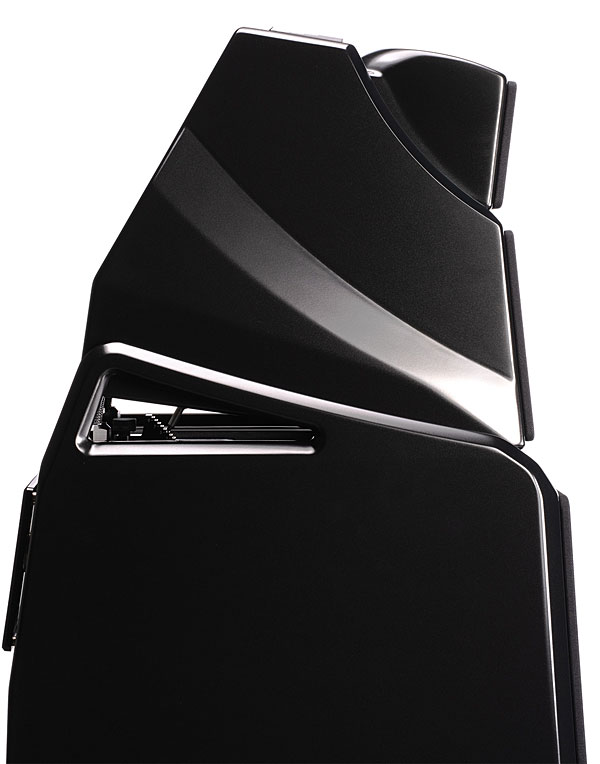
Readers familiar with the Alexia Series 2 will note several differences in size and shape. The width of the woofer enclosure—hence of the speaker itself—was increased by about ¼", depth by 1¼". The internal volume of the woofer enclosure is about 9% larger, that of the midrange enclosure 6.4% larger. Daryl says this allows for "a little more low-frequency extension and alacrity in the bass and a bit more midrange bloom." Not visible from the outside are more elaborate diffusers used inside the midrange enclosure. Sensitivity is claimed to have increased by 1dB, from 89 to 90, and crossover modifications have reduced the impedance dip at 84Hz a fraction, from 2.59 ohms to 2.54 ohms. We'll see what John Atkinson's measurements have to say about that.
"Form follows function," Daryl said in conclusion. "Our primary objective was to get better performance and alignment between the drivers in the time domain. We were able to change the angle of the midrange baffle and how the tweeter and midrange adjust independently of each other relative to the launch point of the woofers. That's one of the reasons the look changed. In addition, the bass goes lower and is more controlled."
 Setup
Setup
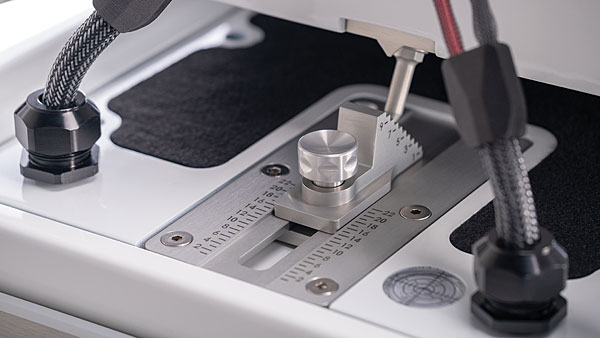
Gary Bruestle, speaker-setup wizard and design/sales consultant at Definitive Audio in Bellevue and Seattle, Washington, visited my home for the initial setup (footnote 5). Peter McGrath, Wilson's account executive and brand ambassador, followed up with a fine-tuning visit. In the end, the speakers remained at the same distance from the center point of the room as before but well over an inch further forward. Toe-in was decreased just a bit so that—this is new—the tweeters were aimed at points just wide of my ears. Happily, this widened both the soundstage and the sweet spot, making it possible to welcome a guest in for optimal listening, two if you sit close. Using Wilson's knowledge base, we were able to precisely align the speaker for my 41" ear height and 12'1" distance from the speakers.
Music at last
First impressions are always important, but they are vital for an objective assessment of audio components, when the ear and heart accustom themselves and what at first inspires wide-eyed wonder can quickly turn routine.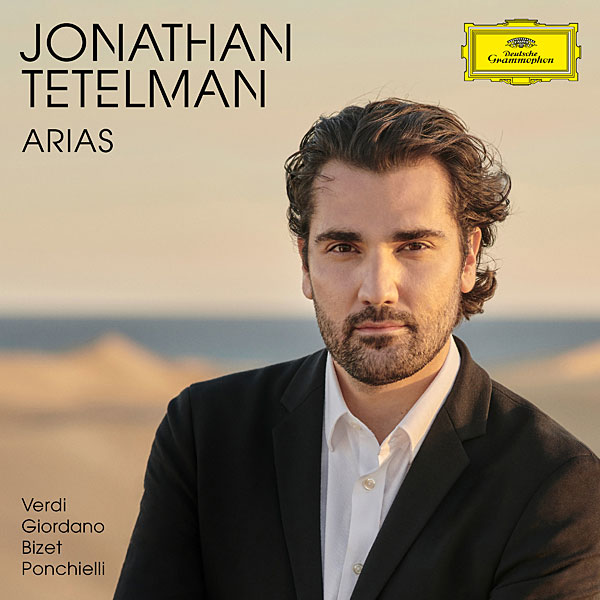 My first listen was to American tenor Jonathan Tetelman, whose debut album for DG, Arias (24/96 WAV), has garnered accolades. I reviewed this album for San Francisco Classical Voice, in the process listening to it several times. I was delighted to discover, through the Alexia Vs, additional natural color and warmth in his ringing voice. He sounded wonderful (footnote 6).
 Turning to an old standby, Boris Blank's "Electrified II" from Yello's Toy (24/48 MQA, Universal Music/Tidal), I discovered improved transparency and superbly controlled yet pounding bass.
In Also Sprach Zarathustra, from Strauss, with the Gewandhausorchester Leipzig under Andris Nelsons—our June 2022 Recording of the Month (24/96 WAV, DG)—the soundstage was wider and more convincing (thanks, in part, no doubt, to the new speaker positioning). I heard more warmth on the solo violin and firmer, better-controlled low lines on the cello and double basses. I heard more detail and more nuanced dynamics, which further increased my appreciation of Nelsons's mastery and invited deeper involvement with the music. It was, to indulge in a cliché, as if I was hearing the recording for the first time. The Alexia V enabled me to indulge not only in clichés but also in the music, to rejoice in its compositional genius and artistry. The violin glowed as never before. I glowed in response.
Turning to an old standby, Boris Blank's "Electrified II" from Yello's Toy (24/48 MQA, Universal Music/Tidal), I discovered improved transparency and superbly controlled yet pounding bass.
In Also Sprach Zarathustra, from Strauss, with the Gewandhausorchester Leipzig under Andris Nelsons—our June 2022 Recording of the Month (24/96 WAV, DG)—the soundstage was wider and more convincing (thanks, in part, no doubt, to the new speaker positioning). I heard more warmth on the solo violin and firmer, better-controlled low lines on the cello and double basses. I heard more detail and more nuanced dynamics, which further increased my appreciation of Nelsons's mastery and invited deeper involvement with the music. It was, to indulge in a cliché, as if I was hearing the recording for the first time. The Alexia V enabled me to indulge not only in clichés but also in the music, to rejoice in its compositional genius and artistry. The violin glowed as never before. I glowed in response.
 Another revelation came in a subsequent listening session, when I returned to one of my most treasured vocal performances: soprano Arleen Auger's early digital recording of Obradors's "Del Cabello más sutil" (From the finest hair, footnote 7) from Love Songs (16/44.1 FLAC, Naxos/Qobuz), a triumph for its recording engineer, the late John Eargle. I never expected a recording I've played dozens of times, at home and at audio shows, to hold previously unrevealed nuance. Yet, the slightest changes in Auger's volume and vocal color were now apparent. Has it really taken more than 30 years, hundreds of audio shows, and 5,877,323 equipment changes to finally discover how subtle an artist Auger was? (Or, maybe there's still more subtlety to be revealed.)
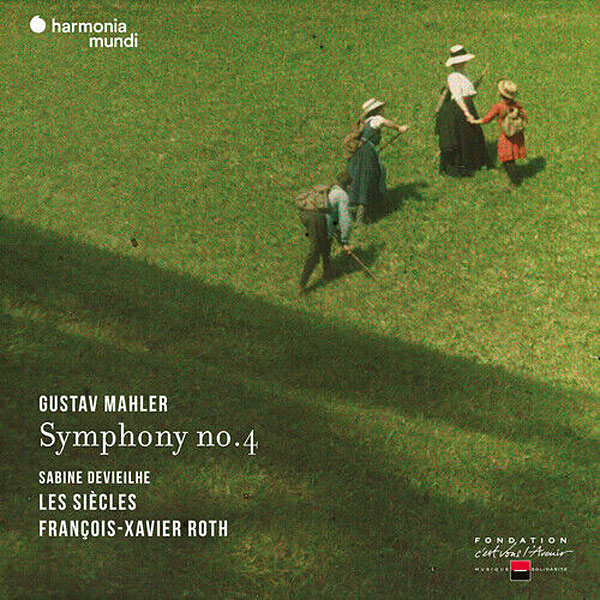 Skip ahead to Peter McGrath's visit. In addition to indulging in some of Peter's wondrous recordings—Peter is not shy about extolling the role MQA remastering has played in the glorious sound of his earlier and current recording efforts—we listened to parts of François-Xavier Roth's recording, with Les Siècles period-instrument orchestra, of Mahler's Symphony No.4 (both 24/96 WAV download and Qobuz 24/96 FLAC—we chose whichever came up first in Roon). I've gone bananas many times over the contrasting colors of the woodwinds in this recording, but they were highlighted even more by the Alexia V. It wasn't just the woodwinds: I could discern harmonics from bows on gut strings that I'd never heard before.
I couldn't let Peter move on from Mahler's Fourth before sharing Kathleen Battle's heavenly performance of the final movement in her 1989 recording with the Vienna Philharmonic under Lorin Maazel (16/44.1 MQA, CBS/Tidal). As much as I like Roth's zippy interpretation and Sabine Devieilhe's superb soprano, I find Maazel's slower rendering and Battle's perfection seductive. At the transition to the soprano's final verse, Maazel executes a radical slowdown that intensifies the musical tension. Few Mahler conductors—Bernstein and Rattle perhaps—have managed to pull off a similar effect.
For decades, I've heard tales of the fabled golden glow of the Vienna Philharmonic in their own hall, Vienna's Musikverein. Dave Wilson was determined to redo his entire speaker line after he sat through countless rehearsals in the Musikverein, asking himself, why can't my speakers fully replicate that sound? I have never been able to discern that fabled glow on Vienna Philharmonic recordings with my system. Some may respond, "Hey, Serinus, maybe you needed to listen to vinyl instead of digital." Thanks to the Alexia V and the MQA remastering of Maazel's early digital recording, I've now heard that golden glow in my music room.
Via the QuadraMag driver, the Alexia V's midrange sounds warmer, fuller, smoother, and more resolving than that of its predecessor. It retrieves dynamic nuance and detail superbly. This was confirmed when I returned to Patricia Barber's "Surrender," from Higher (24/352.8 MQA, Impex/Tidal). I've played this recording countless times—it was my September 2019 Recording of the Month—but I've never before held my breath as I did when I discovered how often Barber, like Auger, uses minute changes in volume to imbue her music with expressive subtlety. If I'm dreaming, let me sleep. When I hear the leading edge of the guitar so perfectly clear and believable and the double bass so full, taut, and rich, if it's a dream, I don't want to wake up.
Some credit—perhaps much credit—is owed to the changes to Wilson's tweeter and other components, to materials, and to cabinet dimensions. Highs seemed clearer than before, bass tauter. I could hear more air around the flute, viola, and harp on Emmanuel Pahud, Gérard Caussé, and Marie-Pierre Langlamet's wonderful recording of Debussy's sonata for those instruments, from Erato's Debussy: Sonates & Trio (24/96 WAV).
Skip ahead to Peter McGrath's visit. In addition to indulging in some of Peter's wondrous recordings—Peter is not shy about extolling the role MQA remastering has played in the glorious sound of his earlier and current recording efforts—we listened to parts of François-Xavier Roth's recording, with Les Siècles period-instrument orchestra, of Mahler's Symphony No.4 (both 24/96 WAV download and Qobuz 24/96 FLAC—we chose whichever came up first in Roon). I've gone bananas many times over the contrasting colors of the woodwinds in this recording, but they were highlighted even more by the Alexia V. It wasn't just the woodwinds: I could discern harmonics from bows on gut strings that I'd never heard before.
I couldn't let Peter move on from Mahler's Fourth before sharing Kathleen Battle's heavenly performance of the final movement in her 1989 recording with the Vienna Philharmonic under Lorin Maazel (16/44.1 MQA, CBS/Tidal). As much as I like Roth's zippy interpretation and Sabine Devieilhe's superb soprano, I find Maazel's slower rendering and Battle's perfection seductive. At the transition to the soprano's final verse, Maazel executes a radical slowdown that intensifies the musical tension. Few Mahler conductors—Bernstein and Rattle perhaps—have managed to pull off a similar effect.
For decades, I've heard tales of the fabled golden glow of the Vienna Philharmonic in their own hall, Vienna's Musikverein. Dave Wilson was determined to redo his entire speaker line after he sat through countless rehearsals in the Musikverein, asking himself, why can't my speakers fully replicate that sound? I have never been able to discern that fabled glow on Vienna Philharmonic recordings with my system. Some may respond, "Hey, Serinus, maybe you needed to listen to vinyl instead of digital." Thanks to the Alexia V and the MQA remastering of Maazel's early digital recording, I've now heard that golden glow in my music room.
Via the QuadraMag driver, the Alexia V's midrange sounds warmer, fuller, smoother, and more resolving than that of its predecessor. It retrieves dynamic nuance and detail superbly. This was confirmed when I returned to Patricia Barber's "Surrender," from Higher (24/352.8 MQA, Impex/Tidal). I've played this recording countless times—it was my September 2019 Recording of the Month—but I've never before held my breath as I did when I discovered how often Barber, like Auger, uses minute changes in volume to imbue her music with expressive subtlety. If I'm dreaming, let me sleep. When I hear the leading edge of the guitar so perfectly clear and believable and the double bass so full, taut, and rich, if it's a dream, I don't want to wake up.
Some credit—perhaps much credit—is owed to the changes to Wilson's tweeter and other components, to materials, and to cabinet dimensions. Highs seemed clearer than before, bass tauter. I could hear more air around the flute, viola, and harp on Emmanuel Pahud, Gérard Caussé, and Marie-Pierre Langlamet's wonderful recording of Debussy's sonata for those instruments, from Erato's Debussy: Sonates & Trio (24/96 WAV).
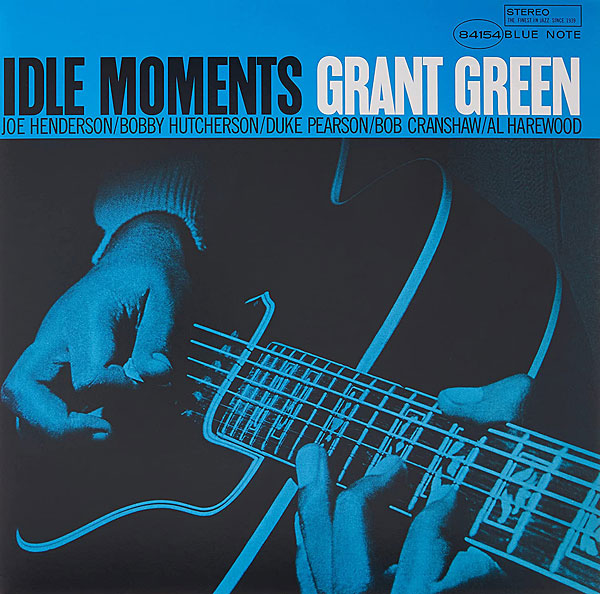 I've seen less of my audiophile buddy Scott these days, as his time has been split between home life, sewing the robes he must complete to enter the Zen Priesthood, and trying to maintain serenity through kitchen-remodeling hell. When he managed to spare a few hours, we began with the title track from Grant Green's Idle Moments (24/192 FLAC, Blue Note/Qobuz). I heard new, irresistible warmth. The piano sound was the epitome of mellow. Bass, solid, clear of pitch, resonant, warm. I heard new complexity—what some call microtonality—from Green's guitar, and more air around the drum. The physicality of sound of each instrument was a joy.
Equally gratifying was the natural sound of horn in Cannonball Adderley's version of "Autumn Leaves" from Somethin' Else (24/96 MQA, Blue Note/Tidal). Miles Davis's trumpet was varicolored, the reed sound palpable on Adderley's alto sax. Talk about up close and personal.
I've seen less of my audiophile buddy Scott these days, as his time has been split between home life, sewing the robes he must complete to enter the Zen Priesthood, and trying to maintain serenity through kitchen-remodeling hell. When he managed to spare a few hours, we began with the title track from Grant Green's Idle Moments (24/192 FLAC, Blue Note/Qobuz). I heard new, irresistible warmth. The piano sound was the epitome of mellow. Bass, solid, clear of pitch, resonant, warm. I heard new complexity—what some call microtonality—from Green's guitar, and more air around the drum. The physicality of sound of each instrument was a joy.
Equally gratifying was the natural sound of horn in Cannonball Adderley's version of "Autumn Leaves" from Somethin' Else (24/96 MQA, Blue Note/Tidal). Miles Davis's trumpet was varicolored, the reed sound palpable on Adderley's alto sax. Talk about up close and personal.
 What more can one ask from a component than to move one closer to the essence of creation and inspiration?
Conclusion
What more can one ask from a component than to move one closer to the essence of creation and inspiration?
Conclusion
It's been quite the six months in Serinusland. First the Stromtank, then the Nordost QNet and QSource, and then one of the finest DACs I've been privileged to enjoy, the dCS Rossini Apex. I never fully appreciated how good each of those components is until Wilson Audio's new Alexia V loudspeaker let me hear so much more of what they can deliver. All these changes and improvements can be summarized in one sentence: Assisted by first-rate amplification and source components, the Wilson Audio Specialties Alexia V presented the entirety of the musical argument more completely and satisfyingly than its predecessor did. And its predecessor was very fine.
The notion that the loudspeaker is the most important component in an audio system is hogwash, although that conversation may be more semantic than substantial. What's the point of being able to hear more of what your system can deliver if all you hear is more distortion or mediocrity?
 Still, if your sources and amplification are up to snuff and your source material musically rich, their gifts can be fully realized only with excellent loudspeakers.
The Wilson Alexia V isn't just excellent, it's superb. Within the limitations of the scale and reach of speakers their size, their ability to deliver the range, color, texture, detail, nuance, dynamics, visceral impact, and emotion—all central to musical greatness—is among the finest I've ever experienced. They can thrill you to the core and make your heart sing.
Still, if your sources and amplification are up to snuff and your source material musically rich, their gifts can be fully realized only with excellent loudspeakers.
The Wilson Alexia V isn't just excellent, it's superb. Within the limitations of the scale and reach of speakers their size, their ability to deliver the range, color, texture, detail, nuance, dynamics, visceral impact, and emotion—all central to musical greatness—is among the finest I've ever experienced. They can thrill you to the core and make your heart sing.
Footnote 5: Wilson's setup policy: A trained representative of the dealer who sold any current-model Wilson speaker from SabrinaX to XVX is required to be involved in the installation and setup of the speakers in the client's listening room. Footnote 6: By the time this review is published, I will have heard Tetelman live for the first time in San Francisco Opera's La Traviata. Footnote 7: As you might suspect (or know if you speak Spanish), "sutil" translates most closely and directly to "subtle"; to me, "fine" seems closer than "soft," which is used in the more common translation of the name of this song: "Of the Softest Hair."
Footnote 8: Reviewed elsewhere in this issue.
SetupGary Bruestle, speaker-setup wizard and design/sales consultant at Definitive Audio in Bellevue and Seattle, Washington, visited my home for the initial setup (footnote 5). Peter McGrath, Wilson's account executive and brand ambassador, followed up with a fine-tuning visit. In the end, the speakers remained at the same distance from the center point of the room as before but well over an inch further forward. Toe-in was decreased just a bit so that—this is new—the tweeters were aimed at points just wide of my ears. Happily, this widened both the soundstage and the sweet spot, making it possible to welcome a guest in for optimal listening, two if you sit close. Using Wilson's knowledge base, we were able to precisely align the speaker for my 41" ear height and 12'1" distance from the speakers.
First impressions are always important, but they are vital for an objective assessment of audio components, when the ear and heart accustom themselves and what at first inspires wide-eyed wonder can quickly turn routine.
My first listen was to American tenor Jonathan Tetelman, whose debut album for DG, Arias (24/96 WAV), has garnered accolades. I reviewed this album for San Francisco Classical Voice, in the process listening to it several times. I was delighted to discover, through the Alexia Vs, additional natural color and warmth in his ringing voice. He sounded wonderful (footnote 6).
Turning to an old standby, Boris Blank's "Electrified II" from Yello's Toy (24/48 MQA, Universal Music/Tidal), I discovered improved transparency and superbly controlled yet pounding bass.
Another revelation came in a subsequent listening session, when I returned to one of my most treasured vocal performances: soprano Arleen Auger's early digital recording of Obradors's "Del Cabello más sutil" (From the finest hair, footnote 7) from Love Songs (16/44.1 FLAC, Naxos/Qobuz), a triumph for its recording engineer, the late John Eargle. I never expected a recording I've played dozens of times, at home and at audio shows, to hold previously unrevealed nuance. Yet, the slightest changes in Auger's volume and vocal color were now apparent. Has it really taken more than 30 years, hundreds of audio shows, and 5,877,323 equipment changes to finally discover how subtle an artist Auger was? (Or, maybe there's still more subtlety to be revealed.)
Skip ahead to Peter McGrath's visit. In addition to indulging in some of Peter's wondrous recordings—Peter is not shy about extolling the role MQA remastering has played in the glorious sound of his earlier and current recording efforts—we listened to parts of François-Xavier Roth's recording, with Les Siècles period-instrument orchestra, of Mahler's Symphony No.4 (both 24/96 WAV download and Qobuz 24/96 FLAC—we chose whichever came up first in Roon). I've gone bananas many times over the contrasting colors of the woodwinds in this recording, but they were highlighted even more by the Alexia V. It wasn't just the woodwinds: I could discern harmonics from bows on gut strings that I'd never heard before.
I've seen less of my audiophile buddy Scott these days, as his time has been split between home life, sewing the robes he must complete to enter the Zen Priesthood, and trying to maintain serenity through kitchen-remodeling hell. When he managed to spare a few hours, we began with the title track from Grant Green's Idle Moments (24/192 FLAC, Blue Note/Qobuz). I heard new, irresistible warmth. The piano sound was the epitome of mellow. Bass, solid, clear of pitch, resonant, warm. I heard new complexity—what some call microtonality—from Green's guitar, and more air around the drum. The physicality of sound of each instrument was a joy.
Equally gratifying was the natural sound of horn in Cannonball Adderley's version of "Autumn Leaves" from Somethin' Else (24/96 MQA, Blue Note/Tidal). Miles Davis's trumpet was varicolored, the reed sound palpable on Adderley's alto sax. Talk about up close and personal.
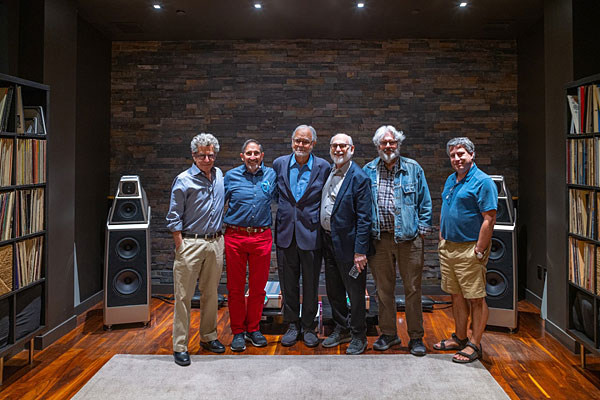
The listeners at Innovative Audio's Alexia V preview. L–R: Michael Fremer, Jason Victor Serinus, Peter McGrath, Kal Rubinson, John Atkinson, unknown. (Photo: Chris Forman)
I'm not sure I would want to get too up close and personal to the floor-shaking organ at the start of Strauss's Also Sprach Zarathustra, but it sounded mighty and clear through the Alexia V. It sounded even more massive and impressive when I heard it during the Alexia V launch at Innovative Audio in NYC (see photo). Many of the same components I have in my own system were used at that event—Stromtank S 2500 Quantum Mk II, dCS Rossini Apex DAC and Clock, D'Agostino Momentum preamp, and D'Agostino Momentum MxV monoblocks (one step up from my reference Progression M550 monos)—but Innovative Audio's longer listening room allowed the Alexia to sing and deep bass to bloom. I grew so covetous of the bass in that room that I immediately asked the universe to deliver an unexpected inheritance that would allow me to enlarge my room beyond its current dimensions. I'm still waiting.
In the Chiaroscuro Quartet's new recording of Mozart's Prussian Quartets (footnote 8), period instruments sounded delicious, with subtle, affecting dynamics. On "Give Me One Reason," from New Beginning (16/44.1 MQ, Elektra/Tidal), Tracy Chapman's voice and guitar sounded more believable than it did with the old Alexias. Terry Riley's multitracked and overdubbed Sun Rings (24/96MQA, Nonesuch/Tidal) sounded clearer, more colorful and detailed. It is easy to understand why it earned recording engineer Leslie Ann Jones another Grammy Award, for Best Engineered Album, Classical.
It's been quite the six months in Serinusland. First the Stromtank, then the Nordost QNet and QSource, and then one of the finest DACs I've been privileged to enjoy, the dCS Rossini Apex. I never fully appreciated how good each of those components is until Wilson Audio's new Alexia V loudspeaker let me hear so much more of what they can deliver. All these changes and improvements can be summarized in one sentence: Assisted by first-rate amplification and source components, the Wilson Audio Specialties Alexia V presented the entirety of the musical argument more completely and satisfyingly than its predecessor did. And its predecessor was very fine.
Still, if your sources and amplification are up to snuff and your source material musically rich, their gifts can be fully realized only with excellent loudspeakers.
The Wilson Alexia V isn't just excellent, it's superb. Within the limitations of the scale and reach of speakers their size, their ability to deliver the range, color, texture, detail, nuance, dynamics, visceral impact, and emotion—all central to musical greatness—is among the finest I've ever experienced. They can thrill you to the core and make your heart sing.
Footnote 5: Wilson's setup policy: A trained representative of the dealer who sold any current-model Wilson speaker from SabrinaX to XVX is required to be involved in the installation and setup of the speakers in the client's listening room. Footnote 6: By the time this review is published, I will have heard Tetelman live for the first time in San Francisco Opera's La Traviata. Footnote 7: As you might suspect (or know if you speak Spanish), "sutil" translates most closely and directly to "subtle"; to me, "fine" seems closer than "soft," which is used in the more common translation of the name of this song: "Of the Softest Hair."