In my high school, Bowie was a living chasm. Sure, he had Mick Ronson’s guitar to toughen things up, but in general when he first appeared in our teenaged consciousness it was as the androgynous, painted Ziggy, which made the less sexually secure amongst us glands-out-of-control a little nervous. This came out in conversation as being surly and dismissive of the man and his music. You either thought his glamminess, and the glam movement as a whole for that matter, was cool and fun or it made you profoundly uncomfortable and was somehow a threat to your manhood.
Actually, the Bowie-is-too-weird thing began with the shot of him in a dress that graced the cover of The Man Who Sold the World. And then of course there was the famous half-man, half-dog cover of Diamond Dogs whose initial run portrayed genitalia (on the half-man, half-dog) and in its way became more famous and valuable in collector circles than first Moby Grape record or The MC5’s original pressing of “Kick Out The Jams,” though not as costly and precious as the Beatles Butcher cover. The dog cover also skeeved out and added to the doubts of those who were suspicious of Bowie in the first place. Eventually, I came to see the separation between those who got Bowie (Ziggy) and those who did not (and were kinda scared of it to be honest) as the divide between those with imaginations (and firm sexual identities) and those with neither. Any record that came with the words, “To Be Played At Maximum Volume” printed on the cover instantly made sense to me.
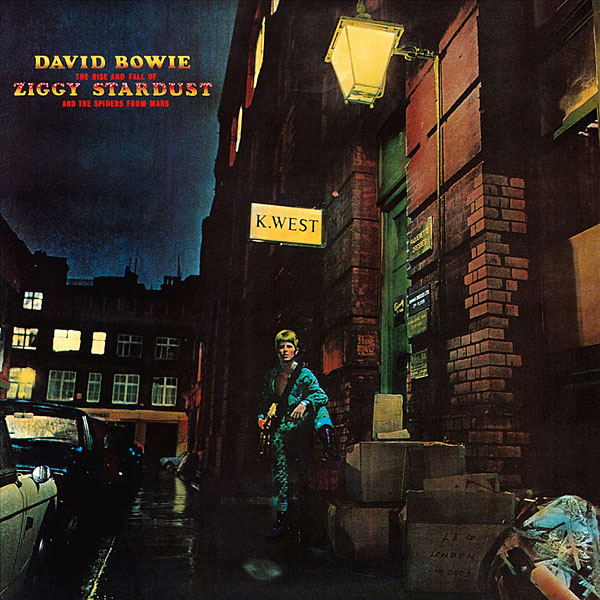
Earlier this year, in some sort of premonition of his passing I guess, I suddenly began searching out different pressings of Ziggy. According to Discogs.com, which I mostly trust, there are 181 versions of The Rise and Fall of Ziggy Stardust and the Spiders from Mars spread out across all physical formats. I’d venture there are many more than that when you add in the many pirate pressings available from China and Russia alone. When it comes to the LPs, many are cut from CDs and so have compromised sound. There are many purdy colored LP versions out there as well that also, for the most part, have very thin, iffy sound. Much as I abhor giving anything with the made up word Dynaflex attached to it much credit, it’s probably best to stick with one of the three official RCA Dynaflex label variations available in this country: tan, orange (US and UK) and green (for international). The 1981 Mobile Fidelity LP is always a solid choice. And much as they have been criticized in certain audiophile quarters, the 1990 Ryko, Coke bottle clear LPs are not unlistenable. If it’s collectibles you seek and can afford, go for the original UK first pressing with a Titanic Music publishing credit on the label and no Mainman logo on the back of the sleeve.
Farewell to the Leopard Messiah