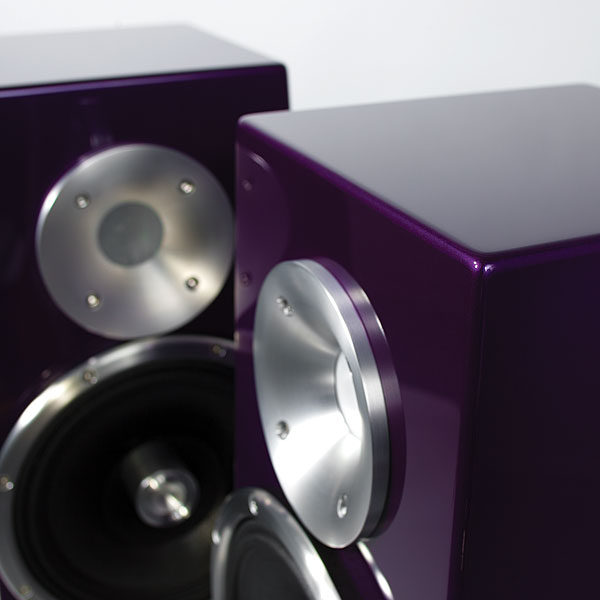
Sean Casey says that all Zu speaker models are designed with an ear to the human voice. Therefore, because the Zu's 10.3" nominally full-range driver hands over to the tweeter at 12kHz, the most important things I listened for were strangeness, sibilance, or discontinuity in the harmonics of the ranges of male and female voices (1–5kHz). I played a greater-than-usual number of recordings of sopranos, high-pitched sirens, and countertenors—such as my perennial favorite, Alfred George Deller, CBE.
When I'm not listening to Scott Walker or Miles Davis, I'm dreaming back to those times before our colonies rejected British rule. I'm especially fond of the music of Henry Purcell (1659–1695). I wish, dear reader, that you could have been here with me, sitting on my couch, as my beloved Deller Consort played and sang extracts from Purcell's King Arthur, sung to a text by John Dryden (LP, Harmonia Mundi HMC E200). Oh solemn joy and mild voices! Act I,ii opens with pomp and pageantry that gradually develops into restrained foreboding: even the choruses and solos that follow are less than joyful. My joy was in the listening. The Soul Supremes and LM-518IA played this semi-opera in a most enlightening way. The textures and spaces were revealed with a clarity and tangible realism that made for an enjoyable intimacy with the performers. Images were well drawn, in a way that enhanced my understanding of Deller's and Purcell's intentions. These American speakers responded supremely to the British Dryden-Purcell-Deller consortium. Joy and odes!
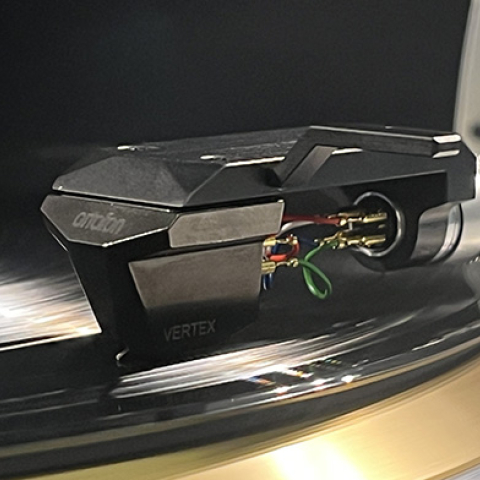
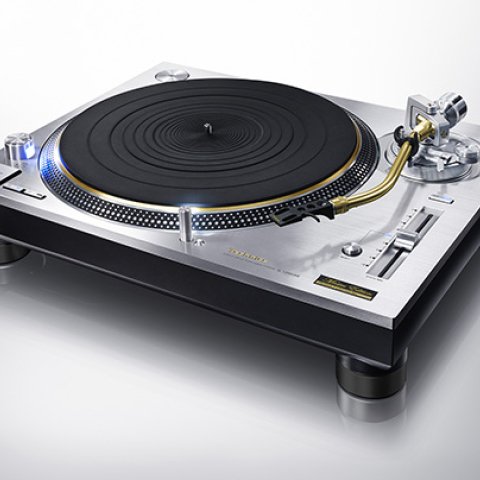
Using the new Hana EL moving-coil cartridge ($400, review in progress), I played more Deller and Purcell. This time, in a scene from Purcell's last semi-opera, The Indian Queen, released in 1969 on the collection Musique de Scène: Airs d'Opéras, Odes et Chants Sacrès (LP, Harmonia Mundi France HMD 218), Deller sings the aria "Wake, Quivera, wake!," accompanied by the most vivid viola da gamba imaginable. This stunning French recording—supreme analog at its goose-bump best—presents a clearly defined space that overflows with layered clouds of penetrating harmonics. The Zus and Line Magnetic were very happy I played it—they made every note a tasty, delight-filled morsel. Deller's voice was transcendent. The viola da gamba, played by Desmond Dupré, sounded so colorful, so ecstatically textured that I had to stop listening and read all about the history and manufacture of these bowed, fretted, stringed instruments and their lovely C-holes.
Continuing my search for problems in the lower treble, I decided to pull out all the stops with J.S. Bach's Prelude & Fugue in D, BWV 532, as performed by Hans Heintze on the Arp Schnitger organ of the Ludgerikirche in Norden, Germany (LP, Nonesuch H-71321). Through the Soul Supremes, this recording projected into my room fierce fugal power: Bass notes shook the floor and vibrated my desk. Treble notes soared to the top of the Zus' soundstage. High frequencies were pure and glowing. The mids were highly resolved, but between 2 and 5kHz I consistently noticed what sounded like the rise of a "presence region" that lent a bit of extra light, extra detail, and occasional brightness to short organ pipes—and, on other recordings, massed strings and female choirs.
 Comparison: DeVore Fidelity Orangutan O/93
I hate comparisons, but Stereophile readers seem to love them. I hate comparisons because I loathe left-brain listening. I prefer to feel the music and dream along with it. Comparison means I have to think—maybe even quantify my experiences—and you all know I can't think and make love at the same time. (Can you?)
Actually, I'm not completely right-brain; I do measure the final value of all audio equipment by the quantity of musical connectedness it can provide.
DeVore Fidelity's Orangutan O/93s ($8400/pair) always deliver copious amounts of savory musical connectedness. So did Zu Audio's Soul Supremes. Both are very direct, exciting-sounding loudspeakers. Both are unusually expressive and very non–hi-fi. Both capture musical heartbeats well. Both love high-quality, low-power, class-A amplifiers.
But how, other than in price, do they differ? I suspect the answers lie in their crossover philosophies, their woofer loading, and, especially, the sound character and implementation of their paper cones.
To my ears, every speaker driver sounds like the materials of which its cone or dome is made. Other elements of the driver and the materials they're made of—iron, neodymium, beryllium, alnico, Kevlar, rubber, ceramic, plastic, etc.—also come into play. Each colors the music with its resonant nature—or at least I imagine they do.
As I listened to "Lullaby" through the Line Magnetic LM-518 integrated and DeVore Orangutans, singer Scott Walker sounded less present, fearsome, and tactile than through the Soul Supremes. His voice also sounded much finer grained and relaxed. The DeVores are noticeably smoother through the midrange than the Zus. The Soul Supremes made music sound louder and more direct, with amazingly lifelike macrodynamics. The distance between soft and loud seemed greater through the Zus than through the DeVores. Compared to the Soul Supremes, the Orangutan O/93s capture more microdetail and dynamic nuance, but seem to compress larger dynamic contrasts. Music seemed to flow faster and more forcefully through the Zus—they had an inescapable "wild woman" boogie factor that swept me up and took me for a Cadillac ride to the Promised Land. The DeVores are a different kind of abductor: They seduce me with their saucy smile, barefoot dancing, and sequined Gypsy clothes. Both induce submission to their charms.

To my ears, the biggest difference between these two excellent—but non-mainstream!—speakers was in the voices of their very different magnet and (paper) cone structures. The Zu woofer's voice reminded me just a little of my ancient and beloved Altec 604s: lightning fast, mostly neutral, wide open, and breathy, while the DeVore O/93s deliver a less open but more refined, colorful, and modern sound. What I mean is: the 10" DeVore woofer delivers less dynamic slam, but more nuance and tonal shading.
Sean Casey and John DeVore are both extremely talented designers. I suspect that each made difficult decisions in order to preserve what he believed to be important. Consider me a fan of both aesthetics.
Conclusions
An audio component must always do its jobs: play music in an enjoyable, enticing, elucidating fashion; be reliable (nothing beats a stereo rig that has two working channels every day); and let its owners feel good about themselves. I don't mean simple pride of ownership. I mean audiophile identity, as in: "These speakers represent how I believe music should be experienced in my home," and "These speakers represent what I value in audio engineering and interior design," and, most important, "These speakers get me and I get these speakers!" These were precisely the thoughts I had while reviewing the Zu Audio Soul Supremes.
Audio consumers need to be self-aware and self-empowered. Don't just buy into some pre-existing (ie, mainstream) audio aesthetic or belief system. Your ears, heart, and mind are far more sensitive and sophisticated measuring tools than any 'scope, calibrated mike, or analyzer—trust them. In my rustic hermitage, and to my ears and heart, Zu Audio's Soul Supremes delivered copious amounts of savory musical connectedness. Highly recommended.