

Paradigm Reference Active/20 loudspeaker
There are many benefits accruing to a loudspeaker when its designer goes the active or powered route. The usual losses and distortions associated with passive crossovers can be circumvented, while the fact that the amplifiers and drive-units can be designed as a package enables the designer to squeeze more performance from each than would otherwise be the case. And the savings gained from the absence of a separate amplifier chassis can be passed on to the consumer.
Paradigm Reference Signature S2 loudspeaker
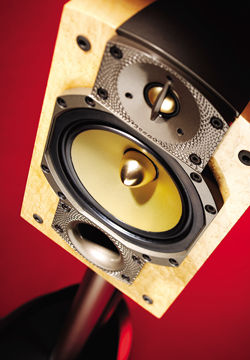
Canadian company Paradigm has made a name for itself over the past 20 years with affordably priced, high-performance loudspeakers. Its Reference Series designs have garnered much praise from this magazine—I was well impressed by the floorstanding Series 3 Reference Studio/100 ($2300/pair) last">http://www.stereophile.com/loudspeakerreviews/105paradigm">last January, my review following hard on the heels of Kalman Rubinson's enthusiastic recommendation of the smaller Studio/60 v.3 ($1600/pair) in December">http://www.stereophile.com/loudspeakerreviews/1204paradigm">December 2004, while the bookshelf Reference Studio/20 ($800/pair) has been a resident of Stereophile's "Recommended Components" listing ever since Bob Reina's original review in February">http://www.stereophile.com/loudspeakerreviews/628">February 1998.
Paradigm Reference Studio 20 v5 loudspeaker

I have fond memories of the Paradigm Reference Studio 20. When I reviewed the original version for the February 1998 issue of Stereophile, it was the model that started me on my quest to seek out the best affordable loudspeakers. I believe that of all the speakers I've reviewed, the original Studio 20 remained in the magazine's "Recommended Components" longest. When I checked out the speaker's fourth generation, in May 2008, I felt it had significantly progressed in terms of sound quality and value for money. This didn't surprise me, however, as pushing the envelopes of sound quality and value has long been Paradigm's trademark. They've done with this with every one of their speakers I've heard, including the third and fifth iterations of the Atom (which I reviewed in September 2002 and February 2008, respectively), and the more expensive models I've heard at audio shows. So when I was given the opportunity to review the Studio 20's fifth generation, I jumped.
Paradigm Reference Studio/20 loudspeaker
The least expensive model in Paradigm's Reference series, the Studio/20 loudspeaker is a rear-ported two-way dynamic bookshelf/satellite design, superficially identical to the powered Active/20 that JA">http://www.stereophile.com//loudspeakerreviews/597/">JA reviewed last November. It features Paradigm's 25mm PAL pure-aluminum dome tweeter in a die-cast heatsink chassis, and a 170mm MLP mica-polymer cone in an AVS die-cast heatsink chassis with a 38mm voice coil. The crossover is third-order, quasi-Butterworth, said to be "phase-coherent." It features high-power ceramic resistors, film capacitors in all signal paths, and both air-core and steel-core inductors.
Paradigm Reference Studio/20 loudspeaker
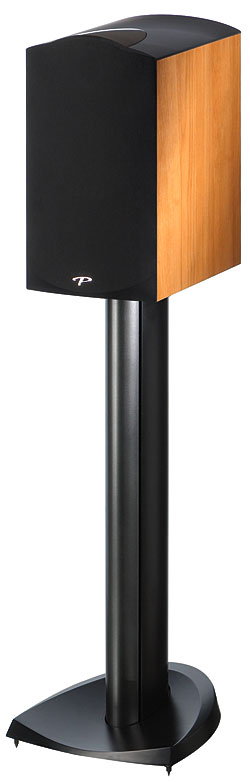
One of the first affordable loudspeakers I reviewed for Stereophile was the original Paradigm">http://www.stereophile.com/standspeakers/628">Paradigm Reference Studio/20 bookshelf model, in the February 1998 issue (Vol.21 No.2). At the time, I felt that the $650/pair speaker was a breakthrough—although not completely devoid of colorations, its ratio of price to performance set a benchmark a decade ago. I kept the Studio/20s around for several years to compare with other bookshelf speakers I reviewed, and they remained listed in Stereophile's "Recommended Components" for several years after that. The Studio/20 is now in its fourth (v.4) iteration, so I thought I'd grab a pair to hear how they compared with current affordable bookshelf designs.
Pawel/Ensemble PA-1 & Reference loudspeakers
 Ten seconds to ignition. Relax, buckle in, and welcome to Stereophile's Good Times time machine. Flux capacitors fully energized. Ignition. Not to worry, that slight tingling sensation is perfectly normal. Roll back your calendar to...June 28, 1933. We're at the Eighth Annual convention of the Institute of Radio Engineers in Chicago. Harry Olsen is on the podium, describing a new wide-range cone loudspeaker for high-fidelity sound reproduction.
Quiet, please, Mr. Olsen is about to describe the disadvantages of multipledrive-unit systems. "The radiating surfaces must be separated by a finite distance, with the result that this system will exhibit peculiar directional characteristics in the overlap region where the sound radiation issues from both sources. To reduce this effect to a minimum, the overlap region must be confined to a very small range which requires an elaborate electric filter system for allocating the frequency bands of the units. The greater space required for the two loudspeakers is another important factor. The cost of two separate field structures and vibrating systems will be considerably greater than that of a single unit."
Ten seconds to ignition. Relax, buckle in, and welcome to Stereophile's Good Times time machine. Flux capacitors fully energized. Ignition. Not to worry, that slight tingling sensation is perfectly normal. Roll back your calendar to...June 28, 1933. We're at the Eighth Annual convention of the Institute of Radio Engineers in Chicago. Harry Olsen is on the podium, describing a new wide-range cone loudspeaker for high-fidelity sound reproduction.
Quiet, please, Mr. Olsen is about to describe the disadvantages of multipledrive-unit systems. "The radiating surfaces must be separated by a finite distance, with the result that this system will exhibit peculiar directional characteristics in the overlap region where the sound radiation issues from both sources. To reduce this effect to a minimum, the overlap region must be confined to a very small range which requires an elaborate electric filter system for allocating the frequency bands of the units. The greater space required for the two loudspeakers is another important factor. The cost of two separate field structures and vibrating systems will be considerably greater than that of a single unit."
Phase Technology PC-60 loudspeaker
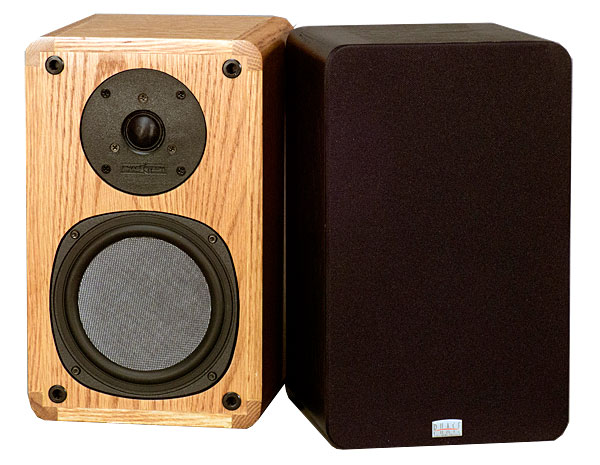
It has been my experience that $400 or thereabouts is about the least one can pay for a pair of speakers with the expectation of audiophile-calibre sound.
Phase Technology PC60 CA loudspeaker
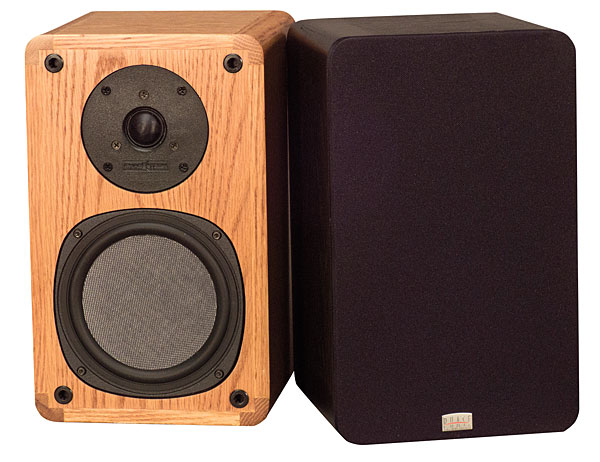
Phase Technology, a speaker-making division of MSE Audio based in Jacksonville, Florida, celebrated their 30th anniversary last September, at the 2013 CEDIA Expo, by reissuing of one of their first products, the PC-60 bookshelf loudspeaker, now updated with new drivers and crossovers. Dick Olsher reviewed the PC-60 for Stereophile in 1984 (footnote 1), and three decades later, John Atkinson thought it time to revisit this classic design, especially as the company's founder, the late Bill Hecht, was the inventor, in 1967, of the soft-dome tweeter. The PC60 CA (the CA stands for Classic Audiophile) intrigued me as welldespite having reviewed audio gear for 30 years and attended audio shows for even longer, I'd never heard a Phase Technology speaker. And with the PC60 CA costing $1400/paircurrently the hottest price point for high-performance bookshelf modelsI couldn't wait to hear it.
Phase Technology PC80 loudspeaker
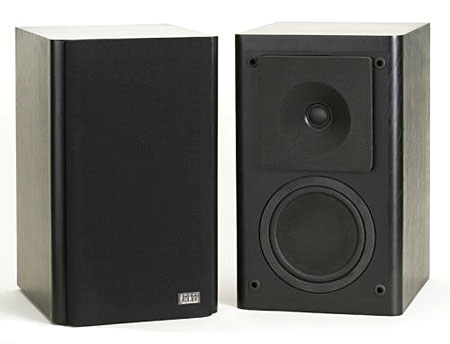
In some ways, building an inexpensive yet musical two-way loudspeaker is a greater design challenge than creating a cost-no-object reference product. Although the latter is a much more complex endeavor, the venerable two-way box seems to bring out the creativity and resources of the designer. Rather than throw money at the product in the form of more expensive drivers, enclosures, or components, the designer of a low-cost two-way is forced to go back to the basics, rethink closely-held tenets, and rely on ingenuity and sheer talent to squeeze the most music from a given cost. Consequently, the inexpensive two-way is the perfect vehicle for designers to develop their skills. If one has mastered this art form, one is much more likely to achieve success when more ambitious designs are attempted.
Philharmonic Audio BMR Monitor loudspeaker
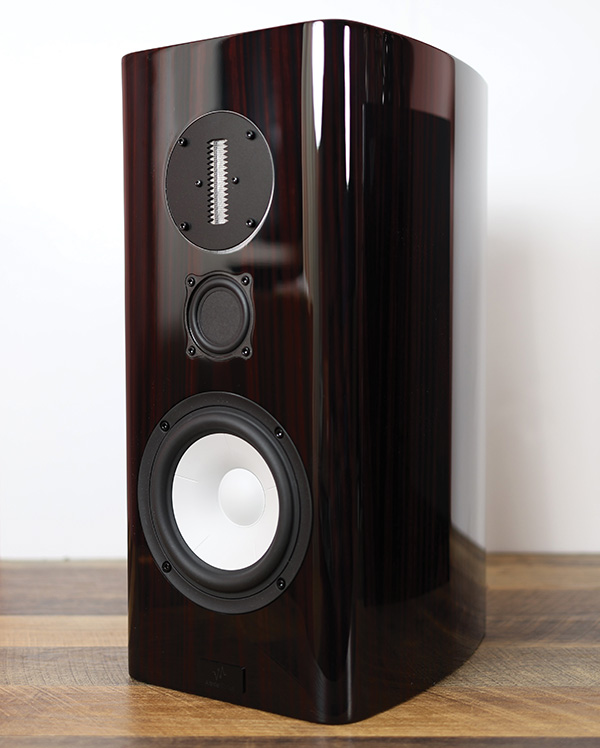
Let's get this out of the way: The BMR Monitor may be a monitor, but it isn't a bookshelf or desktop speaker any more than a yacht is a dinghy. Heave a slick-surfaced, 32lb BMR from its shipping carton, then wrap your arms around its svelte figure, with its fancy array of drivers and rich-colored piano-lacquer finish, and you'll understand this speaker deserves better than to be tucked away amid books or flanking a computer screen.
I was so enamored by the look of the BMR Monitor, I initially thought its name didn't do it justice. It sounded too nondescript. But with time and growing familiarity, I came to find the BMR moniker fittingdare I say sleekly masculine sounding, like a phonetic cross between "Bimmer" and a wolf growl. The BMR Monitorthere's also a BMR Toweris so named for its midrange drivera Balanced Mode Radiator. We don't come across many of these in our hobby, but it's not new: The technology was invented in 1925.