

ProAc Studio 100 loudspeaker

Of all the speakers I've heard through the years, the $3000 ProAc Response 2 (footnote 1) is definitely one of my all-time faves. One of the few high-end speakers at any price that sounds equally at home pumping out Prong as it does Puccini, the Response 2 blew me away with its incredible musicality and just plain "rightness." The Response 2 doesn't call strict attention to any one area of technical achievement, like so many Audiophile-Approved jobs, but just makes music so naturally and unforcedly that I hesitate, even considering its remarkable performance, to call it an "audiophile" loudspeaker. Yah, I dig the Response 2! So last year when ProAc introduced the Studio 100, a new affordable version of the Response 2, I got excited.
Proac Tablette loudspeaker
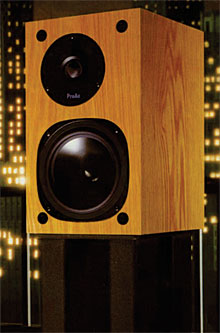
Small enough to fit in a shoebox, these little darlings from England almost manage to redefine the state of the art in very compact monitor design (footnote 1). Here's a speaker that isn't as neutral as the BBC">http://www.stereophile.com/standloudspeakers/361">BBC LS3/5a compact monitor, but that does manage to equal or exceed that venerable design in most respects.
PS Audio Aspen FR5 loudspeaker
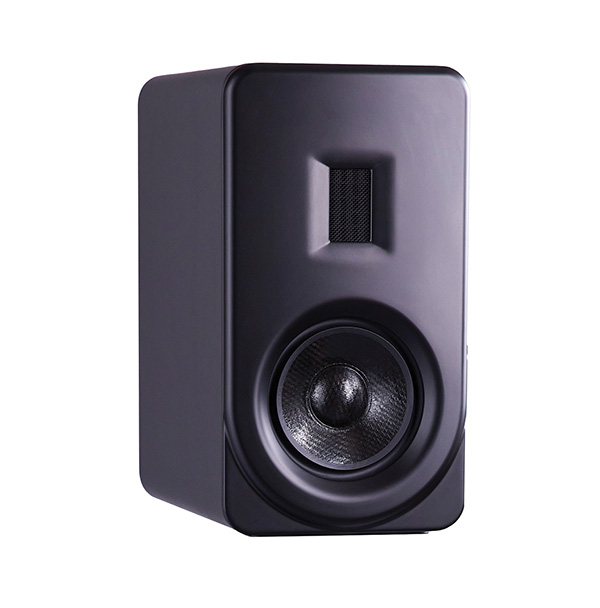
I remember the first PS Audio product: a simple phono stage. It was so simplea passive RIAA EQ filter flanked by a pair of primitive op-ampsthat when the schematic was made public, I built one myself; I was in the midst of my DIY years. I thought it was, to use a word from that time, nifty. Paul McGowan went on to other things and other companies, eventually reviving PS Audio and building it into its present form with a wide range of interesting and substantive products. Most recently, PS Audio added a line of loudspeakers inspired by Paul's erstwhile partner in other ventures, the late Arnie Nudell.
The PS Audio Aspen speaker line has four models, three 3-way floorstanders (FR30, FR20, FR10) and a single two-way standmount (the FR5, $3499/pair).
PSB Alpha A/V loudspeaker

The original PSB Alpha was reviewed for Stereophile by Jack English in July 1992 (Vol.15 No.7). A modest-looking two-way priced at just $199/pair, it combined a reflex-loaded 6.5" woofer using a plastic-doped paper cone with a 0.5" plastic-dome tweeter. JE summed up the Alpha by saying it "is simply one of the best buys in audio, providing a musically satisfying sound...a sensational audio bargain." It went on to become one of the best-selling audiophile speakers ever, with over 50,000 pairs sold.
PSB Alpha B loudspeaker
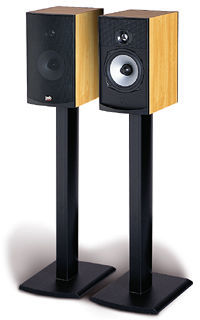
Paul Barton is a legend in the speaker business. For 25 years this musician and engineer has dedicated his life to providing speaker purchasers with higher levels of sonic realism at lower prices. Barton is a frugal perfectionist, and his obsession with psychoacoustics is evident in all his designs. I was mightily impressed with his midpriced Image 4T (Stereophile, February 2001), which was, like all Barton designs, designed with the assistance of the facilities of Canada's National Research Council.
PSB Alpha B1 loudspeaker

When audiophiles speak of the "Golden Age" of audio components, they almost always are talking about amplifiers and preamplifiers, not loudspeakers. While a very few speaker models have stood the test of time—among them the BBC">http://www.stereophile.com/standloudspeakers/361">BBC LS3/5a, the Vandersteen">http://www.stereophile.com/floorloudspeakers/914">Vandersteen 2, the original">http://www.stereophile.com/artdudleylistening/706listening">original Quad electrostatic and the Quad">http://www.stereophile.com/floorloudspeakers/416">Quad ESL-63, some of the Magnepans, and the Klipschorn—almost no one would disagree that, taken en masse, the speakers of today outperform not just those of the 1960s and 1970s but even those of the 1980s and 1990s. The advent of low-cost, computerized test equipment, high-quality, inexpensive measuring microphones, and persuasive research into what measured parameters matter most to listeners who are listening for a neutral-sounding, uncolored loudspeaker (footnote 1), has led to an almost across-the-board improvement in speaker sound quality (footnote 2).
PSB Alpha loudspeaker
As I said during the 1991 Stereophile writers' conference (Vol.14">http://www.stereophile.com/interviews/109">Vol.14 No.12): "There's immense satisfaction in finding that next Audible Illusions or Vandersteen or Rotel." My oh my, am I satisfied! But before you start writing checks, hold onto those pens for a few moments. The PSB Alphas are not ProAc, Hales, Quad, or even Vandersteen killers. Goodness, what do you expect for $200?
PSB Alpha P5 loudspeaker
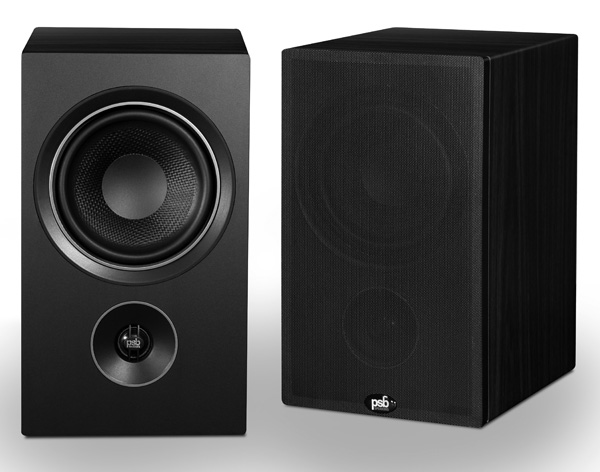
It is said that while any competent engineer can design a superb loudspeaker if allowed an unlimited bill of materials, the true test is being able to produce a great-sounding, budget-priced speaker out of parts that cost a mere handful of dollars. With PSB's Alpha series of bookshelf speakers, Canadian engineer Paul Barton has illustrated this truism many times over the years.
PSB Image B25 loudspeaker
Paul">http://www.stereophile.com/interviews/231">Paul Barton, founder of PSB Speakers International, is an icon of the North American speaker industry. A talented designer who has for many years produced innovative and cost-effective designs at a range of prices, Barton does not let time stand still, constantly updating and revising his designs. But what makes him unique, in my view, is that, unlike the designers at most North American speaker companies, whose successful affordable designs are trickled down from their more expensive models, Barton, like the British designers, seems to get most of his excitement from his budget lines. His original PSB">http://www.stereophile.com/loudspeakerreviews/241">PSB Alpha was, in its day, the most significant entry-level speaker made in North America since the original Advents of the 1970s.
PSB Image B6 loudspeaker

Readers frequently ask me how Stereophile's writers select equipment for review. More often than not, a writer comes up with a review candidate because he's heard it or heard about it, and then suggests it to editor John Atkinson for possible review. JA encourages this behavior—a writer excited about reviewing a component is more likely to produce an article that's interesting and informative. That said, occasionally a review candidate surfaces at Stereophile HQ; in such cases, JA assigns it to one of us.