

SOTA Panorama loudspeaker
 In their seminal work on the subject of audio "Bluff your Way in Hi-Fi" (1987), Sue Hudson and John Crabbe stated that "the perfect speaker would have no mass and no dimensions. The perfect speaker does not exist, and if it did, it still wouldn't." One might add, as a corollary, that a speaker with zero dimensions would also have infinite cost. At least there seems to be a trend in that direction. The Wilson WATT and Celestion SL700to use today's two most visible examplesmay have attracted considerable attention because of their exceptional performance, but they have also attracted at least as much because of their price/size ratio. Even in a considerably "lower" price bracket, a "simple" two-way loudspeaker with a 6" or 7" woofer costing $1000$2000/pair would, at one time, have had most audiophiles laughing themselves silly.
Spectrum Audio 108cd loudspeaker
 Tricker tweets? I know, Halloween has already come and gone, but I just had to use that because this little speaker has a trick about its tweeter. The Spectrum Audio 108cd is constructed of ¾" MDF for the baffle and ½" MDF for the sides, with a veryhigh-quality black ash vinyl covering all the way around. (A brown ash finish is also available.) Rapping on the cabinet results in a hollow bonk, rather than a solid thud.
Spendor BC-1 loudspeaker
 This smallish loudspeaker system has been getting high ratings in the English audio magazines for some years but was not available to US consumers until recently, when the small firm (literally a Mom'n'Pop enterprise, footnote 1) arranged for US distribution through Audio International.
The Spendor BC-1 is about as unimpressive-looking as any other smallish three-way loudspeaker, of which there are countless hundreds of models being made in the US at present. In fact, we were so ho-hummed by the mundane appearance of this speaker that we found it hard to connect the pair up and give them a listen.
This smallish loudspeaker system has been getting high ratings in the English audio magazines for some years but was not available to US consumers until recently, when the small firm (literally a Mom'n'Pop enterprise, footnote 1) arranged for US distribution through Audio International.
The Spendor BC-1 is about as unimpressive-looking as any other smallish three-way loudspeaker, of which there are countless hundreds of models being made in the US at present. In fact, we were so ho-hummed by the mundane appearance of this speaker that we found it hard to connect the pair up and give them a listen.Spendor Classic SP100R2 loudspeaker

In late 1996, as Listener magazine entered its third year of existence, the Spendor SP100 became my reference loudspeaker, and would remain so for a considerable time. My decision to try the SP100 was influenced by John Atkinson's review of its antecedent, the nearly identical Spendor S100, in the December 1991 issue of Stereophile. But my purchase decision came down to two things: The SP100 did virtually everything one could ask a modern loudspeaker to do, requiring in the process far less amplifier power than usual. Just as important at the time, it sold for only $3300/pairwhich explains how I could afford them on the spotty salary of a teacher turned fledgling publisher.
Spendor S100 loudspeaker

"Speakers are difficult," says Lars.
Spendor S3/5R2 loudspeaker

The Spendor S3/5R2 loudspeaker reminds me of Art Dudley. My friendship with Art began more than 25 years ago, long before either of us joined Stereophile. Frequently, we would sit down to discuss music, guitars, and audiophiles. Art didn't have much patience for a certain category of audiophile who would evaluate an audio component based on how many points on their sonic checklists they could tick off. Image specificity? Check. Soundstage depth? Check. Lower-bass extension? Check.
Spendor S3/5se loudspeaker
Transistors can be made to sound like tubes, digital can be made to sound like analog, and cables can be made to sound like no cables. You'd almost think we live in an age of miracles.
Spendor SA1 loudspeaker

Two years ago, I embarked on a series of reviews of mostly state-of-the-art, mostly full-range floorstanding speakers: the Sonus">http://www.stereophile.com/floorloudspeakers/1207sonus">Sonus Faber Cremona Elipsa (December 2007), KEF">http://www.stereophile.com/floorloudspeakers/208kef">KEF Reference 207/2 (February 2008), PSB">http://www.stereophile.com/floorloudspeakers/408psb">PSB Synchrony One (April 2008), Magico">http://www.stereophile.com/floorloudspeakers/508mag">Magico V3 (May 2008), Avalon">http://www.stereophile.com/floorloudspeakers/708ava">Avalon NP Evolution 2.0 and Epos">http://www.stereophile.com/floorloudspeakers/708ava/index1.html">Epos M16i (July 2008), Esoteric">http://www.stereophile.com/floorloudspeakers/808eso">Esoteric MG-20 (August 2008), Dynaudio">http://www.stereophile.com/floorloudspeakers/dynaudio_sapphire_loudspea… Sapphire (January 2009), and Revel">http://www.stereophile.com/floorloudspeakers/608revel/index6.html">Revel Ultima Salon2 (March 2009). I had intended to intersperse those reports with coverage of some high-performance minispeakers, but for various reasons that never happened, so in the next few issues I'll be making up that lost ground, beginning with a promising contender from the UK, the Spendor SA1.
Spica SC-50i loudspeaker
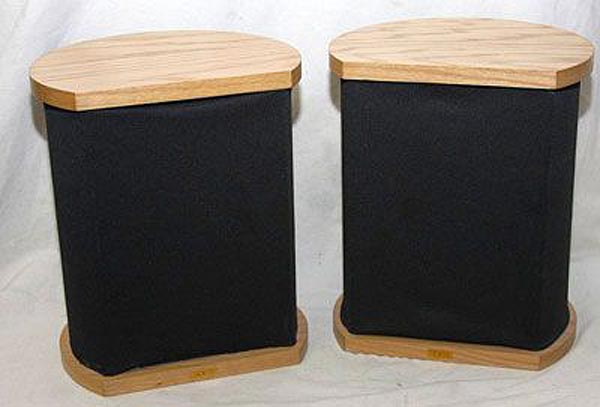
This is a speaker we've been fairly intimate with over quite a period of time. Designed by John Bau, the SC-50i started out three years ago as an inexpensive speaker system ($330/pair) not sold through dealers.
One of the factors allowing it to cost so little was the clever adaptation of cardboard tubes, normally used as forms for pouring concrete pillars, for use as speaker enclosures. They have a number of advantages, other than low cost: their circular form helps eliminate resonance of the back wave within the enclosure; the material is rigid because of its shape, and is non-resonant due to its construction.
Spica TC-50 loudspeaker
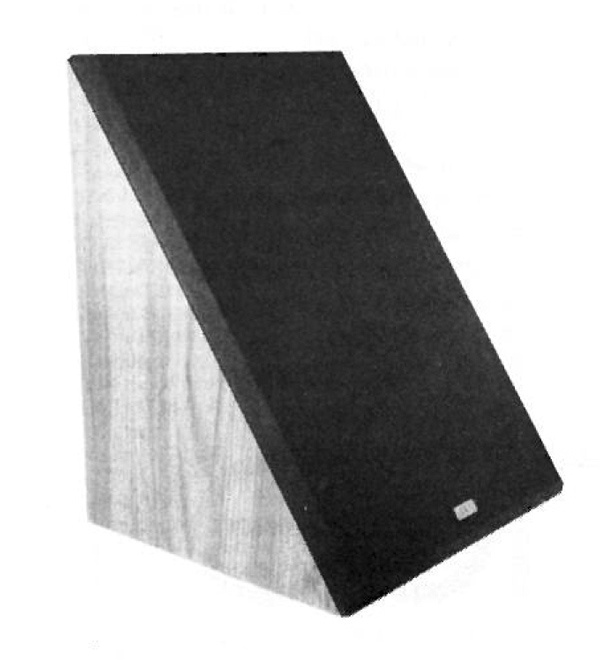
High-quality, low-cost loudspeaker systems are not an everyday blessing. The Rogers LS3/5a has survived for more than a decade precisely because so few US manufacturers sought musical accuracy as distinguished from high output and powerful bass. The economics of loudspeaker manufacture also don't lend themselves to economy. The cost of woodwork is driving the price of speakers up almost as fast as the cost of sheet-metal work is escalating the price of electronics.