

Spica TC-60 loudspeaker

As far as I can tell, Santa Fe–based speaker engineer John">http://www.stereophile.com/interviews/694">John Bau had designed but four commercial loudspeakers before the TC-60 was launched at the 1994 Winter CES: in order of appearance, they were the Spica SC50i (1980), the TC-50http://www.stereophile.com/standloudspeakers/446">TC-50; (1983), the Angelushttp://www.stereophile.com/floorloudspeakers/693">Angelus; (1987), and the SC-30 (1989). None were expensive, and all garnered much praise, both in Stereophile's pages and elsewhere.
Stenheim Alumine loudspeaker
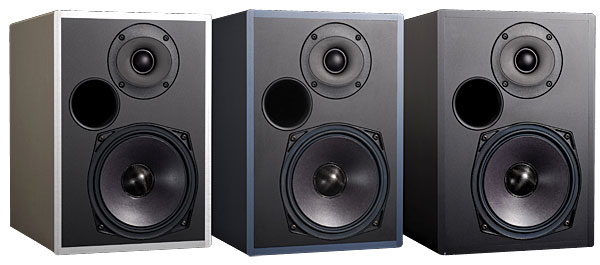
The sound of the Stenheim Alumine loudspeakerits openness, transparency, and freedom from temporal distortions, not to mention its good bass extension for such a small enclosurereminded me at once of my favorite small loudspeaker from the late 1980s, the Acoustic Energy AE1. On reflection, the comparison is extraordinary: The two products are as different as night and day, the AE1 being a wooden loudspeaker with a metal-cone woofer, the Alumine a metal loudspeaker with a pulp-cone woofer. I suppose one can skin a catfish by moving the knife or by moving the fish.
Stirling Broadcast BBC LS3/6 loudspeaker
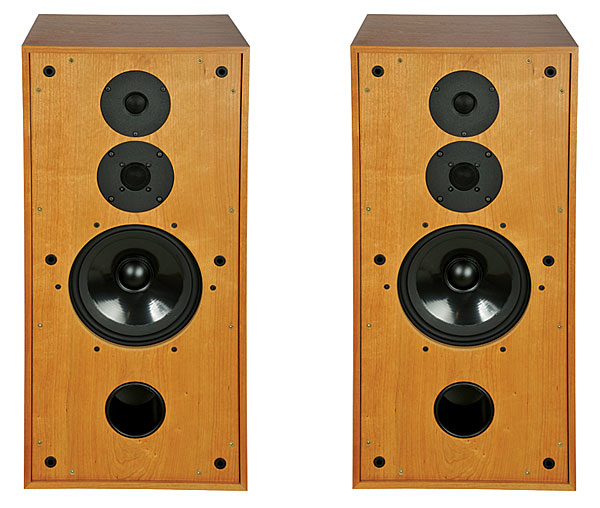
I know someone who bought, for his own kitchen, a stove intended for the restaurant trade, simply because it enhances his enjoyment of cooking. Another friend, a motoring enthusiast, has equipped his garage with a brace of tools, including a hydraulic lift, that would be the envy of some humbler repair shops. Yet another friend indulges her enthusiasm for ceramics with a potter's wheel and kiln that one might find in a well-endowed art school. Among the most serious consumers, it seems, the watchword is professional; odd, then, that professional-quality monitors don't account for an even bigger chunk of the domestic loudspeaker market.
SVS Prime Pro wireless active loudspeaker

Patches was the first to exit the car, sporting a nose like an overripe tomato. Amid the sawdust-andtiger-dung smell that wafted through the bigtop, he nimbly extracted himself from the multicolored Mini Cooper, face beaming with vows of slapstick and mischief. Patches gestured behind him, to Chuckles, who emerged with floppy shoes the length of baguettes. Next to squeeze out of the Mini were Bozo, Klutzy, Wiggle, Dinky, Cletus, Peewee, Pinhead, Joey, Sparkles, and Poppyall wearing baggy pants in shouty hues and huge smiles applied with grease paint. I shuddered with delight. I was 8.
TAD CE1TX loudspeaker

The most money I've ever spent on a pair of loudspeakers was back in the early 1990s, when I bought a pair of used TAD TH-4001 wooden horns and their associated TD-4001 compression drivers. The TAD horn's smooth, micro-resolved response was a refinement upgrade from my multicell Altec horns; plus, the TADs' French-polished wood looked radically less industrial than the soldered-tin, tar-filled 1005/288C horns they replaced. None of my horn-fanatic friends had anything sonically or aesthetically comparable, and all of them were envious. I didn't keep the TADs long, because the friend who admired them most made me a very "friendly" offer.
That was my first experience with Japanese loudspeaker design, and it exposed me to a level of engineering precision and fine craftmanship I had not yet encountered in American-made speakers.
TAD Compact Reference CR1 loudspeaker

High-end audio is in some ways a dynastic beast, though without as many "begats." One of the world's most successful loudspeaker manufacturers in the years following World War II was the Wharfedale company, from Yorkshire in the North of England. Wharfedale was founded by Gilbert Briggs in 1932, who in the 1950s handed over the reins of Technical Director to fellow Yorkshireman Raymond Cooke. Cooke left Wharfedale in 1961 to found KEF Electronics Ltd., where he subsequently appointed Goodmans designer Laurie Fincham as Chief Engineer in 1968. Fincham led a team of young engineers, including Mike Gough, who eventually joined B&W, and Yorkshire-born Andrew Jones, who became KEF's Chief Engineer in 1989, before Fincham was lured to Harman's Infinity division, in Northridge, California, in 1993. Jones followed Fincham across the Atlantic, where he worked on Infinity's Prelude, Overture, and Reference Series speakers, before joining Pioneer in 1997. The Japanese company had established a state-of-the-art speaker-design facility in Southern California, and Jones was invited to lead the design team.
TAD Micro Evolution One loudspeaker

Notwithstanding the twists and turns of Japanese corporate culture, the status of Technical Audio Devices Laboratories, Inc. remains unchanged. Founded in 1975 as a subsidiary of Pioneer to build loudspeakers for the professional market, TAD remains part of that corporation, even after the recent sale of Pioneer's home-audio division to Onkyo.
Tannoy E11 loudspeaker

The Tannoy E11 ($349/pair) is the company's least-expensive model in a wide range of consumer loudspeakers. Tannoy is most often known for its professional models, especially their nearfield, dual-concentric monitors that have become de rigueur on the top of recording consoles. The E11 is a two-way, ported design with a 6.5" woofer and 1" dome tweeter. Both drivers are manufactured by Tannoy, instead of being sourced from a driver manufacturer. The woofer is made from a polyolefin co-polymer, a plastic material with high rigidity and good self-damping properties. To improve power handling and increase sensitivity, the voice-coil is edge-wound on a Kapton former. The surround appears to be made of butyl rubber.
Tannoy Mercury V1 loudspeaker

The last few decades have seen dramatic improvements in the art (and science) of loudspeaker design. Tannoy's budget-priced Mercury series is now in its fifth iteration. The two-way, front-ported Mercury V1 ($320/pair) measures 11.8" high by 6.7" wide by 10" deep and weighs 9.9 lbs. My samples came in a very handsome Dark Walnut finish (Sugar Maple is available) with simple black cloth grilles. I left the grilles off to reveal the speakers' attractive front baffles and accentuate their equally attractive high frequencies (more on the latter later).
Tannoy Revolution XT 6 loudspeaker

I've been wrestling with my elders about new ways to measure loudspeakers, lobbying for methods that might correlate more directly with a listener's experience. And wouldn't you know? Right in the middle of this Socratic dialogue, I put the fresh-from-UPS, $1000/pair, Tannoy Revolution XT 6s into my reference system, plunking them down on my 24" Sound Anchor Reference stands in the same spot my Harbeth P3ESRs had been sitting. And I freaked! I was using the Rogue RP-7 preamp and the Rogue Stereo 100 (100Wpc) amplifier, and I could never adequately describe how bad the shiny white Tannoys sounded. Imagine sound that's thin, metallic, herky-jerky, dull, and rolled off completely below about 90Hz.