

Krell Full Power Balanced 600 power amplifier

Latest and largest in Krell's current range of power amplifiers, the 600Wpc, $12,500 Full Power Balanced 600 joins the 300Wpc FPB 300 ($9000) and the 200Wpc (originally 150Wpc) FPB 200 ($5900). All are single-box stereo chassis and are specified as "Full Power Balanced"—I think to distinguish the essence of these designs from ordinary stereo amplifiers operated in balanced-bridged mode, usually with impaired performance. The FPB 600's speaker output is balanced; ie, neither "positive" or negative" terminals are connected to ground or the amplifier chassis. (Note that no speaker switches or headphone adaptors, which often have joined channel grounds, may be used, as they will short the outputs.) The output terminals are electrically at 0V, but float above the chassis ground.
Krell KMA-i800 monoblock power amplifier
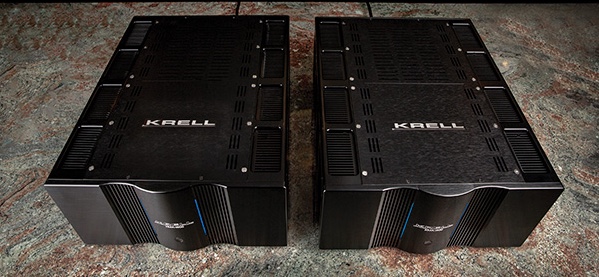
Ever since I raved about Krell's K-300i integrated amplifier after it was released in early 2019, I've wanted to review other Krell products. After spending more than a year and a half (since its prerelease announcement) awaiting the opportunity to review Krell's new flagship mono power amplifier, the KMA-i800 ($73,000/pair), the time has come. Both Krell models utilize the company's proprietary iBias technology, albeit in different iterations, and both were designed by longtime Krell engineer Dave Goodman.
Krell KSA-100S power amplifier

The Federal Express delivery man was having a hard time carrying the box containing the Krell KSA-100S up the front steps.
Krell KSA-200S power amplifier
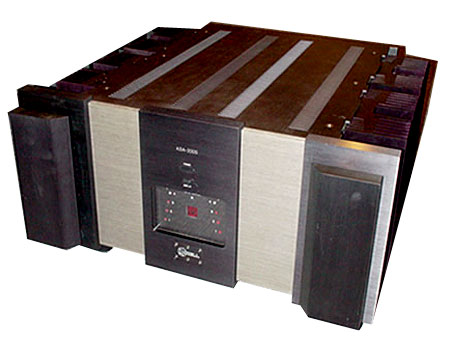
There's always a certain amount of jockeying for position at the very top of the High End. Every few months, a new star burns brightly, getting all the attention. While the constant turnover at the cutting edge helps to define the state of the art, audiophiles should keep their eyes on the longer term. It's a company's track record—examined over a period of years—which defines its position in the market and the credibility of its products.
Krell KSA-250 power amplifier

I still have fond memories of my first Krell amplifier, a KSA-50. Back in those days (date purposely omitted), my principal source of audio equipment reviews, aside from Stereophile and The Absolute Sound, was Hi-Fi News & Record Review, which I read voraciously from cover to cover every month. One fateful day while sitting by our community swimming pool, I happened upon an enlightening review of the KSA-50 written by none other than our own John Atkinson, editor of HFN/RR at">http://www.stereophile.com/asweseeit/352">at the time. His words describing "the steamroller-like inevitability of the bass with this amplifier" haunted me for weeks, until I got up the nerve to audition, and ultimately purchase, my first Krell product.
Krell KSA-300S power amplifier
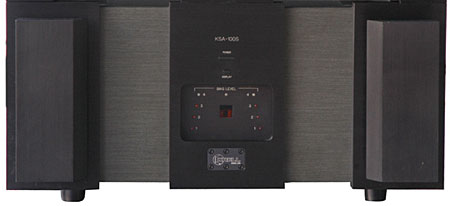
It was a dark and stormy night. A biting, cold wind cut through Sam's skimpy jacket; ice crystals clung tenaciously to his bushy moustache. As he approached his front door, visions of a toasty-warm, Krell-heated listening room softened the chill. He could feel the glow already; his Krell amp had been on all day, awaiting his return.
Krell KSA-50 power amplifier

Some readers may feel that it is pushing poetic license beyond reasonable limits to call the Krell KSA-50 a "new-wave" amplifier. It has, after all, been around for several years. The Krell KSA-50 is new-wave enough, however, to be an incredibly stiff class-A design, rather than a pseudo–class-A circuit, and its 50 watts per channel are supported by enough of a power supply to drive an arc welder. You get about 70 watts of RMS power with 8 ohms, 150 watts with 4 ohms, and sufficient watts into 2 ohms to threaten my load resistors. There is almost enough power to drive a pair of Apogee Scintillas at their ohm setting—though I'd prefer at least the Krell KSA-100.
Krell KSA-50S power amplifier
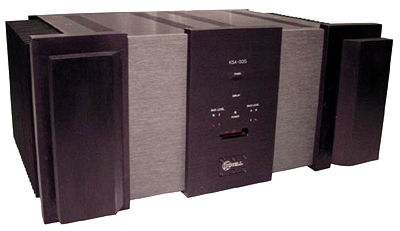
In the fall of 1982, I had just become the Editor of the English magazine Hi-Fi News & Record Review. Hi-fi was in a state of flux. The Compact Disc had just made its debut in Japan, but the British and American launches were six months and a year away, respectively. The Linn orthodoxy prevailed about the role of the source in system performance, but there was no agreement about what was and was not important when it came to enhancing the musical experience. "Objectivists" insisted that amplifiers and even loudspeakers had pretty much reached a design plateau where no further improvement was necessary or even desirable, while "subjectivists" were fragmented. All I was aware of was that my system, based on Celestion SL6 loudspeakers, needed more of an undefinable something.
Krell KST-100 power amplifier
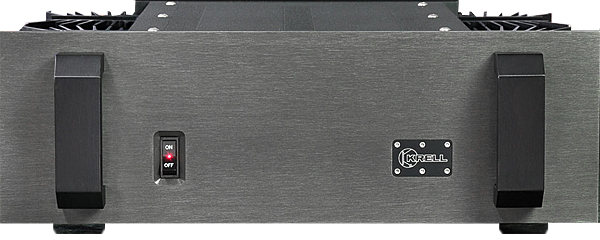
There seems to be an inexhaustible supply of amplifiers; it's hard to choose which ones to review. Big-name operators are difficult to ignore, while smaller outfits often complain of neglect. In the case of a new and moderately priced introduction from Krell there's no need to find excuses: it's available, it's likely to be important judging from this company's track record, and we'd all like to see just how well it performs.
This review features the KST-100 stereo power amplifier. Initially this product was differentiated from the more expensive Krell components by having an all-black livery. However, as customers showed a preference for Krell's traditional anthracite finish, the KS series is now also available in this finish.
Krell Solo 575 monoblock power amplifier
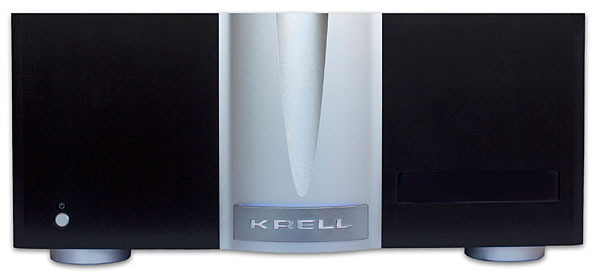
Class-A amplifiers have a well-deserved reputation for being power guzzlers that run hot enough to burn fingers. They're inherently inefficient because their output devices conduct full current at all times, and much of that current is dissipated as heatrequiring, in the case of class-A solid-state amplifiers, massive heatsinks. This is why class-A amps tend to produce relatively low power, and tend to be heavy and expensive to buy and run. And these days, energy inefficiency is out of fashion.