

Recording of July 2021: The Who Sell Out

The Who: The Who Sell Out
Universal 7711420 (5 CDs, 2 7" singles). 1967/2021. Kit Lambert, Pete Townshend, prods.; Damon Lyon-Shaw, Jon Astley, Andy MacPherson, other engs.
Performance *****
Sonics **** This 5-CD box-set version of The Who Sell Out is the latest iteration of a 54-year-old work-in-progress. It contains an unrivaled wealth of recorded information covering the period between the Who's second album, A Quick One (Happy Jack in the US), and the monumental rock opera Tommy.
Universal 7711420 (5 CDs, 2 7" singles). 1967/2021. Kit Lambert, Pete Townshend, prods.; Damon Lyon-Shaw, Jon Astley, Andy MacPherson, other engs.
Performance *****
Sonics **** This 5-CD box-set version of The Who Sell Out is the latest iteration of a 54-year-old work-in-progress. It contains an unrivaled wealth of recorded information covering the period between the Who's second album, A Quick One (Happy Jack in the US), and the monumental rock opera Tommy.
Recording of July 2022: Growing Up

The Linda Lindas: Growing Up
Epitaph (16/44.1 stream, Qobuz). 2022. Produced, engineered, and mixed by Carlos de la Garza.
Performance *****
Sonics ****½ When your uncle is an award-winning producer and engineer, a band formed by you and your cousins has a higher-than-average shot at going somewhere. But even that family advantage can't explain the immediate success of the Los Angelesbased Linda Lindas; they've earned their accolades through talent, hard work, and ingenuity. Their first album, Growing Up, offers proof of their worth and the promise of a stellar musical future.
Epitaph (16/44.1 stream, Qobuz). 2022. Produced, engineered, and mixed by Carlos de la Garza.
Performance *****
Sonics ****½ When your uncle is an award-winning producer and engineer, a band formed by you and your cousins has a higher-than-average shot at going somewhere. But even that family advantage can't explain the immediate success of the Los Angelesbased Linda Lindas; they've earned their accolades through talent, hard work, and ingenuity. Their first album, Growing Up, offers proof of their worth and the promise of a stellar musical future.
Recording of July 2023: Rites of Percussion
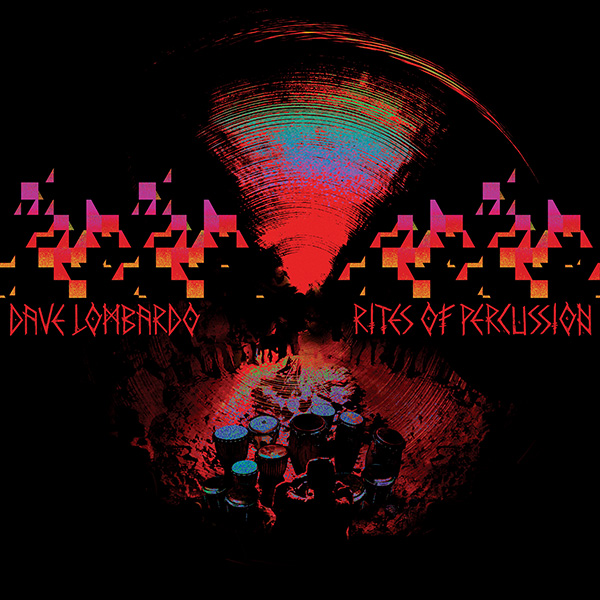
Dave Lombardo: Rites of Percussion
Ipecac IPC-265 (Auditioned as LP). 2023. Lombardo, prod.; Lombardo, David A. Lombardo, John Golden, engs.
Performance ****½
Sonics ****½
Ipecac IPC-265 (Auditioned as LP). 2023. Lombardo, prod.; Lombardo, David A. Lombardo, John Golden, engs.
Performance ****½
Sonics ****½
Recording of July 2024: Cannonball Adderley: Somethin' Else
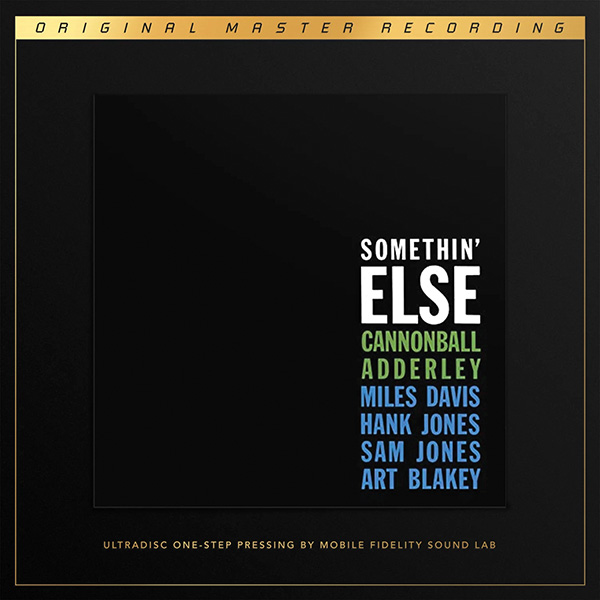
Cannonball Adderley: Somethin' Else
Julian "Cannonball" Adderley (alto saxophone), Miles Davis (trumpet), Hank Jones (piano), Sam Jones (bass), Art Blakey (drums)
Mobile Fidelity UD15 2-022 (2 45rpm "Ultradisc One-Step" LPs). 2024. Alfred Lion, prod.; Rudy Van Gelder, eng.; Krieg Wunderlich, Shawn R. Britton, mastering engs.
Performance *****
Sonics ***** For those who care about sonics, the current wave of expensive 45rpm vinyl reissues has made one question urgently relevant: Does convenience trump better sound? Put differently, does the ease of not getting up every 10 minutes to turn over or replace the record offset improved sound quality? It's settled science that a higher rotational speed can result in a better frequency range, better stereo imaging, less frequency fluctuation, and increased low-end responseif a record is well-pressed.
Julian "Cannonball" Adderley (alto saxophone), Miles Davis (trumpet), Hank Jones (piano), Sam Jones (bass), Art Blakey (drums)
Mobile Fidelity UD15 2-022 (2 45rpm "Ultradisc One-Step" LPs). 2024. Alfred Lion, prod.; Rudy Van Gelder, eng.; Krieg Wunderlich, Shawn R. Britton, mastering engs.
Performance *****
Sonics ***** For those who care about sonics, the current wave of expensive 45rpm vinyl reissues has made one question urgently relevant: Does convenience trump better sound? Put differently, does the ease of not getting up every 10 minutes to turn over or replace the record offset improved sound quality? It's settled science that a higher rotational speed can result in a better frequency range, better stereo imaging, less frequency fluctuation, and increased low-end responseif a record is well-pressed.
Recording of July 2025: Shades of Sound: Gil Evans Project Live at Jazz Standard Vol.2
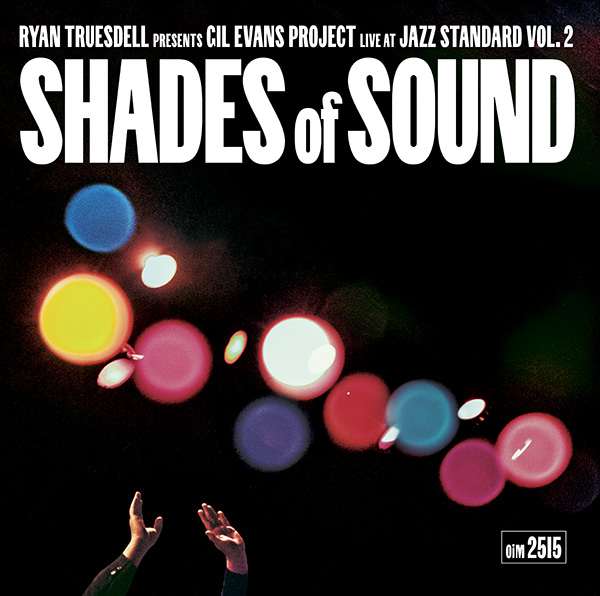
Ryan Truesdell: Shades of Sound: Gil Evans Project Live at Jazz Standard Vol.2
Truesdell, conductor; 23-piece orchestra
Outside in Music 2014/2025 (reviewed as CD). 2025. Truesdell, Dave Rivello, prods.; James Farber, Tyler McDiarmid, Geoff Countryman, engs.
Performance ****½
Sonics ****½ Ryan Truesdell launched his Gil Evans Project in 2012 with Centennial. It contained 10 Evans arrangements, including two original Evans compositions, that had never been recorded. The project was made possible by the fact that Truesdell had been granted access to the Evans family archives. Evans was a towering figure who had been responsible for some of the greatest recordings in the history of jazz, like his own Out of the Cool and Miles Davis's Sketches of Spain. Evans died in 1988, and Centennial was something the jazz world never expected to have again: a brand-new Gil Evans record. Truesdell assembled a large orchestra containing many of the best jazz musicians in New York and used an eminent engineer, James Farber.
Truesdell, conductor; 23-piece orchestra
Outside in Music 2014/2025 (reviewed as CD). 2025. Truesdell, Dave Rivello, prods.; James Farber, Tyler McDiarmid, Geoff Countryman, engs.
Performance ****½
Sonics ****½ Ryan Truesdell launched his Gil Evans Project in 2012 with Centennial. It contained 10 Evans arrangements, including two original Evans compositions, that had never been recorded. The project was made possible by the fact that Truesdell had been granted access to the Evans family archives. Evans was a towering figure who had been responsible for some of the greatest recordings in the history of jazz, like his own Out of the Cool and Miles Davis's Sketches of Spain. Evans died in 1988, and Centennial was something the jazz world never expected to have again: a brand-new Gil Evans record. Truesdell assembled a large orchestra containing many of the best jazz musicians in New York and used an eminent engineer, James Farber.
Recording of July 2026: Paul McCartney: The Boys of Dungeon Lane
Paul McCartney: The Boys of Dungeon Lane
MPL/Capitol Records 578853 (LP). 2026. McCartney, Andrew Watt, prods. and engs.
Performance ****½
Sonics ****½
MPL/Capitol Records 578853 (LP). 2026. McCartney, Andrew Watt, prods. and engs.
Performance ****½
Sonics ****½
Recording of June 1963: Music for Strings
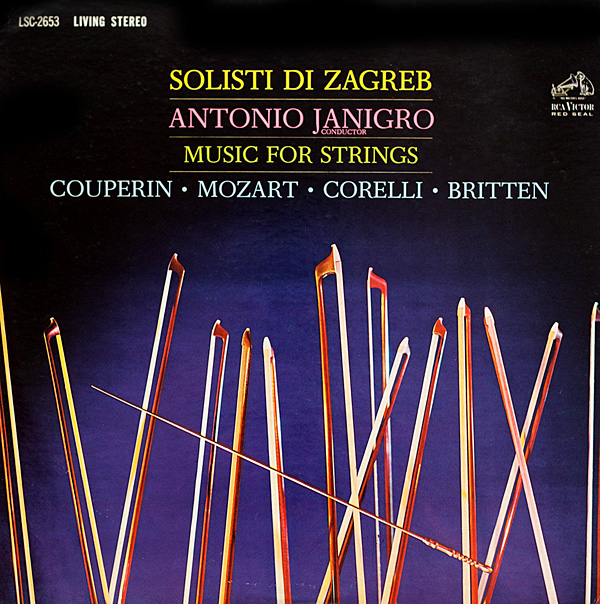
Music for Strings
Couperin: Concert Pieces for Cello and Orchestra; Mozart: Divertimento in D, K.136; Corelli: Concerto Grosso No.4, Op.6; Britten: A Simple Symphony
Solisti de Zagreb, Antonio Janigro, cello and director
RCA Victor LSC 2653 (2 LPs). Richard Mohr, prod., Lewis W. Layton, eng, TT: 47:56 From the standpoint of content and musicianship this is a superb collection of delightful music performed with the consummate authority and artistry for which Mr. Janigro and I Solisti de Zagreb are justly famous. The recording, too, while by no means perfect, is at least pre-Dynagroove, which as far as I'm concerned is now a compliment to any RCA Victor release.
Couperin: Concert Pieces for Cello and Orchestra; Mozart: Divertimento in D, K.136; Corelli: Concerto Grosso No.4, Op.6; Britten: A Simple Symphony
Solisti de Zagreb, Antonio Janigro, cello and director
RCA Victor LSC 2653 (2 LPs). Richard Mohr, prod., Lewis W. Layton, eng, TT: 47:56 From the standpoint of content and musicianship this is a superb collection of delightful music performed with the consummate authority and artistry for which Mr. Janigro and I Solisti de Zagreb are justly famous. The recording, too, while by no means perfect, is at least pre-Dynagroove, which as far as I'm concerned is now a compliment to any RCA Victor release.
Recording of June 1964: Joan Baez In Concert, Part 2

Joan Baez In Concert, Part 2
Joan Baez, vocals, guitar
Vanguard VTC-1679 (tape), VSD-2123 (LP). Maynard Solomon, prod., Reice Hamel, eng. TT: 48:00. Well, we finally got ourselves equipped to review 4-track open-reel tapes, via a slightly modified Ampex F-44. All the tapes we have auditioned had noticeably higher hiss than the average stereo disc, but this was not loud enough to be distracting except when the tapes were reproduced at very high levels. Even then, we found the smooth, even hiss to be less objectionable than the ticks and pops from some discs played at the same level.
Joan Baez, vocals, guitar
Vanguard VTC-1679 (tape), VSD-2123 (LP). Maynard Solomon, prod., Reice Hamel, eng. TT: 48:00. Well, we finally got ourselves equipped to review 4-track open-reel tapes, via a slightly modified Ampex F-44. All the tapes we have auditioned had noticeably higher hiss than the average stereo disc, but this was not loud enough to be distracting except when the tapes were reproduced at very high levels. Even then, we found the smooth, even hiss to be less objectionable than the ticks and pops from some discs played at the same level.
Recording of June 1980: Pictures at an Exhibition, Night on Bald Mountain
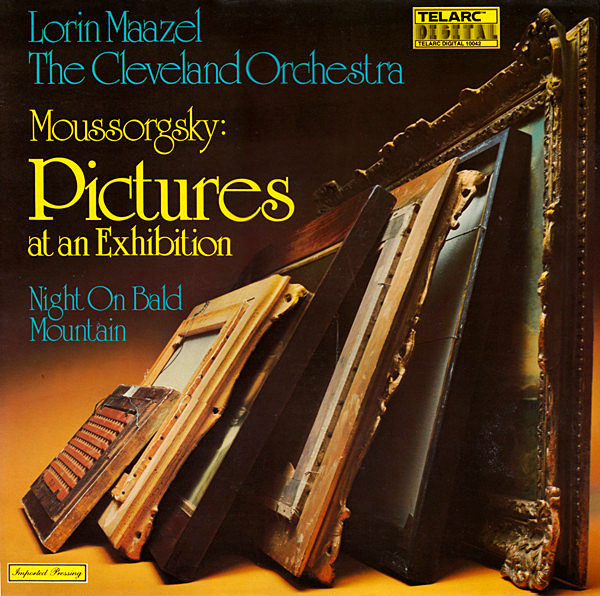
MOUSSORGSKY: Pictures at an Exhibition, Night on Bald Mountain
Cleveland Orchestra, Lorin Maazel, cond.
Telarc 80042 (LP). Recorded at Masonic Auditorium, Cleveland, OH. Edited at Soundstream, Inc. Mastered at JVC Cutting Center. Robert Woods, prod.; Jack Renner, eng.; Stan Ricker, mastering eng. DAA. This is unquestionably the best recording Telarc has done to date. It is almost impossible to fault. If I were to pick nits, I would complain about a slight lack of air in the strings. The rest is, simply, superlatives!
Cleveland Orchestra, Lorin Maazel, cond.
Telarc 80042 (LP). Recorded at Masonic Auditorium, Cleveland, OH. Edited at Soundstream, Inc. Mastered at JVC Cutting Center. Robert Woods, prod.; Jack Renner, eng.; Stan Ricker, mastering eng. DAA. This is unquestionably the best recording Telarc has done to date. It is almost impossible to fault. If I were to pick nits, I would complain about a slight lack of air in the strings. The rest is, simply, superlatives!
Recording of June 1982: Encores à la Française
 Michael Murray: Encores à la Française
Works by Couperin, Dupré, Gigout, Franck, Widor, J.S. Bach, Vierne, Lemmens
Michael Murray: Encores à la Française
Works by Couperin, Dupré, Gigout, Franck, Widor, J.S. Bach, Vierne, LemmensOrgan at Symphony Hall, Boston
Telarc Digital DG10069 (LP), 80104 (CD, released in 1990). Robert Woods, prod., Elaine Martone, assistant prod., Jack Renner, eng. TT: 65:46 (CD). This is another winner. Michael Murray's superior performances are or should be well known to all by this time. This recording of Encores in the French style covers a wide gamut of registration and mood, ranging from the large and full-blown sonorities of Franck's Pièce Héroique, the Toccata from Widor's Organ Symphony 5, and Vierne's Final from the Symphony 1 in d to the light and nimble Scherzo of Eugene Gigout and the technically demanding Musette by Marcel Dupré.