

Recording of April 2015: Matson: Cooperstown
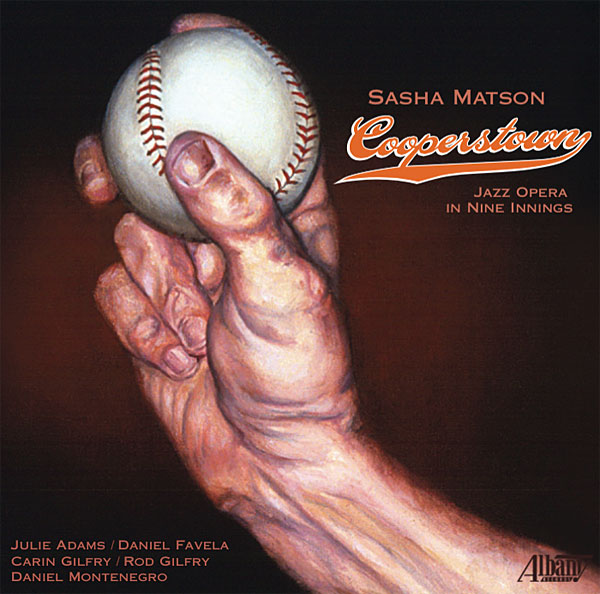
Sasha Matson: Cooperstown: Jazz Opera in Nine Innings
Julie Adams (Lilly Young), soprano; Carin Gilfry (Jan Green), mezzo-soprano; Daniel Favela (Marvin Wilder), Daniel Montenegro (Angel Corazon), tenors; Rod Gilfry (Dutch Schulhaus), baritone; Jason Rigby, saxophones; Russ Johnson, trumpets; Sean Wayland, keyboards; Rich Mollin, double bass; Gernot Bernroider, drums; Sasha Matson, conductor
Albany TROY1553/54A (2 CDs). 2015. John Atkinson, prod., mastering; Mike Marciano, eng., mix; Bill Schnee, Kenton Fukuda, engs. DDD TT: 101:63
Performance ****½
Sonics ***** A jazz opera about baseball? Uh-huh. Sung in colloquial English? A recording produced by the editor of this magazine? Sounds like the kind of situation where I should have nodded politely and just said No. What about ethicsall the folks who already think that review-based outlets like Stereophile are bought and paid for? Pony up and we'll write you a rave, right? Well, no. Absolutely not. ButRecording of the Month?
Julie Adams (Lilly Young), soprano; Carin Gilfry (Jan Green), mezzo-soprano; Daniel Favela (Marvin Wilder), Daniel Montenegro (Angel Corazon), tenors; Rod Gilfry (Dutch Schulhaus), baritone; Jason Rigby, saxophones; Russ Johnson, trumpets; Sean Wayland, keyboards; Rich Mollin, double bass; Gernot Bernroider, drums; Sasha Matson, conductor
Albany TROY1553/54A (2 CDs). 2015. John Atkinson, prod., mastering; Mike Marciano, eng., mix; Bill Schnee, Kenton Fukuda, engs. DDD TT: 101:63
Performance ****½
Sonics ***** A jazz opera about baseball? Uh-huh. Sung in colloquial English? A recording produced by the editor of this magazine? Sounds like the kind of situation where I should have nodded politely and just said No. What about ethicsall the folks who already think that review-based outlets like Stereophile are bought and paid for? Pony up and we'll write you a rave, right? Well, no. Absolutely not. ButRecording of the Month?
Recording of April 2016: Into the Silence
Avishai Cohen: Into the Silence
Avishai Cohen, trumpet; Bill McHenry, tenor saxophone; Yonathan Avishai, piano; Eric Revis, bass; Nasheet Waits, drums
ECM 2482 (CD). 2016. Manfred Eicher, prod.; Gérard de Haro, Nicolas Baillard, engs. DDD. TT: 53:08
Performance ****½
Sonics ****½ In the new millennium, no country other than Cuba has exported more important jazz musicians to the United States than has Israel. But even though the Israeli jazz phenomenon has been much discussed in the jazz press, critics have been late to recognize that Avishai Cohen is one of the best trumpet players alive. Cohen has two siblings who also play jazz, and his charismatic older sister, Anat, who has been winning major jazz polls on clarinet for several years, gets most of the attention in the family. And then there is Avishai's name problem: One of the best-known Israeli jazz musicians, a bassist of the same name, got to New York first.
Avishai Cohen, trumpet; Bill McHenry, tenor saxophone; Yonathan Avishai, piano; Eric Revis, bass; Nasheet Waits, drums
ECM 2482 (CD). 2016. Manfred Eicher, prod.; Gérard de Haro, Nicolas Baillard, engs. DDD. TT: 53:08
Performance ****½
Sonics ****½ In the new millennium, no country other than Cuba has exported more important jazz musicians to the United States than has Israel. But even though the Israeli jazz phenomenon has been much discussed in the jazz press, critics have been late to recognize that Avishai Cohen is one of the best trumpet players alive. Cohen has two siblings who also play jazz, and his charismatic older sister, Anat, who has been winning major jazz polls on clarinet for several years, gets most of the attention in the family. And then there is Avishai's name problem: One of the best-known Israeli jazz musicians, a bassist of the same name, got to New York first.
Recording of April 2017: Extraordinary Met Performances from 1966-67
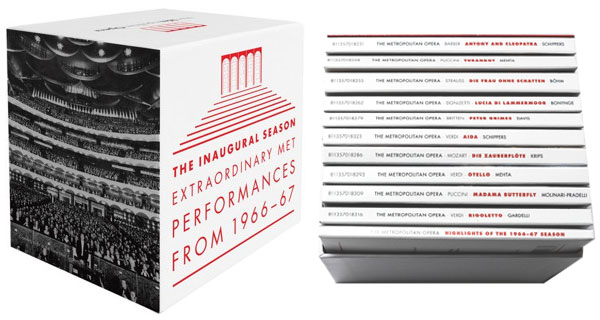
Aside from the overnight sensation (after a career of more than a decade) of Beverly Sills at the New York City Opera as Cleopatra in Julius Caesar, the 19661967 opera "news" in New York was the Metropolitan Opera, newly opened at Lincoln Center. The 10 broadcasts included here feature some singers who still have no equals. In addition to seven starrily cast favorite operas and the premiere of Marvin David Levy's fine Mourning Becomes Electra, there were Samuel Barber's Antony and Cleopatra, composed to inaugurate the new house; the Met premiere of Richard Strauss's 1919 masterpiece, Die Frau ohne Schatten; and the first production in 20 years of Benjamin Britten's Peter Grimes, with the incomparable Jon Vickers essaying the title role for the first time.
Recording of April 2018: Fairytales: Original Master Edition (MQA)

Radka Toneff & Steve Dobrogosz: Fairytales: Original Master Edition (MQA)
Odin LP03 (original LP, 1982); Odin CD9561 (24-bit/48kHz MQA-encoded FLAC file; Tidal Masters stream; hybrid MQA-CD; original sample rate 192kHz; 2017). Arild Andersen, prod. (1982, 2017); Andreas Risanger Meland, exec. prod. (2017); Tore Skille, Tom Sætre, original engs.; Svein Vatshaug, Rune Sund Nordmark, recorder restoration; Thomas Baårdsen, Geir Iversen, digital transfer of original tapes; Morten Lindberg, Peter Craven, Bob Stuart, digital restoration; Erik Gard Amundsen, technical advisor. DAA (original LP); DDD (MQA). Except: "My Funny Valentine," ADA (LP), ADD (MQA). TT: 40:11
Performance ******
Sonics ****** "See her how she flies . . ." When I first heard that lyric, from Jim Webb's "The Moon Is a Harsh Mistress," sung by a hauntingly fragile woman's voice and supported by a sparse yet lyrical piano accompaniment, at an audio show in 1983, I got chills. Who was this empathetic singer? Back in my cabaret-musician days, more than four decades ago, I backed so many singers with beautiful-sounding pipes but who didn't seem to comprehend the meaning of the wordsyet this unknown woman directly communicated the song's emotion.
Odin LP03 (original LP, 1982); Odin CD9561 (24-bit/48kHz MQA-encoded FLAC file; Tidal Masters stream; hybrid MQA-CD; original sample rate 192kHz; 2017). Arild Andersen, prod. (1982, 2017); Andreas Risanger Meland, exec. prod. (2017); Tore Skille, Tom Sætre, original engs.; Svein Vatshaug, Rune Sund Nordmark, recorder restoration; Thomas Baårdsen, Geir Iversen, digital transfer of original tapes; Morten Lindberg, Peter Craven, Bob Stuart, digital restoration; Erik Gard Amundsen, technical advisor. DAA (original LP); DDD (MQA). Except: "My Funny Valentine," ADA (LP), ADD (MQA). TT: 40:11
Performance ******
Sonics ****** "See her how she flies . . ." When I first heard that lyric, from Jim Webb's "The Moon Is a Harsh Mistress," sung by a hauntingly fragile woman's voice and supported by a sparse yet lyrical piano accompaniment, at an audio show in 1983, I got chills. Who was this empathetic singer? Back in my cabaret-musician days, more than four decades ago, I backed so many singers with beautiful-sounding pipes but who didn't seem to comprehend the meaning of the wordsyet this unknown woman directly communicated the song's emotion.
Recording of April 2019: Here If You Listen

David Crosby: Here If You Listen
BMG 538431461 (LP), 538429532 (CD), none (FLAC 24/48). 2018. David Crosby, Michael League, prods.; Fab Dupont, prod., eng., mix; Josh Welshman, eng.; Greg Calbi, mastering. ADD/DDD. TT: 45:08
Performance ****
Sonics ***** In 1967, the year the Byrds would fire him, David Crosby sits in a rooma small space, from the sound of itwith a cheap microphone and a recorder of dubious merit. He's improvising some jazzy, open-tuned acoustic guitar strumming, adding nonlexical vocables on top. He then files away the resulting tapeclearly ahead of its time and of no use to his bandmatesfor 50 years.
BMG 538431461 (LP), 538429532 (CD), none (FLAC 24/48). 2018. David Crosby, Michael League, prods.; Fab Dupont, prod., eng., mix; Josh Welshman, eng.; Greg Calbi, mastering. ADD/DDD. TT: 45:08
Performance ****
Sonics ***** In 1967, the year the Byrds would fire him, David Crosby sits in a rooma small space, from the sound of itwith a cheap microphone and a recorder of dubious merit. He's improvising some jazzy, open-tuned acoustic guitar strumming, adding nonlexical vocables on top. He then files away the resulting tapeclearly ahead of its time and of no use to his bandmatesfor 50 years.
Recording of April 2020: Afterimage
Cooper, Cerrone, Pergolesi, et al: Afterimage
String Orchestra of Brooklyn, Argus Quartet, Melissa Hughes, Kate Maroney, Rachel Lee Priday
Furious Artisans facd6823 (CD). 2020. Emily Bookwalter, Eli Spindel, prods.; Ryan Streber, eng.
Performance ****
Sonics **** If an orchestra is going to wait more than a decade before releasing its first record, it had better go big when it finally doeswhich is what the String Orchestra of Brooklyn has done. Afterimage includes compositions by Paganini (17821840) and Pergolesi (17101736) alongside works by Rome Prize winner Christopher Cerrone (b. 1984) and the less well-known Jacob Cooper (b. 1980).
String Orchestra of Brooklyn, Argus Quartet, Melissa Hughes, Kate Maroney, Rachel Lee Priday
Furious Artisans facd6823 (CD). 2020. Emily Bookwalter, Eli Spindel, prods.; Ryan Streber, eng.
Performance ****
Sonics **** If an orchestra is going to wait more than a decade before releasing its first record, it had better go big when it finally doeswhich is what the String Orchestra of Brooklyn has done. Afterimage includes compositions by Paganini (17821840) and Pergolesi (17101736) alongside works by Rome Prize winner Christopher Cerrone (b. 1984) and the less well-known Jacob Cooper (b. 1980).
Recording of April 2021: Saudade
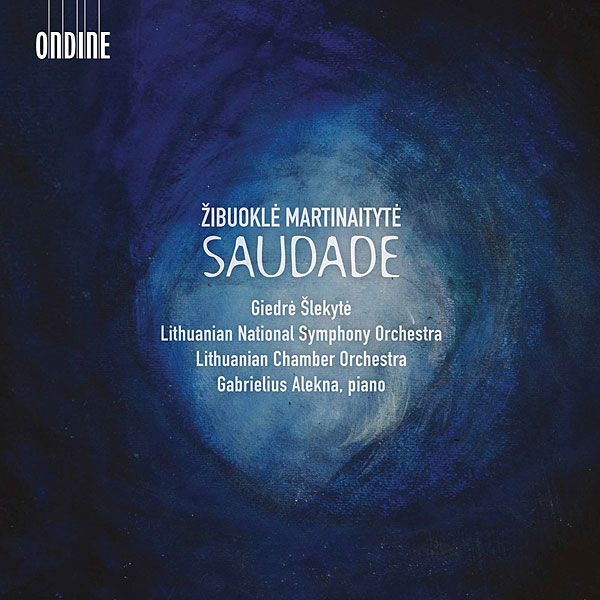
Žibuoklė Martinaitytė: Saudade
Lithuanian National Symphony Orchestra, Lithuanian Chamber Orchestra, Giedrė Slekytė, cond.; Gabrielius Alekna, piano.
Ondine ODE1386 (24/96 download). 2021. Aleksandra Kerienė. Vilius Keras, prods.; Evelina Staniulytė, Aleksandra Kerienė, Vilius Keras, engs.
Performance *****
Sonics ****½ Might this recording be too "out there" for some? I spent hours mulling alternative recommendations, my favorites being accordionist Ksenija Sidorova's captivating Piazzolla Reflections and cellist Nicole Peña Comas and pianist Hugo Llanos Campos's beautiful new recording of Latin American music, El Canto del Cisne Negro. Either would have been accessible in more obvious ways than Saudade, a collection of four recent orchestral and chamber works by Lithuanian composer Žibuoklė Martinaitytė.
Lithuanian National Symphony Orchestra, Lithuanian Chamber Orchestra, Giedrė Slekytė, cond.; Gabrielius Alekna, piano.
Ondine ODE1386 (24/96 download). 2021. Aleksandra Kerienė. Vilius Keras, prods.; Evelina Staniulytė, Aleksandra Kerienė, Vilius Keras, engs.
Performance *****
Sonics ****½ Might this recording be too "out there" for some? I spent hours mulling alternative recommendations, my favorites being accordionist Ksenija Sidorova's captivating Piazzolla Reflections and cellist Nicole Peña Comas and pianist Hugo Llanos Campos's beautiful new recording of Latin American music, El Canto del Cisne Negro. Either would have been accessible in more obvious ways than Saudade, a collection of four recent orchestral and chamber works by Lithuanian composer Žibuoklė Martinaitytė.
Recording of April 2022: Ghost Song
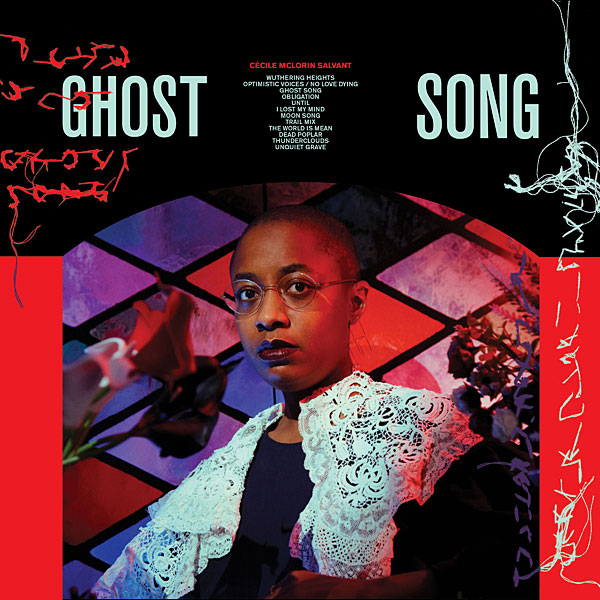
Cécile Mclorin Salvant: Ghost Song
McLorin Salvant, vocals; Sullivan Fortner, piano, Fender Rhodes; Aaron Diehl, piano, pipe organ; Paul Sikivie, Burniss Travis, bass; Alexa Tarantino, flute; Marvin Sewell, guitar; James Chirillo, banjo; Keita Ogawa, percussion; Kyle Poole, drums; Daniel Swenberg, lute, theorbo; Brooklyn Youth Chorus.
Nonesuch (LP, CD). McLorin Salvant, prod.; Todd Whitelock, Patrick Dillet, Chris Muth, engs.
Performance *****
Sonics ***** Starting with her out-of-nowhere triumph at the 2010 Thelonious Monk Jazz Competition and continuing with the release of four albums including three Grammy winners, Cécile McLorin Salvant, still just 32, has been raising eyebrows and neck hairs for a dozen years. She reigns as the supreme jazz singer of our time, ranking among the best of all time. More remarkable, she keeps getting better, and, rarer still, she keeps evolving, expanding her repertoire of styleswhich was vast from the startwithout losing a wisp of her deep blues, swing, precision, wit, operatic range, or storytelling drama.
McLorin Salvant, vocals; Sullivan Fortner, piano, Fender Rhodes; Aaron Diehl, piano, pipe organ; Paul Sikivie, Burniss Travis, bass; Alexa Tarantino, flute; Marvin Sewell, guitar; James Chirillo, banjo; Keita Ogawa, percussion; Kyle Poole, drums; Daniel Swenberg, lute, theorbo; Brooklyn Youth Chorus.
Nonesuch (LP, CD). McLorin Salvant, prod.; Todd Whitelock, Patrick Dillet, Chris Muth, engs.
Performance *****
Sonics ***** Starting with her out-of-nowhere triumph at the 2010 Thelonious Monk Jazz Competition and continuing with the release of four albums including three Grammy winners, Cécile McLorin Salvant, still just 32, has been raising eyebrows and neck hairs for a dozen years. She reigns as the supreme jazz singer of our time, ranking among the best of all time. More remarkable, she keeps getting better, and, rarer still, she keeps evolving, expanding her repertoire of styleswhich was vast from the startwithout losing a wisp of her deep blues, swing, precision, wit, operatic range, or storytelling drama.
Recording of April 2023: Stravinsky: Violin Concerto & Chamber Works
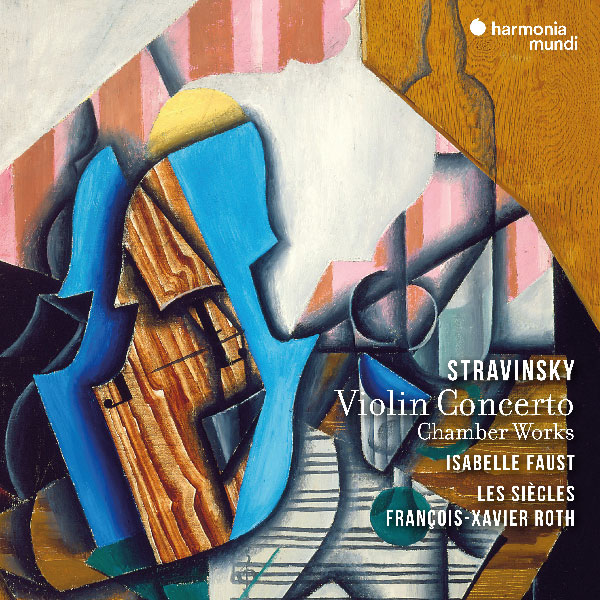
Stravinsky: Violin Concerto & Chamber Works
Isabelle Faust, violin; Les Siècles, François-Xavier Roth, cond.
Harmonia Mundi 902718 (reviewed as 24/96 WAV download). 2023. Jiri Heger, prod.; Aurélien Bourgois & Alix Ewald, engs.
Performance *****
Sonics ****½ You might think that by 1931—the year Igor Stravinsky (1882–1971) completed his unforgettable Violin Concerto in D Major—orchestral instruments were the same as those used today. Far from it. According to the website of Claire Givens Violins, pure-gut D strings began to disappear after WWI and were wound with aluminum after WWII. Gut A strings ceded to synthetics in 1970, and gut E strings transitioned to steel between 1910 and WWII. With no consistency between modern orchestras, the string sections we hear in live performances and on electrical recordings set down since 1926 are, for the most part, a grab bag. Wind instruments and pianos have changed as well, and halls have increased in size and pitch has risen. Put all that together, and you can well understand why this "period instrument" recording of music Stravinsky completed between 1907 and 1931 is a revelation.
Isabelle Faust, violin; Les Siècles, François-Xavier Roth, cond.
Harmonia Mundi 902718 (reviewed as 24/96 WAV download). 2023. Jiri Heger, prod.; Aurélien Bourgois & Alix Ewald, engs.
Performance *****
Sonics ****½ You might think that by 1931—the year Igor Stravinsky (1882–1971) completed his unforgettable Violin Concerto in D Major—orchestral instruments were the same as those used today. Far from it. According to the website of Claire Givens Violins, pure-gut D strings began to disappear after WWI and were wound with aluminum after WWII. Gut A strings ceded to synthetics in 1970, and gut E strings transitioned to steel between 1910 and WWII. With no consistency between modern orchestras, the string sections we hear in live performances and on electrical recordings set down since 1926 are, for the most part, a grab bag. Wind instruments and pianos have changed as well, and halls have increased in size and pitch has risen. Put all that together, and you can well understand why this "period instrument" recording of music Stravinsky completed between 1907 and 1931 is a revelation.
Recording of April 2024: Wagner: Famous Opera Scenes
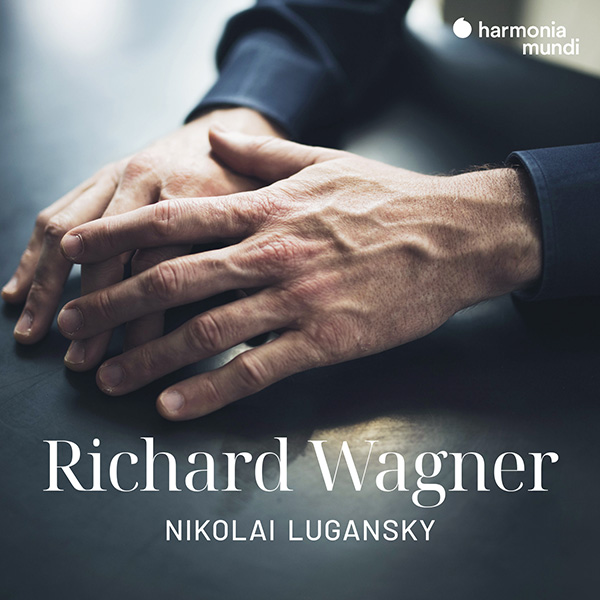
Wagner: Famous Opera Scenes
Nikolai Lugansky (piano)
Harmonia Mundi HMM 902393 (CD). Nicolas Bartholomée, prod.; Bartholomée, Ambroise Helmlinger, engs.
Performance ****
Sonics ***** Concert arrangements of operatic themes for piano, like Liszt's famous concert paraphrases, obviously provide an opportunity to display one's virtuosic keyboard technique. As Denis Morrier's program note for Harmonia Mundi indicates, however, transcriptions of Wagner served a second important purpose: spreading awareness of the composer's operas when they only played in a limited number of venues. There was no Spotify or Idagio back then!
Nikolai Lugansky (piano)
Harmonia Mundi HMM 902393 (CD). Nicolas Bartholomée, prod.; Bartholomée, Ambroise Helmlinger, engs.
Performance ****
Sonics ***** Concert arrangements of operatic themes for piano, like Liszt's famous concert paraphrases, obviously provide an opportunity to display one's virtuosic keyboard technique. As Denis Morrier's program note for Harmonia Mundi indicates, however, transcriptions of Wagner served a second important purpose: spreading awareness of the composer's operas when they only played in a limited number of venues. There was no Spotify or Idagio back then!