

Bonnie Raitt's Inexorable Rhythm

In conversation with Bonnie Raitt these days, one word continually jumps out: groove. She's speaking of her music, of course, but the blues singer and guitaristher gifts as commanding as ever on her latest, Dig In Deephas also survived some family struggles in the past decade that nearly forced her out of her personal groove.
Capturing it Live with Peter McGrath
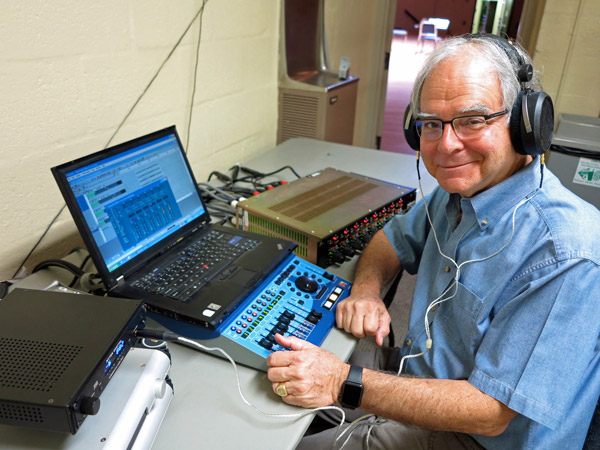
Ever since I encountered Wilson Audio Specialties' Peter McGrath (above) playing his own digital recordings at audio shows, hanging out in the Wilson Audio room has proven the consistent highlight of my show coverage experience. Nor is it simply the quality of the musicianship that continues to draw me to McGrath's rooms. As anyone who has heard his work can attest, the man's ability to capture the unique characteristics of a performance venue, as well as the natural sound of voice and instruments, is second to none.
Carla Bley: The Further Adventures of the Lone Arranger

Even though she calls her new band, 4x4, a "small" group, it's a big band—almost too big for the stage of the Knitting Factory on the night of October 11, 2000, as it makes its first American appearance. Bley's piano is so far to stage left, she has to lean against the wall and stoop under a hanging monitor speaker to address the audience. Four music stands dominate the rest of the apron—her front line of tenor saxophone, alto saxophone, trumpet, and trombone stand shoulder to shoulder, blocking the audience's view of Larry Goldings and his Hammond B3, drummer Billy Drummond, and bassist Steve Swallow, who stands 15' back and on a riser. If she'd showed up with her 17-piece band, they'd have had to have hung the horn sections from the rafters, like the sound system.
Cary Christie: from Infinity to Artison
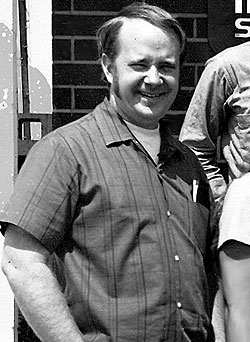 When Cary Christie, Arnie Nudell, and John Ulrick founded Infinity Systems more than 25 years ago, high-end audio as we know it today didn't exist. Hi-fi was audio, though the reverse wasn't necessarily true.
Through the growth years, Infinity became a major force in the High End. Cary Christie is the only one of the original players still associated with Infinity in 1995, now part of Harman International. His relationship, however, is now as an independent designer and consultant with Christie Designs, Inc. (footnote 1). I corralled him by phone on a clear fall day in Santa Fe, and a snowy one at his home near Lake Tahoe, Nevada. I asked him how Infinity had started.
When Cary Christie, Arnie Nudell, and John Ulrick founded Infinity Systems more than 25 years ago, high-end audio as we know it today didn't exist. Hi-fi was audio, though the reverse wasn't necessarily true.
Through the growth years, Infinity became a major force in the High End. Cary Christie is the only one of the original players still associated with Infinity in 1995, now part of Harman International. His relationship, however, is now as an independent designer and consultant with Christie Designs, Inc. (footnote 1). I corralled him by phone on a clear fall day in Santa Fe, and a snowy one at his home near Lake Tahoe, Nevada. I asked him how Infinity had started.Charley Hansen: The Wizard of Boulder
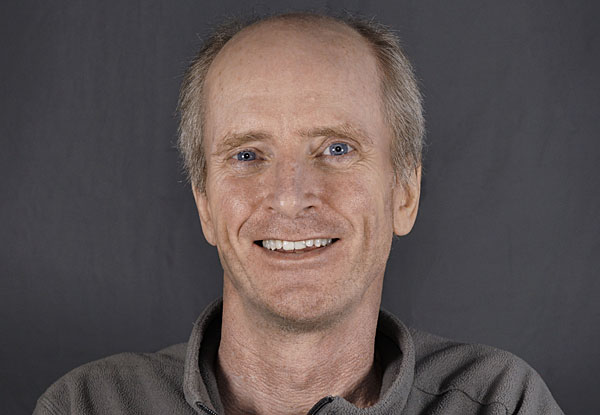
Twenty-three years ago, in 1993, Charles Hansen cofounded Ayre Acoustics, Inc., in Boulder, Colorado. On Ayre's website, Hansen is named as Research Director for Ayre, and it seems an apt description. Along with experimenting in and developing audio-electronics hardware and software, Hansen has strongly hewn to certain design principles, among them fully balanced operation, an absence of loop negative feedback, and solid-state circuitry. Ayre's current flagship preamplifiers and amplifiers, the twentieth-anniversary R Series, have received reviews and accolades, while at the other end of the budget spectrum, Hansen's design work was a key element of Neil Young's widely publicized and crowdfunded PonoPlayer project.
Charlie Hansen, Ayre Acoustics

While I was working on my review of the K-1 preamplifier, I telephonically corralled Ayre's Research Director Charlie Hansen for a midwinter afternoon's gabfest. I started by asking Charlie how he became an audiophile.
Craig Kallman of Atlantic Records: Listen Closely
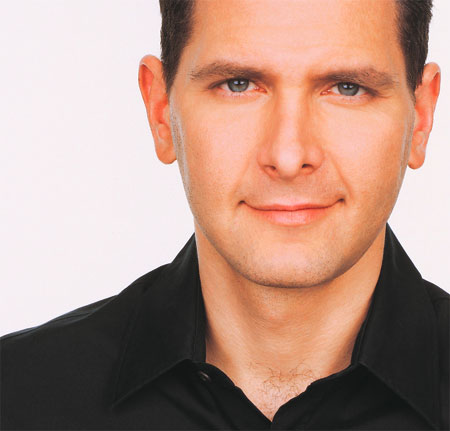
Label heads—those at the very highest positions of power at music companies. To anyone who's spent time near the record business, they're a mythical breed. Like gnomes. Or dragons. Often, it's their vision that spells success or failure for the label they run. And what they say goes. Over the years, many a legendary creature has assumed the title: Goddard Lieberson, Clive Davis, Mo Ostin, to name just a few of those who have survived and prospered. The list of those who did not is at least twice as long.
Dan D'Agostino of Krell: Power Is As Power Does
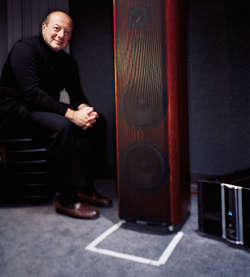
Maybe Dan D'Agostino was destined to develop and build a line of products distinguished by their sheer might. After all, he grew up just blocks from a natural phenomenon synonymous with power: Niagara Falls. Even today, when the 56-year-old D'Agostino returns to his boyhood home to visit his parents, he enjoys pulling on a pair of shorts and going for a long run in the adjacent park, which resounds with the Falls' unrelenting thunder.
Dan D'Agostino's Progress to Progression
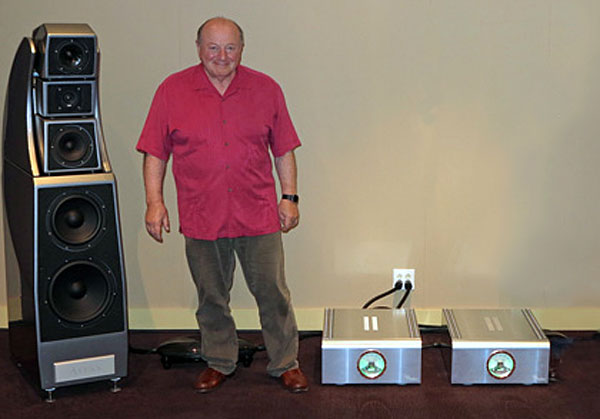
To accompany my review of the Dan D'Agostino Master Audio Systems Progression monoblock amplifier elsewhere in this issue, I talked to Dan D'Agostino about the amplifier's design. I started by asking him what were some of the major differences between the Momentum and the Progression monoblocks?
Dan D'Agostino: I took the best parts of the Momentum's more sophisticated and complex circuitry and put them in the Progression, without using the same high parts count. Each stage of the Momentum's gain amplifier is separate, with input stage and driver stages on separate rails. All of the Momentum's devices are designed for maximum performance in a small package, which requires a lot more of them, and a significantly bigger input card than the Progression's. These differences create subtleties, because I'm able to run much higher current in the Momentum's front end.
Dancing on the Edge: Keith Jarrett on Music & Art

Years before I moved to Santa Fe, where I eventually became Stereophile's copyeditor, assistant editor, and first music editor, I lived in Boston, Massachusetts. There, I'd spent a year as the in-house typesetter, copyeditor, and book-review editor of East West Journal, an eclectic monthly magazine devoted to nutrition, spirituality, cooking, gardening, conservation, and other subjects. Two years after I'd left EWJ, managing editor Meg Seaker called to ask if I wanted to interview Keith Jarrett for the magazine.