

Judy Spotheim: Seeing & Hearing The Light
Judy Spotheim, maker of the SpJ arm and the gorgeous La Luce turntable that I reviewed a while back for Stereophile (October 1998) and that has subsequently become one of my references for LP playback. She's an intelligent, well-read individual who has a penchant for asking me, "You didn't read that in the manual?!" Ahem. Although the following interview was taped on the phone from her home in the Netherlands, I hope to meet her sometime soon.
Kal Rubinson Talks to Merging Technologies' Dominique Brulhart
As part of his preparation for reviewing Merging Technologies' NADAC Multichannel-8 networked D/A processor in the March 2016 issue of Stereophile, Kal Rubinson talked with the Swiss company's Dominique Brulhart.
Keith O. Johnson: Reference Recordings
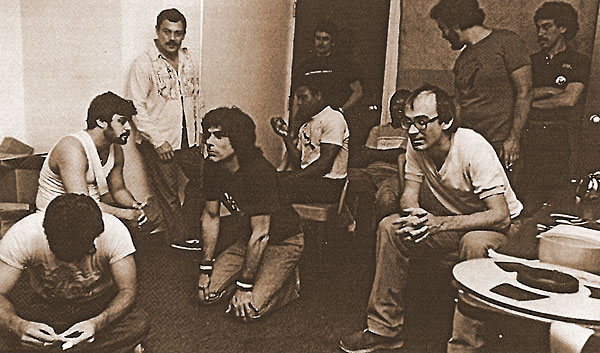
Keith Johnson is the man responsible for the records issued by Reference Recordings, from Professor Johnson's Astounding Sound Show through Tafelmusiknot to mention upcoming releases of Your Friendly Neighborhood Big Band and Respighi's Church Windows. As is frequently the case, Johnson's astounding recordings result from his intimate (molecular-level) knowledge of the process with which he deals and his ingenious adaptations to squeeze the most out of available (and not so available) technology. He is also one of the few critics of digital recording who has actually used a digital recorder, who has run tests to specifically identify digital's problems, and who would welcome a digital format that works as perfectly as the claims would have us believe the current system works.Larry Archibald
Ken Kantor: Now Hear This
Stereophile Editor John Atkinson walked into our office brandishing a CD (footnote 1). "Guess what Ken Kantor did? He took a year off from running NHThttp://www.nhthifi.com">NHT; (footnote 2) to make this disc."
Kevin Gray: Vinyl-Mastering Master

When I need information about recordings, I go to Discogs. At Discogs, Kevin Gray has more than 2500 entries. That's as good an indicator as any of the amount of ground he has covered in his career so far as a creative participant in the recorded-music art known as mastering. Since starting out in the early 1970s, in Los Angeles, he has worked for all the major music labels and many independents, in all music genres.
Kevin Hayes: Knowledge from the Glass Age
Kevin Hayes: Valve Amplification Company arose out of my dissatisfaction with the stereo gear I could buy. I've been an audiophile since before I knew what the word meant, going back to the mid-'70s. I had an epiphany when I first heard a piece of old tubed gear, a Fisher X101, that simply blew away a highly touted receiver that I happened to own. It was a 25W integrated amplifier, using 7591s on the output, and except for sustained organ-pedal notes, it was far better than what I had at that time.
Kevin Voecks: Loudspeakers, Crossovers, & Rooms
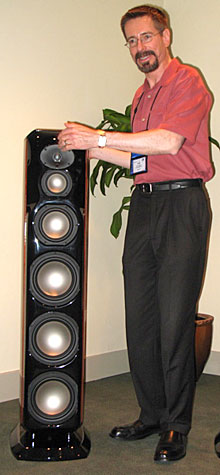
Since he joined Snell Acoustics in the mid-1980s, Kevin Voecks, their chief designer (footnote 1), has been involved in the design or redesign of the entire Snell line, from the minor revision of the Type">http://www.stereophile.com/floorloudspeakers/378snell">Type A/III (incorporation of a new tweeter), to the complete redesign of the Type C (now the CIII). Snell Acoustics is located in Massachusetts, and although Kevin spends a good deal of time there or at the measurement and analysis facilities of the Canadian National Research Council (NRC) in Ottawa, he does a great deal of his conceptual and preliminary design work, as well as his listening, in Los Angeles, where he makes his home. I visited him there last summer to gather a little insight into his background and loudspeaker design philosophy. I started by asking Kevin when had he first become interested in loudspeaker design...
Klaus Heymann: A 20th-Anniversary Chat with the Founder of Naxos
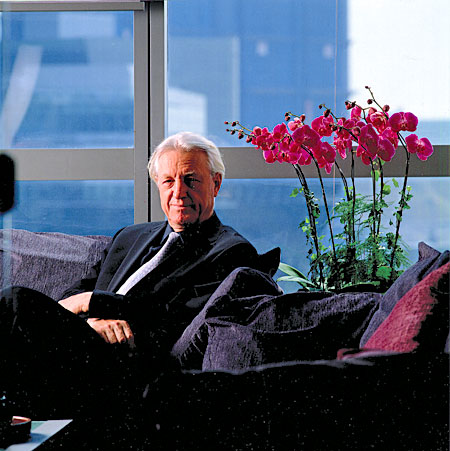
When Hong Kong–based music lover and electronics-equipment distributor Klaus Heymann (footnote 1), now 70, first began organizing classical-music concerts as a way to boost sales, he had no idea he would end up founding the world's leading classical-music label. But after starting a record-label import business and meeting his future wife, leading violinist Takako Nishizaki, the German-born entrepreneur sought a way to promote her artistry. First he founded the HK label, which specialized in Chinese symphonic music (including Nishizaki's recording of Butterfly Lovers, the famous violin concerto by Chen Gang). Next he established Marco Polo, a label devoted to symphonic rarities.
Klaus Heymann: A Naxos World
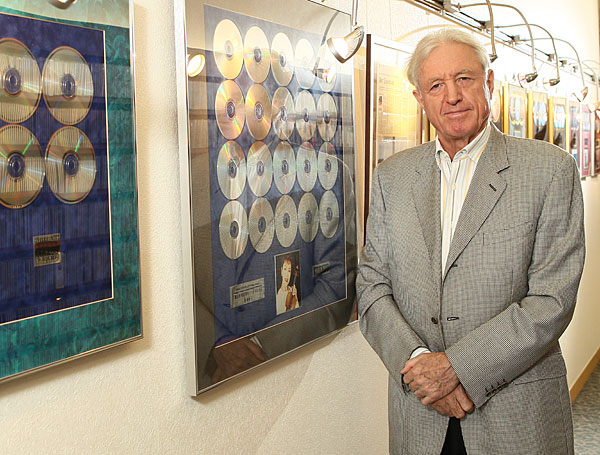
Is it because no one takes pot shots at you unless you're on top? Or are the most recent criticisms of Klaus Heymann and his diversified Naxos Digital Services empire on to something more?
To refresh: Heymann, a German entrepreneur who began selling cameras and stereos to American GIs in Vietnam, and later become the Hong Kong distributor of Bose and Studer audio gear, launched Naxos, a classical-music label specializing in budget-priced CDs, in 1987 (footnote 1). The label's name is also easy to pronounce in any language. Heymann began to build the Naxos catalognow one of the largest classical labelsby recording young and often unknown artists and orchestras, most from Eastern and Central Europe. Soon, displays of Naxos CDs, all of their covers conforming to a uniform, instantly recognizable design, became to crop up in record stores large and small.
Legendary Jazz Bassist Ron Carter Talks About Music, Recording, and Hi-Fi

From left to right: Gideon Schwartz, Ron Carter, and Stephen Mejias in the listening room at Audioarts.
I'm sitting next to Ron Carter in the listening room at Manhattan dealer Audioarts, trying not to cry. We're listening to "All Blues," the title track from Carter's 1974 CTI releasea meditative rendition of the Miles Davis masterpiece that has been slowed-down and elongated in such a way that it practically pulls tears from eyes as easily as Carter pulls notes. It's hard to believe that anyone other than Carter has ever touched this piece. Right now, it belongs entirely to him. The system through which we listen is doing a fine job of articulating Carter's distinct combination of purpose and passion. To describe his performance as mere magic would be an insult to his craft, yet to focus too heavily on his discipline would be an injustice to his art.