

500 Components. Recommended.
It's a jungle out there. The shrinking shelves of your neighborhood newsstand drip with the blood and corpses of magazines that have gone under in the intense battle for browsers' eyeballs. And only if we can make our latest issue's cover sufficiently eye-catching to get enough newsstand browsers to pick up and buy a copy do we get to play another round of the game. (Conventional publishing wisdom holds that, at most, a magazine's cover has six seconds to get its message across.)
500 Issues!

In October 1962, the first issue of what was then called The Stereophile was published and edited by J. Gordon Holt out of Wallingford, Pennsylvania. The issue you hold in your hands, published by AVTech Media out of New York, New York, and edited by Jim Austin, is #500. Jim is the magazine's third editor, having occupied that seat since the July 2019 issue. Gordon Holt put together the first 82 issues, through the June 1986 issue; I was the editor from issue #83, cover-dated August 1986, through issue #473, June 2019.
60 Years of Stereophile!
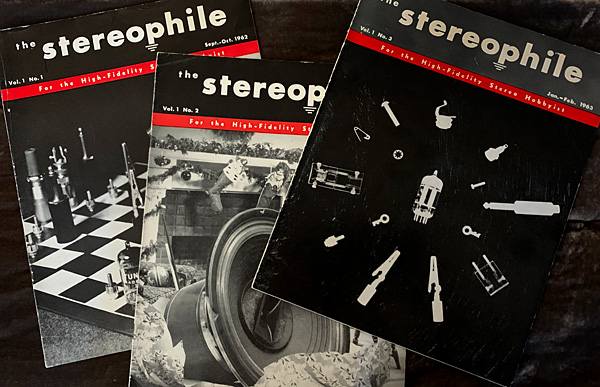
It was September 1962. In the UK, the Beatles were recording their first single, "Love Me Do," at London's Abbey Road Studios. And in the US, a young journalist, J. Gordon Holt, born in North Carolina but raised in Australia from 1935 to 1947, had become dissatisfied with the advertiser-friendly atmosphere at High Fidelity magazine, for which he had been the audio editor. Holt quit High Fidelity and, after a brief stint with phono cartridge manufacturer Weathers, published the first issue of what was then called The Stereophile.
A Bad Idea That Would Make a Worse Law
As the May issue was being put to bed, the Internet was all aflutter over a proposal by digital strategy consultant Jim Griffin to have Internet Service Providers (ISPs) levy a $5 surcharge—a "network licensing model"—on all broadband users. Under this model, Griffin proposes that ISPs collect the fee, which would then be paid into a pool to "compensate music-copyright holders." Griffin says that consumers who do not download digital music files would not be forced to pay the surcharge, but that he anticipates "70–80% would pay" for all the content they could download.
A Bad Year
Though the January 2010 issue of Stereophile will be hitting newsstands before the holidays, this is nominally the last issue of 2009. But already in October, on my return flight from Denver to New York following this year's Rocky Mountain Audio Fest, it struck me that 2009 had not been a good year for the world of high-end audio. Yes, the worldwide recession has bit deep into the economic health of audio manufacturers and retailers, but in the past 12 months too many of those who have helped make our hobby great, and have helped promote our shared passion for listening to music with as high a quality as possible, have breathed their last.
A Brief History of the Lost

Children, for the most part, are normal human beings who like to make believe that they're extraordinary, just for fun. Adults, on the other hand, are delusional creatures who enjoy pretending that they're normal, simply for their own peace of mind.
A Change of Schedule (from 1980)
Recently, we've been asking a representative sample of Stereophile subscribers for suggestions as to how the magazine could be improved. We got 'em, in droves. And the one thing that led every list of suggestions we received was: "Publish more often!" Second in importance was: "Do more reports on affordable components, and let's have more suggestions for cheap ways of improving existing systems."
A Chatbot's Take on Hi-Fi Issues

There has been much discussion lately about ChatGPT, the machine-learning based chatbot from OpenAI. Some experts say it will soon make human writers obsolete. Will that include human hi-fi reviewers?
I decided to engage ChatGPT in an exploratory conversation; think of it as a sort of job interview.
A Clash of Values?
In the April 1992 Stereophile, reader Hilary Paprocki expressed his belief that recording engineers are unconcerned about sound quality. Indeed, he went so far as to allege that engineers intentionally use inferior miking techniques so that they can bill clients for additional time spent trying to fix the sound. The example he used was the engineer who places a microphone directly in front of a guitar amplifier, a technique Mr. Paprocki felt captured only "4%" of the sound. Mr. Paprocki also likened recording engineers to "featherbedders."
A Dolby In the House
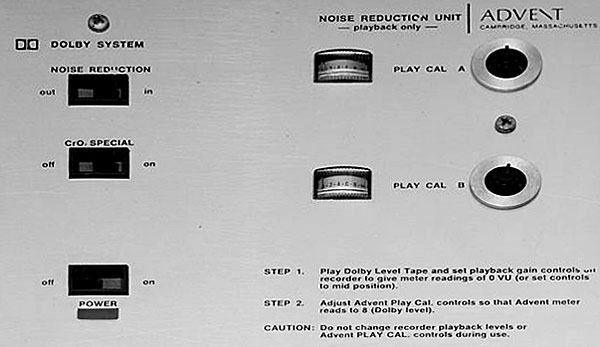
By the time you read this, in the fall of 1967, the "Dolby system" will probably be old hat to you. Every other audio publication has been describing it, discussing it, and hailing it as the greatest invention since sex.
We've seen that kind of press ballyhoo before, about such significant advances as the Edsel, the 16-rpm LP and the "thin-profile" loudspeaker, so our first inclination was to be a wee bit skeptical of the Dolby. It seemed too good to be true.