

A Question of Scale
I've been wondering whether we who write about audio will ever agree on a sensible way to express the scale of the differences we hear. If magazines like Stereophile and The Abso!ute Sound lack credibility among the broader audience of music lovers and hi-fi shoppers—and we do—one important reason may be our habit of greatly exaggerating the importance of differences that in fact are very small. A subtle improvement, one that most people wouldn't notice except in a carefully arranged comparison, is often described by audiophile reviewers in language that makes it seem like the contrast between a whisper and a thunderclap.
A Reviewing Life
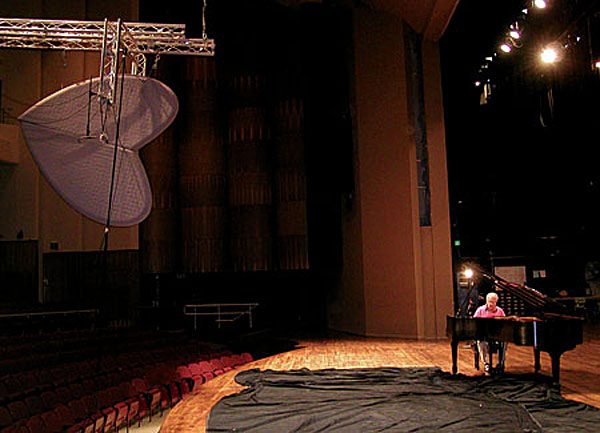
It's been 30 years since I began work on my very first equipment report, of the Goldbug Brier moving-coil phono cartridge, for Hi-Fi News & Record Review. That review appeared in the British magazine's May 1983 issue; I have lost track of how many equipment reviews I've written since then, but my review of the Vandersteen Treo loudspeaker in this issue is at least my 500th.
A Script for a High-End Audio Demonstration
High-end audio is not a rational construct. It is a sensory experience that leads to emotional engagement. In slightly different words: High-end audio is not about a concept, but about the experience of having our emotions engaged. The difference between reading about a high-end audio system and hearing great recordings played on one is almost as big as the difference between reading a love poem and falling in love.
A Tale of Two Systems
"When you read...that an electronic recording has 'excellent' sound it does not mean you can use that record as a system evaluation tool," wrote J. Gordon Holt in October's "As">http://www.stereophile.com//asweseeit/111/">As We See It." Yet, if you are a regular reader of Stereophile, you will be aware that the magazine's equipment reviewers do make use of a considerable number and variety of recordings, including many which would appear to be totally electronic, to reach value judgments about hi-fi components.
A Trojan Horse in Washington
"Tax proposed to fund Public TV, radio," read the newspaper headline. The Working Group for Public Broadcasting, described as a "private study group," was proposing to free public broadcasting "from improper political and commercial influences" by replacing its $228 million in congressional appropriations and $70 million or so in corporate funding with $600 million to be raised from a new sales tax on electronic equipment. The article went on to say that the proposal was being sent to the congressional panels concerned with communications (ie, the commerce committees), where it could become the basis for a new Public Broadcasting Act.
A View Into the Soundstage
Stuck out here in the desert">http://www.stereophile.com/asweseeit/498awsi">desert depths of the Southwest, we look forward to visits from out-of-towners. So when David">http://www.stereophile.com/interviews/478">David Wilson, one-time audio reviewer but now full-time high-end manufacturer, called to say he was going to be in Santa Fe, there was a flurry of activity. David had agreed to an interviewhttp://www.stereophile.com/interviews/690wil">interview;, so I started going through back issues of The Absolute Sound and Stereophile for background. Vol.6 No.2 of Stereophile from 1983, with its front-cover photograph of David and Sheryl Lee Wilson with their WAMM speaker system, seemed a good place to start—except that nothing inside the magazine corresponded to the cover picture. It was the next issue that had featured Larry Archibald's write-up on the WAMM, and once I opened its pages, I got trapped into reading the entire issue.
A Year of Dueling Shows

This year is not only one of fallout from the most divisive political campaigns of our time, but will also one of competing audio shows too close for comfort. Southern California will see dueling audio shows three months and 35 miles apart, and New York City and Washington, DC will host shows on consecutive weekends. While a proliferation of audio shows potentially presents plenty of opportunities for audiophiles to hear new gear, such conflicts ultimately limit which manufacturers can exhibit where, and can render some shows a poor value.
Abandon Folly, Not Hope
The day before I began writing this, John Atkinson posted on Stereophile's website a chart from Nielsen Soundscan showing the ski-jumplike path CD sales have been on since 2004. In 2004, total sales were 651 million units; in 2014, 141 million units. All that is lacking from that impactful visual to make the ski-jump analogy perfect is the little uptick at the end to launch the skier into free air. Those numbers look to me like a total decline in sales of 78%. Ouch.
Absolute Issues
One of the things endured by engineers and journalists involved in the design and discussion of high-end components is the seemingly endless attacks from those who, for whatever reason, feel that there is something unhealthy, even vaguely immoral, in the whole idea of wanting to listen to music with as high a quality as possible. The Listening Studio's Clark Johnsen reminded me recently of a letter from Daniel Shanefield that I published in the January 1984 issue of Hi-Fi News & Record Review that illustrates the whole genre: "It is utterly useless to write an amplifier review based on listening tests. If there were anything other than mere frequency response variation, it might be interesting...most hi-fi magazines will...forswear attempts to review amplifiers for their 'inherent sounds.' There are still plenty of interesting things to talk about in reviewing amplifiers, such as features, power, cost effectiveness, beauty, etc." (Of course, Daniel Shanefield is not quite as authoritative a published amplifier reviewer as, say, J">http://www.stereophile.com/interviews/66">J. Gordon Holt or Harry Pearson of The Abso!ute Sound.)
Absolute Values
I recently came across a 1998 report, "Explaining">http://www.conference-board.org/publications/describe.cfm?id=398">Expla… the Computer Productivity Paradox," by Kevin Stiroh and Robert H. McGuckin III, that discussed the apparent fact that the widespread use of computers has not resulted in any significant increase in worker productivity. This is indeed a paradox, as my experience in the magazine business has left me with the opposite impression. We all do more, with less, than at any earlier time.