

Watching the Detectives
I made myself comfortable. The system—Linn Unidisk universal player, Meridian digital active speakers—was obviously working well: "For unto us a Child is born..." pum pum pum pum...
Watermarking & DVD Conspiracy Theories
I've recently been rereading Mark Lane's and Donald Freed's 1970s screenplay cum novel, Executive Action, which develops the theory that John F. Kennedy was assassinated by a conspiracy between organized crime, expatriate Cuban Batistists, and Eisenhower's "military-industrial complex." Long predating Oliver Stone's JFK, the book is fascinating, convincing stuff, from authors who had done considerable research into what really happened in November 1963. But, like all conspiracy theories, it falls down on the hard rock of reality: the more people and organizations are involved in a conspiracy, the less likelihood there is of anything happening at all, let alone going according to plan.
Watermarking & the SDMI
Mastering engineer Denny Purcell let out a long sigh. "Does anyone in this room believe that any of this is going to do any good?" he asked. Of the eight or nine people—each with decades of experience in the music and/or audio industries—hanging out at Georgetown Masters Studios for SDMI's Phase II listening tests this past October, not one said "Yes." The consensus: the watermarking">http://www.stereophile.com/asweseeit/2002awsi">watermarking issue will probably be dead and forgotten within a year.
Watermarking: the Devil's Work!
I left you last month 104 miles from Santa Fe, New Mexico, heading east on I-40 accompanied by a dog and two cats, with 1946 miles to go to reach Stereophile's new editorial home, New York City. To cut a long story short, I did arrive in New York (covered in dog and cat hair). After a nerve-wracking delay, so did our furniture. We will be living out of boxes for a while chez Atkinson, but that's a mere inconvenience compared with the Great Adventure of setting up a new listening room.
We Are What We Are
As I write these words, it is exactly 15 years to the day since I left the English magazine Hi-Fi News (then Hi-Fi News & Record Review) to take">http://www.stereophile.com//asweseeit/352/">take the editorial helm of Stereophile. What has driven my editing of both magazines (and, Carol Baugh, p.10, I certainly do "edit" them) has been the view that the traditional model of a magazine—that it dispense and the readers receive wisdom—is fundamentally wrong. Instead, I strongly believe that a magazine's editors, writers, and readers are involved in an ongoing dialog about their shared enthusiasms. Stereophile's involvement in Shows stems from this belief, and it is in this light that its "Letters" column should be regarded as the heart of each issue.
We Did It!
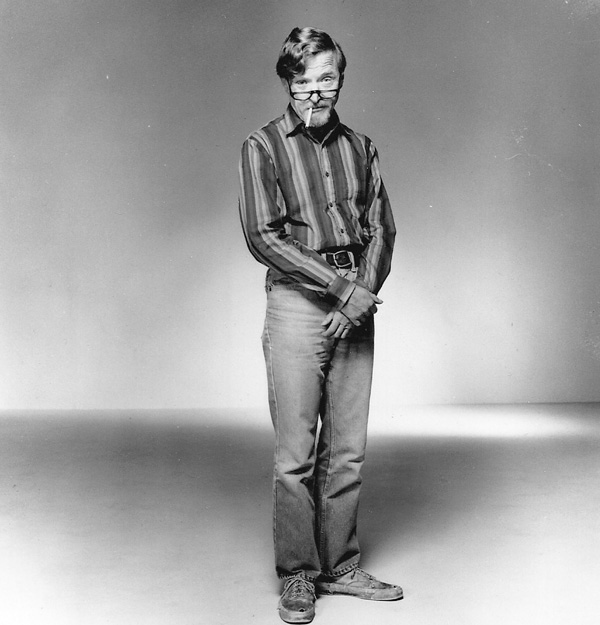
In 1960 the high-fidelity field was in a period of stasis. The hi-fi boom was starting to crest out, and there were three magazines for audiophiles: High Fidelity, Stereo Review, and Audio. The first two were (and still are) little more than vehicles for their advertising, more dedicated to promoting their advertisers' wares than in advancing the state of the art. Audio was more into equipment testing than either of the mass-hi-fi magazines, but it too was contributing to the stagnation by listening to its test results rather than to the components.
We Don't Get No Respect

It never fails. Browse Stereophile's Facebook page, scroll through the comments to an article that refers to life as an audiophile, and splatappearing like bird droppings on your glistening screen are anti-audiophile wisecracks pointing out exactly how far off the "normal" track our hobby has derailed. Occasionally, I catch myself in mid-sentence, already replying to one of these droppings, the gist of my intended message invariably being: "If you're an anti-audiophile, what are you doing using up what life you have left reading a webpage devoted to a hobby you don't get? Shouldn't you be hanging out with your own friends?" Then, realizing that I'm wasting my time.
We Get Letters
One of my mentors, John Crabbe—my predecessor as editor of the English magazine Hi-Fi News—used to insist that a magazine's soul is its "Letters" column. If a magazine was able to publish a lively collection of readers' letters, said John, it would enjoy a lengthy life. Conversely, if its letters column was dull or nonexistent, then no matter how much advertising it had or how many readers it could boast, it was just a matter of time before it had the lid shut on it. In the 28 years since John told me this, I have not found an exception. The kicker, of course, is that there's no easy way of ensuring that a magazine has lively letters to publish.
Were Those Ears So Golden? (DCC & PASC)
The whole field of subjective audio reviewing—listening to a piece of equipment to determine its characteristics and worth—is predicated on the idea that human perception is not only far more sensitive than measurement devices, but far more important than the numbers generated by "objective" testing. Subjective evaluation of audio equipment, however, is often dismissed as meaningless by the scientific audio community. A frequent objection is the lack of thousands upon thousands of rigidly controlled clinical trials. Consequently, conclusions reached by subjective means are considered unreliable because of the anecdotal nature of listening impressions. The scientific audio community demands rigorous, controlled, blind testing with many trials before any conclusions can be drawn. Furthermore, any claimed abilities to discriminate sonically that are not provable under blind testing conditions are considered products of the listeners' imaginations. Audible differences are said to be real only if their existence can be proved by such "scientific" procedures (footnote 1).
Wes Phillips Bids a (Temporary) Farewell
The March 1999 issue of Stereophile is my last as the magazine's Equipment Reports Editor. I have accepted a job elsewhere in the industry, and, as a public relations consultant, will be actively promoting this wonderful hobby of ours in a different capacity.