

What's Real?
I couldn't believe it. Something was off.
What's Right?
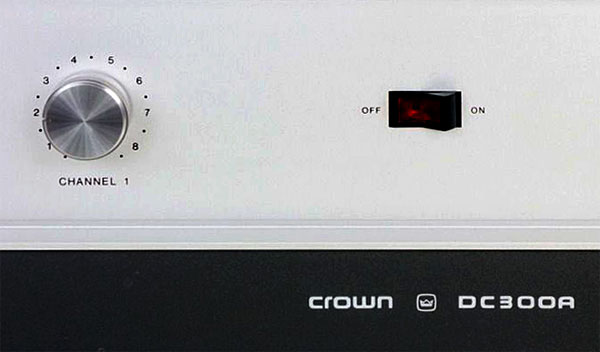
A recent experience with two excellent loudspeaker systems and two of the top power amplifiers raised a question that has been cropping up more and more frequently these days: When one component sounds more toppish or more bassy than another, which one is really flat and which isn't?
The question arose this time in connection with some listening tests on a pair of FMI 80 speakers and a pair of IMF Monitor III speakers, using Audio Research Dual 75 and Crown DC-300A power amplifiers.
Whatever happened to 5.1-channel music?
I love two-channel stereo. A great stereo recording can produce such a full-bodied, three-dimensional soundstage that surround sound seems superfluous. Multichannel is just peachy for home theater, but good ol' stereo suits music just fine, thanks very much.
When Caruso Was King
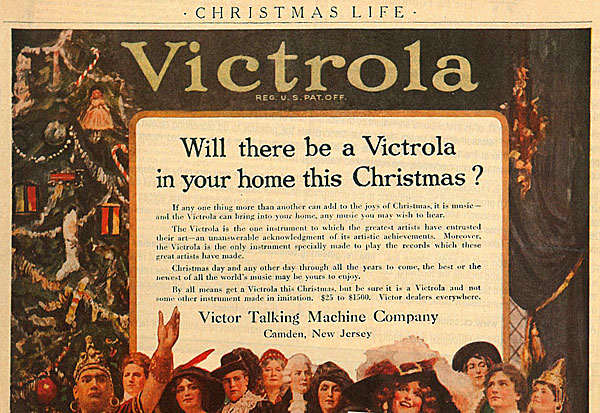
One of the benefits of belonging to the Institute of Electrical and Electronics Engineers (IEEE) is a subscription to their monthly magazine, IEEE Spectrum. Superbly written and edited, this journal keeps me up to date on emerging technology, and entertains me with things like reprints, on the final page, of vintage advertisements. Their January 2016 issue, for example, featured an ad from December 1920, promoting the Victor Talking Machine Company's Victrola: "By all means get a Victrola this Christmas, but be sure it is a Victrola and not some other instrument made in imitation. $25 to $1500. Victor dealers everywhere."
When The Music Stops
An acquaintance in the world of CD distribution recently gave me an astonishing statistic: that the average classical title sells fewer than 2000 copies worldwide in its first year of release; which in turn means that many titles sell only about 500 copies! Given that the cost of producing a classical orchestral album can include up to $100,000 in union-mandated musician fees, such minimal sales guarantee financial disaster.
When the Music's Over
It's one of those good news/bad news stories: more people are listening to music than ever before, but the major record labels are in dire straits. Some of the reasons for the record industry's malaise are easy to spotteenagers and grandmas grooving to music-streaming services like Spotify, Pandora, and MOG, or ripping each other's CDsbut the music industry's problems run deeper than lost sales. Digital audio mortally wounded recorded music's creative mojo in 1982, and the record industry never fully recovered.
When Things Go Wrong...
Michael Fremer's review of the AudioPhysic Caldera III loudspeaker in this issue (p.81) reminded me of a subject I have written about many times in the past: what happens when a manufacturer submits a faulty sample for review. I formalized Stereophile's policy on this matter in late 1988, following both an unfortunate series of reviews in which the samples either arrived broken or broke during the auditioning, and my learning about how much went on behind closed doors at other audio magazines, where reviewers and editors too often appeared to collude with manufacturers.1 I wrote back then that:
When video rides shotgun
I was planning one of my occasional long drives, for music and photography. I had scheduled two nights in Nashville, so I asked around: Where should I go for live music after a dinner of Hattie B's hot chicken? Art Dudley recommended the Station Inn, perhaps the world's best venue for live bluegrass music. You can read about my experience there in the November 2019 Stereophile. The Station Inn has now added a streaming service. For $8.99/month or $99/year, you get between 10 and 20 live-streamed performances every month plus access to the archives. If you're a bluegrass fan or merely bluegrass-curious, I encourage you to check it out. It's not as good as being there, but it's still good.
Where Did We Go Wrong?
Editor's Introduction: Thirty years ago this month, in September 1962, J">http://www.stereophile.com//interviews/66/">J. Gordon Holt, lately Technical Editor of High Fidelity magazine, was working on the contents of the first issue of his">http://www.stereophile.com//features/708/">his brainchild The Stereophile, a magazine that would judge">http://www.stereophile.com//asweseeit/711/">judge components on how they actually sounded. We thought it appropriate, therefore, to use the occasion of the 1992 Summer Consumer Electronics Show, held in late May in Chicago, to invite some 200 members of the international high-end industry to a dinner to celebrate the occasion. Larry Archibald dug deep into the magazine's coffers; Ralph Johnson took time off from organizing the 1993 High End Hi-Fi Show to burn up the long-distance telephone lines faxing invitations; the conversation was excellent, the food superb, and the wine even better. Which is probably why the venerable JGH took the opportunity to remind the assembled luminaries what this whole business is supposed to be about. Here follows the text of his speech. I hope you find it as stimulating reproduced in these pages as did those who heard it live.—John Atkinson
Where We Are & How We Got Here
1987 will mark Stereophile's 25th year of continuous (if initially sometimes sporadic) publication. And while we haven't yet decided what we're going to do in celebration, the first issue of 1987 does seem to be as good a time as any to contrast the state of the audio art when we began publication with what is routinely possible today.