

Why Music?
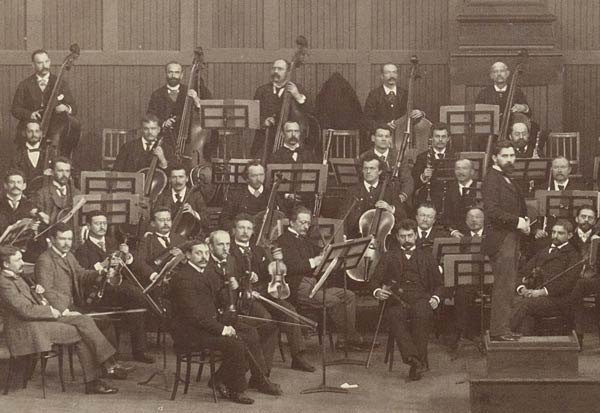
Why does music matter so much to so many of us? Some, like Stereophile's readers, go to great lengths to reproduce it in their homes with accuracy and impact, and build libraries of their favorite works. Others, like my daughters, don't care much about equipment, but find it hard to spend more than five minutes in a car without listening to music. We go to concerts, play instruments, hum tunes, sing. Why? Why does music seem to speak to so many more of us than do, say, painting, sculpture, poetry, architecture, or even literature?
Why Pay More?
A very popular myth among the audio unwashedand one still perpetuated by the pop hi-fi writersis that nothing is to be gained by paying more than $1000 for a stereo system (footnote 1). Members of the general public, including masses of people who enjoy live, unamplified music, have the impression that more money simply buys one wider and wider frequency range, and defend their $500 "compact" systems with the lame excuse that their ears aren't all that good, and who needs to hear what bats hear anyway? This is no doubt a soothing emollient for one's disinclination to invest more money in audio gear, but it is a supreme self-deception.
Why They Scorn Us—and Why We Should Care
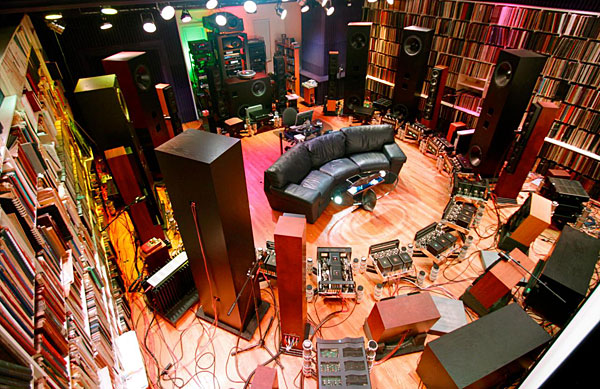
Photo © Kipnis Studios 2015
Are you on Facebook? Twitter? Instagram? Reddit? Social media has done much to bring together people of every interest imaginable to share their fascinations, desires, and, occasionally, delusions. From fans of frogs (FrogStomp) and proponents of clean public toilets (Benjyo Soujer) to a group that challenged an Iranian cleric's statement that women's flimsy attire causes earthquakes (Boobquake), social media is a global town square in which anyone with a keyboard and an attitude has an equal voice.
Wired!!!
Compuserve's CEAUDIO forum has been buzzing in recent weeks about audio cables. The subject even spilled over into an April meeting of the New York chapter of the Audio Engineering Society (see Wes Phillips's report in this month's "Industry Update"). Nearly two decades after Polk, Fulton, and Monster Cable raised our collective consciousness about the differences cable choice can make in an audio system, the debate still rages between audiophiles and some members of the engineering community. "High-priced tone controls" is how some engineers dismiss the subject of cables, while admitting that they can sound different. Other engineers adopt the "Hard Objectivist" line that if there are differences to be heard between cables, differences in the lumped electrical parameters of resistance (R), inductance (L), and capacitance (C) are all that are required to explain such differences.
Won't get fooled again
I'm excited about the return of live music to New York City. I've attended several classical concerts in the last few weeks, and in a week or so, I'll take in a show at the City Winery: Suzanne Vega. I haven't yet made it back to New York's amazing jazz clubsthe Vanguard, the Blue Note, Smallsbut I look forward to doing so soon, especially to dropping in on my jazz local, Smoke, when it reopens in a few weeks in new, larger digs.
Working in the Front Line
A committed audio equipment reviewer operates at the front line of audio subjectivity. Working on behalf of a readership made up of consumers thirsting for independent, informed opinion and advice, a reviewer is commissioned by the editor of a magazine to produce reports with a technical and subjective content on a wide range of available audio products. These reviews must be both fair and completed at short notice on a relatively small budget.
You Did It! (When Is a Change of Schedule Not a Change?)
Ever since Vol.6 No.3 was published in August of 1983, Stereophile has been the leading subjective review magazine in terms of circulation. At that juncture our circulation was 12,000 and has now increased to 15,000. And it's all your fault!
You Heard What?!?!?!
It seemed a bit like the game of Telephone: Someone at the head of a long line of people whispers a sentence or two into the ear of the next in line, who in turn passes it along. By the time the last person in line repeats aloud what they think they've heard, the message is often barely recognizable to the first person.
You, too, can listen like a pro!

I've written before in this space that to me the most wondrous aspect of our avocation (apart from the music) is the way it exists at the intersection of logic and emotion, of science and art. The equipment we use is made by engineers applying scientific principles, yet its goal is to deliver sensual pleasure. Both viewpoints are valid.
Your Music vs My Music: This Time, It's Personal!

My "As We See It" in the July 2011 issue seems to have touched a nerve. At the AXPONA NYC audio show last June, more than one person stopped me in a corridor to take issue with what they thought I'd written.
That column certainly brought the Beethoven worshippers out of the woodwork. Look, I revere Beethoven, and I stand by what I wrote in the July issue: There can be little doubt, in terms of his impact on the course that Western music would follow, that Beethoven was the most important composer. But "most important" in terms of music history is not the same thing as the composer whose works most deeply touch my heart. For that, Beethoven is just not in my Top Five.