

Rogue Sphinx V3 integrated amplifier
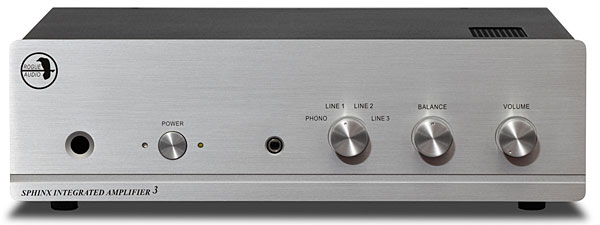
I am proud of the fact that my first review for Stereophile was of a modestly priced integrated amplifier called the Rogue Audio Sphinx. Specified at 100Wpc into 8 ohms, 200Wpc into 4 ohms (footnote 1), it played the KEF LS50s like it was made for them. It was simple and handsome and cost only $1295, phono stage included.
Roksan Attessa streaming integrated amplifier

When I put together my first hi-fi system in the late 1960s, the amplifier was a Kenwood integrated. Soon I replaced the Kenwood with a Sony integrated, and then, a few years later, I bought a Lecson preamplifier and power amplifier pairing. It's been separates for me ever since.
Roksan Kandy K2 BT integrated amplifier
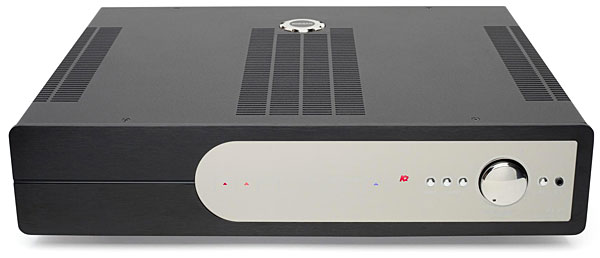
It was spring. I was planting kale and cabbage, wearing bib overalls, and listening to Pigboy Crabshaw (aka Elvin Bishop) on my iPhone. My girlfriend, "bb," came out, and just stood there laughing. "What's this? American Gigolo: The Alabama Years?"
Now, please, don't start worrying about your newest Stereophile reviewer. I've owned my share of Julie London and Jennifer Warnes records, but these days I'm more into Hazel Dickens and Maybelle Carter. It's summertime, fish are jumpin', and that dirt-road American music is getting me high.
Roksan Kandy K2 integrated amplifier

Besides my 20th wedding anniversary and the 15th anniversary of Listener magazine's first issue, this year marks the 25th anniversary of Roksan Audio Ltd., easily one of the most innovative design and manufacturing firms in British audio. Before Roksan came upon the scene in 1985, none of us had ever seen a loudspeaker whose tweeter was isolated from its surroundings by a sprung suspension. Or a commercial phono preamplifier designed to fit inside a turntable, just a centimeter away from the tonearm base. And who among us could have guessed that the Linn">http://www.stereophile.com/turntables/1103linn">Linn LP12's hegemony—among flat-earthers, I mean—would be broken by a turntable from outside of Scotland? Yet the Roksan Darius loudspeaker, Artaxerxes phono stage, and, above all, Xerxes turntable accomplished those things and more, to the genuine surprise of nearly everyone—and to the benefit of our industry at large, as other firms took those ideas and ran with them.
Rotel RA-6000 integrated amplifier

Before this month, I'd never experienced Rotel amplification in one of my own systems, but I have memories of how their amplifiers sounded back in the early 1990s. In those days, at audio shows, I would audition every Rotel amp I could find; I was especially interested in their $369, 60Wpc RB-960BX. I was curious about that model because it was the number-one competitor to the 60Wpc darling of the audiophile proletariat: Adcom's GFA 535 II. My friend Corey Greenberg compared these two popular amps in Stereophile and concluded, "The Rotel is for the budget-minded music lover who wants a good, solid little amplifier that's not going to make listening to music a trying experience."
Schiit Audio Ragnarok 2 integrated amplifier
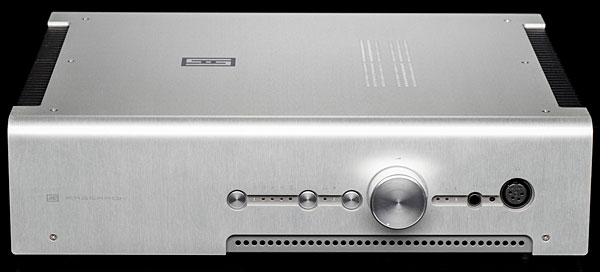
In Herb Reichert's review of the original Schiit Audio Ragnarok integrated amplifier, he wrote, "Schiit Audio's Ragnarok [is] the first amplifier of my experience that plays earth and sky, mind and body, brown eyes and blue, speakers and headphones, with equal narcotic intensity." Herb's colorful conclusions so persuaded me of the Ragnarok's worth that, when Schiit Audio's Jason Stoddard and Mike Moffatt announced the impending release of the Ragnarok 2, I pitched a Stereophile follow-up review.
Schiit Audio Ragnarok integrated amplifier
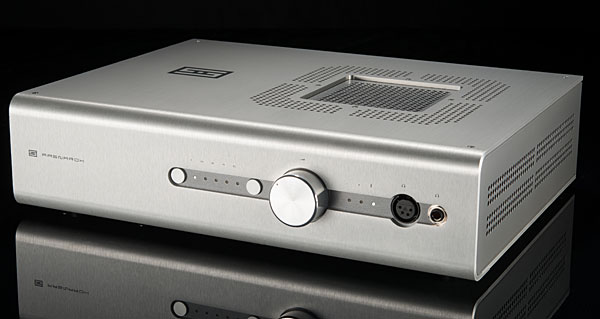
This is a story about vulgar words and what is likely one of the most innovative and exciting, yet self-consciously idiosyncratic, audio components of the 21st century: Schiit Audio's Ragnarok integrated amplifier ($1699).
I never use vulgar wordsat least not in public. I rarely use the word shit as an adjective, a verb, or a noun. Therefore, when I first heard of an audio company founded by legendary audio engineer Mike Moffat (formally of Theta) and award-winning science-fiction author and audio polymath Jason Stoddarda company named SchiitI could permit myself to pronounce its name only as Shite. I thought it made me sound British instead of rude.
Shanling MC-30 Music Center CD receiver

My first one-piece stereo—I think I paid $60 for it, including a pair of speakers with pegboard backs—gave me a lot of pleasure when I was young, and I loved it. Everything that came after has been better in every way but one: None has inspired that kind of love. And most have left me wondering if there might be something just a little bit better.
Sharp SM-SX100 digital integrated amplifier

Why would a sharp mind offer a $15,000 integrated digital amplifier to a reviewer who has been characterized in the audio press as the "self-proclaimed Analog Messiah" and a "hyper-Luddite"? That's the first question a self-centered reviewer asks himself. Yours might be: "A $15,000 integrated amplifier from...Sharp?"
Simaudio Moon Evolution 700i integrated amplifier

In my review of Krell's FBI integrated amplifier in the July 2007 issue, I noted that $16,500 (it now costs $18,000) seemed an astonishing chunk of change to spend on a product category generally associated with "budget" gear. Now, the 2011 edition of the Stereophile Buyer's Guide lists no fewer than 19 companies selling integrated amps for five figuresone goes for $100,000!which perhaps suggests that economic slumps prod even the well-heeled to alter their habits. There are, after all, advantages to cramming a preamplifier and a power amplifier into a single box: you need one less pair of interconnects, one less power socket, one less cabinet shelf. And if the integrated contains state-of-the-art parts, elegant circuitry, and a hefty power supply, what's the problem?
And so we have Simaudio Ltd., the veteran Canadian high-end electronics firm, leaping into this realm after 30 years of business with the Moon 700i, priced at $12,000only two-thirds the price of the Krell, but aimed at the same downsizing but still toney demographic.